

Almay Color Changing Foundation: Does This Drugstore Pick Deliver?
Almay brings decades of drugstore credibility to the color changing category. Here is an honest look at the formula, the technology, and the real-world results.
Almay has been a fixture in American drugstore beauty for decades, building its reputation on sensitivity-focused formulas and straightforward, clean-ingredient positioning. When the brand moved into the color changing foundation space, it brought that same practical, no-fuss sensibility. The question is whether that approach translates into a product that genuinely adapts to your complexion, or whether it is a traditional foundation with a color-shift claim attached.
Disclosure: Lindalia sells a color changing foundation stick that competes directly with the products reviewed in this article. This review is written to give you accurate, useful information rather than to direct you toward any single outcome. All analysis is based on available product information, ingredient review, and aggregated user feedback.
Almay's Place in the Color Changing Market
Almay is a mass-market American brand distributed primarily through drugstores, grocery chains, and large retail pharmacies. Its products are widely available in-store across the United States, which gives it a significant accessibility advantage over many online-only competitors in this space.
The brand has historically focused on sensitive skin formulations, fragrance-free options, and hypoallergenic claims. Their color changing foundation line extends this positioning into the adaptive coverage category, targeting consumers who want something functional, skin-friendly, and available without waiting for delivery.
Pricing typically falls in the $12 to $20 range depending on the retailer and format, which places it solidly in the drugstore tier alongside competitors like L'Oreal True Match and Maybelline Fit Me.
Almay's clean, sensitivity-first positioning is a genuine differentiator in the drugstore space. The question for color changing technology specifically is whether that formulation approach extends to the adaptive pigment system or only to the base ingredients.
How the Color Adaptation Works
Almay's color changing mechanism relies on a combination of light-diffusing pigments and temperature-sensitive colorants that respond to skin contact. The product is designed to start slightly lighter than your target shade and shift warmer and slightly deeper on contact with skin warmth.
This is a thermochromic-adjacent approach rather than true pH-responsive encapsulation. The distinction is meaningful: thermochromic pigments react to temperature, which is a consistent variable across people, while pH-responsive systems react to the acid mantle of individual skin, which correlates more directly with undertone and natural pigmentation.
In practice, this means Almay's color shift is fairly predictable in direction but limited in range. The formula tends to work well for people whose complexion is already close to one of the available base shades. It is less effective for bridging significant gaps between the base shade and a user's actual skin tone.
Almay offers the product in a small number of shades, typically three to five options depending on the specific sub-line. This limited shade range is a recurring criticism and one that intersects directly with the question of how far the color adaptation can realistically reach.
Formula Quality and Skin Benefits
Where Almay tends to do better than many competitors in this price range is formula quality outside of the color-shift system. The brand's commitment to hypoallergenic, sensitivity-tested ingredients is reflected in the foundation base, which avoids common irritants and uses emollient systems that are generally well-tolerated.
Some versions of Almay's color changing foundation include ingredients like aloe vera, vitamin E, and mineral-based pigments in addition to the adaptive colorants. These additions provide mild skin conditioning benefits that go slightly beyond what you get from a basic coverage formula.
Coverage is typically medium, which is a step up from the lighter coverage offered by several online-only competitors at a similar or lower price. The finish is described as natural to slightly radiant, which is suitable for a range of skin types and occasions.

What pH-Responsive Technology Looks Like in Practice
Lindalia's color changing stick uses microencapsulated pigments activated by your skin's acid mantle, not heat. Niacinamide, collagen, and a clean stick format make application fast and precise.
Shop LindaliaPerformance by Skin Type
For normal to combination skin, Almay's color changing foundation tends to perform solidly. The formula blends well, provides reliable medium coverage, and holds for a reasonable portion of the day without requiring touch-ups.
For dry skin, the results are more variable. The formula is not particularly moisturizing, and without a dedicated hydrating base underneath, it can settle into dry areas and look patchy by midday. Users with dry skin consistently report needing a good moisturizer and sometimes a primer before application.
For oily skin, Almay tends to perform better than average for its price tier. The formula does not include a dedicated oil control system, but the mineral-based pigments in some versions help absorb excess sebum and extend wear time.
For sensitive skin, Almay's hypoallergenic formulation is a genuine advantage over many competitors. The absence of common irritants and fragrance makes it a safer option for reactive complexions.
What Works
- Hypoallergenic, sensitivity-tested formula
- Medium coverage with a natural finish
- Widely available in-store, no wait for delivery
- Reasonable price point for the quality
- Some skin conditioning ingredients included
What Doesn't
- Thermochromic shift is limited in adaptation range
- Very few shade options available
- Can look patchy on dry skin without preparation
- No integrated application tool
- Technology less sophisticated than pH-responsive options
"Almay's clean formulation approach is a real differentiator at the drugstore level. The technology is straightforward but the base is better than most at this price."

When You Want More Than a Temperature-Based Shift
True pH-responsive microencapsulation reads your skin's unique chemistry, not just its warmth. The result adapts to your undertone, not to a uniform temperature trigger shared by everyone.
Learn MoreShade Range and Adaptation Reality
This is where Almay's color changing foundation runs into the most consistent criticism. The number of shades on offer is small, and within each shade the adaptation range is limited. The product works best as a "fine-tuning" tool rather than a broad-spectrum shade matcher.
If your complexion sits close to one of the available base shades, you will likely find the product effective and pleasant to use. If you have a deeper, very fair, or strongly cool-toned complexion, you may find that none of the base shades get close enough for the color shift to complete the work.
Almay has expanded their shade offerings in some product lines over the years, so it is worth checking current availability at your local retailer rather than relying on older reviews that may have been written when fewer options were stocked.
Oxidation and Day-Long Wear
One area where Almay performs better than some online-only competitors is oxidation resistance. The formula's pigment system appears to be relatively stable, with fewer reports of the product pulling orange or dramatically darkening after the initial activation window.
This stability is likely related to the quality of the colorant system, which tends to be more carefully formulated in established drugstore brands compared to some lower-cost e-commerce alternatives. Wear time is typically reported at six to eight hours before touch-ups become necessary, which is solid performance for a drugstore product.
Setting with a light powder extends wear for most users, though for dry skin this can emphasize texture. A setting spray is a better option for dry or mature complexions.
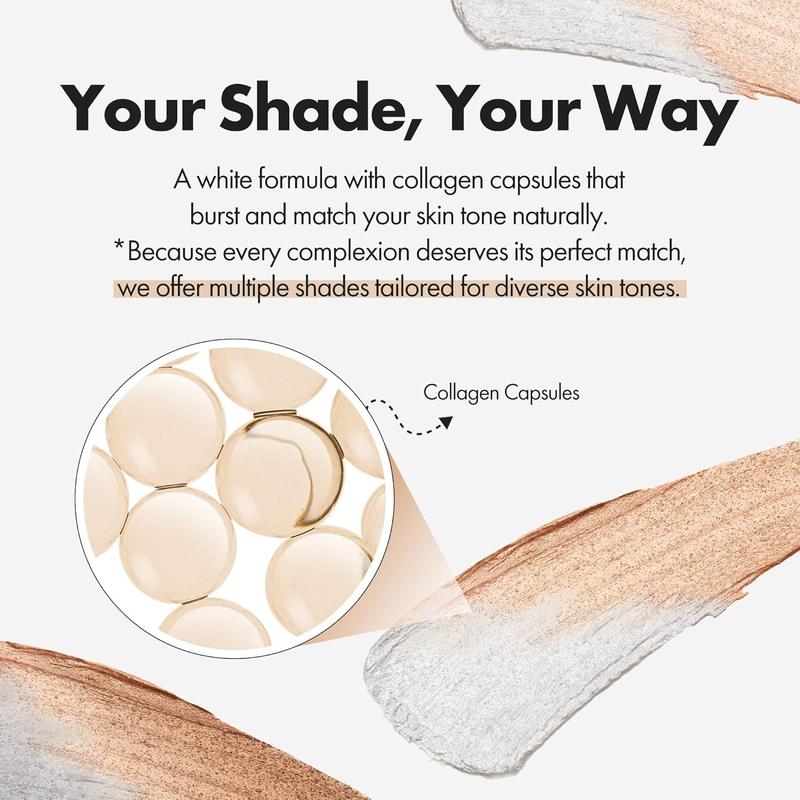
Lindalia's Stick: A Different Approach to Adaptive Coverage
Skin-chemistry-activated pigments, a portable stick format with no separate brush needed, niacinamide and collagen in the formula. Designed for precision where drugstore options leave off.
Shop the StickIs Almay the Right Drugstore Color Changing Foundation
For someone who wants a color changing foundation they can pick up today, from a brand with a solid formulation track record, and who has a complexion close to one of the available shades: yes, Almay is a reasonable choice. The hypoallergenic approach is a real benefit for sensitive skin, and the formula quality is above average for the price tier.
For someone with a specific undertone concern, a complexion that is particularly deep or very fair, or someone who wants more than a modest temperature-based shift: Almay's limited shade range and thermochromic mechanism will likely leave you wanting more.
The in-store availability is genuinely valuable if you want to test shades before buying. Use that advantage: swatch a shade on your jaw, wait 90 seconds, and assess in natural light before committing.
Because Almay is sold in physical stores, take advantage of the opportunity to test before you buy. Apply a small amount to your jawline and wait two full minutes under natural lighting. The initial color on the back of your hand is not representative of how it will look on your face after activation.
Recommended for you: Milk Thistle Liver Detox Complex, available at Lindalia with free tracked shipping.