

Benefits of Garlic Supplement: The Full Breakdown
A systematic review of what aged garlic extract does in each body system: cardiovascular, immune, digestive, cognitive, and anti-inflammatory.
Understanding the full range of garlic supplement benefits requires looking at each body system separately. The evidence is not equally strong across all areas, and a useful breakdown separates what has strong clinical support from what has preliminary or indirect evidence. This breakdown does both, system by system, so you know exactly what aged garlic extract is and is not documented to do.
Cardiovascular System: The Strongest Evidence Base
The cardiovascular benefits of aged garlic extract have the most robust clinical evidence. Four distinct mechanisms converge to produce cardiovascular protection.
Blood pressure: Multiple meta-analyses confirm that aged garlic extract reduces systolic and diastolic blood pressure in hypertensive individuals. The mechanism is endothelial nitric oxide production, driven by S-allylcysteine (SAC)-mediated activation of eNOS. Effect size: 8 to 10 mmHg systolic in hypertensive participants over 12 weeks. Confidence: high.
LDL oxidation: SAC and SAMC reduce the susceptibility of LDL particles to oxidation, measured by extended lag time in ex vivo oxidation assays. This reduces the atherogenic activity of LDL independent of total LDL levels. Effect size: significant prolongation of LDL oxidation lag time versus placebo. Confidence: moderate-high.
Arterial stiffness: Pulse wave velocity studies show reduction in arterial stiffness with sustained aged garlic extract supplementation. Mechanism: improved endothelial function and vascular smooth muscle compliance. Effect size: significant PWV reduction over 24 weeks. Confidence: moderate.
Platelet function: SAMC inhibits thromboxane-mediated platelet aggregation, providing mild antiplatelet activity. This is relevant for long-term thromboembolic risk reduction. Effect size: modest but consistent. Confidence: moderate.
The cardiovascular evidence for aged garlic extract is the strongest in the botanical supplement category for this outcome. Blood pressure reduction has multiple replicated RCTs. LDL oxidation reduction is mechanistically well-explained. Arterial stiffness reduction is emerging but consistent.
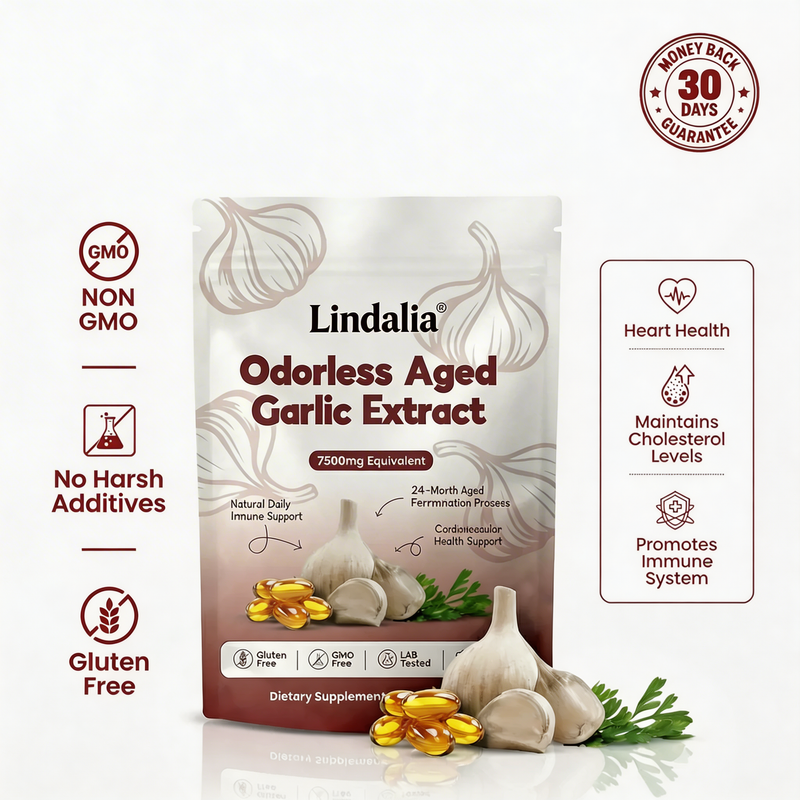
The Full Cardio Protocol in One Softgel
7500mg aged garlic extract. SAC and SAMC active. The dose with clinical precedent for cardiovascular outcomes.
See the ProductImmune System: Strong Evidence for NK Cell Activity
The immune evidence for aged garlic extract centers on natural killer (NK) cell modulation. NK cells are innate immune cells that provide first-line defense against viral infections without requiring prior antigen exposure. Their activity declines with age, a process called immunosenescence.
NK cell activity: A double-blind RCT found significantly greater NK cell counts and cytotoxic activity in aged garlic extract users versus placebo over 12 weeks. The mechanism involves IL-2 and other cytokine upregulation. Effect size: approximately 58 percent greater NK cell activity than placebo. Confidence: moderate-high, based on a well-designed single trial.
Cold and flu severity: Fewer colds and reduced cold severity have been reported in aged garlic extract users. The evidence here is less controlled than the NK cell data, relying partly on self-reported illness frequency. Confidence: moderate, consistent with NK cell mechanism.
Antibody production: Some evidence suggests aged garlic extract may improve antibody titers in response to influenza vaccination in older adults. The mechanism may involve NK cell-mediated enhancement of adaptive immune responses. Confidence: preliminary, needs replication.
Digestive System: Indirect Evidence and Prebiotic Effects
Garlic contains fructooligosaccharides (FOS), prebiotic fibers that serve as substrate for beneficial gut bacteria. Aged garlic extract retains some FOS content. In theory, regular supplementation could support microbiome diversity and gut barrier integrity through these prebiotic compounds.
The direct evidence for digestive benefits from aged garlic extract specifically is limited. Most gut microbiome research on garlic has used whole garlic or garlic powder, not standardized aged extract. The extrapolation to aged garlic extract is mechanistically plausible but not directly confirmed in clinical trials focused on digestive outcomes.
Importantly, aged garlic extract does not cause the gastric irritation associated with raw garlic. This means the digestive system is not burdened by the supplement, even if the direct gut microbiome benefit is not strongly established. The absence of harm is itself a digestive system benefit compared to alternatives.
Anti-Inflammatory Effects: Moderate Evidence Across Systems
Chronic low-grade inflammation contributes to cardiovascular disease, metabolic syndrome, and neurodegenerative conditions. Aged garlic extract demonstrates anti-inflammatory activity through NF-kB pathway downregulation and reduction of pro-inflammatory cytokines.
Clinical measurements show reductions in C-reactive protein (CRP) and interleukin-6 (IL-6) in participants with elevated baseline values taking aged garlic extract. The effect is most pronounced in people with higher baseline inflammation, consistent with a regulatory mechanism. Effect size: significant CRP reductions in elevated-CRP populations. Confidence: moderate.
The anti-inflammatory effect contributes to the cardiovascular benefits (reducing arterial wall inflammation), the immune effects (modulating cytokine balance), and potentially to metabolic effects. It is a cross-systems benefit rather than a system-specific one.
SAC acts as both an antioxidant (scavenging reactive oxygen species directly) and an anti-inflammatory agent (downregulating NF-kB signaling). These two actions often work together: oxidative stress activates NF-kB, and NF-kB drives inflammatory gene expression. Interrupting both pathways with the same compound produces broader protection than either action alone.
The body does not work in isolated systems. Cardiovascular health, immune function, inflammation, and oxidative stress are interconnected. A compound that addresses several simultaneously produces more than the sum of its parts.
Cognitive and Neurological: Indirect Evidence Only
Cognitive function depends heavily on cerebrovascular health: adequate blood flow to the brain through healthy, flexible arteries. Since aged garlic extract demonstrably improves blood pressure, reduces arterial stiffness, and reduces LDL oxidation, it indirectly supports the vascular conditions necessary for good cognitive function.
Some animal studies have shown that aged garlic extract reduces amyloid precursor protein accumulation and protects against neuroinflammatory damage. Human clinical trials with cognitive outcomes as primary endpoints are very limited. One study in older adults found improved cognitive scores after 12 weeks of aged garlic extract, but the study was small and not yet replicated.
Honest assessment: the cognitive benefit of aged garlic extract in humans is plausible based on mechanism (cerebrovascular support, antioxidant protection, anti-inflammatory action in neural tissue) but not established through clinical evidence. It should not be a primary reason to take this supplement. Cardiovascular and immune support have stronger direct evidence.
Metabolic Effects: Early Evidence Worth Watching
Some clinical and animal research suggests aged garlic extract may support insulin sensitivity and glucose metabolism, possibly through the antioxidant and anti-inflammatory pathways that reduce oxidative stress in pancreatic beta cells. The evidence in humans is preliminary.
For people managing metabolic syndrome or early-stage diabetes, aged garlic extract may provide indirect support through the cardiovascular effects it clearly documents. Arterial health, platelet function, and inflammation reduction are all relevant to metabolic cardiovascular risk. But direct glycemic control effects are not established at this time.
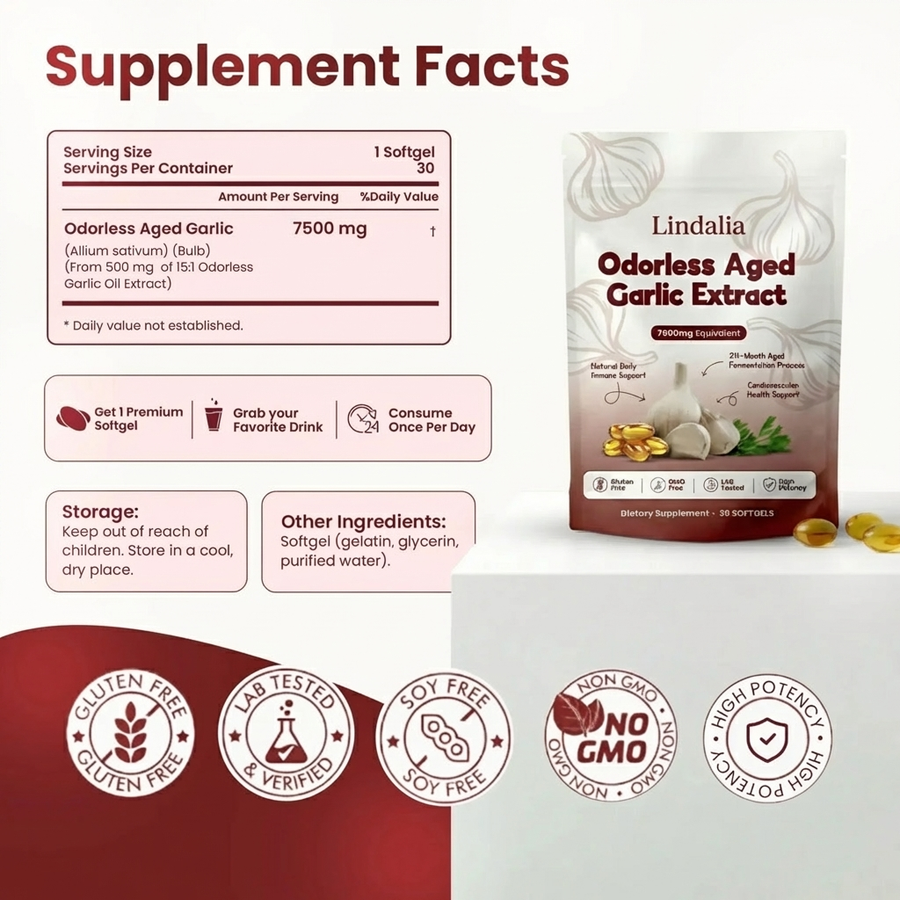
The Compound That Works Across Systems
7500mg aged garlic extract. Cardiovascular, immune, anti-inflammatory. One daily softgel with documented mechanisms.
See the ProductPutting the Evidence Together: What to Take This For
Based on the evidence breakdown, aged garlic extract is most appropriately taken for cardiovascular support (blood pressure, LDL oxidation, arterial stiffness) and immune support (NK cell activity, cold susceptibility reduction in adults over 50). These are the areas with the strongest, most replicated clinical evidence at doses corresponding to 7,500mg of aged garlic extract per day.
Anti-inflammatory and antioxidant effects are well-documented and contribute to the cardiovascular and immune benefits. They are not standalone reasons to take aged garlic extract but enhance the case for it in people who have the primary cardiovascular or immune motivations.
Cognitive, metabolic, and digestive effects are plausible but not established at the level of the cardiovascular and immune evidence. They may develop as the research base grows, but they should not be the primary motivation for purchase based on current evidence.
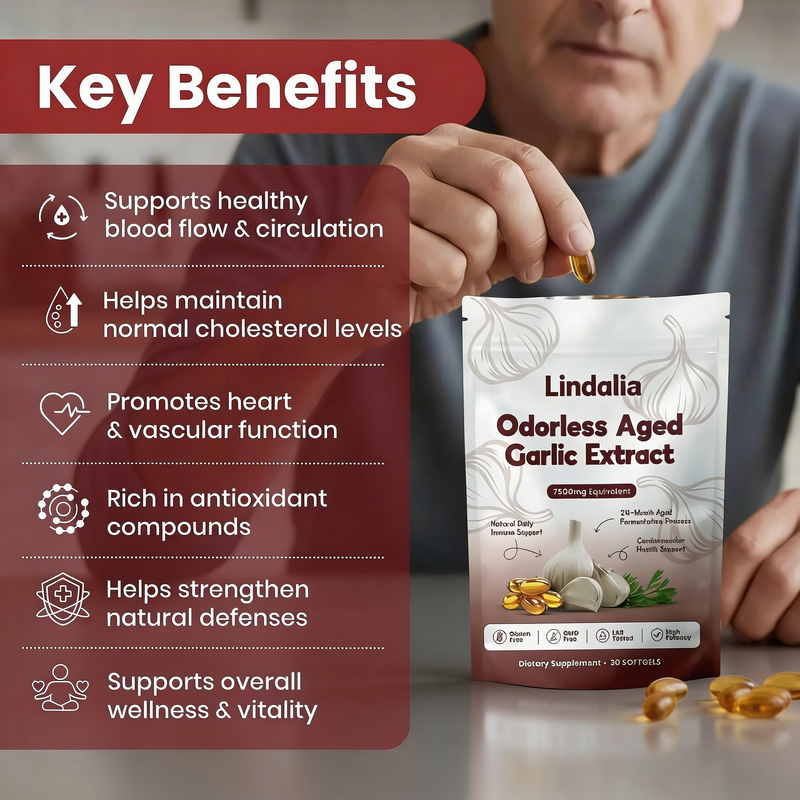
Cardiovascular. Immune. Anti-Inflammatory.
The three evidence-strong systems. 7500mg aged garlic extract. Clinical dose in one daily softgel.
See the Product