

Best 3 in 1 Ultrasonic Tooth Cleaner: Features That Really Matter
Which combinations deliver real cleaning value and which are marketing labels in disguise.
The "3 in 1" label on dental devices can mean almost anything. Sometimes it reflects genuine functional breadth. Sometimes it means three modes that all do essentially the same thing. Here is how to tell the difference and what features actually move the needle on cleaning results.
What "3 in 1" Usually Means
In ultrasonic tooth cleaners, the 3-in-1 designation typically refers to some combination of: ultrasonic vibration for calculus removal, LED light for working visibility, and an additional mode or accessory tip (often a flat polishing tip or a whitening/polishing mode). Less commonly, it refers to ultrasonic vibration plus a water irrigation function plus a whitening light. The actual combination varies by device.
The meaningful version of 3-in-1 for a tooth cleaner combines the fine metal tip (calculus disruption), the flat tip (polishing and stain removal), and LED illumination. These three elements cover genuinely different functions: calculus removal, surface smoothing, and visibility. Together, they form a complete maintenance tool rather than a single-purpose instrument.
The less meaningful version combines three intensity modes and calls them three functions. Or adds a tongue-cleaning attachment to a basic ultrasonic device and claims a third use. These expand the marketing description without adding material value for the core use case: keeping teeth free of tartar between professional cleanings.
Ask: does each of the three elements address a distinct problem that the others cannot? If the answer is no, two of the three are marketing. Calculus removal, surface polishing, and working visibility are three distinct problems. Three intensity modes are not.
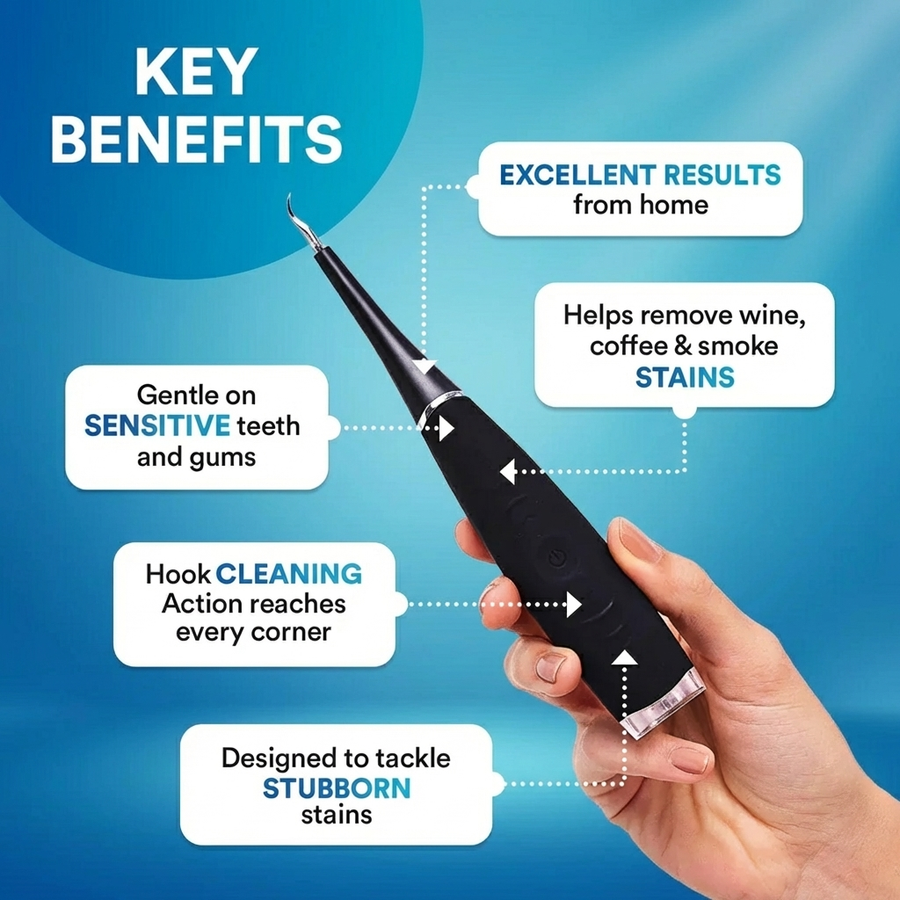
Ultrasonic Tooth Cleaner by Lindalia
Fine metal tip for calculus, flat polishing tip for stains and smoothing, LED for visibility. Three functions that address three distinct problems.
See the ProductUltrasonic Vibration: The Core Function
No matter what else a device claims, if the ultrasonic vibration mechanism is underpowered, everything else is irrelevant. The vibrating tip is the functional core. It needs to transmit sufficient energy to fracture early calculus bonds at the tooth surface, which requires both adequate frequency and adequate amplitude.
How to assess this without laboratory equipment: on the lowest intensity setting, hold the tip lightly against your fingernail. You should feel a definite buzzing vibration, not just a faint tingle. On the highest setting, the vibration should be noticeably stronger, enough that you can feel it resonating in your fingertip. If there is little difference between settings or the vibration is barely perceptible, the device's output is probably insufficient for meaningful calculus disruption.
Also assess: does the vibration frequency remain consistent over a full 3-minute session? Cheap motors can sustain peak frequency for 30 to 60 seconds and then drop as temperature increases. This is difficult to test at home without instruments, but it is reflected in the price and build quality differential between budget devices and mid-range ones.
LED Light: Practical Visibility, Not Therapy
The LED in a quality 3-in-1 device illuminates the working area. The mouth is dark, particularly the inner surfaces of lower teeth where calculus accumulates fastest. A 100 to 200 lumen LED at the tip provides enough light to see what you are working on without needing a separate light source.
Some devices market their LED as "whitening" or "accelerating" the cleaning effect. There is no clinical evidence for this at the low-power LED intensities used in handheld consumer devices. Therapeutic photobiomodulation requires specific wavelengths and energy densities that are not achievable from a status LED on a handheld device. The LED's value is exactly what it sounds like: light to see by.
What to look for: a forward-facing LED that projects toward the working area when the tip is in normal use position. Side-mounted or backward-facing LEDs illuminate the device rather than the teeth. Position and projection angle matter more than the LED's watt rating.
Most users who report that the LED does not help have not adjusted their body and device angle to direct the light toward the tooth surface they are working on. Hold the device so the LED faces the area of interest, not down your throat. At the right angle, the difference in visibility is meaningful.
Interchangeable Tips: The Versatility That Matters
The combination of a fine metal tip and a flat polishing tip covers the full at-home maintenance cycle. The fine tip disrupts and fractures tartar deposits through concentrated vibrational energy at a point. The flat tip then polishes the surface smooth after deposits are removed, reducing the surface roughness that makes re-adherence of plaque and staining faster.
Using only the fine tip leaves the enamel surface microscopically rougher than optimal after calculus removal, because the tartar leaves a crater-like footprint when it detaches. The flat tip smooths this over, producing a surface that is easier to keep clean and that resists staining adherence better than a rough surface would.
The sequence matters: fine tip first to disrupt deposits, flat tip second to polish. Reversing this order reduces the effect of both steps.
Fine tip disrupts. Flat tip smooths. Together they produce a result neither achieves alone.
Pressure Sensitivity and Motor Feedback
Some quality 3-in-1 devices include a feedback mechanism that responds to applied pressure. When the user presses too hard, the mechanism reduces vibration output or provides a tactile/visual signal. This is genuinely useful for first-time users who instinctively apply manual pressure and need a correction signal until they internalize the correct light-contact technique.
This feature is not essential for experienced users who have developed correct technique. But for beginners, it shortens the learning curve and prevents the most common harmful use pattern (excessive pressure) from becoming a habit. If budget allows for it, it is worth having.
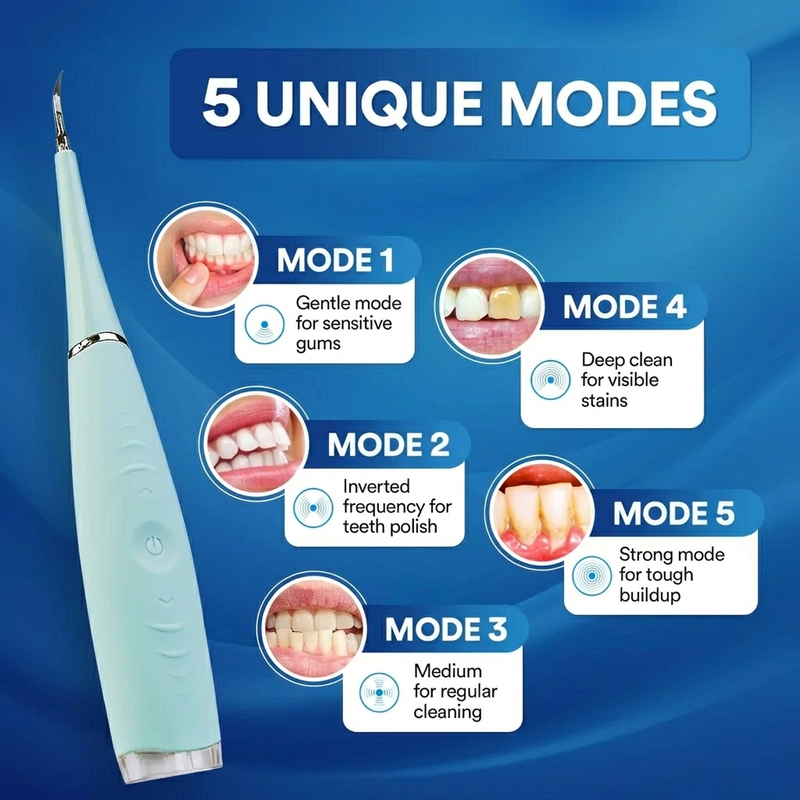
Lindalia Ultrasonic Tooth Cleaner
Fine metal tip, flat polishing tip, LED illumination, multiple intensity modes. USB rechargeable. The 3-in-1 combination that delivers on every claim.
See the ProductWhat You Do Not Need
App connectivity adds zero cleaning performance. If a device costs significantly more because it connects to a smartphone, that premium is entirely cosmetic. No clinical evidence suggests that guided brushing apps or session tracking improves long-term oral health outcomes for motivated adults who understand the technique.
Wireless charging cases are convenient but not functionally superior to USB charging for a device used 2 to 3 times per week. The extra cost rarely reflects extra cleaning capability.
Multiple replacement tip varieties beyond fine and flat are generally not necessary. Gum massage tips, tongue cleaners, and whitening trays may have marginal benefits but none of them address the core calculus and staining problems that make the device worth purchasing in the first place.
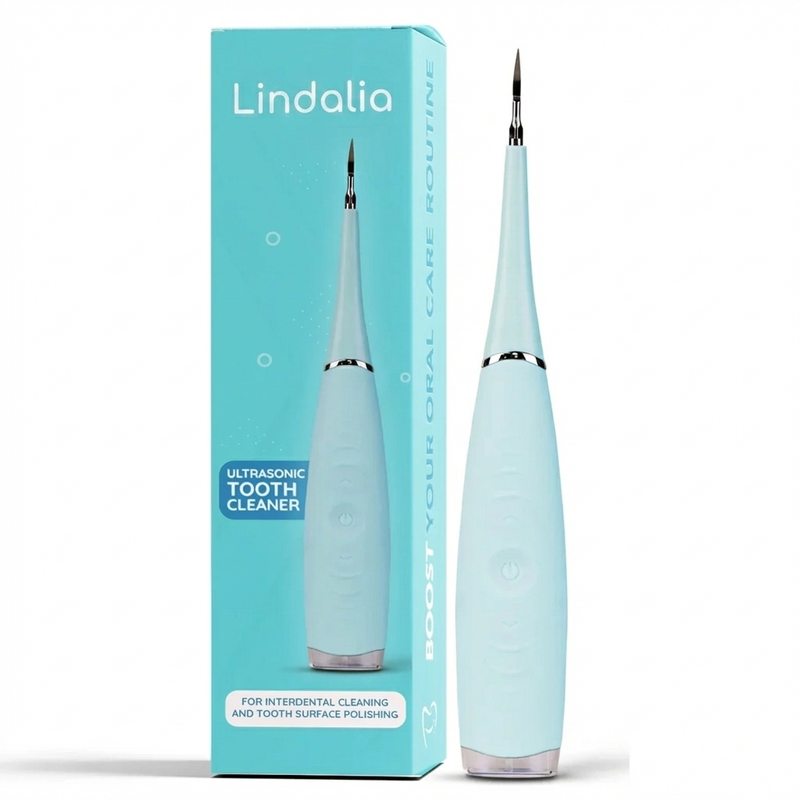
Lindalia Ultrasonic Tooth Cleaner
Two tips, one LED, multiple modes. The features that deliver results without the add-ons that inflate price without improving performance.
See the Product