

Best Ceylon Cinnamon Supplements: Our Top Picks for 2026
Evaluated on dose, species verification, bioavailability strategy, and synergy stack. Here is what a genuinely effective Ceylon cinnamon supplement looks like in 2026.
The market for cinnamon supplements is growing alongside awareness of blood sugar management, and the quality range is enormous. Some products are genuinely well-formulated. Many more are underdosed, poorly sourced, or both. This 2026 review applies a consistent set of criteria to identify what a top-tier formula actually requires, and why those criteria matter.
The Evaluation Criteria We Applied
Before listing any product, we established the criteria that determine whether a cinnamon supplement is worth recommending for metabolic health. These come directly from clinical literature, not marketing language.
Species authenticity: the product must use Cinnamomum verum, not Cassia. This is non-negotiable for daily high-dose use. The EFSA coumarin safety concern is directly relevant here.
Therapeutic dose: the clinical research shows meaningful blood sugar effects starting at 1,000 mg per day, with stronger effects at 3,000 to 6,000 mg. Products at 500 mg are below threshold.
Bioavailability strategy: cinnamaldehyde is fat-soluble. A formula without a lipid carrier delivers less active compound to circulation. MCT oil is the standard evidence-based enhancer.
Synergistic stack: complementary mechanisms (AMPK via berberine, insulin cofactor via chromium) multiply outcomes without redundancy.
Manufacturing quality: GMP compliance, third-party testing, transparent labelling of individual ingredient doses.
What a Top-Tier Formula Delivers in Practice
A formula that meets all five criteria above is not common. Most products fail on at least two: dose and species. They use Cassia and call it cinnamon, or they use Ceylon but dose at 500 mg per day.
The standout formula in 2026 for consumers serious about blood sugar management combines Ceylon cinnamon at 7,200 mg per day with MCT oil for cinnamaldehyde absorption, berberine at 250 mg for AMPK activation, and chromium picolinate as an insulin cofactor. This is not a typical product structure. Most cinnamon supplements contain one ingredient at one dose. A formula that stacks four synergistic compounds, each at a meaningful dose, and uses genuine Ceylon at nearly fifteen times the industry standard quantity, represents a genuinely different category of product.
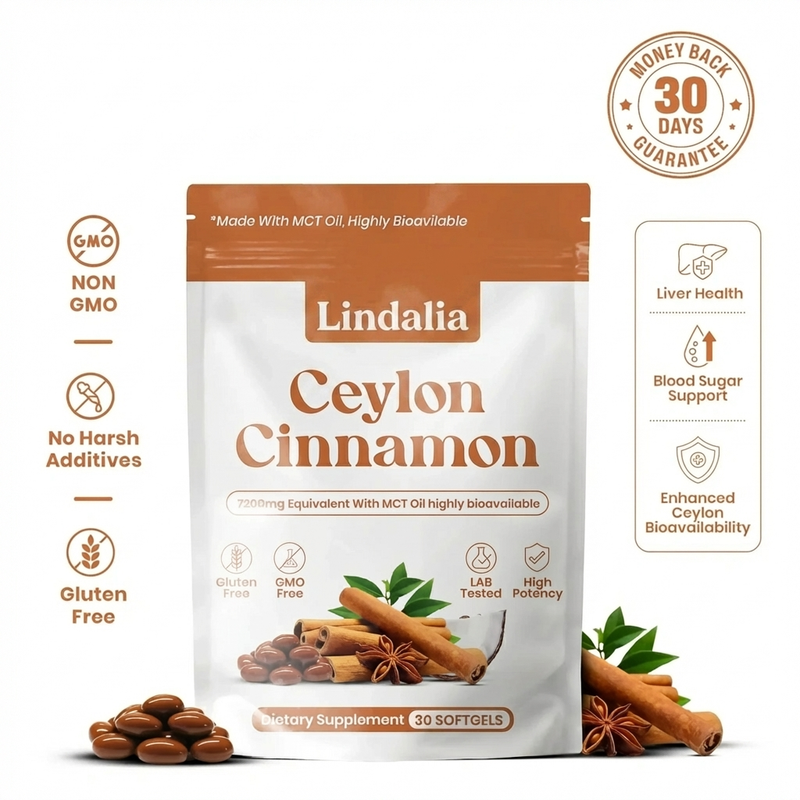
Ceylon Cinnamon 7,200mg with MCT Oil
Lindalia's formula scores at the top on every evaluation criterion: species, dose, bioavailability, synergy stack, and manufacturing quality.
See the ProductWhy Dose Is the Biggest Differentiator
If you surveyed the clinical literature on cinnamon and blood glucose, you would find a consistent pattern: studies using 500 mg per day show weak or inconsistent effects. Studies using 1,000 mg and above show clearer results. Studies in the 3,000 to 6,000 mg range show the strongest outcomes for fasting blood glucose and HbA1c reduction.
Most products sold in 2026 still dose at 500 mg per capsule with a one-capsule-per-day recommendation. Some have moved to two capsules, reaching 1,000 mg. Very few reach 3,000 mg. A formula at 7,200 mg per day represents a committed formulation decision that costs more per unit to manufacture and requires a buyer who understands why the dose matters.
At 7,200 mg of Ceylon per day, you are not approaching any safety concern. Ceylon's coumarin level is so low that even at this dose, the daily coumarin intake is a small fraction of the EFSA tolerable daily intake. The only reason to stay at 500 mg is cost or ignorance of the evidence. Neither serves the consumer.
A cup of authentic Ceylon cinnamon tea delivers roughly 500 to 800 mg of cinnamon. If 500 mg capsules were sufficient, drinking one cup of cinnamon tea daily would be the clinical standard. It is not. The research is at higher doses for a reason.
The Berberine Addition: Why It Changes the Ranking
Berberine at 250 mg per day activates AMPK, adenosine monophosphate-activated protein kinase, sometimes described as the body's metabolic master switch. AMPK activation increases the uptake of glucose by skeletal muscle independent of insulin, reduces the liver's production of new glucose (gluconeogenesis), and improves insulin sensitivity through a pathway that operates separately from cinnamaldehyde's mechanisms.
Several clinical trials comparing berberine with a standard pharmaceutical intervention for blood sugar management have found comparable glycaemic outcomes in patients with elevated blood glucose. This is a strong finding that places berberine among the most evidence-backed metabolic compounds outside the pharmaceutical category.
Adding berberine to a Ceylon cinnamon formula means the product is working on the alpha-glucosidase pathway (slowing carb breakdown), the insulin receptor pathway (improving sensitivity), and the AMPK pathway (increasing cellular glucose uptake) simultaneously. No single-ingredient cinnamon formula can match this.
MCT Oil: The Detail That Separates Good Formulas from Great Ones
Cinnamaldehyde, the primary active compound responsible for cinnamon's metabolic effects, is fat-soluble. When a dry cinnamon capsule is swallowed, the cinnamaldehyde encounters a predominantly aqueous (water-based) environment in the gut. Fat-soluble compounds do not dissolve well in water. Without a lipid carrier, a significant portion of the cinnamaldehyde simply passes through unabsorbed.
MCT oil changes this. Medium-chain triglycerides are rapidly digested fats that form micelles in the small intestine, lipid droplets that capture fat-soluble compounds and carry them across the intestinal wall into the lymphatic system and then into circulation. This is basic pharmacokinetics, not a marketing claim.
In practical terms, a Ceylon cinnamon formula with MCT oil delivers more active cinnamaldehyde to target tissues per milligram of cinnamon than an equivalent formula without it. The 7,200 mg dose becomes even more meaningful when a substantial fraction of it is actually absorbed.
Chromium Picolinate: The Quiet Addition That Fills a Real Gap
Chromium is an essential trace mineral that functions as a cofactor for insulin. Specifically, it is part of a complex called chromodulin that amplifies insulin receptor binding. When chromium status is suboptimal, insulin receptors respond less efficiently to insulin, contributing to the blunted glucose clearance that characterises early insulin resistance.
Chromium deficiency is more common than widely recognised in populations consuming refined diets. Processed foods strip chromium. Diets high in simple sugars increase urinary chromium excretion. The people most likely to be using a blood sugar supplement are also, statistically, the people most likely to have borderline chromium status.
Chromium picolinate (chromium bound to picolinic acid) has among the highest bioavailability of any chromium form. At 200 mcg per day, it has shown improvements in glucose tolerance and insulin sensitivity in multiple trials. As a standalone, the effect is modest. As part of a stack where cinnamon and berberine are handling the heavy lifting, chromium fills a specific gap that the other ingredients do not address.
"A formula dosed at 7,200mg of Ceylon with MCT, berberine, and chromium is not a cinnamon supplement. It is a metabolic support system that happens to lead with cinnamon."
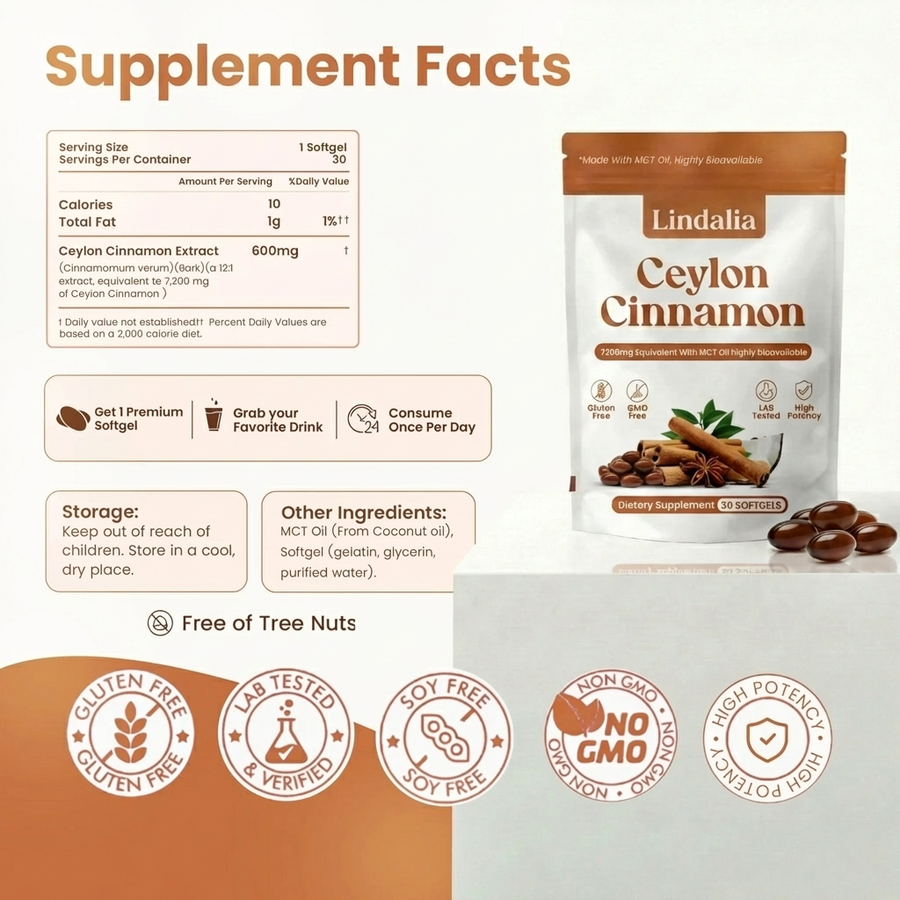
Ceylon Cinnamon 7,200mg Formula
Meets every criterion in this review: species-verified, full therapeutic dose, MCT bioavailability, berberine and chromium stack, GMP manufactured.
See the Product