

Best Cinnamon Supplement: Ceylon vs Cassia, Which One Wins?
One is safe for daily therapeutic dosing. One is not. The science gives a clear verdict, and it is not even close.
Every year, more people start taking cinnamon for blood sugar support. Most of them end up with Cassia, because it is cheap, available, and labelled simply as "cinnamon." Most of them do not know there is a safer, more appropriate alternative called Ceylon, and that for daily high-dose use the difference is not a preference, it is a safety consideration.
What They Have in Common
Both Ceylon and Cassia belong to the Cinnamomum genus. Both contain cinnamaldehyde, the compound responsible for the characteristic cinnamon flavour and metabolic effects. Both have some degree of evidence for blood sugar support. Both are used in cooking and supplementation worldwide.
The flavour difference is real but secondary to therapeutic use: Ceylon is lighter, more floral, and more complex. Cassia is more pungent and the familiar taste of most Western cinnamon products. For culinary purposes, this flavour difference is the main distinction most people encounter.
For supplementation purposes, particularly at the daily high doses required for clinical-range effects, the differences that matter are chemical, not sensory.
The Coumarin Divide
Cassia bark contains coumarin at concentrations typically ranging from 1 mg to 12 mg per gram of dried bark. Ceylon bark contains coumarin at approximately 0.004 mg per gram. That is a three-order-of-magnitude difference: roughly one thousand times less coumarin in Ceylon than in Cassia.
Coumarin is not harmless. It is hepatotoxic in repeated doses above established thresholds. The European Food Safety Authority assessed coumarin safety and established a tolerable daily intake of 0.1 mg per kilogram of body weight. For a person weighing 70 kg, that is 7 mg per day. A single teaspoon of Cassia contains 5 to 12 mg. A high-dose Cassia supplement (3,000 mg or more per day) can deliver 15 to 36 mg of coumarin, well above the EFSA limit.
This is not a theoretical concern extrapolated from extreme animal studies. Human cases of liver damage associated with regular high Cassia intake appear in medical literature. These are individuals who, not knowing better, were taking large amounts of Cassia in supplement or food form daily.
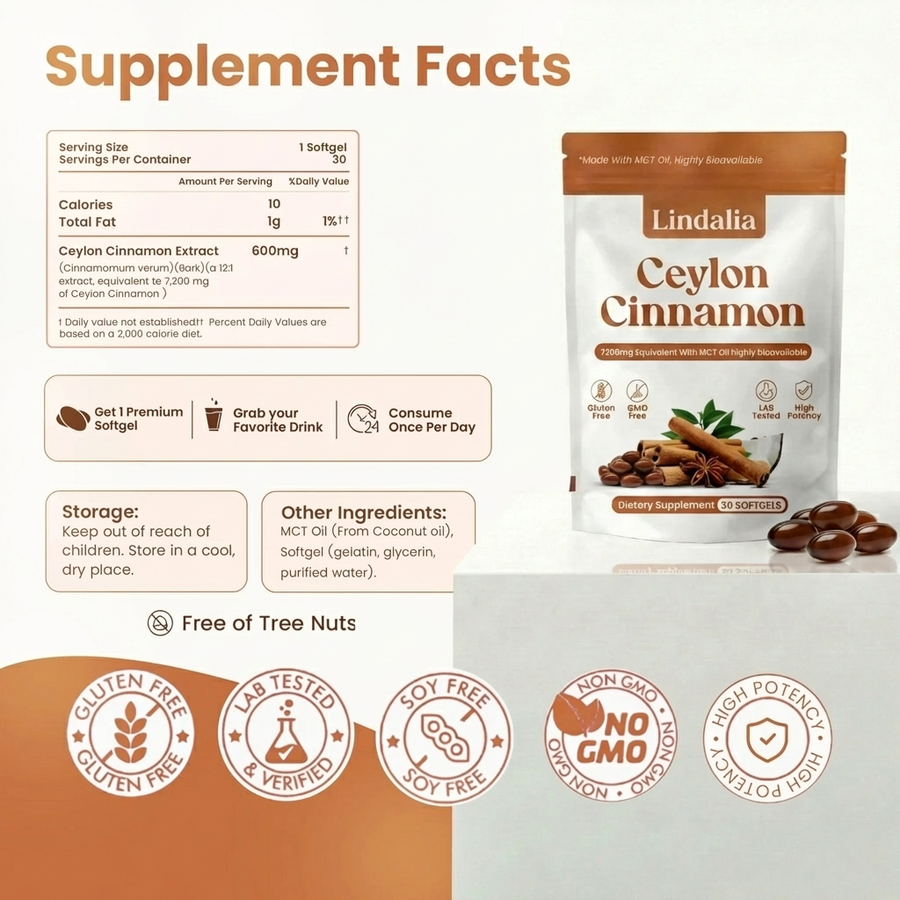
Ceylon Cinnamon 7,200mg, Safe for Daily Use
True Ceylon cinnamon (Cinnamomum verum) at therapeutic dose. 1/1000th the coumarin of Cassia. The only sensible choice for high-dose daily supplementation.
See the ProductActive Compound Profiles: More Than Just Coumarin
Beyond coumarin, Ceylon and Cassia differ in their overall polyphenol composition. Ceylon is richer in certain procyanidins and flavonoids that contribute to its anti-inflammatory and insulin-sensitising effects. The cinnamaldehyde content of Ceylon, while variable with harvest and storage, tends to be well-preserved in high-quality forms because the thinner bark quills protect the volatile compound from oxidation better than Cassia's single thick bark layer.
Cassia's cinnamaldehyde content is also meaningful, but the coumarin contamination in therapeutic doses makes it a liability rather than a benefit. A compound that also happens to be hepatotoxic at the required dose does not make a good daily supplement regardless of its metabolic benefits.
Price: Why Cassia Is Cheaper and Why That Should Not Be Decisive
Ceylon cinnamon costs three to five times more than Cassia per kilogram at the raw material level. This cost difference passes through to the finished supplement. A 7,200 mg daily dose of Ceylon in a properly formulated supplement will cost more than a 500 mg daily dose of Cassia.
The question of value changes entirely when you frame it correctly. Cassia at therapeutic doses (3,000 mg and above per day) has a documented safety concern. The money saved on cheap Cassia buys a compound that cannot be taken at the dose required for meaningful effects without elevating liver risk. Ceylon at 7,200 mg daily has no comparable concern. You are paying more for the version of the ingredient that is actually usable at therapeutic doses.
Compare the cost of 7,200 mg of Ceylon per day with 500 mg of Cassia per day and Cassia wins on price. Compare 7,200 mg of Ceylon with 7,200 mg of Cassia and the safety argument terminates the discussion.
Flavour, Sourcing, and Sustainability
Ceylon cinnamon is produced primarily in Sri Lanka, with the cultivation and harvesting remaining predominantly a small-scale, artisan process. The quills require skilled hand-rolling. Harvest is seasonal. Supply is more constrained and more dependent on a specific geographical region than Cassia, which grows at commercial scale across China, Vietnam, and Indonesia.
This supply chain has implications beyond price. Ceylon is more traceable. Sourcing directly from Sri Lankan producers or from verified importers provides more certainty about authenticity than buying generic "cinnamon" from a commodity supplier who may source from multiple origins. The geographic specificity of Ceylon is part of what enables third-party species verification to be meaningful.
True Ceylon quills are rolled into tight multi-layer tubes, like a cigar. Cassia bark is a single thick, hard, rough curl. If you are buying whole cinnamon sticks, this visual difference is definitive. For supplements, the label and COA are your verification tools.
The Verdict
For occasional culinary use, Cassia is fine. The amounts used in cooking do not approach coumarin thresholds, and the flavour is familiar and functional.
For daily therapeutic supplementation at doses that actually move the needle on blood sugar, the verdict is unambiguous. Ceylon is the only option that is both effective and safe for long-term daily use at clinical doses. Cassia at therapeutic doses carries a coumarin burden that the available safety data does not support for daily long-term use.
Every reputable formulator working in the metabolic health space should already know this. The fact that most products still use Cassia is a market failure driven by cost, not evidence. When a product specifically states Ceylon, doses it therapeutically, and combines it with synergistic ingredients, it is making a formulation commitment that sets it apart from the bulk of what is available.
"Cassia is fine in a cinnamon bun. It is not the right ingredient in a daily supplement dosed to affect your blood sugar."
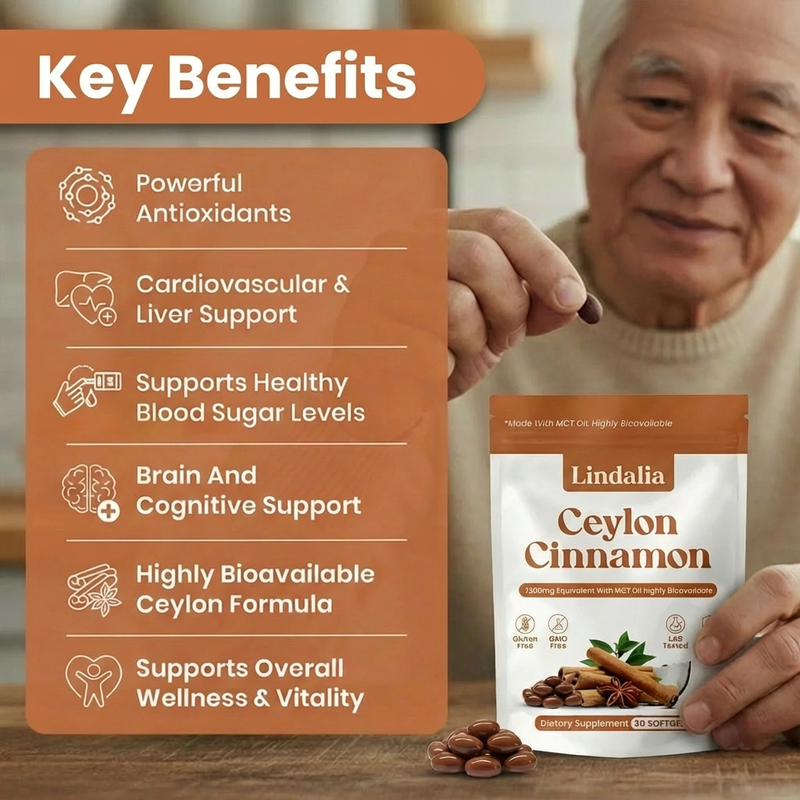
Ceylon Cinnamon 7,200mg Formula
The verdict is in. Ceylon at therapeutic dose, with MCT oil, berberine, and chromium. This is what responsible cinnamon supplementation looks like.
See the Product