

Best Cinnamon Supplements: Ranked by Potency and Purity
Milligrams, coumarin levels, cinnamaldehyde content, synergy stack. The metrics that actually determine whether a cinnamon supplement performs.
When someone asks which cinnamon supplement is "best," the question needs to be broken into measurable components. Best for what? Measured how? Potency and purity are the two axes that reveal actual quality, and both can be assessed with specific, objective criteria. Here is how to apply them.
Ranking by Potency: The Dose Axis
Potency in the context of a cinnamon supplement has a specific meaning: how much active compound reaches your target tissues per daily serving. This depends on three factors: total milligrams of cinnamon, standardisation (guaranteed active compound percentage), and bioavailability (how much is actually absorbed).
At the lowest tier: 500 mg daily, not standardised, no lipid carrier. This is the most common type on the market. Clinical evidence for metabolic effects at this dose is weak and inconsistent. It functions as a symbolic dose. Many users who "tried cinnamon and it didn't work" took this quantity.
Mid tier: 1,000 to 2,000 mg daily, sometimes standardised. At this range, some blood glucose effects begin to appear in research, particularly for post-meal glucose management. Without a lipid carrier, absorption remains suboptimal.
High tier: 3,000 to 6,000 mg daily, standardised, with a lipid carrier. This covers the range where clinical trials show consistent effects on fasting blood glucose, post-meal glucose excursions, and over time on HbA1c.
Top tier: 7,200 mg daily of verified Ceylon, standardised, with MCT oil for enhanced bioavailability. This represents the upper end of the evidence-backed therapeutic range using the species that is safe for that dose long-term. The combination of high total dose and improved absorption maximises the concentration of active cinnamaldehyde reaching insulin receptors and intestinal alpha-glucosidase.
Ranking by Purity: The Coumarin Axis
Purity in cinnamon supplements has a specific, safety-critical dimension: coumarin content per daily dose. This is not about overall quality in an abstract sense. It is about whether the daily amount of a hepatotoxic compound you are ingesting falls within or outside established safety thresholds.
Cassia at 500 mg daily delivers approximately 0.5 to 6 mg of coumarin per serving. At 500 mg, this usually falls within EFSA guidelines for most adults. At 3,000 mg of Cassia daily, coumarin delivery reaches 3 to 36 mg, potentially exceeding the tolerable daily intake for all adult body weights.
Ceylon at any dose, including 7,200 mg, delivers negligible coumarin. At 0.004 mg per gram, even a 7.2 gram daily dose delivers less than 0.03 mg of coumarin, well under 1% of the EFSA tolerable daily intake for a 70 kg adult. The purity concern with cinnamon is not about heavy metals or contaminants in the traditional sense. It is specifically about the relationship between dose, species, and coumarin load.
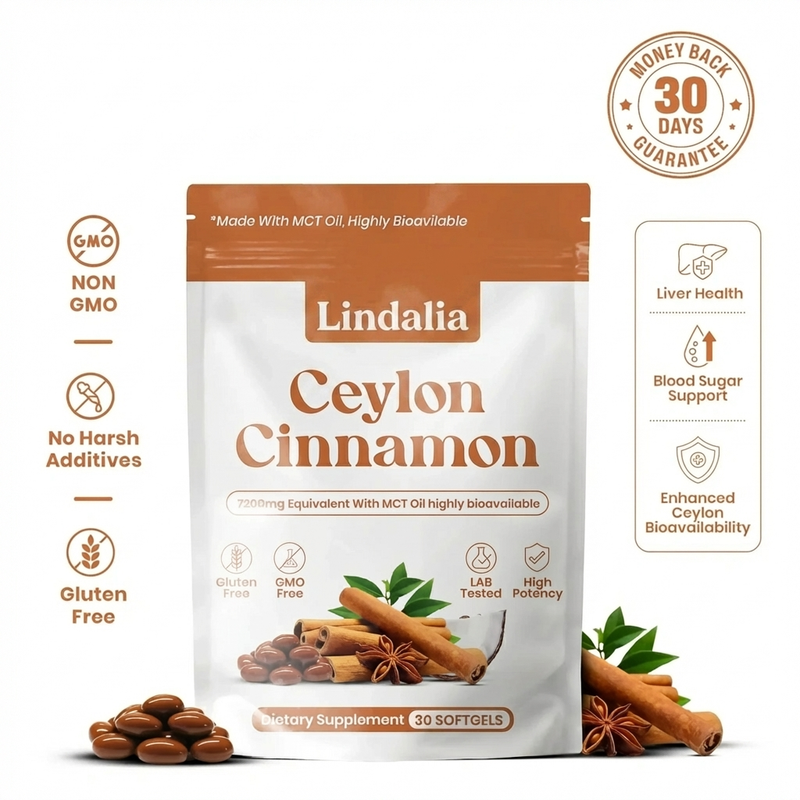
Ceylon Cinnamon 7,200mg with MCT Oil
Highest category on both axes: 7,200mg daily dose with MCT bioavailability, and near-zero coumarin using verified Cinnamomum verum.
See the ProductThe Cinnamaldehyde Concentration Factor
Total milligrams of bark powder and actual cinnamaldehyde content are not the same thing. Raw Ceylon bark varies between 0.5% and 4% cinnamaldehyde by weight depending on origin, harvest timing, and storage conditions. A product claiming 7,200 mg of cinnamon might contain anywhere from 36 mg to 288 mg of cinnamaldehyde depending on the source material.
Standardised extracts address this by concentrating and testing to a specified percentage. A product standardised to 2% cinnamaldehyde from a 7,200 mg daily serving delivers approximately 144 mg of cinnamaldehyde regardless of batch variation. This consistency is what makes clinical outcomes reproducible across different users and different purchase cycles.
When comparing potency rankings, a standardised extract at lower total milligrams can outperform a non-standardised product at higher total milligrams if the standardisation ensures a higher cinnamaldehyde percentage. Both the total dose and the standardisation percentage are necessary information.
Look for "standardised to X% cinnamaldehyde" alongside total daily milligrams. Multiply the two to get actual cinnamaldehyde per day. That number is what drives your metabolic outcomes, not the raw bark weight alone.
Synergy Stack as a Potency Multiplier
The potency of a cinnamon formula is not limited to cinnamon's own mechanisms. A well-designed synergy stack covers additional pathways and increases the net metabolic effect per dollar spent.
Berberine at 250 mg per day adds AMPK activation. This pathway increases muscle glucose uptake and reduces liver glucose output independent of insulin. The metabolic effect is additive to cinnamon's alpha-glucosidase inhibition and insulin sensitisation. Combined potency of the stack exceeds what either compound produces alone.
Chromium picolinate at 200 mcg per day adds insulin cofactor support. In the context of a full stack targeting blood glucose, every pathway counts. Chromium's contribution is modest but mechanistically distinct, filling a gap the other ingredients do not cover.
A formula combining Ceylon cinnamon at 7,200 mg, berberine at 250 mg, and chromium at 200 mcg has a total metabolic potency that no single-ingredient cinnamon product can match, even at similar cinnamon doses.
Manufacturing Purity: What GMP and Third-Party Testing Actually Mean
Beyond coumarin and cinnamaldehyde, purity covers heavy metal contamination, microbial load, and the absence of undeclared ingredients. These are the concerns that third-party laboratory testing addresses.
Heavy metals, particularly lead, arsenic, and cadmium, are a genuine concern in botanical supplements. Soil contamination in cinnamon-growing regions can concentrate these metals in the bark. A COA showing heavy metal testing below regulatory limits is meaningful, not just a box-ticking exercise.
Microbial contamination (bacteria, moulds, yeast) is tested in GMP-compliant manufacturing and confirmed by COA. This is standard but worth confirming, particularly for products marketed to individuals with health conditions that may affect immune function.
Adulteration, the substitution of Cassia for declared Ceylon, is the specific purity concern most relevant to cinnamon. HPLC species confirmation in a COA specifically addresses this. Coumarin levels below 0.05 mg per gram are consistent only with genuine Ceylon and rule out adulteration with Cassia material.
Request or look for a COA confirming: (1) Cinnamomum verum identity by HPLC, (2) coumarin under 0.05mg/g, (3) heavy metals below regulatory limits, (4) microbial counts within specifications. All four confirm genuine, clean Ceylon.
"Potency without purity is dangerous. Purity without potency is pointless. The top formula has both, and the metrics to prove it."
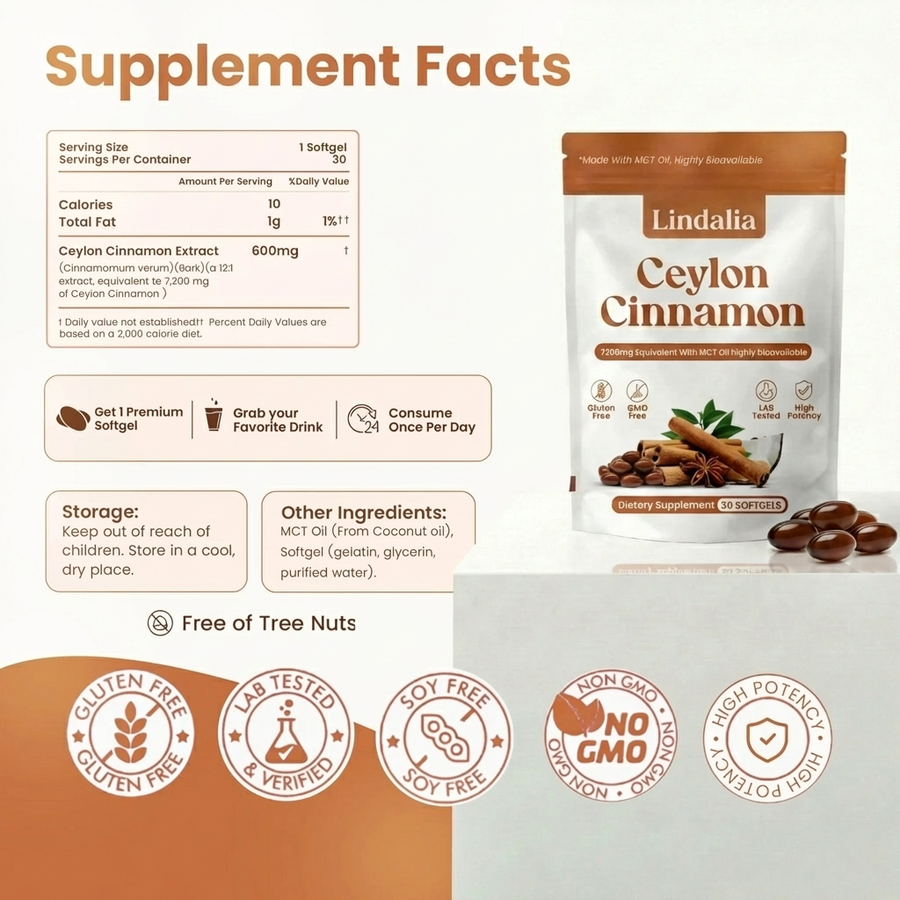
Ceylon Cinnamon 7,200mg Formula
Highest potency category, near-zero coumarin, standardised extract, MCT bioavailability, berberine, and chromium. Everything the ranking looks for.
See the Product