

Best Color Changing Foundation:
Our Top Picks for 2026
We tested the most-talked-about adaptive formulas on the market. Here is what actually held up, what disappointed, and how we decided.
Every few months, a new foundation promises to finally solve the shade problem. Most of them do not. But the color changing category has matured considerably in the past two years, and some formulas genuinely do what they say. The challenge is telling them apart from the ones that just turn slightly darker and call it "adaptive."
This roundup looks at the best color changing foundations available in 2026, evaluated on five criteria: the quality of the adaptive technology, finish and longevity, skincare ingredient value, format practicality, and whether the shade range is broad enough to be genuinely inclusive. We are including Lindalia on this list because we make the product and it belongs in the conversation, but we will tell you who else is worth considering and why.
How We Evaluated Each Formula
Before the picks, a note on methodology. Not all "color changing" foundation claims are equal. We used the following framework to separate genuine adaptive technology from thermochromic gimmicks.
Technology check: Does the formula use pH-responsive microencapsulated pigments, or does it rely on temperature-triggered color shift that is the same for everyone? The latter produces minimal real adaptation. The former actually responds to individual skin chemistry.
Oxidation test: Does the formula look the same at 12pm as it did at 8am? Orange undertone shift during the day is a sign of unstabilized iron oxide pigments. This is a quality problem that affects many color-adaptive formulas because the "adaptive" claim distracts attention from the oxidation issue.
Format and usability: Is application practical for everyday use, or does it require additional tools, time, and a mirror to do well?
Many budget "color changing" foundations use thermochromic dyes that shift color with body heat. Since everyone's face is roughly the same temperature, these products produce minimal real adaptation. They may look slightly different on application but settle the same across users. pH-responsive microencapsulation is the more sophisticated, genuinely individualized technology.
Our Top Color Changing Foundation Picks for 2026
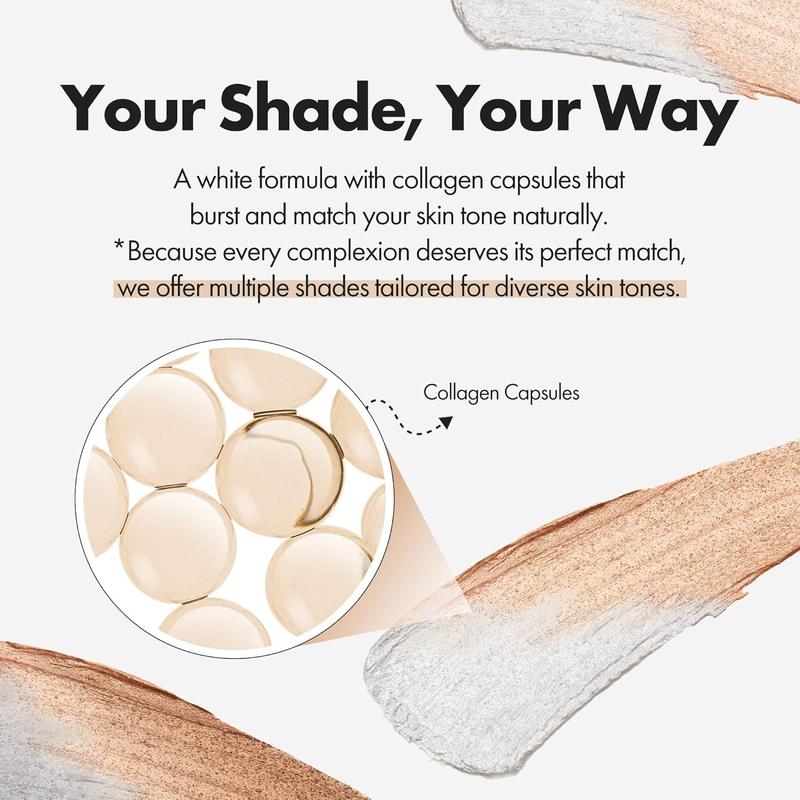
Full disclosure: this is our product. We put it first because it checks the criteria we set, not because we set the criteria to favor it. Encapsulated pH-responsive pigments, no orange oxidation, skincare actives infused into the formula, and a stick format that makes morning routine genuinely shorter. Five shade ranges that flex to cover light through medium-deep. The integrated brush makes blending precise without needing additional tools.
TLM is one of the original color changing formulas and has been popular for years. The coverage is light to medium and the formula is fairly simple. The main limitation is that it uses basic thermochromic pigments rather than pH-responsive encapsulation, which means the adaptation is less nuanced. Works reasonably well for light to medium skin tones, less predictable at deeper shades. Good option for sensitive skin because the formula is minimalist.
Korean beauty brands have been working with skin-adaptive technology longer than most Western brands. Cushion formulas from brands like Laneige, Sulwhasoo, and Missha include SPF, skincare actives, and some degree of tone adaptation. The coverage tends to be sheer to light, and the cushion format has its own application learning curve. Great if you want SPF and a dewy finish; less ideal if you need medium to full coverage.

The Adaptive Foundation We Made
pH-responsive pigments, no orange shift, niacinamide and collagen, integrated brush. Five shade ranges that flex to your skin.
See the ProductWhat to Look for When Choosing Your Own
If none of the picks above match your specific needs, here is a framework for evaluating any color changing foundation you come across.
Ask about the pigment type
If a brand cannot tell you whether their formula uses thermochromic or pH-responsive encapsulated pigments, assume it is the former. Thermochromic pigments change with temperature, which is the same for everyone. They produce a slight warming or darkening on contact but do not adapt to your individual undertone or skin chemistry the way encapsulated pigments do.
Check the shade range honestly
Adaptive formulas work within a range, not across all skin tones with one product. If a brand claims one universal shade works for everyone from albino to deep ebony, that is a marketing exaggeration. Look for brands that are honest about their adaptive range and offer multiple starting shades that flex within a band.
Look for oxidation-resistant stabilization
Ask or read reviews specifically for whether the foundation changes color or turns orange during wear. This is the single biggest quality issue in this category. Encapsulation helps, but proper formula stabilization is what maintains the adapted color throughout the day.
The best color changing formulas of 2026 are not just foundation products. They include meaningful concentrations of niacinamide (which minimizes pores and evens tone over time), collagen (which helps the formula smooth into skin texture rather than settling into it), and often hyaluronic acid or glycerin for sustained hydration. This turns your morning foundation step into skincare application at the same time.
Who Should Try Color Changing Foundation
If you have ever bought a foundation that looked right in the store and wrong at home, adaptive foundation is worth trying. The technology genuinely addresses the core problem of traditional shade matching: that store lighting, skin chemistry variation, and oxidation all conspire to make the right shade impossible to choose reliably.
If you have skin that changes with seasons, hormones, or sun exposure, adaptive foundations track those changes automatically. You do not need to rebuy a summer shade and a winter shade. The formula adjusts to where your skin is today, not where it was when you picked a shade code three months ago.
If you have mixed or hard-to-classify undertones (that category of "I never know if I'm warm or cool"), adaptive technology is particularly useful. The pH-responsive pigments do not ask you to categorize your skin. They read it directly.
"The best foundation picks for 2026 share one thing: they stop making the wearer do the hard work of matching. The formula does it instead."
Format Is Part of the Decision
Even the best formula in the wrong format can be frustrating. Liquid adaptive foundations need a brush, sponge, or clean fingers, and they expire faster once opened because air exposure degrades the encapsulated pigments over time. Stick formats with integrated brushes apply more precisely, waste less product, and are significantly more travel-friendly.
If your mornings are busy and your makeup bag is already full, a stick foundation that does not require additional tools is probably the practical choice. If you prefer the feel of a liquid foundation and have the time to use one properly, liquid formulas give you a longer blending window and can be easier to achieve very sheer coverage with.

Our Best Overall Pick, Made by Us
We can be honest about it being our product and still say it's the one we'd recommend. See why it made the top of this list.
See the ProductThe Verdict
The color changing foundation category has real science behind it. Not every product lives up to its claims, but the ones that use genuine pH-responsive microencapsulated pigments consistently outperform traditional shade matching for almost everyone who tries them.
In 2026, the best overall option for most people combines adaptive pigments with skincare actives, a format that fits into a real morning routine, and a brand that is honest about what the technology can and cannot do. That combination is harder to find than it should be, but it exists.
Try the Foundation That Adapts to You
No shade drawer of regret. No orange by noon. Just a satin glow finish that matches your skin because it reads your skin.
See the Product