

Best Lymphatic Face Brush: Our Honest 2026 Picks
The market is full of options. Here is what the bristles, handle, and design actually need to do for a face brush to support real lymphatic drainage.
Not every brush marketed as a "lymphatic face brush" is built for the job. The lymphatic system requires a very specific kind of interaction: extremely light pressure, the right stroke direction, and bristles soft enough to activate the vessels just below the skin surface without compressing them. A brush that is too firm, too stiff, or the wrong shape can produce zero drainage benefit even when used daily. Here is what to actually evaluate when choosing one.
What Makes a Lymphatic Face Brush Actually Work
The function of a lymphatic face brush is to apply gentle, distributed pressure to the skin surface in a way that stimulates the lymphatic capillaries lying 0.1 to 0.2 millimeters beneath it. This requires bristles that are fine enough to avoid concentrating pressure into discrete points, soft enough not to compress the vessels, and numerous enough to cover sufficient surface area with each stroke.
Most body brushes fail this test immediately. They are designed to exfoliate, which requires firmness to lift dead skin cells. Applied to the face with lymphatic drainage intent, they are either too stiff (compressing rather than stimulating the vessels) or too sparse (covering too little surface area per stroke to create meaningful fluid movement).
The handle matters as well. The face has curves and angles that a straight-handled brush cannot follow easily, particularly the jawline, the under-eye area, and the sides of the nose. A contoured handle that allows the brush head to sit flush against these areas produces more contact surface and more effective drainage per stroke.
Lymphatic capillaries open at roughly 5–15 grams per square centimeter of pressure — about the weight of a nickel coin resting on skin. A bristle that springs back easily when touched with a fingertip is in the right zone. A bristle that resists bending is too stiff for lymphatic work.
Five Criteria for Evaluating Any Lymphatic Face Brush
- Bristle fineness: Ultra-fine or micro-fine bristles that distribute pressure across a wide surface area rather than concentrating it. When run across the back of your hand, fine bristles should feel like a light feathering, not a scrub.
- Bristle softness: The bristles should bend readily under very light pressure. If you need to press to feel them, they are too stiff for lymphatic capillary stimulation.
- Handle ergonomics: A contoured or angled handle allows the brush head to follow the curved surfaces of the face without requiring an awkward wrist position that leads to pressing too hard to compensate.
- Brush head shape: An angled or rounded head that fits naturally against the jaw and cheekbone angles allows proper stroke positioning without frequent adjustment mid-routine.
- Dry-skin compatibility: A brush designed for lymphatic drainage should work on dry skin. Tools requiring oil introduce dependency on additional products and create cleanup that reduces the likelihood of daily use.

Built Specifically for Facial Lymphatic Drainage
Ultra-fine bristles, ergonomic contoured handle, angled head for jawline and cheekbone work, usable on dry skin in five minutes.
See the ProductWhat to Avoid
Body Brushes Marketed for the Face
A growing number of body brush brands have added "face" to their marketing without changing the bristle construction. Body brush bristles are designed to exfoliate, which means they have a stiffness that is counterproductive for lymphatic drainage. The face is also significantly more sensitive than the body and requires softer materials than even the gentlest body brush.
Electronic Vibrating Devices
Vibrating facial devices can be effective for improving blood circulation, which is a different system from the lymphatic system. For pure lymphatic drainage, vibration can actually work against the goal: the rapid compression and release of vibrating bristles or heads does not follow the slow, one-directional wave motion that opens lymphatic capillaries most effectively. For people with rosacea or chronically sensitized skin, vibration can also aggravate redness without delivering the calming fluid-drainage benefit that manual brushing provides.
Brushes With a Single Large Head
The face is not flat. A large flat brush head that works well on the cheeks sits at the wrong angle against the jaw and cannot reach under the eye socket without pressing in a way that distorts the skin. A contoured or angled head that adapts to the different zones of the face produces more anatomically correct strokes and better drainage per session.
"The right face brush is not about how it looks or how premium it feels in the hand. It is about whether it is physically capable of stimulating lymphatic vessels at the correct pressure."
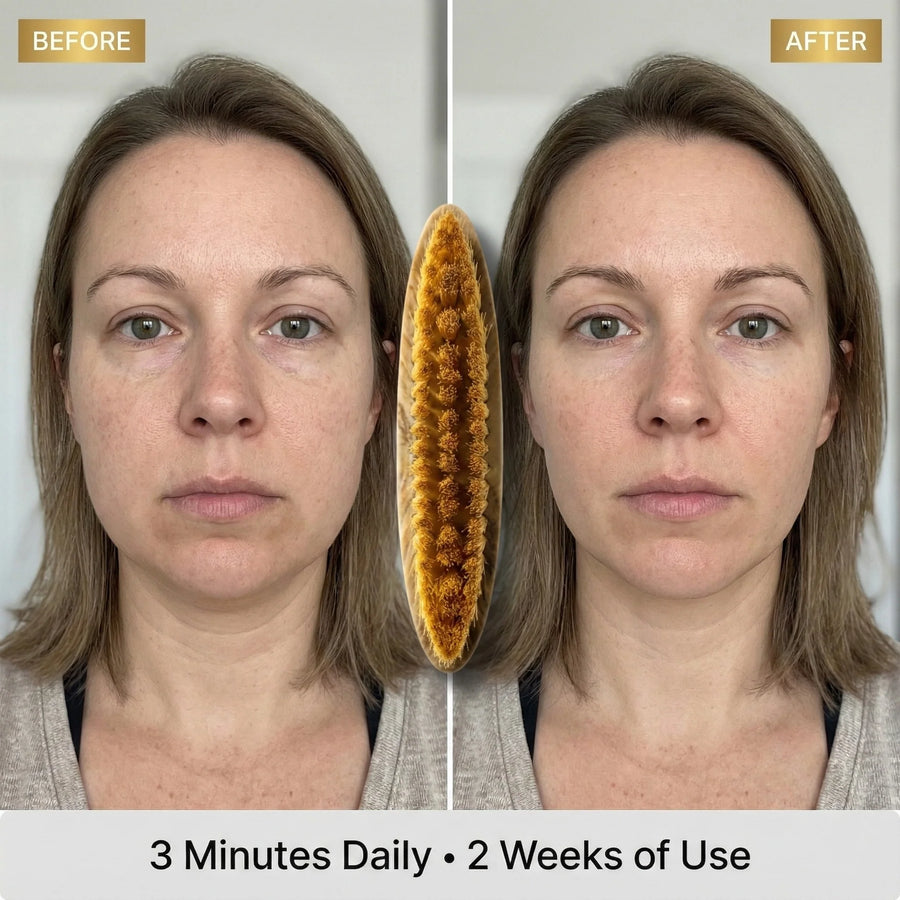
Designed for the Anatomy of Drainage
The Lindalia De-Bloat Brush meets every criterion for effective facial lymphatic drainage, in a tool simple enough to use every single morning.
See the ProductThe Lindalia De-Bloat Lymphatic Face Sculpting Brush
Among the options currently available, the Lindalia De-Bloat Lymphatic Face Sculpting Brush is built around the specific requirements of facial lymphatic drainage rather than adapted from a general skincare tool. The ultra-fine bristles distribute contact pressure naturally at the depth of the lymphatic capillaries, making incorrect pressure almost impossible to achieve accidentally.
The contoured handle is shaped to allow the brush head to sit flush against the jaw, cheekbone, and eye area without requiring an angled wrist that tends to result in excess pressure. It works on dry skin, eliminating the oil step that reduces daily usage compliance for tools like gua sha. A complete facial drainage routine takes five minutes from start to finish.
The de-puffing result is visible from the first use, which distinguishes it from tools whose benefits require weeks to manifest. For morning routines where time is limited and visible results are the benchmark, this is a relevant practical advantage.
Clean the bristles weekly with mild soap and warm water, allow to air dry bristle-side down. A clean brush maintains consistent bristle softness and reduces the risk of bacterial transfer to the face over time.
The Bottom Line on Choosing
The best lymphatic face brush is the one that meets the physical requirements of the task: ultra-fine bristles, appropriate softness, an ergonomic handle designed for the curves of the face, and dry-skin compatibility for daily use. Everything else — price, packaging, brand origin — is secondary to those functional criteria.
If a brush feels like it is exfoliating, it is too stiff. If the handle requires wrist contortions to position against your jawline, it is the wrong shape. If it needs oil to work, it will probably end up used twice a week instead of every morning.
The tools that produce the most consistent user results are invariably the ones people actually use daily, and daily use depends entirely on how frictionless the routine is. A five-minute, dry-skin, pick-up-and-go routine beats a fifteen-minute ritual that requires setup and cleanup, regardless of how much more elaborate the second option looks.
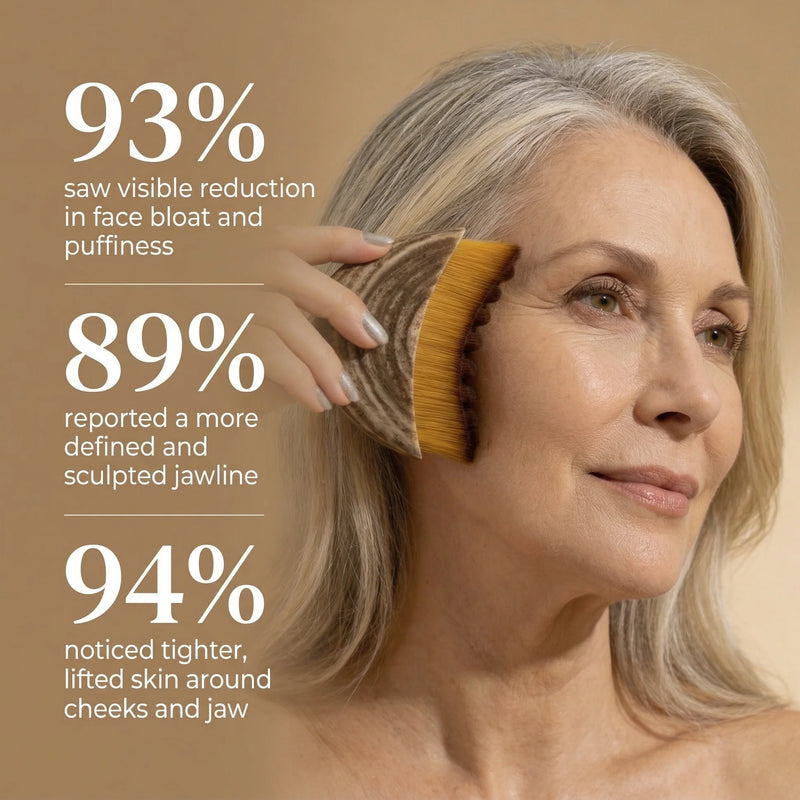
The De-Bloat Lymphatic Face Sculpting Brush
Ultra-fine bristles, ergonomic contoured handle, immediate visible results on dry skin. No oil, no charging, no learning curve.
See the Product