

Best Oil of Oregano Capsules: What Separates the Best From the Rest
Two capsules can look identical and deliver completely different results. Here is what actually determines quality in oil of oregano supplements.
The oil of oregano capsule category is full of products that use the same terminology and make broadly similar claims. Wild oregano, high-carvacrol, natural antimicrobial. The problem is that some of these claims are marketing language and some are meaningful specifications. Knowing which details actually determine product quality is the difference between a supplement that works and one that leaves you wondering why nothing changed.
Carvacrol Percentage: The Single Most Important Number on the Label
Carvacrol is the primary active compound in oil of oregano. If a product does not tell you the carvacrol percentage of its oil, that is your first signal about quality. A manufacturer who is using high-quality wild-harvested oil with 80-plus percent carvacrol will specify this. It is a competitive advantage. A manufacturer who cannot meet this standard has reason to omit the number.
The minimum carvacrol content for therapeutic efficacy based on the published research is approximately 70%. Below this threshold, the antimicrobial effects are measurable but significantly weaker. The concentration-response relationship for carvacrol activity against both bacteria and fungi is steep: doubling the carvacrol concentration from 35% to 70% does not double the effect. It multiplies it by a substantially larger factor due to the non-linear nature of membrane disruption kinetics.
The practical implication: do not buy an oregano oil capsule that does not specify carvacrol content. If it is specified, look for at least 70%, with 80% or higher being the premium range that wild Mediterranean oregano typically achieves.
Be aware that some products list thymol alongside carvacrol in a combined "phenol" percentage. This can be misleading. A product that says "80% phenols" with 40% carvacrol and 40% thymol is not equivalent to a product with 80% carvacrol. Carvacrol and thymol are both active, but their mechanisms and potencies differ. The carvacrol percentage specifically is what determines antimicrobial breadth and strength.
Find the supplement facts panel and look for carvacrol specifically as a listed compound with a percentage. If the label says only "oregano oil (Origanum vulgare)" with a milligram weight but no carvacrol percentage, you cannot assess the potency of what you are buying. This missing information is itself a quality signal.
Wild-Harvested vs Cultivated: Why the Growing Conditions Change the Chemistry
Origanum vulgare is the species used in therapeutic-grade oregano oil supplements. But not all Origanum vulgare is equivalent. The carvacrol content of the plant varies significantly based on growing conditions, altitude, soil composition, and climate.
Wild-harvested oregano from Mediterranean mountain regions (Turkey, Greece, the Balkans, southern Italy) consistently produces oil with 75 to 86% carvacrol. These plants grow under stress conditions: high UV exposure, mineral-rich but nutrient-poor soil, temperature variation, and competition with other vegetation. Plants under environmental stress produce higher concentrations of secondary metabolites, including phenolic compounds like carvacrol, as part of their defensive chemistry.
Cultivated oregano grown under optimal agricultural conditions (irrigated, fertilized, protected from competition) grows faster and produces more biomass, but the carvacrol content is significantly lower, often in the 40 to 55% range. The plant simply does not need to produce as much defensive chemistry when it is not under environmental stress.
This is why "wild-harvested" is a meaningful specification and not just marketing. The same species, grown differently, produces oil with dramatically different carvacrol concentrations. A product that says "wild Origanum vulgare from the Mediterranean" is telling you something specific and verifiable about the chemistry of its source material.
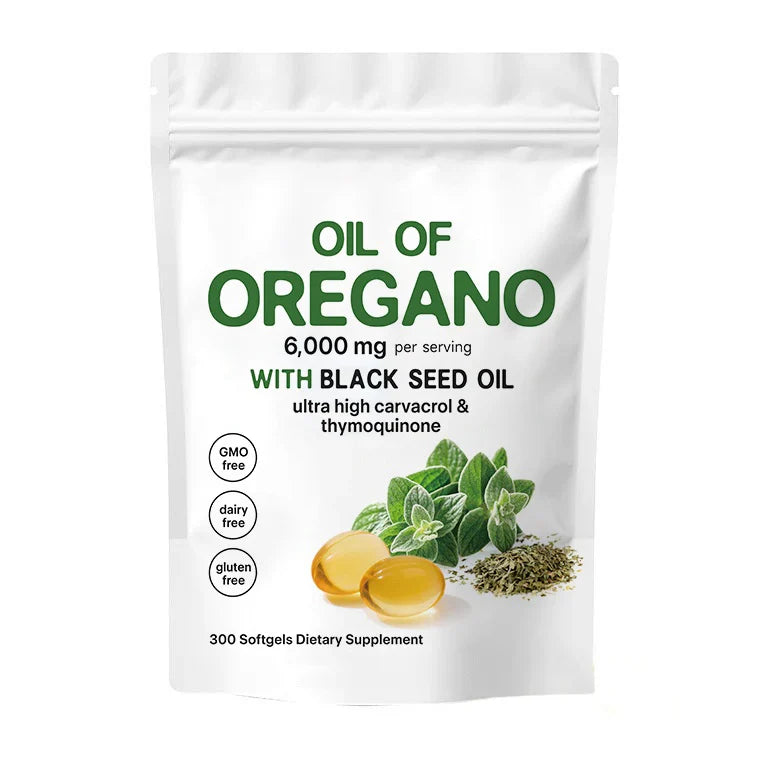
Oil of Oregano Softgels
High-carvacrol wild Origanum vulgare in a clean softgel. The specification that matters most.
See the ProductEncapsulation Quality: Why the Capsule Is Not Just Packaging
The quality of the capsule that contains the oil significantly affects what you actually receive when you swallow it. This is particularly relevant for oil-based supplements, where oxidation, sealing integrity, and the location of release all depend on how well the capsule is made.
A well-sealed softgel prevents atmospheric oxygen from reaching the oil. Carvacrol and other phenolic compounds in oregano oil are susceptible to oxidation, which degrades their activity over time. A capsule with a compromised seal allows oxygen in during storage, reducing carvacrol potency before the product is even opened. High-quality softgels have hermetic seals that maintain oil integrity through the stated shelf life.
The release profile of the capsule determines where the oil is delivered. A softgel designed for intestinal delivery (sometimes described as enteric-coated or simply made with a gelatin shell of the appropriate thickness) passes through the stomach's acid environment intact and releases its oil in the less acidic intestinal environment. This matters for gut health applications and for avoiding direct gastric contact that causes stomach irritation.
Hard capsules (two-piece capsules with a powder or oil fill) do not seal as completely as softgels. Volatile aromatic compounds like carvacrol can slowly migrate through the capsule shell, affecting potency over time. They also do not guarantee intestinal delivery in the same way a sealed softgel does. For oil-based supplements, the softgel format is not cosmetic. It is a functional quality specification.
The capsule that gets the right amount of carvacrol to the right place in your body is as important as the carvacrol itself. Formulation quality is not a secondary consideration.
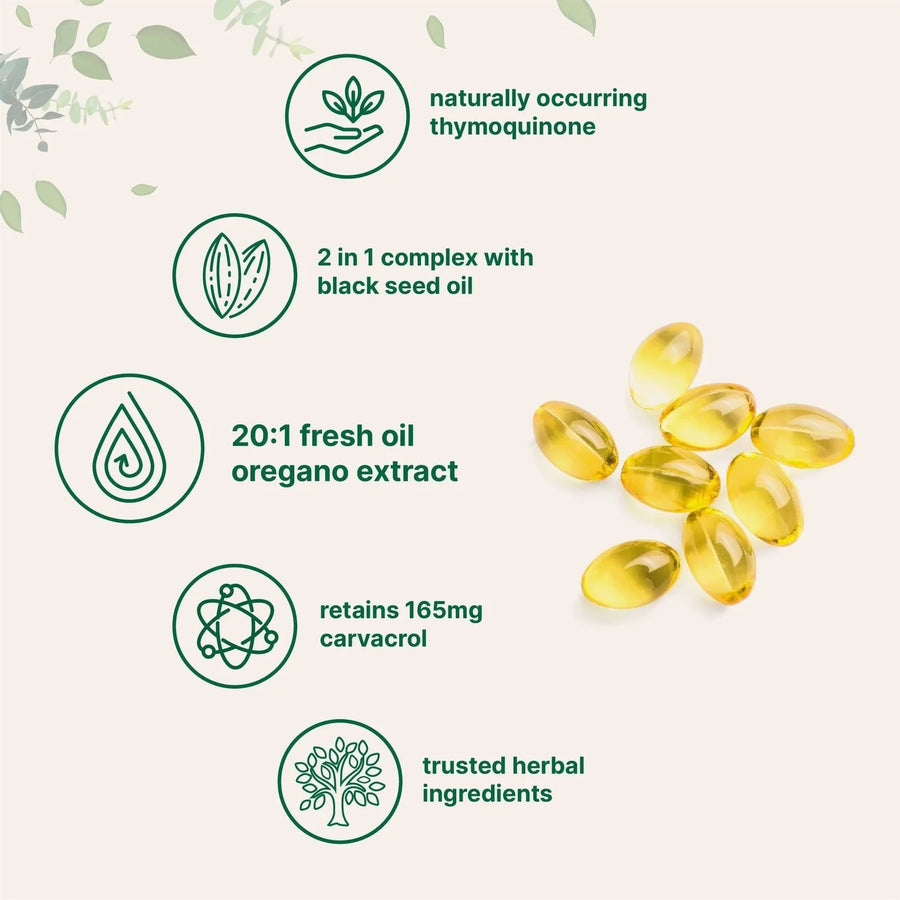
Oil of Oregano Softgels
Wild-harvested Origanum vulgare, high carvacrol, clean softgel formulation. The quality differentiators in one product.
See the ProductFillers and Inactive Ingredients: What Should (and Should Not) Be There
The inactive ingredients in an oregano oil capsule reveal a lot about the manufacturer's formulation priorities. A minimalist, clean formulation has: the oregano oil, a carrier oil (ideally organic extra-virgin olive oil), and a capsule shell made from gelatin or a vegetarian alternative (hydroxypropyl methylcellulose). That is it.
Common unnecessary additions in lower-quality products include magnesium stearate (a flow agent used to speed up capsule filling machines), titanium dioxide (a whitening agent that coats the capsule shell, with ongoing controversy regarding potential health effects), silicon dioxide in large quantities (another anti-caking agent), and synthetic shellac or carnauba wax coatings on the capsule exterior.
None of these additives improve the therapeutic efficacy of the product. They are manufacturing conveniences or cosmetic additions that serve the producer, not the consumer. A supplement company that prioritizes formulation quality will avoid them. One that prioritizes production speed or visual appeal may include them without consideration of their necessity.
The carrier oil quality also matters. Organic extra-virgin olive oil is the optimal carrier for oregano oil: it has favorable fat composition for absorption of lipophilic compounds like carvacrol, natural antioxidants that protect against oxidation, and centuries of documented safe use alongside oregano. Cheaper refined vegetable oils (soy, canola, corn) are less effective as carriers and contribute less to the overall nutritional profile of the supplement.
Check for these in the inactive ingredient list of any oregano oil capsule: titanium dioxide (unnecessary whitening agent), magnesium stearate in high quantities, synthetic shellac or petroleum-based coatings, and cheap refined vegetable oils as the carrier. Each is a sign that the manufacturer is optimizing for cost rather than quality.
Third-Party Testing: The Verification That Matters
Supplement labels are manufacturer self-declarations. Without third-party testing, there is no independent verification that the carvacrol percentage stated on the label is accurate, that the oil is free of pesticide residues (relevant for wild-harvested plants from uncontrolled environments), or that heavy metals from soil absorption are within safe limits.
Third-party tested products provide certificates of analysis (COAs) from independent laboratories that verify the product's composition against the label claims. These tests measure actual carvacrol percentage in the finished product, not just in the raw oil before formulation. They also test for common contaminants: microbial counts, heavy metals, pesticide residues, and solvent residues from extraction.
A product that publishes or provides COAs is doing two things: demonstrating that it actually tested the product, and demonstrating confidence that the results are worth sharing. This combination of transparency and accountability is one of the clearest signals of genuine quality in the supplement category.
For oregano oil specifically, third-party testing is particularly important because the raw material (wild-harvested plant material from varied geographic sources) is inherently variable. A manufacturer that tests each batch has a mechanism to catch quality variations. One that does not is relying on supplier declarations and hope.
Search the product name on the manufacturer's website under "testing", "quality", or "lab results". If a COA is not publicly available, contact the company directly and request the most recent batch test results. A quality manufacturer will provide this without hesitation. Resistance or inability to provide testing documentation is itself useful information.
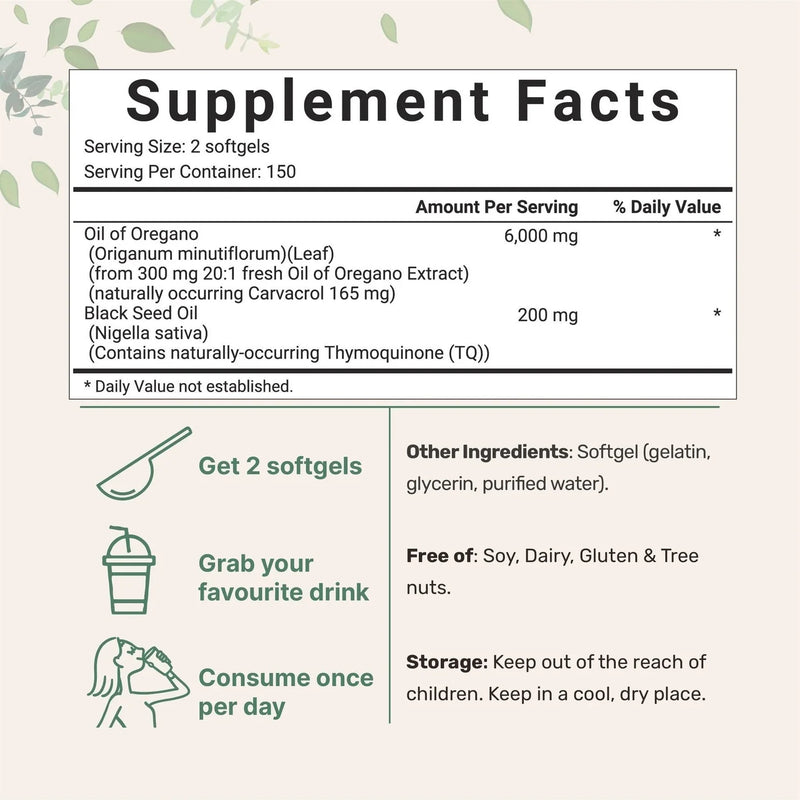
Oil of Oregano Softgels
Specified carvacrol content, wild source, sealed softgel, clean ingredients. with 30-day guarantee.
See the Product