

Best Oregano Oil Supplement: How to Spot a Quality Formula
The oregano oil market is full of products that look similar and deliver very different results. Here is the checklist that separates therapeutic-grade from marketing-grade.
Two oregano oil supplement bottles on the same shelf can contain products that differ by 300% in active compound concentration. The label will not make this obvious. Spotting a quality formula requires knowing exactly which four or five data points determine whether an oregano oil supplement is therapeutic or essentially inert. This is that checklist.
The Carvacrol Percentage: Non-Negotiable
Carvacrol is the compound responsible for the vast majority of oil of oregano's documented antimicrobial, antifungal, and immune-supporting activity. Its concentration in the oil is the single most important quality indicator. If a product does not disclose the carvacrol percentage of its oil, you have no way to assess its potency, and the absence of disclosure is itself a signal.
The minimum carvacrol content for meaningful therapeutic activity, based on the in vitro and in vivo research on carvacrol's effects against bacteria and fungi, is approximately 70%. Below this threshold, antimicrobial effects are measurable but substantially weaker. Wild-harvested Mediterranean oregano typically yields oils at 75 to 86% carvacrol. Products claiming to use wild oregano should be able to support a carvacrol figure in this range.
Some products list total phenol content rather than carvacrol specifically. A product reporting 80% phenols with 40% carvacrol and 40% thymol is not equivalent to one with 80% carvacrol. Thymol is active and synergistic with carvacrol, but it is not an equal substitute. Always locate the carvacrol figure specifically.
Look for the carvacrol percentage in the supplement facts panel, the product description, or the certificate of analysis. If none of these sources disclose a specific carvacrol percentage, treat that as a red flag. Premium producers who use high-carvacrol wild oregano have every incentive to feature this number. Those who omit it typically cannot meet the standard.
Source Disclosure: Wild-Harvested Origanum Vulgare
The species and growing conditions of the source plant determine the carvacrol ceiling. The medicinal standard is Origanum vulgare grown wild in Mediterranean mountain environments, particularly Turkey, Greece, and the Aegean region. These plants grow under conditions of environmental stress (poor soil, high UV, drought) that drive them to produce high concentrations of defensive phenolic compounds including carvacrol.
Cultivated Origanum vulgare grown in favorable agricultural conditions consistently yields oils with 40 to 55% carvacrol, compared to 70 to 86% in wild-harvested plants from the same species. The difference is not marginal. A supplement using cultivated oregano oil would need to double the per-capsule oil volume to deliver the same carvacrol dose as a wild-harvested product at the same capsule size.
Labels that say only "oregano oil" or "Origanum vulgare" without specifying wild-harvested or the geographic origin provide insufficient information. Labels that say "wild Mediterranean oregano" or name a specific country of origin (Turkey, Greece) are providing more meaningful disclosure. The most transparent products specify both the species and the growing conditions.
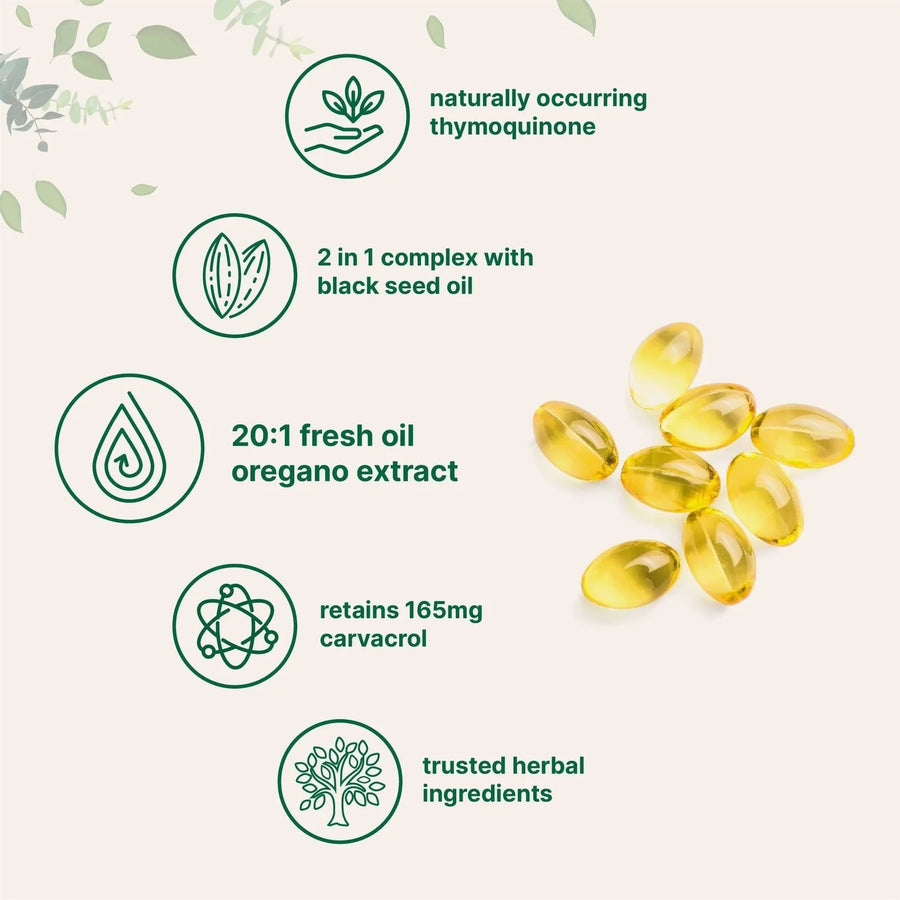
Oil of Oregano Softgels
Wild-harvested Origanum vulgare, high carvacrol, clean softgel formula. 1,900+ verified reviews.
See the ProductEncapsulation: Softgel vs Hard Capsule vs Liquid
The encapsulation format affects tolerability, delivery location, and shelf stability. Softgels are the gold standard for oil-based supplements. The sealed gelatin or vegetarian capsule prevents oxidation of the oil, eliminates contact with the mouth and throat, and delivers the oil intact to the intestinal environment. This is particularly relevant for gut health applications where intestinal-level delivery is more effective than gastric delivery.
Hard capsules (two-piece capsules that can be separated) provide a tasteless delivery method but do not seal the oil as hermetically as softgels. Moisture can penetrate the capsule join over time, affecting oil stability. Some hard capsules release in the stomach rather than the intestine, reducing the targeted delivery benefit for gut applications.
Liquid drops are the most traditional format. They have a marginal speed advantage for systemic absorption but create the compliance problems that cause most people to abandon the supplement before completing a therapeutic cycle. For most users, the format that gets taken consistently delivers more total carvacrol over a cycle than a theoretically superior format that gets skipped repeatedly.
A formula is only as good as its delivery system. The best carvacrol in a format you cannot tolerate is worth less than a good carvacrol in a format you will take every day.
Carrier Oil and Inactive Ingredients
Oil of oregano is an essential oil that requires dilution in a carrier for safe use. The carrier oil affects both the safety of the product and the bioavailability of the fat-soluble carvacrol. Olive oil is the traditional and most studied carrier. It has favorable absorption characteristics, is stable against oxidation when paired with the antioxidant phenolics in oregano oil, and has well-documented safety in supplemental quantities.
Some lower-cost products use refined vegetable oils as carriers. Highly refined oils lack the minor fatty acids and antioxidants that make olive oil a particularly good carrier for phenolic compounds. While they are not dangerous, they may not support absorption as effectively and may be higher in oxidized fatty acids if the oil is not fresh.
Inactive ingredients in the capsule shell deserve review. Quality softgels contain the oil, the carrier, and a capsule shell made from gelatin or a vegetarian alternative. Red flags in the inactive ingredients include titanium dioxide (a synthetic whitening agent), synthetic capsule coatings derived from petroleum products, magnesium stearate in large quantities (controversial regarding absorption), and artificial colors.
Open the product page and find the full ingredient list. The active ingredient should specify carvacrol percentage and Origanum vulgare. The carrier should be olive oil or a named food-grade oil. The capsule should be gelatin or vegetarian capsule. Everything else should be minimal. If the inactive ingredient list is longer than the active ingredient list, look further.
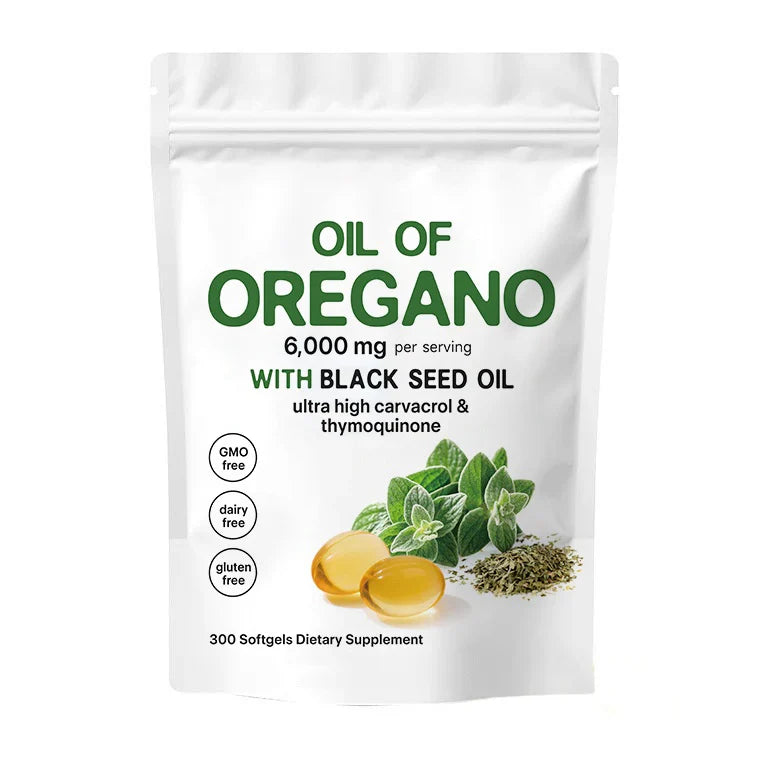
Oil of Oregano Softgels
High-carvacrol, clean label, softgel delivery. Everything a quality oregano oil should be.
See the ProductThird-Party Testing: The Verification Layer
A certificate of analysis (COA) from an independent laboratory is the highest level of quality verification available to supplement consumers. The COA tests the actual product batch, not just the raw material, and confirms that the carvacrol percentage on the label matches the content in the capsule. It also screens for heavy metals, pesticide residues, and microbial contamination.
Not all COAs are equal. A COA commissioned by the manufacturer themselves and never reviewed by an independent party provides less assurance than one from a certified independent testing laboratory. Look for testing from organizations with ISO 17025 accreditation, which certifies laboratory competency to specific international standards.
The absence of any testing documentation does not mean a product is unsafe or ineffective. Many smaller supplement producers do not publish COAs publicly. But for a product where the carvacrol concentration is the key therapeutic variable, independent verification is worth seeking, particularly for first-time buyers or people using oregano oil for specific health applications.
Price as a Quality Signal (and Its Limits)
Wild-harvested oregano oil from Mediterranean mountain regions costs more to produce than cultivated oil. Labor-intensive manual harvesting, lower per-hectare yields, and seasonal limitations all contribute to a higher raw material cost. This means that very low-priced oregano oil products (below the market average for comparable capsule counts) are almost certainly using lower-grade inputs.
That said, a high price does not guarantee quality. Marketing costs, brand positioning, and retail margin all add to consumer price without changing the carvacrol content. The price of an oregano oil supplement tells you relatively little in isolation. What matters is what you get for the price: the carvacrol percentage, the source disclosure, and the encapsulation quality.
The most efficient evaluation is to divide the confirmed carvacrol milligrams per serving by the price per serving. This gives you a cost-per-therapeutic-unit metric that allows fair comparison across products of different prices, capsule counts, and concentrations.
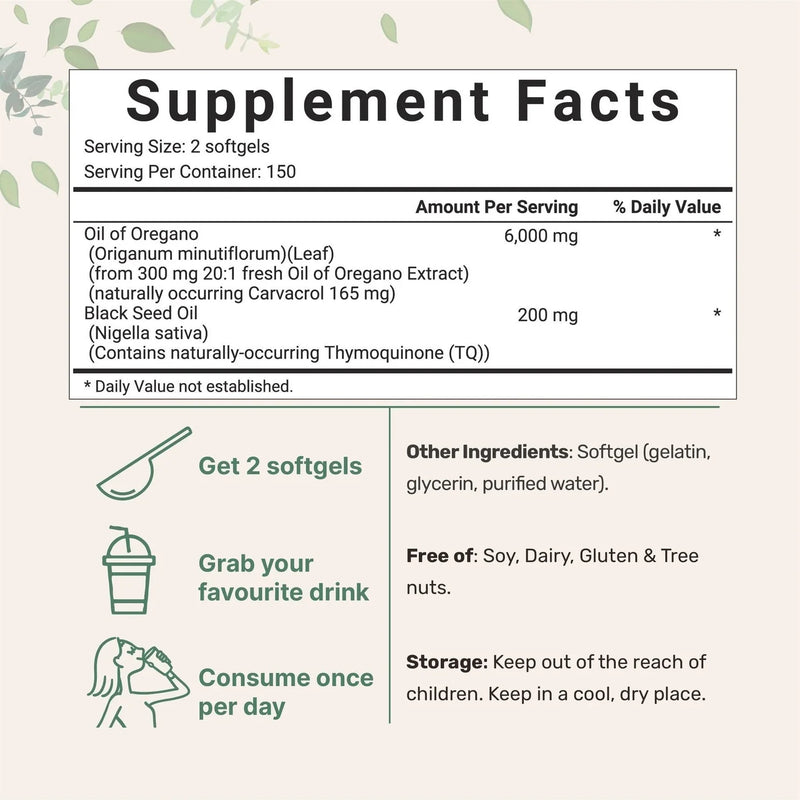
Oil of Oregano Softgels
Wild-harvested carvacrol, sealed softgel, no synthetic fillers. 30-day satisfaction guarantee.
See the Product