

Best Orthopedic Pillow: Our Top Picks for 2026
A proper buying guide cuts through the marketing and tells you what actually separates a good orthopedic pillow from a mediocre one. Here's what we found.
Choosing an orthopedic pillow is harder than it should be. The category is full of products that use medical-sounding language while delivering standard foam in a slightly contoured shape. After evaluating dozens of pillows across different designs, materials, and price points, a few clear criteria separate the ones that actually work from the ones that just look the part. Here's what matters and what to avoid.
The Five Criteria That Actually Determine Pillow Quality
Most pillow comparisons focus on price or brand reputation. Neither tells you much about whether a pillow will hold your cervical spine in the right position. The criteria that matter are foam density, contour geometry, dual-height design, material breathability, and durability under sustained use. A pillow that scores well on all five will outperform any competitor that scores well on only two or three, regardless of price.
Foam density, as discussed extensively in material-focused reviews, should be 4 lb per cubic foot minimum for anything calling itself an orthopedic pillow. Below that threshold, you're looking at a comfort product that compresses under sustained use. Density determines both immediate support and long-term durability. It's the single most important specification, and it's the one most often hidden in vague descriptions like "premium foam" or "high-quality memory foam."
Contour geometry is the second criterion. The contour should be functional, not decorative. The cervical channel (the lower central area for back sleepers) should be deep enough to genuinely support the neck curve, not so shallow it's cosmetic. The lateral sections (for side sleepers) should be meaningfully higher than the center. A 2 to 3 centimeter height difference between the cervical channel and the lateral lobes is a reasonable minimum for the dual-height design to work as intended.

Cervical Orthopedic Pillow by Lindalia
Meets all five quality criteria: high-density dynamic foam, genuine dual-height contour, breathable open-cell structure. Free shipping.
See the ProductWhat the Best Orthopedic Pillows Have in Common
After evaluating across price ranges, the pillows that consistently performed best shared a few structural characteristics. They all used medium-to-high density foam rather than low-density alternatives. They all had a meaningful height difference between the cervical channel and the lateral sections, creating genuine positional differentiation for back versus side sleeping. And they all maintained their shape after repeated use, which is the most reliable indicator of foam quality short of having the density measured directly.
The best-performing pillows also had integrated cervical rolls or channels, not just a general "wave" shape. A wave-shaped pillow is better than a flat pillow, but a pillow with a defined cervical channel provides more precise support for the natural inward curve of the neck. Back sleepers in particular benefit from a channel deep enough that the neck doesn't rest on the flat surface but is actively supported by the raised foam on either side of the channel.
Hypoallergenic materials matter more than most buyers anticipate. You spend a third of your life with your face in close contact with this material. Memory foam that uses CertiPUR-US certified foam has been tested for harmful VOCs and chemical off-gassing. Pillows with breathable, washable covers maintain cleanliness over time in a way that sealed, non-removable covers cannot. These aren't luxury features. They're baseline quality indicators.
Ask or look for the foam density specification, listed in pounds per cubic foot or kg per cubic meter. If a brand won't provide this number, treat it as a red flag. Quality manufacturers know their foam density and are happy to share it. Vague materials descriptions hide low-density foam.
The Common Mistakes Buyers Make
The most expensive mistake is choosing based on immediate feel. A pillow that feels luxuriously soft when you press your hand into it will likely compress too much under the sustained weight of your head overnight. The correct assessment is not whether it feels good in the store but whether it holds its shape after prolonged pressure. If you can, press your head into the pillow for thirty seconds and release. A quality orthopedic foam should recover fully within a minute.
Choosing the wrong height is the second common error. Side sleepers consistently underestimate the height they need. The gap between the ear and the shoulder for an average adult is 10 to 15 centimeters. A pillow that doesn't bridge that gap precisely will allow the neck to bend toward the mattress, which is no better than sleeping without a pillow at all. Back sleepers often do the opposite, buying pillows that are too thick and push the chin toward the chest.
A third mistake is not accounting for mattress firmness. A soft mattress allows the shoulder to sink deeper than a firm mattress. This effectively reduces the gap between your ear and the mattress surface, meaning you need less loft from your pillow. Side sleepers on soft mattresses who buy high-loft pillows often end up with their necks bent the wrong way, because the pillow height is calculated for a firm surface while their body is sinking into something much softer.
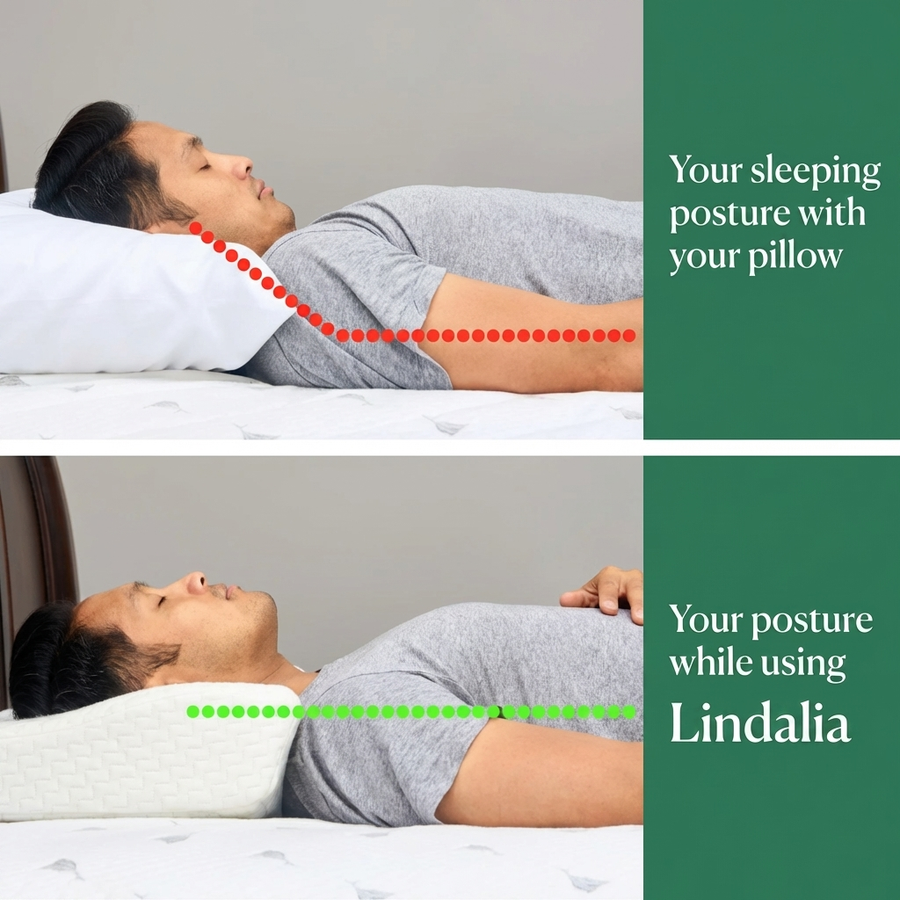
Contoured for Both Sleep Positions
Dual-height design works whether you sleep on your back or your side, with a cervical channel for back sleepers and raised lateral support for side sleepers.
See the ProductValue vs Price: Where the Line Falls
Orthopedic pillows range from under twenty dollars to over two hundred. At the low end, you're generally getting single-density low-foam under a marketing label. At the high end, you're often paying for brand name recognition rather than meaningfully better foam technology. The sweet spot for value, where material quality and price align most efficiently, tends to fall in the mid-range.
A pillow in the mid-range that uses genuine medium-high density dynamic memory foam, a functional dual-height contour, and washable hypoallergenic cover materials will outperform both budget options and many premium-priced alternatives. The key is knowing how to evaluate the specifications rather than the branding. Price is only a proxy for quality if you can't read the actual technical details. When you can, price becomes less relevant.
Factor in the cost-per-year calculation. A thirty-dollar pillow that needs replacing annually costs more over three years than a ninety-dollar pillow that maintains its support for the same period. Beyond the financial aspect, a pillow that degrades quickly means months of progressively worsening cervical support before you realize you need to replace it. Investing in documented quality upfront avoids that gradual degradation.
We assessed pillows by foam recovery time after thirty seconds of sustained pressure, height difference between central channel and lateral lobes, cover washability and material quality, and user-reported outcomes at two weeks and three months of use.
The best orthopedic pillow is not the most expensive one. It's the one whose specifications match your anatomy and sleep position.
Our Top Pick for 2026
Based on the criteria above, our top recommendation for 2026 is the Cervical Orthopedic Pillow from Lindalia. It checks every box on the quality list: dynamic memory foam with graduated density, a genuine dual-height contour with a defined cervical channel for back sleepers and raised lateral sections for side sleepers, hypoallergenic construction, and a track record of maintaining its shape under sustained use.
The price-to-quality ratio is strong for this category. You're getting foam density and contour geometry that justify the orthopedic label rather than using it as marketing shorthand. The washable cover is a practical feature that most comparable options in this price range don't include. And the satisfaction guarantee removes the risk from a purchase that genuinely requires a week or two to evaluate properly.
For most adults dealing with morning neck stiffness, cervicogenic headaches, or general poor sleep quality with no clear cause, this pillow addresses the most likely structural source of the problem. It won't fix every sleep issue. But if your issue is cervical misalignment during sleep, which is the case for the majority of people with morning neck pain, it's the most direct solution available at this price point.
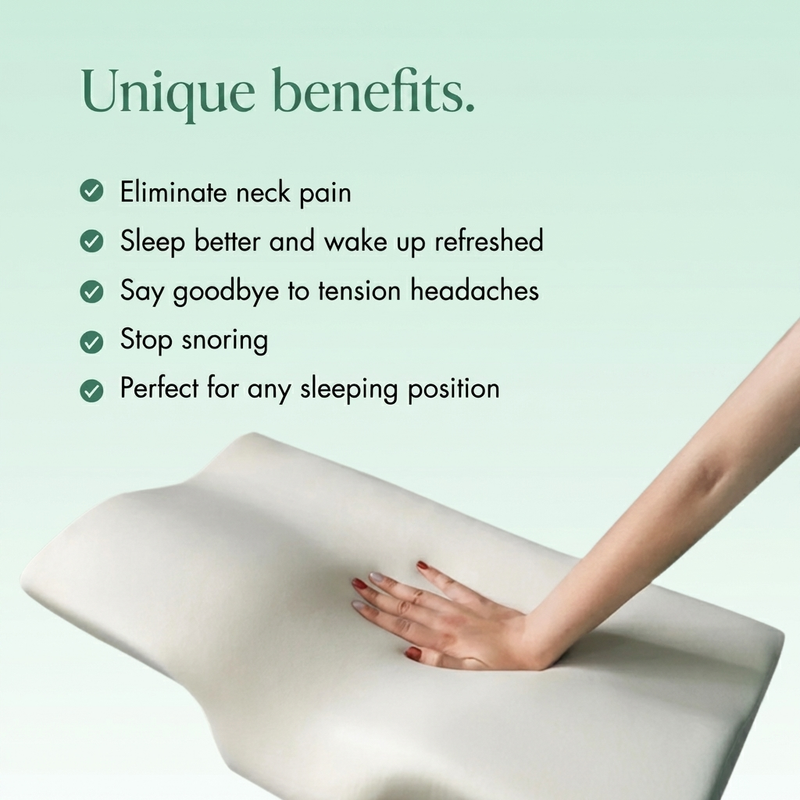
The Cervical Orthopedic Pillow
Dual-height dynamic foam contour. Hypoallergenic. Free shipping. Satisfaction guarantee. The one that meets all five criteria.
See the Product