

Best Rated Garlic Supplement: What Really Sets Top Formulas Apart
Beyond star ratings and review counts: the formulation decisions that determine whether a garlic supplement performs or just sells well.
Star ratings on supplement marketplaces measure satisfaction, not efficacy. A product can maintain a 4.8-star average based on placebo effects, pleasant packaging, and the fact that few buyers actually measure their blood pressure before and after a 12-week trial. This article looks at what top-rated formulas genuinely do differently at the formulation level, not the marketing level.
The Disconnect Between Ratings and Results
Consumer ratings for supplements correlate more strongly with ease of swallowing, absence of after-taste, and whether the person felt generally healthy during the period they were taking the supplement than with any measurable clinical outcome. This is not a criticism of buyers. Placebo effects are real. General wellness improvements come from many sources simultaneously. Attributing how you feel to a specific supplement is difficult without controlled conditions.
The result is a market where products with excellent marketing, attractive packaging, and a low side-effect profile accumulate reviews regardless of whether the formulation would produce measurable effects in a clinical trial. A product that contains 500mg of raw garlic powder, causes no side effects, and is easy to swallow will collect positive reviews from people who feel good while taking it. That same product would not show up as statistically significant in a blood pressure trial.
To find what actually sets top formulas apart, you have to go beyond the rating and look at the three variables that predict clinical performance: the form of garlic, the dose per serving, and the fermentation quality.
Instead of asking which garlic supplement has the best reviews, ask which garlic supplement uses aged extract at or above 2,400mg per serving. That filter eliminates most of the market and reveals the subset worth comparing on secondary criteria.
Fermentation Quality: The Most Underexamined Variable
Not all aged garlic extract is produced to the same standard. The aging process converts allicin and related volatile compounds into stable water-soluble organosulfur compounds, principally S-allylcysteine (SAC). The duration of fermentation, the temperature and conditions during aging, and the solvent ratio all affect the final SAC concentration.
A 20-month fermentation period at controlled temperature produces the highest and most consistent SAC concentrations documented in the clinical literature. Shorter fermentation periods produce lower SAC levels. Higher fermentation temperatures can degrade the compounds being formed. The specific water-ethanol solvent ratio affects extraction efficiency.
Top formulas specify their fermentation parameters. They say 20 months, not just "aged." They provide SAC concentration data, not just a total milligram weight. The difference between a 10-month aged extract and a 20-month aged extract is not halved efficacy. It can be substantially greater, because SAC accumulation is not linear: it accelerates in the later months of the aging period.
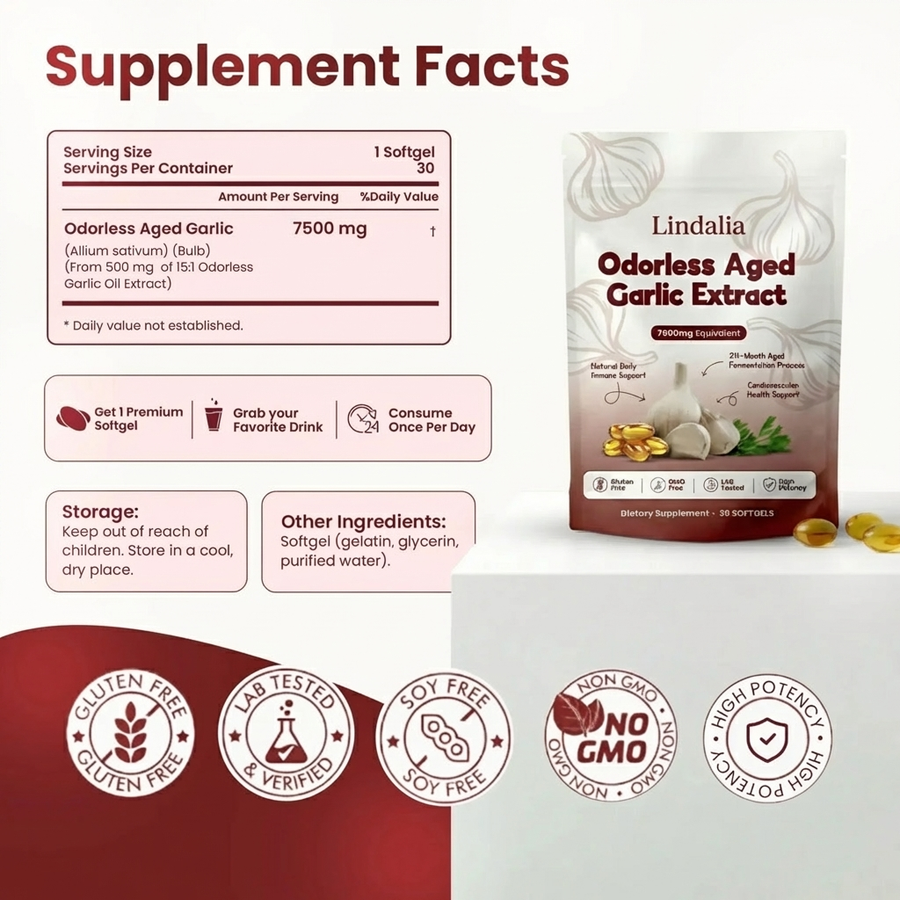
20 Months. SAC-Active. Verified Quality.
Not just labeled aged. Fermented the full 20 months for maximum stable compound conversion. Clinical-range dose in one softgel.
See the ProductStandardization vs Unstandardized Extracts
A standardized extract is tested to verify it contains a specified minimum concentration of the marker compound before release. For aged garlic extract, that marker is SAC. Standardization means the batch analysis confirmed the SAC level is at or above a defined threshold. An unstandardized extract may state a total weight of aged garlic extract but provides no assurance about the active compound concentration within that weight.
This matters practically because SAC content in aged garlic extract can vary with the garlic source, the harvest season, and the specific fermentation conditions. Without standardization, a product that claims 7,500mg per serving may deliver 7,500mg of extract with highly variable SAC content from batch to batch. With standardization, the SAC level is consistent regardless of source variation.
Top formulas standardize. They can provide a certificate of analysis showing the SAC content for the specific batch in your bottle. Companies that cannot or will not provide this information are operating without the quality control that standardization requires.
The Transparency Test
Transparency is a quality signal that separates formulas made by companies with confidence in their product from those relying on label claims. There are three transparency indicators worth evaluating.
Batch-level certificate of analysis: A COA from an independent third-party laboratory confirming the active compound content, absence of contaminants, and meeting of label claims. This should be available for the specific batch on your bottle, not a generic sample COA.
Fermentation documentation: The specific process used, including duration and conditions. If a company says "aged garlic extract" without specifying how long or by what method, ask. Top formulas answer this question readily.
Clinical citation practice: Do the product materials reference specific studies, or do they make general claims about garlic? Companies whose marketing cites peer-reviewed research with specific parameters are signaling that the product was designed around the evidence. Generic garlic benefit claims signal marketing, not science.
A company that can tell you exactly how long their garlic was aged, what the SAC level per batch is, and which studies they designed their dose around is operating differently from one that cannot answer these questions. The willingness to be specific is itself a quality indicator.
The best-rated supplement and the best-performing supplement are often different products. The distinction shows up when you start measuring outcomes instead of impressions.
Delivery Form and Its Role in Consistent Performance
The delivery form of a supplement affects how reliably the active compound is released and absorbed. For aged garlic extract, which contains water-soluble SAC and SAMC, the compound class is inherently well-absorbed. The delivery form optimizes the consistency of that absorption rather than enabling it.
Softgels disintegrate reliably in the upper gastrointestinal tract. The liquid or semi-liquid fill matrix ensures the active compounds are in solution when the shell dissolves. This produces consistent absorption with each dose. Hard capsules are the next best option: they dissolve reliably, though slightly less predictably than softgels. Compressed tablets require the tablet matrix to break down, which can take longer and varies more with individual gastric conditions.
Top formulas use softgels. The softgel delivers the active compound to the absorptive surface of the small intestine at the highest and most consistent rate available in oral supplementation.
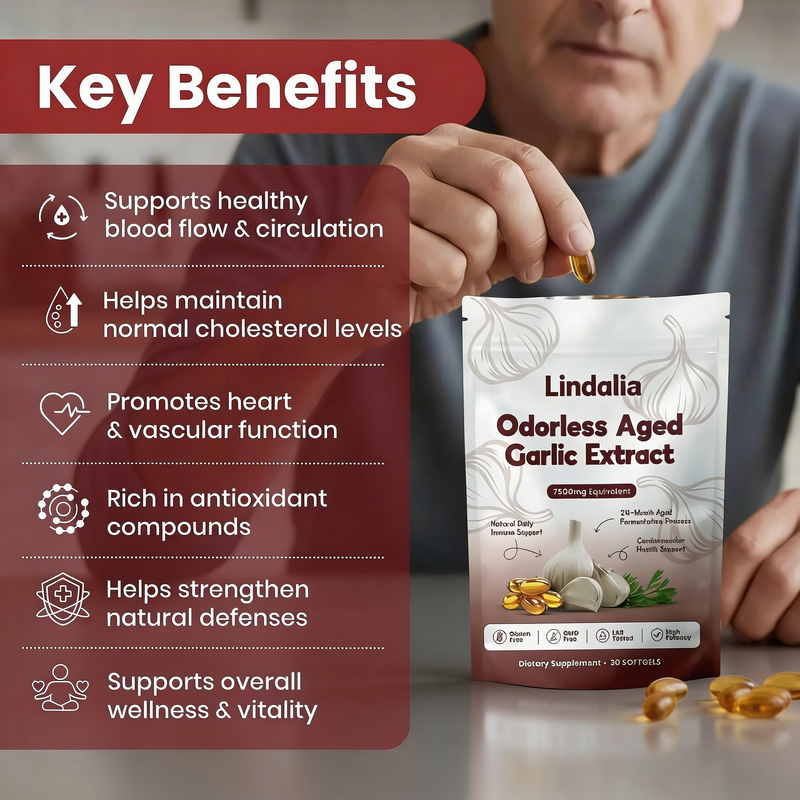
Fermentation. Dose. Delivery. All Three.
20-month aged garlic extract, 7500mg potency, softgel form. The three differentiators of a formula that earns its rating.
See the ProductWhat Makes Someone Stay on a Supplement Long Enough to See Results
A formula that produces cardiovascular effects over 12 weeks only produces those effects if it is taken consistently for 12 weeks. The formulation variables that affect compliance are as important as those that affect bioavailability, because a highly bioavailable compound that causes side effects at week two delivers no long-term benefit.
Aged garlic extract at clinical doses has a well-documented tolerability advantage over raw garlic. No odor. No gastric irritation. No garlic burps. One capsule per day. These are not trivial design features. They are the difference between a protocol people complete and one people abandon.
The most common reason given by supplement users for stopping is not that they doubted efficacy. It is that the product was inconvenient, uncomfortable, or socially problematic. A daily supplement that produces none of these problems removes the compliance barrier and allows the clinical timeline to play out.
Putting It Together: The Formula Scorecard
When evaluating any garlic supplement formula against these criteria, a simple scorecard helps: Does it use aged garlic extract specifically? Is the dose at or above 2,400mg per serving? Is the fermentation period specified as 20 months? Is SAC standardization documented? Is the delivery form a softgel? Is third-party COA testing available?
A formula that answers yes to all six of these questions is genuinely at the top of the market. A formula that answers yes to three or four is a reasonable product with notable gaps. A formula that answers yes to one or two is a product competing on marketing rather than formulation. The best-rated formulas by review count span all three categories. The best-performing formulas by formulation criteria are a much smaller group.
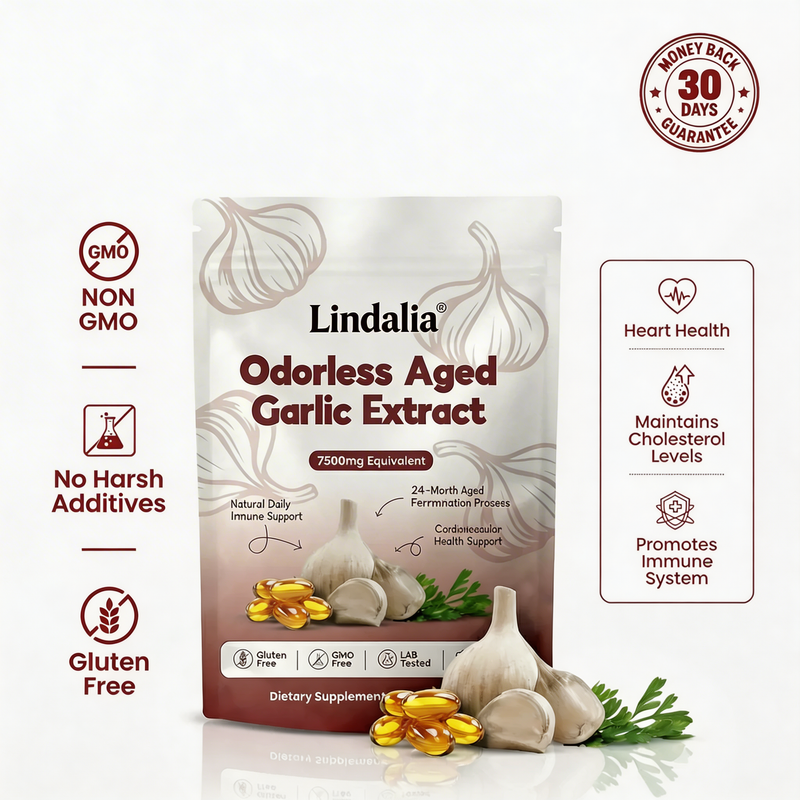
Aged. Dosed. Fermented. Standardized. Softgel. Tested.
Every formulation criterion met. 7500mg aged garlic extract, 20 months fermented, one daily softgel, no odor.
See the Product