

Best Time to Take Cinnamon Supplement: Morning vs Evening
The right timing matters more than most people think. Here is how to align your doses with your meals, your circadian rhythm, and your biggest glucose challenges.
If the mechanism of action of a supplement determines when it should be taken, then cinnamon's timing is among the most specific in the supplement world. Pre-meal is not optional advice, it is a functional requirement based on how the active compound works. But pre-meal is not enough detail. Here is the complete timing picture.
Why Pre-Meal Is the Non-Negotiable Starting Point
The primary mechanism behind cinnamon's glycaemic effect is alpha-glucosidase inhibition. This is an enzyme in the brush border of the small intestinal wall. Its job is to cleave complex carbohydrates into monosaccharides (simple sugars) that can be absorbed. Cinnamaldehyde inhibits this enzyme, slowing the rate at which it processes incoming carbohydrates.
For this to work, cinnamaldehyde must be present in the intestinal lumen before carbohydrates arrive. If you take cinnamon after eating, the enzyme has already completed most of its work. The glucose has already entered the bloodstream, the spike has already happened, and the supplement arrives too late to change the acute outcome of that meal.
The target window is 15 to 20 minutes before eating. This allows the capsule to dissolve in the stomach and the compounds to begin reaching the small intestine as the first nutrients arrive. The overlap between cinnamon compound arrival and carbohydrate arrival is the operational window for alpha-glucosidase inhibition.
Take the supplement when you start preparing or ordering food, not when you sit down to eat. If you prepare your own meals, the 15 to 20 minutes elapses naturally between starting to cook and actually eating. This built-in delay makes correct timing automatic.
Morning vs Evening: Matching Dose to Your Carbohydrate Load
With two doses per day, the question is not simply "morning or evening" but "which two meals carry my highest glucose challenge."
For most people following standard eating patterns, this means lunch and dinner. Breakfast for many people is relatively modest in total carbohydrate load, or even protein-forward with eggs, yoghurt, or a protein shake. Lunch tends to be the first substantial mixed meal. Dinner is often the largest meal of the day.
If your breakfast is substantial (large bowl of oatmeal, toast, cereal, significant fruit), it represents a meaningful glucose challenge and deserves one dose. Your second dose then goes to whichever of lunch or dinner carries the heavier carbohydrate load.
The principle: match the supplement to the glucose challenge, not to the clock. A pre-breakfast dose protects the breakfast glucose curve. A pre-lunch dose protects lunch. Pre-dinner protects dinner. Two doses means two meals get protection. Choose wisely based on your actual eating pattern.
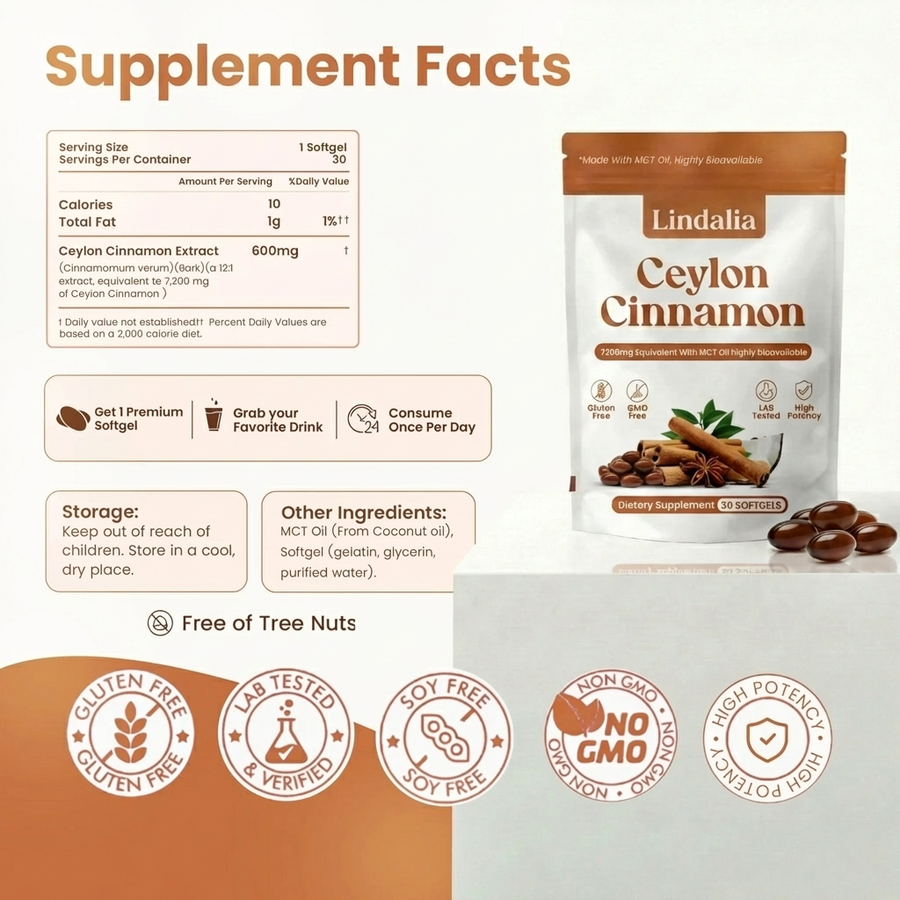
Ceylon Cinnamon 7,200mg with MCT Oil
15 to 20 minutes before your two largest carbohydrate meals. The timing protocol that activates everything this formula does.
See the ProductThe Circadian Dimension: Why Insulin Sensitivity Changes Through the Day
Insulin sensitivity is not constant across the day. Research on circadian metabolic rhythms shows that insulin sensitivity is highest in the morning and progressively declines through the afternoon and evening. The same meal eaten at noon produces a lower glucose spike than the identical meal eaten at 8 pm.
This has two implications for cinnamon timing. First, the evening meal typically represents the greatest glucose challenge due to both higher carbohydrate content (dinner tends to be the largest meal in most patterns) and reduced insulin sensitivity. If you can only take one dose at a fixed time, the pre-dinner dose has the highest return because the glucose challenge is greatest and the body's own insulin efficiency is lowest.
Second, the morning dose, if your breakfast is substantial in carbohydrates, is acting against a more insulin-sensitive background. The supplement's effect is additive to already-better insulin function. This is a more comfortable physiological environment and produces a flatter curve, but the urgency is lower than for the evening meal.
Pre-Meal vs Fasting: Why Taking It on an Empty Stomach Falls Short
Some supplement protocols recommend taking compounds first thing in the morning, fasted, for maximum absorption. This logic does not apply well to cinnamon's primary mechanism.
Absorption of cinnamaldehyde is improved by the presence of fat (as MCT oil in the formula), which is typically present during a meal, not in fasted conditions. Taking cinnamon fasted at 6 am when your first meal is at 8 am means the cinnamaldehyde is absorbed, reaches peak plasma levels, and begins to decline before any carbohydrates arrive. The peak blood concentration may have passed its most useful window by mealtime.
The exception: if you take the supplement 20 minutes before a meal and you happen to be in a fasted state at that point (morning dose before breakfast), the timing is still correct because the carbohydrates arrive within the window. The issue is not fasting per se but taking it too far in advance of eating.
Split Dosing: Why Two Smaller Doses Beat One Large One
Taking 7,200 mg at once versus splitting it into two 3,600 mg doses is not equivalent. Several reasons favour split dosing.
Alpha-glucosidase inhibition is a per-dose, per-meal phenomenon. Taking all 7,200 mg before one meal maximises protection for that meal but leaves the other meals of the day without any acute protection. Two meals under cinnamon protection each day is more beneficial than one meal with double protection.
Berberine, included in the formula, has better outcomes with split dosing. AMPK activation is maintained more consistently throughout the day when berberine plasma levels are sustained through two doses rather than peaking and declining from a single dose.
Gastrointestinal tolerance is also better with split dosing. High-dose herbal compounds taken in a single large dose can cause mild digestive discomfort in some individuals. Splitting the dose reduces this possibility.
Adapting to Irregular Schedules
Shift workers, people who intermittently fast, travellers, and anyone with variable meal timing face a timing challenge. The principle remains: pre-meal, before the two highest-carbohydrate meals. The clock time is irrelevant. If your "breakfast" is at 3 pm after a night shift, pre-breakfast dose timing means 2:40 to 2:45 pm.
For intermittent fasting protocols where eating is compressed into a six to eight hour window, the two doses go before the first and last meal of the eating window, or before the first and largest meal if you eat multiple times within the window. The fasting period itself does not require supplementation because no carbohydrates are arriving.
For people who regularly eat out for business meals or social occasions where the timing is less controllable, keep the supplement in your pocket or bag and take it when you sit down and order rather than when the food arrives. In a restaurant setting, food typically arrives 15 to 25 minutes after ordering. This natural delay creates approximately the correct window without any timing management.
One dose before your two most carbohydrate-heavy meals, taken 15 to 20 minutes before eating. If you are unsure which meals qualify, choose dinner (always a good anchor) and whichever other meal contains bread, rice, pasta, or a large amount of starchy vegetables.
"The supplement is in place before the glucose arrives. That sequence is the entire basis of the mechanism. Reverse it and you lose most of the benefit."
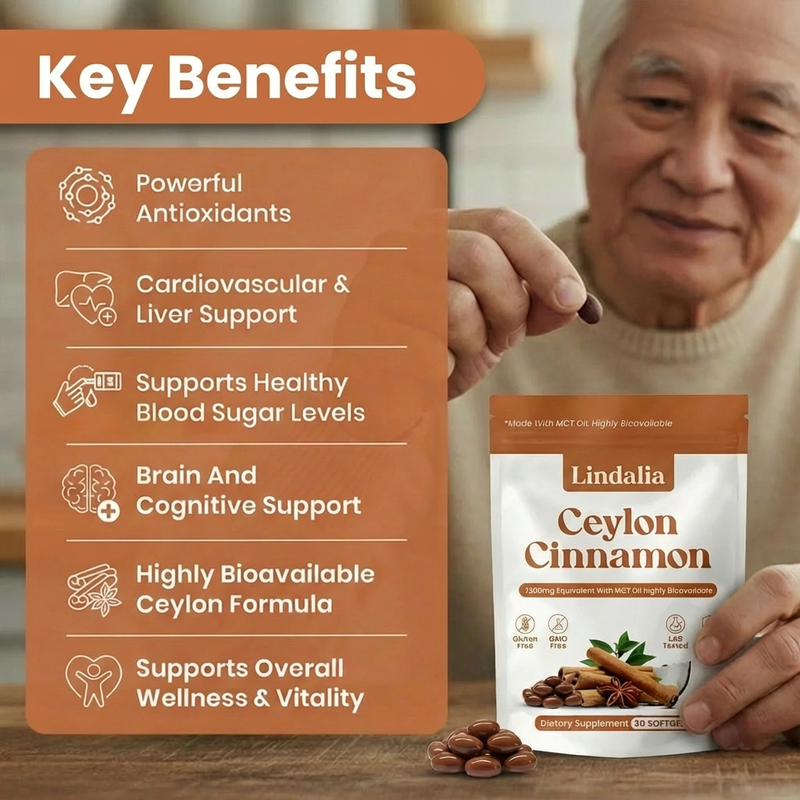
Ceylon Cinnamon 7,200mg with MCT Oil
Two doses, pre-meal, before your highest-carbohydrate meals. The complete formula for the complete protocol.
See the Product