

Best Ultrasonic Tooth Cleaner: Our Top Picks for 2026
What to look for, what to ignore, and which devices actually deliver results in 2026.
The market for at-home ultrasonic tooth cleaners has grown considerably over the past few years, and with it, a flood of devices ranging from genuinely capable to disappointingly underpowered. Knowing what to look for separates a tool that will actually change your oral health from one that will collect dust after two weeks.
The Criteria That Actually Matter
Before listing specific devices, it helps to understand the variables that separate effective ultrasonic cleaners from ineffective ones. Most marketing focuses on cosmetic features: sleek design, color options, app connectivity. The performance variables that determine cleaning outcome are different.
Frequency and amplitude together determine how much energy the tip transmits to a tartar deposit. A device that oscillates at higher frequency but with very low amplitude may feel smooth and gentle but accomplish little against hardened calculus. You want a device where the tip visibly vibrates at contact; if you cannot feel any sensation at all on a soft setting, the output may be insufficient for actual tartar disruption.
Tip design is the second critical variable. The most useful tip for tartar removal is a fine metal point that can access tight spaces and work at low angles to the tooth surface. Flat rubber tips polish and remove staining but do not generate the concentrated vibrational energy needed to fracture calculus. A device that comes only with flat tips is a stain remover, not a tartar tool. Look for a metal fine tip as the primary cleaning head.
App connectivity, charging cases, and color-customization add zero cleaning performance. They add cost. The best device for most people is the one that delivers consistent vibration frequency, a good metal tip, sufficient battery life, and multiple intensity modes at a price that does not require a second thought before purchasing.
Battery Life and Charging
Battery life matters more than most buyers anticipate. A device used 2 to 3 times per week at 2 to 3 minutes per session uses roughly 6 to 9 minutes of runtime per week. A device rated at 60 minutes of total battery life lasts about 6 to 10 weeks between charges. That is a practical, unremarkable interval for most users.
Devices rated at 200 or more uses on a single charge are in a different category. At 2 to 3 uses per week, 200 uses represents more than a year of typical usage between charges. The practical implication: you stop thinking about charging, the device is always ready, and you use it consistently instead of letting the dead battery become a reason to skip sessions.
USB-C charging is the current standard and the most convenient. Proprietary charging docks tend to be lost, broken, or left behind during travel. Pen-sized devices with universal charging connectors are the pragmatic choice for real-world use.
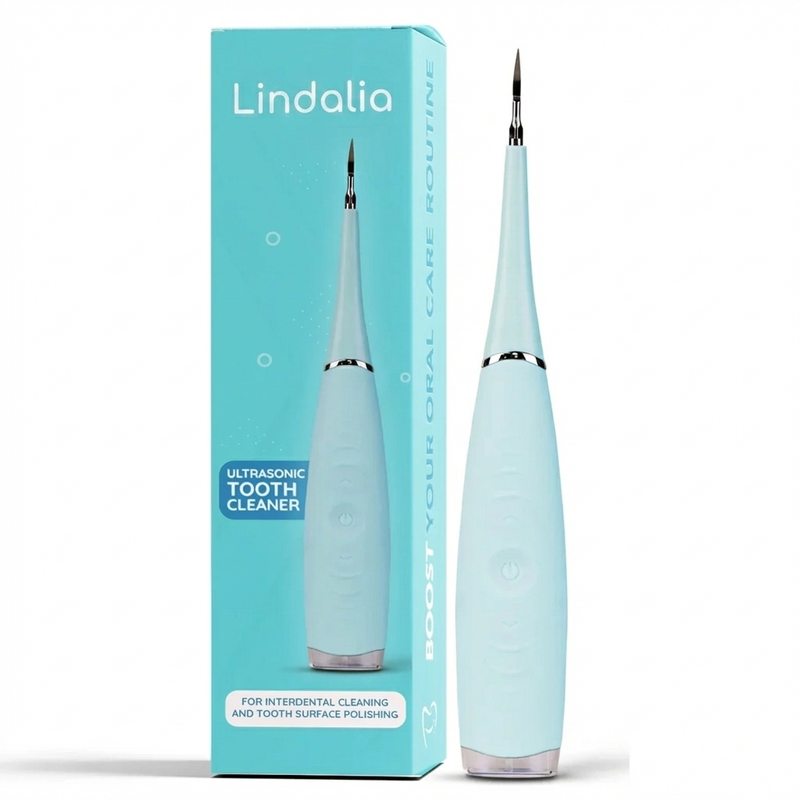
Lindalia Ultrasonic Tooth Cleaner
200+ uses per charge via USB. Fine metal tip and flat tip included. Multiple intensity modes for gradual, comfortable use. A tool that earns its place in your routine.
See the ProductIntensity Modes: Why Multiple Settings Matter
First-time ultrasonic users almost universally find the sensation unfamiliar. The vibration transmits through the tip into the tooth, and even at low power, there is a distinct buzzing feeling that is unlike any other dental tool. Starting at maximum intensity on a first use typically leads to discomfort and abandonment of the device.
Multiple intensity modes serve two functions. First, they allow gradual introduction: start on the lowest setting for the first week, increase to the middle setting once the sensation feels normal, and move to full power only for areas with significant buildup. Second, different zones in the mouth require different energy levels. The inner lower front teeth accumulate calculus fastest and tolerate more intensity. The gum margins and areas around restorations benefit from lower settings.
Devices with only a single power output are designed for convenience but sacrifice adaptability. For anyone building a long-term routine, variable intensity is not optional.
LED Light: Useful or Gimmick?
This one is genuinely useful, and for a simple reason: the inside of your mouth is dark. Most people attempting to clean their own teeth without magnification and lighting have almost no visibility of what they are doing. A built-in LED illuminates the working area, allowing you to see deposits and staining on surfaces like the inner lower front teeth that are otherwise invisible during self-cleaning.
The LED is not a therapeutic element; it does not contribute to whitening or cleaning. It is a visibility tool. Any device claiming therapeutic benefits from the LED (whitening acceleration, gum stimulation) is overstating the evidence significantly.
Some mid-range to premium devices include a pressure sensor that dims the LED or reduces vibration intensity when the user presses too hard. This is genuinely protective, especially for users new to the tool. The most common error in at-home ultrasonic use is applying manual pressure like a traditional scaler, which is unnecessary and potentially harmful. A pressure-responsive device prevents this automatically.
Interchangeable Tips: The Versatility Question
Most capable devices include at least two tip types: a fine metal point for calculus disruption and a flat or disc tip for polishing and stain removal. The combination covers the full range of at-home maintenance: the fine tip addresses tartar, the flat tip smooths and brightens afterward.
More tips is not always better. Rubber gum-massage tips, tongue-cleaning attachments, and whitening trays marketed as add-ons for ultrasonic devices are primarily revenue items. The two-tip setup (fine point and flat) covers everything most users need at home.
Tip replacement availability matters for long-term use. Check before purchasing whether replacement tips are available from the manufacturer, at what cost, and whether they are compatible with the device's attachment mechanism. Proprietary tip systems that become unavailable after a product line change render the device useless for its primary function.
The best ultrasonic tooth cleaner is the one you will actually use twice a week for the next two years.
Where the Lindalia Ultrasonic Tooth Cleaner Fits
The Lindalia device performs at the functional sweet spot for most adult users. The fine metal tip and flat tip are both included. Multiple intensity modes allow gradual adaptation. The USB charging and 200-plus uses per charge address the most common consistency-killer in oral care routines: a dead battery as a reason not to use the device.
The pen-sized form factor means it travels without adding bulk. The LED provides practical working visibility. At the current price point, it sits below premium-tier devices that offer app connectivity and cases without delivering meaningfully better cleaning performance.
For users dealing with rapid calculus formation, visible staining from coffee or tea, or looking to extend the interval between costly professional cleanings while maintaining results, this device covers the functional requirements without unnecessary additions.
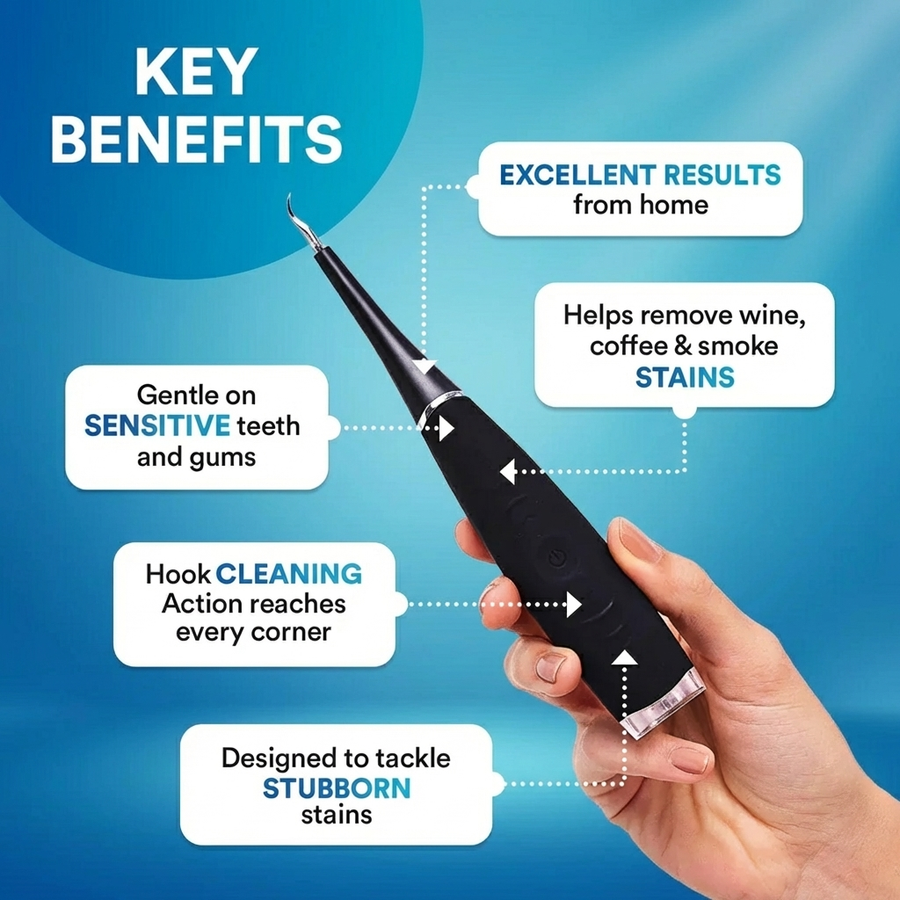
Ultrasonic Tooth Cleaner by Lindalia
Fine metal tip, flat polishing tip, multiple intensity modes, LED light, USB charging. The complete at-home dental maintenance kit.
See the ProductWhat to Avoid
Devices sold at very low price points (under $15) typically use lower-quality vibration motors that cannot sustain consistent frequency output. The vibration feels strong initially and weakens significantly within weeks of use as the motor degrades. The tip materials are often less precise, making effective calculus disruption less reliable.
Avoid devices that ship with only rubber or silicone tips if tartar removal is your goal. These tools are polishers, not scalers, regardless of how they are marketed. And ignore products that claim to remove subgingival (below-gum-line) calculus at home: this is clinically not achievable with consumer-grade devices and consumer-safe tip geometries. Any device making that claim is misrepresenting its capabilities.
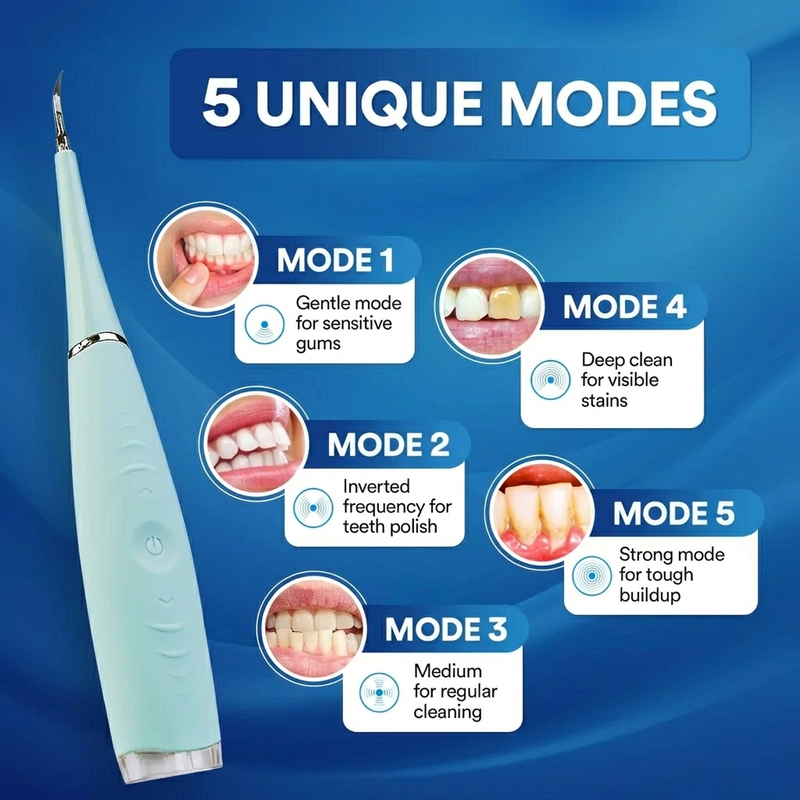
Lindalia Ultrasonic Tooth Cleaner
Consistent vibration, practical design, 200+ uses between charges. The straightforward choice for at-home tartar maintenance.
See the Product