

Cervical Orthopedic Pillow: Why Cervical Support Matters More Than You Think
The cervical spine controls more of your health than most people realize. Here's what it connects to, and why getting proper support during sleep is a health decision, not just a comfort one.
People buy cervical pillows to fix neck pain. That's the obvious application. But the cervical spine's influence on how you feel extends well beyond the neck itself. The seven vertebrae of the cervical spine house the spinal cord, route all the nerve signals between the brain and the body, and sit at the top of a chain that includes every organ system below it. When those vertebrae are chronically misaligned during the eight hours you sleep, the downstream effects go further than a stiff neck in the morning.
What the Cervical Spine Actually Controls
The cervical spinal cord and its exiting nerve roots serve as the primary relay station between the brain and the rest of the nervous system. C1 through C4 nerve roots provide sensation and motor control to the head, neck, and diaphragm. C5 through T1, the lower cervical nerve roots, innervate the arms, hands, and much of the shoulder girdle. The vertebral arteries run through the transverse foramina of C1 through C6, supplying blood to the brainstem and cerebellum.
This anatomy explains why cervical dysfunction can produce symptoms that seem completely unrelated to the neck. Persistent headaches at the base of the skull are often cervicogenic, driven by the C1-C3 nerve roots. Jaw tension and TMJ discomfort frequently have a cervical component, as the muscles of mastication share neural connections with the upper cervical spine. Dizziness, particularly positional dizziness on waking, can originate from cervical vertebral artery irritation or from the dysfunction of proprioceptive sensors in the cervical facet joints that contribute to balance control.
Arm symptoms, including tingling, weakness, and the characteristic "dead arm" of thoracic outlet syndrome, trace back to the C5-C8 nerve roots being irritated by sustained positional stress. People who present to physiotherapists with "mystery arm symptoms" that are worse in the morning have often been sleeping in a position that chronically stresses these nerve roots for years.

Cervical Orthopedic Pillow
A properly supported cervical spine during sleep is not a comfort upgrade. It's a health decision. Dynamic foam, dual-height contour, free shipping.
See the ProductHeadaches: The Cervical Connection Most People Miss
Cervicogenic headaches are among the most commonly misdiagnosed pain presentations in general practice. They account for an estimated 15 to 20 percent of all chronic headache cases, but they're frequently treated as tension headaches or migraine variants without addressing the cervical source. The pattern is distinctive once you know what to look for: pain that starts at the base of the skull, is typically unilateral or strongly lateralized, is triggered or worsened by neck movement or sustained neck positions, and is associated with restricted range of motion in the cervical spine.
The morning timing is the diagnostic key for sleep-related cervicogenic headaches. If you wake with a headache already present, or develop one within the first thirty minutes of the day before any obvious trigger (screen, stress, caffeine), the source is highly likely to be the cervical position you maintained overnight. The suboccipital muscles, particularly the rectus capitis posterior and the obliquus capitis, are key sites of referred pain in this pattern, and they respond directly to sustained cervical misalignment during sleep.
Clinical experience consistently shows that patients with morning-onset cervicogenic headaches who switch to properly supported cervical sleeping positions (the right pillow plus correct sleeping position) see meaningful reduction in headache frequency within three to six weeks. This is not a slow outcome. Three to six weeks of consistent overnight positional correction produces measurable changes in the suboccipital tissue tension that's driving the referred head pain.
For one week, note the time your headache starts and the position you slept in. If headaches consistently appear within an hour of waking, regardless of sleep duration, the cause is positional rather than lifestyle-based. Morning headaches that appear before coffee, before screens, before stress, are pointing at something that happened during the night.
Jaw Tension and TMJ: The Cervical Link
The connection between the cervical spine and the temporomandibular joint (TMJ) is less well known than the neck-headache relationship, but it's equally well documented. The trigeminal nerve, which provides sensory innervation to the jaw and face, and the upper cervical nerves share connections in the trigeminal cervical nucleus in the brainstem. This shared circuitry means that chronic irritation in the upper cervical spine can sensitize the trigeminal pathways, leading to increased jaw muscle tone, TMJ discomfort, and facial pain that presents as a "jaw problem" without any primary dental or joint pathology.
People who grind their teeth at night (bruxism) have an elevated co-occurrence of upper cervical dysfunction. The elevated masseter and temporalis tone that characterizes bruxism is partly mediated through the trigeminal-cervical connection. When upper cervical alignment is corrected and the overnight stress on the C1-C3 levels is removed, some bruxers notice a reduction in jaw tension and morning jaw fatigue, even without any direct jaw treatment. This is not universal, and bruxism has multiple causes, but the cervical component is real and often overlooked.
The practical takeaway: if you have chronic jaw tension, morning jaw ache, or diagnosed TMJ dysfunction, assess your cervical sleeping position as part of the picture. A physiotherapist who works with TMJ patients should be asking about your pillow and your sleep position. If they're not, it's worth raising the question yourself.
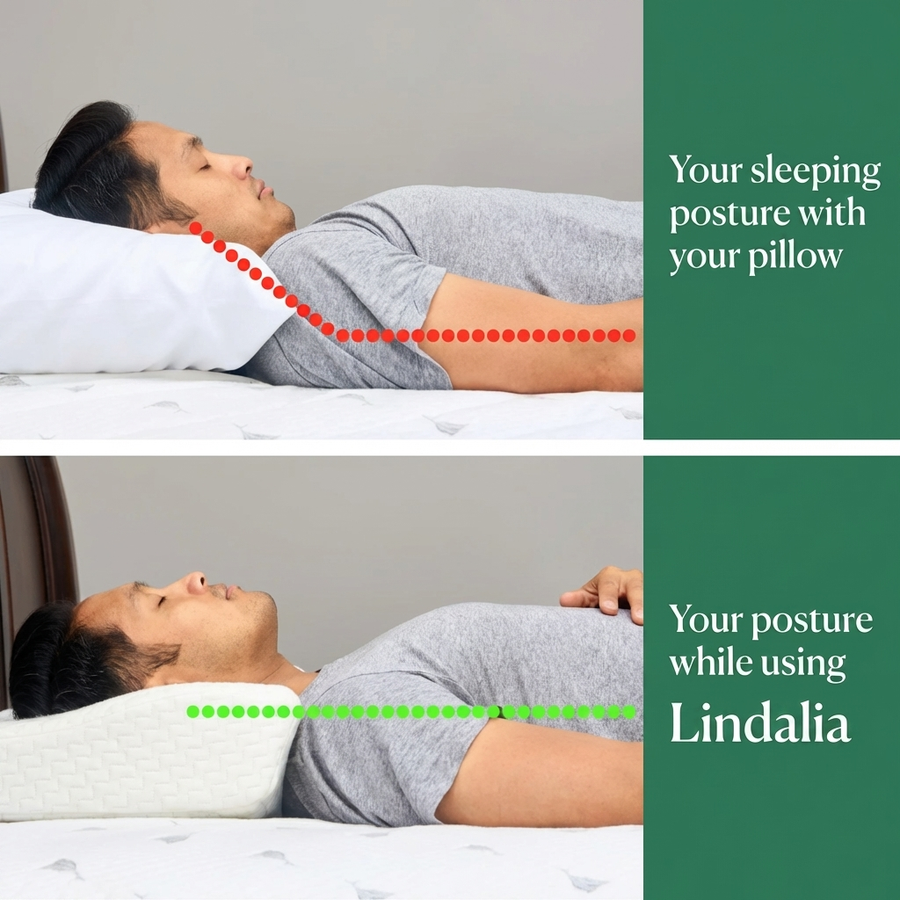
Cervical Support With Whole-Body Benefits
From headaches to jaw tension to arm symptoms, proper cervical alignment during sleep removes the source of multiple cascading health complaints.
See the ProductDizziness and Balance: Cervical Proprioception
The facet joints of the cervical spine are among the richest sources of proprioceptive information in the body. The mechanoreceptors embedded in the joint capsules, muscles, and ligaments of the cervical region send continuous position-sense signals to the brain that contribute to balance, spatial orientation, and gaze stabilization. When these receptors are chronically irritated by sustained positional stress (as happens with ongoing cervical misalignment during sleep), the quality of the proprioceptive signals they send becomes unreliable.
This unreliability in cervical proprioception contributes to the symptom of dizziness, particularly positional dizziness on waking or with position change. The brain receives conflicting information from the cervical mechanoreceptors and the vestibular system, and interprets this conflict as movement or imbalance. People with chronic cervical dysfunction often describe a sensation of fogginess or mild unsteadiness in the morning that clears over the first hour of the day, as movement gradually restores more reliable cervical mechanoreceptor function.
This is distinct from benign paroxysmal positional vertigo (BPPV), which has a different mechanism involving displaced otoconia in the inner ear. Cervicogenic dizziness is typically less severe than BPPV, doesn't produce the specific rotational vertigo of BPPV, and responds to cervical treatment rather than the repositioning maneuvers used for BPPV. If you experience morning dizziness that improves with movement, it's worth having a physiotherapist assess the cervical contribution.
Most people start thinking about cervical health after they have pain. But the cervical spine is the kind of structure where prevention is significantly more effective than treatment. Eight hours of correct cervical support every night prevents the cumulative tissue stress that creates the problems. Once chronic patterns are established, recovery takes longer than prevention would have cost.
The cervical spine is not just where your neck pain lives. It's the gateway between your brain and your body. Treat it like it matters.
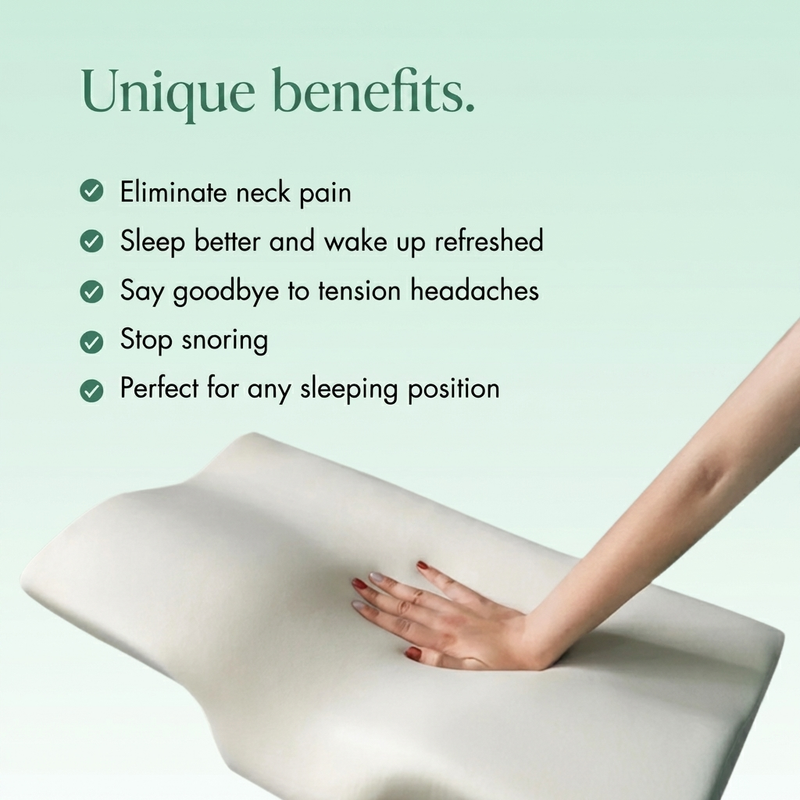
Cervical Orthopedic Pillow for Total Cervical Health
One properly supported cervical spine during sleep. One decision with benefits that extend well beyond the neck. Free shipping and satisfaction guarantee.
See the Product