

Ceylon Cinnamon Supplement: How to Choose a High-Quality Formula
Beyond the Ceylon label, there are five deeper quality markers that separate a formula that works from one that just looks right on paper.
Confirming the species on a cinnamon supplement label is step one. But labelling something "Ceylon cinnamon" does not guarantee that the active compounds are present in meaningful quantities, that the extraction method preserved them, or that the formula delivers them where they need to go. Evaluating a cinnamon supplement properly means going several layers deeper than the front panel.
Standardisation: Does the Label Tell You the Active Compound Content?
Raw cinnamon bark varies in cinnamaldehyde content depending on the plant's age, the growing region, harvest season, and storage conditions. A bag of Ceylon bark powder could contain anywhere from 0.5% to 4% cinnamaldehyde by weight. Without standardisation, a 7,200 mg daily dose from one batch could deliver a genuinely different amount of active compound than the same dose from a different batch.
Standardised cinnamon extracts address this by concentrating the bark to a defined percentage of active compound. A label stating "standardised to 2% cinnamaldehyde" tells you that the manufacturer has tested and adjusted the extract so that each serving delivers a consistent quantity of the compound you actually want.
This distinction between plain bark powder and standardised extract is meaningful. Both can legitimately state the genus and species on the label. Only the standardised version guarantees consistent therapeutic potency across batches. If you are using the supplement to manage blood sugar, consistency of effect matters.
Phrases like "standardised to X% cinnamaldehyde" or "standardised cinnamon bark extract" indicate active-compound quality control. Plain "cinnamon bark powder" does not. Both can be Ceylon. Only one guarantees potency.
Extraction Method: How the Bark Becomes a Capsule
The method used to process cinnamon bark into supplement form affects how much of the active compound survives and how bioavailable it is. Three main formats exist in the market.
Dry powder is the simplest: bark is dried and milled into powder. Minimal processing, low cost, variable potency. Fine for culinary use. Adequate but not optimal for therapeutic supplementation.
Hydroethanolic extraction uses a water-alcohol solvent to pull a broader range of polyphenols from the bark. This produces a more concentrated extract with a wider spectrum of active compounds. The resulting extract is then dried and encapsulated. Potency is higher per gram, which is why standardised extracts often achieve equivalent effects at lower total weights.
Supercritical CO2 extraction uses pressurised carbon dioxide to extract volatile compounds, including cinnamaldehyde, with high purity and without solvent residues. This method is more expensive and less common but preserves the volatile aromatic compounds most effectively.
For most consumers, a well-made hydroethanolic extract from verified Ceylon bark is the practical standard. What to avoid is heat-processed or long-stored powder without any standardisation claim, which may have significantly degraded active compound content.
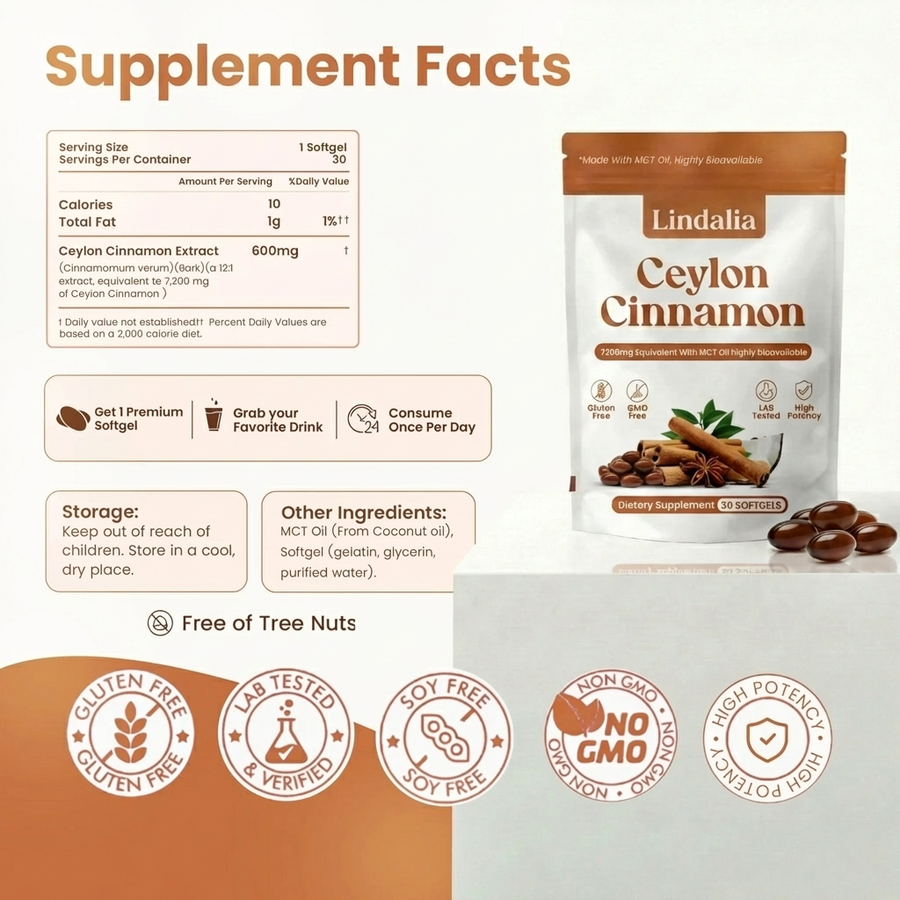
Ceylon Cinnamon 7,200mg with MCT Oil
A formula built on consistent, verified Ceylon cinnamon combined with MCT oil for bioavailability and berberine for complementary metabolic support.
See the ProductBioavailability Enhancers: Does the Formula Account for Fat Solubility?
Cinnamaldehyde and many of cinnamon's polyphenols are fat-soluble. This has a practical consequence: taken in a capsule without any fat, their absorption is limited. The compound is present in the gut but does not efficiently cross the intestinal wall into circulation.
MCT oil (medium-chain triglycerides) serves two roles in a cinnamon formula. First, it provides a lipid environment that dramatically improves the absorption of fat-soluble compounds. Studies on fat-soluble supplements consistently show higher plasma concentrations when taken with fat, and MCT oil is particularly efficient because it is absorbed and metabolised more rapidly than long-chain fats.
Second, MCT oil is metabolised directly to ketones by the liver, providing a steady energy source that does not require insulin for cellular uptake. This contributes to the stable-energy effect that users report during blood sugar management protocols.
A formula that combines Ceylon cinnamon with MCT oil is not adding MCT as a filler. It is addressing a genuine pharmacokinetic gap in plain cinnamon supplementation. When evaluating products, this inclusion signals that the formulator understood bioavailability, not just ingredient listing.
Fillers and Capsule Quality: What Else Is in There
Every capsule supplement contains inactive ingredients. Some are necessary and benign. Others are present to reduce manufacturing costs, improve flowability, or extend shelf life without any benefit to you.
Acceptable excipients include vegetable cellulose (for capsule shells), rice flour as a minor filler, and silica in small amounts as an anti-caking agent. These are functional and safe at normal quantities.
Watch for maltodextrin, which raises blood sugar, a particularly poor choice in a blood sugar management supplement. Artificial colours and flavours add nothing. Proprietary blends that combine multiple ingredients into a single undisclosed weight mean you cannot evaluate individual doses. Magnesium stearate in excessive quantities can reduce absorption of some compounds.
The capsule shell matters too. Gelatin capsules are standard and functional. Vegetarian (HPMC) capsules are preferable if you follow plant-based practices. Enteric-coated capsules pass through the stomach intact and dissolve in the small intestine, which can be an advantage for compounds that are partially degraded by stomach acid.
Third-Party Certification: Accountability Beyond the Label
A manufacturer can print anything on a label. Third-party testing creates external accountability. An independent laboratory receives blinded samples and tests for species identity, active compound content, heavy metals, microbial contamination, and the absence of undeclared ingredients.
When a brand publishes COAs (certificates of analysis), it is making a specific empirical claim about what is in the bottle. If the COA lists Cinnamomum verum confirmed by HPLC testing, and shows coumarin levels consistent with Ceylon (under 0.05 mg/g), you have real evidence that the species claim is accurate.
GMP certification (Good Manufacturing Practice) at an FDA-registered or EU-notified facility adds manufacturing quality controls. The supplement will not be contaminated with unintended substances, and the doses listed on the label reflect what is actually present within acceptable tolerances.
Ask or search whether the brand provides a COA for the current production batch. It should confirm species (Cinnamomum verum), cinnamaldehyde content, heavy metal limits, and microbial safety. If none is available, that is information in itself.
Complementary Ingredients: Does the Stack Make Sense?
If a formula includes ingredients beyond cinnamon, each addition should work through a distinct mechanism that complements rather than overlaps. A stack where every ingredient does the same thing is less valuable than one with genuine mechanistic diversity.
Berberine activates AMPK, increasing glucose uptake into muscle cells and reducing glucose production in the liver. This is a different pathway from cinnamon's alpha-glucosidase inhibition and insulin receptor sensitisation. The two together cover more of the blood glucose regulation system than either alone.
Chromium picolinate supports insulin receptor function as a cofactor. Suboptimal chromium status, common in adults eating processed food, reduces the efficiency of insulin signalling at the receptor binding step. Correcting this supports the same insulin sensitivity gains that cinnamon produces through a different mechanism.
What does not add value: high doses of generic antioxidants that duplicate what polyphenols in cinnamon already do, stimulants like caffeine that mask fatigue without addressing underlying glycaemic instability, or superfood extracts included for label appeal without evidence of synergy.
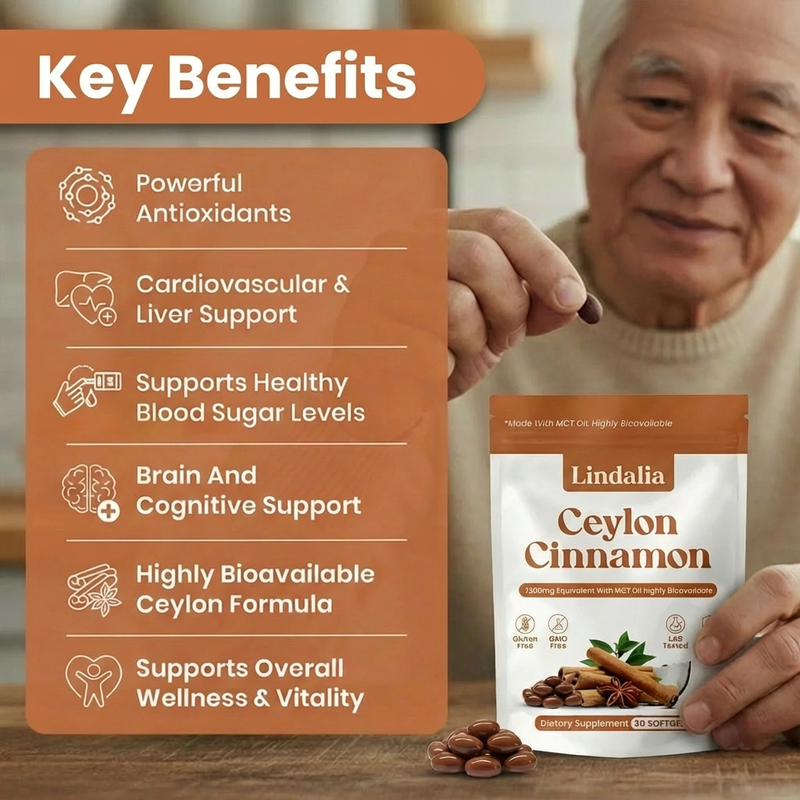
Ceylon Cinnamon 7,200mg Formula
Standardised Ceylon cinnamon with MCT oil, berberine at 250mg, and chromium picolinate. Each ingredient verified, each dose therapeutic.
See the Product