

Cinnamon as a Health Supplement: Science-Backed Benefits
Dozens of clinical trials. Consistent findings across glycaemia, inflammation, and cardiovascular markers. Here is what the research actually shows, without extrapolation.
Cinnamon has been studied more extensively than most botanical supplements. The evidence base is not perfect, but it is substantial. Understanding what is well-established, what is emerging, and what is overstated separates rational use from wishful thinking. This review covers the clinical findings with specifics.
Blood Glucose: The Strongest Evidence
The most replicated finding in cinnamon research is its effect on blood glucose markers. Multiple randomised controlled trials have examined cinnamon's impact on fasting blood glucose, post-meal glucose, and HbA1c in people with elevated glucose levels.
A systematic review and meta-analysis that pooled data from multiple randomised trials found that cinnamon supplementation produced statistically significant reductions in fasting blood glucose compared to placebo. The effect size was moderate but clinically meaningful, particularly in individuals starting with elevated baseline glucose (fasting glucose above 100 mg/dL).
The mechanism is well-characterised. Cinnamaldehyde inhibits alpha-glucosidase in the small intestine, the enzyme that breaks down complex carbohydrates into absorbable glucose. Slower breakdown equals slower glucose entry into the bloodstream. Simultaneously, cinnamon compounds activate insulin receptor tyrosine kinase, improving the efficiency of insulin signalling at the receptor level. Cells become more responsive to insulin, so less insulin is required to achieve the same glucose clearance.
A third mechanism involves the GLUT4 transporter. Some research suggests cinnamon increases GLUT4 expression on cell surfaces, providing more channels through which glucose can enter cells. This is a separate pathway from insulin receptor sensitisation, potentially adding to the overall effect.
Effects are most consistent and clinically significant in individuals with baseline fasting glucose above 100 mg/dL. In individuals with completely normal glucose metabolism, the effect is smaller because the system is already functioning efficiently. Cinnamon is most useful where the underlying problem it addresses is actually present.
HbA1c: The Long-Term Marker
HbA1c (glycated haemoglobin) reflects average blood glucose over the past two to three months. It is the standard clinical measure for tracking glycaemic control over time and is used diagnostically for pre-diabetes (5.7% to 6.4%) and diabetes (6.5% and above).
Several trials specifically tracking HbA1c over eight to twelve weeks of cinnamon supplementation have found measurable reductions, typically in the range of 0.1% to 0.5% from baseline. In absolute terms, those numbers appear small, but in clinical terms, a 0.3% HbA1c reduction in someone at 6.1% moves them meaningfully away from a diabetes diagnosis threshold.
The consensus from the literature is that HbA1c effects are real but require sufficient dose and sufficient time. Studies using 500 mg per day over four weeks do not consistently show HbA1c changes. Studies using 1,500 mg to 6,000 mg over eight to twelve weeks show more consistent and larger effects. This dose-duration relationship is why the formulation details matter so much for real-world outcomes.
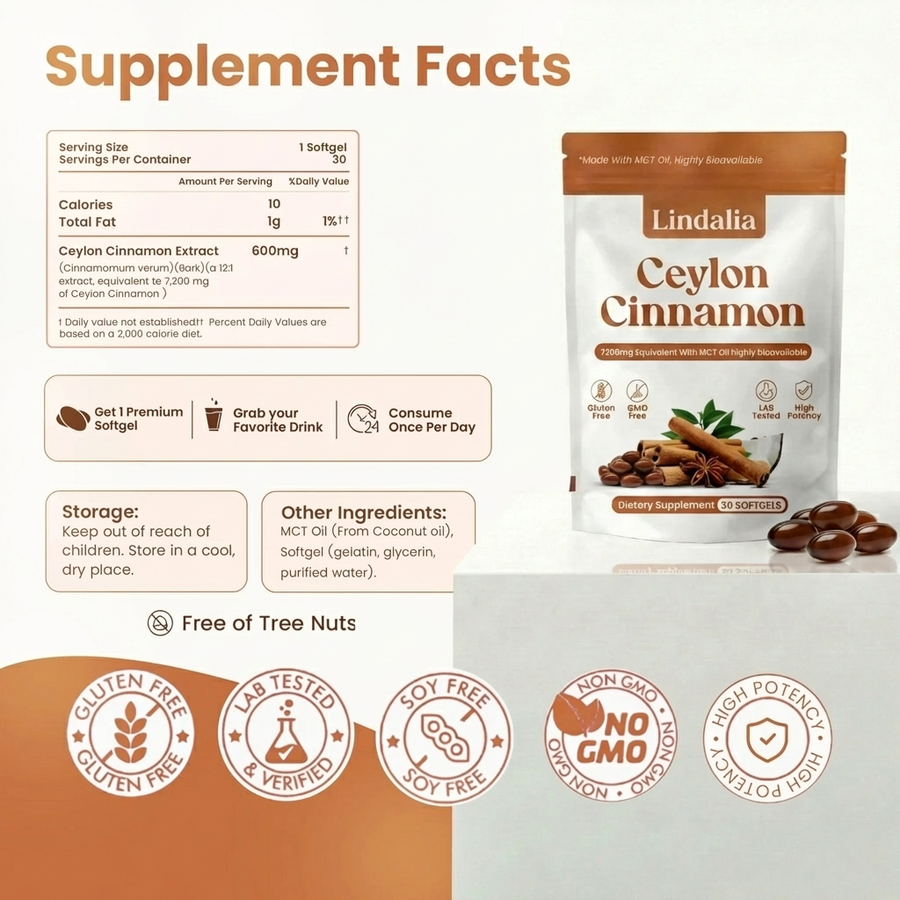
Ceylon Cinnamon 7,200mg Formula
Dosed at the range where clinical evidence is strongest. Paired with berberine and chromium for complementary pathway support.
See the ProductPost-Meal Glucose Response: Practical Day-to-Day Effects
Beyond fasting markers, acute studies have examined cinnamon's effect on post-meal glucose excursions. In crossover studies where participants consumed a standardised carbohydrate meal with or without cinnamon, the cinnamon condition consistently produced a lower and flatter glucose curve.
The peak glucose concentration was lower (the spike was blunted). The time to return to baseline was shorter (the crash was less prolonged). And in several studies, the insulin required to achieve glucose clearance was reduced, indicating improved insulin efficiency rather than just slower glucose release.
This acute effect is what users notice first in practical use. The 3 pm energy crash is the real-world expression of a steep post-lunch glucose spike followed by reactive hypoglycaemia. When the spike is blunted, the crash is proportionally milder. This is not a subtle effect. Users typically notice it within the first one to two weeks of consistent, appropriately-dosed supplementation.
Insulin Sensitivity and Insulin Resistance
Insulin resistance is a spectrum, not a binary state. Most adults in industrialised countries sit somewhere on that spectrum, particularly as they age and particularly with increasing amounts of processed food in their diets. The clinical language for the earlier stages is "impaired glucose tolerance" or "pre-diabetes," but the underlying physiology begins years before any diagnostic threshold is crossed.
Cinnamon's insulin-sensitising effects have been documented through HOMA-IR (the homeostatic model assessment of insulin resistance), a calculated measure derived from fasting insulin and fasting glucose. Multiple trials show significant reductions in HOMA-IR with cinnamon supplementation, indicating genuine improvement in how efficiently the body processes glucose per unit of insulin.
This is relevant not only for people with pre-diabetic markers but also for weight management, PCOS (polycystic ovary syndrome, where insulin resistance is a core feature), and perimenopause (where declining oestrogen impairs insulin sensitivity directly).
Anti-Inflammatory Effects: Real But Secondary
Chronic low-grade inflammation is a feature of metabolic disease. Elevated blood sugar itself is pro-inflammatory: glucose binds to proteins (glycation) and generates reactive oxygen species that activate inflammatory pathways. Stabilising blood glucose is therefore inherently anti-inflammatory, independent of any direct anti-inflammatory action by cinnamon.
Cinnamon also has direct anti-inflammatory properties. Cinnamaldehyde and related polyphenols inhibit NF-kB, a central inflammatory signalling pathway, and reduce production of pro-inflammatory cytokines including TNF-alpha and IL-6. This has been demonstrated in both cell culture and animal studies, and there are limited but positive human studies examining inflammatory markers.
The evidence for direct anti-inflammatory effects is less robust than the glycaemic evidence. It is real, but treating cinnamon primarily as an anti-inflammatory supplement would overstate the current evidence base. The glycaemic effects are where the scientific confidence sits, and reducing chronic glycaemic stress is itself the most evidence-backed anti-inflammatory intervention cinnamon provides.
Cardiovascular Markers: Emerging Evidence
Several trials have examined cinnamon's effects on lipid panels, finding modest reductions in total cholesterol, LDL cholesterol, and triglycerides alongside improvements in glucose markers. The effect sizes are typically smaller than the glycaemic findings, and not all studies show significant effects.
The mechanism likely connects through glycaemic control: when post-meal glucose spikes are blunted, the associated triglyceride elevations are also reduced. Insulin resistance itself drives elevated triglycerides and reduced HDL, so improving insulin sensitivity has downstream cardiovascular effects that may not be attributable to cinnamon as a direct lipid-modifying agent.
The cardiovascular data is promising but should be described accurately as an area of emerging evidence, not as established fact. Someone choosing cinnamon specifically for lipid management would be doing so on weaker scientific footing than someone choosing it for glycaemic support.
Use cinnamon for what the evidence strongly supports: post-meal glucose management, fasting blood glucose improvement, and insulin sensitivity. The anti-inflammatory and cardiovascular benefits are real but secondary, and they come largely through the glycaemic improvements anyway.
"The science on cinnamon and blood sugar is solid. Dozens of trials, consistent direction of effect, clear dose-response. That is a high bar in the supplement world."
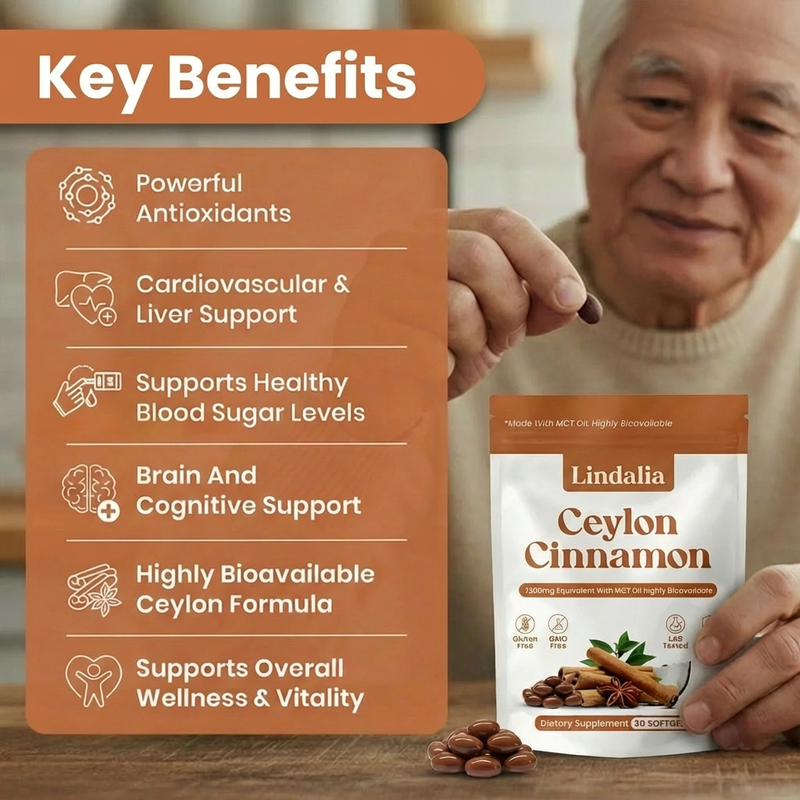
Ceylon Cinnamon 7,200mg with MCT Oil
Dosed and formulated at the level where clinical evidence is strongest. MCT for absorption, berberine for AMPK, chromium for insulin cofactor support.
See the Product