

Cinnamon Dietary Supplement: How to Integrate It Into Your Diet
Why sprinkling cinnamon on oatmeal is not the same as supplementing, and how to build a dietary approach that works with, not against, your cinnamon protocol.
Adding cinnamon to food and taking a cinnamon supplement are not the same intervention. The dose, the species, the bioavailability, and the consistency differ so significantly that treating them as equivalent is a mistake that leads to underestimating what supplementation can do. Here is how to use both intelligently and what dietary choices multiply the supplement's effect.
Why Food-Based Cinnamon Is Not a Supplement Substitute
A heaped teaspoon of ground cinnamon in your oatmeal contains roughly 2,500 to 3,000 mg of cinnamon, which is within the therapeutic dose range. So why is it not equivalent to a supplement?
Species is the first issue. The cinnamon in most kitchens is Cassia. At 2,500 to 3,000 mg daily, the coumarin content from Cassia reaches approximately 2.5 to 36 mg depending on the source, approaching or exceeding the EFSA tolerable daily intake for a 70 kg adult. You cannot use daily high-dose Cassia in food safely for months without liver risk.
Bioavailability is the second issue. Cinnamaldehyde in dry powder mixed into food is subject to partial volatilisation during cooking and to digestion in an aqueous food matrix without the lipid carrier that a supplement formula provides. The fraction that reaches absorption is lower and more variable than from a properly formulated capsule with MCT oil.
Consistency is the third issue. Measuring 7,200 mg of Ceylon cinnamon powder into food daily, without a scale, is impractical. Some days you add more, some days less. A supplement delivers a precise, consistent dose every time.
Culinary cinnamon is a complementary addition to a supplementation protocol, not a substitute for it. Add Ceylon to food if you enjoy it. Count it as a bonus, not as your therapeutic dose.
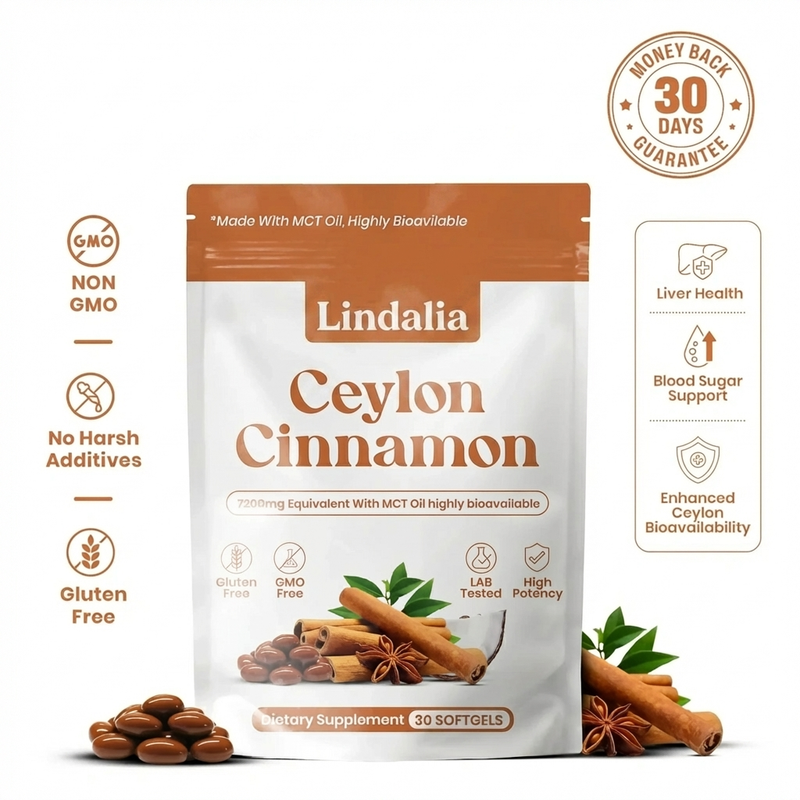
Ceylon Cinnamon 7,200mg with MCT Oil
Precise dose, verified Ceylon, MCT bioavailability. The supplementation side of a whole dietary approach to blood sugar management.
See the ProductDietary Choices That Work Synergistically With Cinnamon
Cinnamon's primary mechanism is slowing carbohydrate digestion and improving insulin sensitivity. Certain dietary patterns amplify both mechanisms. Others work against them.
Dietary fibre is the most synergistic addition. Soluble fibre (oats, legumes, vegetables, psyllium) forms a gel in the digestive tract that slows glucose absorption through a physical mechanism that complements cinnamon's enzymatic one. The two effects together produce a flatter glucose curve than either alone. Including high-fibre foods at every meal is the single most powerful dietary complement to a cinnamon protocol.
Protein at the start of meals produces another complementary effect. Eating protein before carbohydrates in a meal (the "food order" strategy) slows gastric emptying and reduces post-meal glucose by approximately 30% compared to eating carbohydrates first, in studies examining this specific question. Combined with cinnamon's alpha-glucosidase inhibition, the two mechanisms further flatten the post-meal glucose curve.
Vinegar (acetic acid) and fermented foods produce similar alpha-glucosidase inhibition through acetic acid's known enzyme-inhibiting properties. A small amount of apple cider vinegar or a fermented food (kimchi, sauerkraut, natural yoghurt) at meals adds a third overlapping mechanism.
Foods That Undermine the Cinnamon Protocol
Certain dietary patterns reduce the effectiveness of any blood sugar supplement by providing a glycaemic challenge that exceeds even well-supported interventions.
Liquid calories with high sugar content, including sweetened drinks, juices, and smoothies with large amounts of fruit, deliver glucose so rapidly that alpha-glucosidase inhibition cannot meaningfully slow their absorption. The enzyme targeted by cinnamaldehyde acts on complex carbohydrates. Simple sugars are already in absorbable form and bypass this mechanism entirely. Liquid sugar is the hardest glucose load for any supplement to manage.
Very high-glycaemic meals dominated by refined carbohydrates and devoid of protein, fat, and fibre overwhelm the alpha-glucosidase inhibition by sheer volume. Cinnamon will still help at the margin, but the dose-response relationship means a massive glucose challenge produces a larger residual spike even with optimal alpha-glucosidase inhibition.
Alcohol disrupts glucose regulation through multiple pathways, including impaired hepatic glucose production and altered insulin sensitivity. Heavy alcohol consumption the night before can affect the following day's glucose management regardless of supplementation.
Start with protein and vegetables. Add complex carbohydrates after. Include fibre at every meal. Take your cinnamon supplement 15 to 20 minutes before. Avoid liquid sugar. This structure consistently produces flatter post-meal glucose than any single intervention alone.
Specific Foods That Complement the Formula
Certain foods pair particularly well with a cinnamon-based metabolic support protocol, not because they are "superfoods" in a vague sense, but because they contain compounds with documented complementary mechanisms.
Berries (blueberries, blackberries, strawberries) contain anthocyanins that inhibit alpha-glucosidase through the same general mechanism as cinnamaldehyde. Including berries with a carbohydrate-containing breakfast adds additional enzyme inhibition alongside your supplement's effect.
Green tea contains EGCG, which has independently documented insulin-sensitising properties and modest alpha-glucosidase inhibition. Drinking green tea with meals that contain carbohydrates adds another layer of glucose management support. Unlike coffee, which can transiently elevate cortisol and blood glucose in some individuals, green tea's effect on glucose regulation is reliably positive.
Extra virgin olive oil with meals improves the fat-soluble compound absorption from cinnamon supplements if you are taking them around meal time, and has its own documented effects on post-meal glucose through mechanisms including slowing gastric emptying. Mediterranean dietary patterns, which feature olive oil prominently, consistently show better insulin sensitivity outcomes than comparable diets without it.
Integrating the Supplement Into Meal Planning
The practical aspect of integration is about building the supplement into meal habits rather than treating it as separate from food decisions. Think of it as part of the meal, not an addition after the meal.
Morning routine: if you eat breakfast, take your first dose as you are preparing the meal, not after eating. If your breakfast is low in carbohydrates, reserve both doses for lunch and dinner where the glucose challenge is higher.
Work lunches: keep the supplement container in your bag or desk. The trigger is taking it out when you get your lunch, not when you sit down to eat. The physical action of getting your food out cues the supplement dose.
Restaurant and social eating: this is where consistency matters most and where people most often miss doses. Carry a small travel supply. The metabolic benefit of taking your supplement before a restaurant meal, which is typically higher in carbohydrates and refined ingredients than a home-cooked equivalent, is actually higher than a controlled home meal.
"The supplement is not separate from your diet. It is the metabolic infrastructure that lets your diet work better."
Ceylon Cinnamon 7,200mg with MCT Oil
Build your dietary approach on the right supplement foundation. Therapeutic dose, MCT bioavailability, pre-meal timing. Everything else adds on top.
See the Product