

Cinnamon Supplement Benefits: What Daily Intake Really Does
From the first week to the third month, here is what changes in your body, and when. A week-by-week breakdown based on the clinical and user evidence.
Most supplement protocols are evaluated at the wrong timescale. You try something for a week, notice nothing dramatic, and conclude it does not work. Blood sugar regulation is a continuous physiological process that changes incrementally over weeks and months, not days. Understanding what to expect, and when, determines whether you give a supplement long enough to demonstrate what it is capable of.
Days 1 to 7: Setting the Stage
In the first week, two things are happening that you will not necessarily feel immediately. First, cinnamaldehyde is beginning to inhibit intestinal alpha-glucosidase. This is an acute, per-dose effect. Each time you take the supplement 15 to 20 minutes before a carbohydrate-containing meal, the enzyme activity in your gut is reduced for several hours, slowing carbohydrate breakdown and glucose entry into the bloodstream.
Second, berberine (if included in the formula) begins activating AMPK in muscle tissue. AMPK activation increases the number of glucose transporters (GLUT4) on muscle cell surfaces, improving insulin-independent glucose uptake. This effect also begins with the first dose but becomes more pronounced as berberine plasma levels establish a steady state over several days.
What you might notice in week one: a slightly smoother energy curve after your largest meal. Not dramatic. Some users describe it as the post-lunch heaviness feeling somewhat less pronounced. Many people notice nothing yet. This is normal. Week one is physiological groundwork, not perceptible transformation.
Weeks 1 to 2: The Post-Meal Crash Begins to Flatten
By the end of the first two weeks, most consistent users begin to notice the afternoon energy crash changing in character. The "3 pm wall," the sudden drop in alertness and energy that follows a carbohydrate-heavy lunch, starts to become less severe and less abrupt.
This is a direct result of alpha-glucosidase inhibition producing a flatter post-meal glucose curve. When glucose enters the bloodstream more gradually, the insulin response is proportional rather than reactive. The subsequent drop in blood glucose is gentler. There is no steep decline triggering cortisol release and a sudden energy trough.
The change is subtle at first. You may simply find it easier to stay focused through the afternoon. The urgency to have a coffee at 3 pm or reach for something sweet starts to feel less pressing. This is the first objective signal that the mechanism is working as intended.
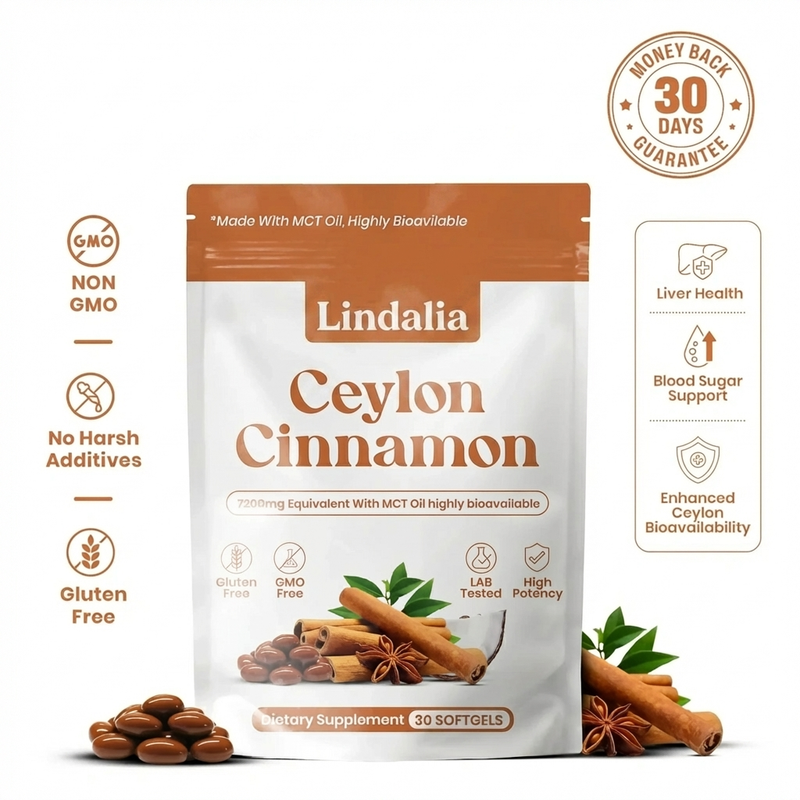
Ceylon Cinnamon 7,200mg with MCT Oil
The week-by-week changes begin with your first dose. Consistent pre-meal timing is where the results come from.
See the ProductWeeks 2 to 3: Cravings Begin to Reduce
Carbohydrate and sugar cravings are largely driven by blood glucose instability. When blood glucose drops rapidly after a spike, the brain interprets this as a shortage and signals urgency for fast energy. The craving for sweets, refined carbs, or caffeine is the brain's response to perceived glucose scarcity, even if total daily calories are adequate.
As the glucose curve flattens over weeks two to three, this craving signal weakens. It is not a motivational change. It is a hormonal and neurological one. The feedback loop driving cravings is less activated when blood sugar does not spike and crash as dramatically.
Users in this phase typically describe it as: "I used to need something sweet after lunch. Now I sometimes forget to eat it and do not feel bothered." Or: "I stopped reaching for snacks at 4 pm without really deciding to." The absence of the craving is often more noticeable than its presence was. Something you previously noticed by its effects simply stops showing up.
Week 4: Consistent Energy Through the Day
By week four, users with consistent dosing report a qualitatively different daily energy pattern. Morning energy is cleaner and more sustainable. The transition from waking to full alertness is smoother. The post-lunch trough is either absent or significantly reduced. Energy in the late afternoon no longer requires caffeine support to maintain.
This shift reflects the cumulative effect of stabilised blood glucose on cortisol rhythms, energy availability, and mental clarity. The brain runs on glucose. When glucose supply is erratic, brain function is erratic. When it is stable, mental clarity is more consistent. This is not a stimulant effect. Cinnamon does not increase energy. It removes the instability that was wasting it.
Sleep quality can also begin to improve around this point in the protocol. Blood sugar instability overnight, a common but underrecognised issue, can cause waking in the early morning hours as cortisol rises to correct falling glucose. As daytime glucose regulation improves, overnight stability often follows.
Weeks 4 to 8: Body Composition Begins to Respond
Stable blood sugar creates a metabolic environment more favourable to fat utilisation. When insulin is chronically elevated by frequent glucose spikes, fat cells are effectively locked. Elevated insulin suppresses lipolysis (the release of stored fat for energy use). When insulin is only elevated in appropriate proportion to actual glucose loads, the periods of lower insulin between meals allow more fat to be mobilised.
This does not mean cinnamon is a fat burner. It is not. What it does is remove an obstacle to fat loss that many people carry without recognising it. When blood sugar instability drives cravings and overeating, and when chronically elevated insulin suppresses fat release, weight management is fighting upstream. Stabilising the glucose-insulin system makes the same dietary effort more effective.
People who track their body composition through weeks four to eight while maintaining a consistent diet often see modest but real changes that were not happening before, not because they are eating less, but because the same food intake is producing a different hormonal response.
Weeks 8 to 12: Measurable Blood Marker Changes
HbA1c reflects average blood glucose over the preceding two to three months. This means you need at least eight weeks of consistent supplementation before a blood test can detect the effect. Twelve weeks gives a cleaner signal.
Clinical trials using therapeutic cinnamon doses over this timeframe show fasting blood glucose reductions in the range of 10 to 30 mg/dL from elevated baselines, and HbA1c reductions of 0.1% to 0.5%. In clinical terms, moving from 6.2% to 5.9% HbA1c is not trivial. It is the difference between early pre-diabetes and normal range.
If you are monitoring your blood markers, testing before starting and again at twelve weeks gives a clear picture of what the supplement has done for your specific baseline. People with higher starting values tend to see larger absolute changes, which aligns with the mechanism: the system is correcting towards normal, so those furthest from normal have the most room to improve.
The pre-meal timing is critical for acute effects. 15 to 20 minutes before your largest carbohydrate meal. Consistency matters more than perfection. Missing a dose occasionally does not derail the protocol. Missing doses chronically does.
"The energy crash at 3pm is not a personality trait. It is a metabolic signal. When you fix the signal, the crash stops."

Ceylon Cinnamon 7,200mg with MCT Oil
The timeline starts with consistency. 7,200mg daily, pre-meal timing, 12 weeks to see the full picture.
See the Product