

Cinnamon Supplements Benefits: What to Expect After 30 Days
A realistic 30-day report. What has changed, what is changing, and what still needs more time. Managing expectations is part of using supplements correctly.
Thirty days is enough time for some changes to be clearly felt. It is not enough for others. Knowing which is which determines whether you give the protocol the time it needs or abandon it prematurely because it did not do something it was never going to do in a month.
What You Should Already Feel at 30 Days
If you have been consistent with timing (15 to 20 minutes before your main carbohydrate meals) and dose (at a therapeutic level), several changes should be perceptible by day 30.
Post-meal energy stability is the most commonly reported early change. The afternoon energy drop that for many people reliably arrives one to two hours after lunch should be noticeably reduced or absent. Users describe this as simply not needing caffeine or a sugary snack to get through the afternoon, without consciously deciding to skip either.
Carbohydrate cravings in the second half of the day typically decline significantly. This is one of the most practically impactful changes because it alters behaviour without requiring willpower expenditure. The craving signal does not fire because the underlying glucose instability that was triggering it has been partially corrected. You are not resisting anything; the impulse simply arrives with less force, or not at all.
Sleep quality can begin improving around weeks three to four, though not everyone notices this change. Blood glucose instability overnight, which can cause early morning waking as cortisol rises to counter falling blood sugar, starts to resolve as overall daily glycaemic control improves. If you have been waking between 3 and 5 am and lying awake for an hour or two, this pattern may have started to shift.
Keep a simple log in week one and week four. Rate your post-lunch energy (1 to 10), afternoon cravings intensity (1 to 10), and 3pm alertness (1 to 10). The comparison at 30 days is often more striking than the day-to-day change, which can feel gradual.
What Is Beginning to Change at 30 Days
At 30 days, some physiological changes are underway but not yet complete. Insulin sensitivity continues to improve over months rather than weeks. The HOMA-IR (insulin resistance index) in clinical trials shows progressive improvement through 8 to 12 weeks. At 30 days, you are part-way through this process.
Body composition may begin to show modest shifts around week four to six. Blood glucose stabilisation removes the insulin-driven barrier to fat mobilisation between meals. When insulin is not chronically elevated, the body can access stored fat for energy more readily during the periods between eating. This does not produce rapid visible change, but the direction of change has begun.
Inflammatory markers begin to improve in parallel with glycaemic control. C-reactive protein (CRP) and other inflammatory indicators are driven partly by blood glucose instability. As glucose management improves, these markers tend to follow, though the full effect requires more than 30 days to be measurable in blood tests.
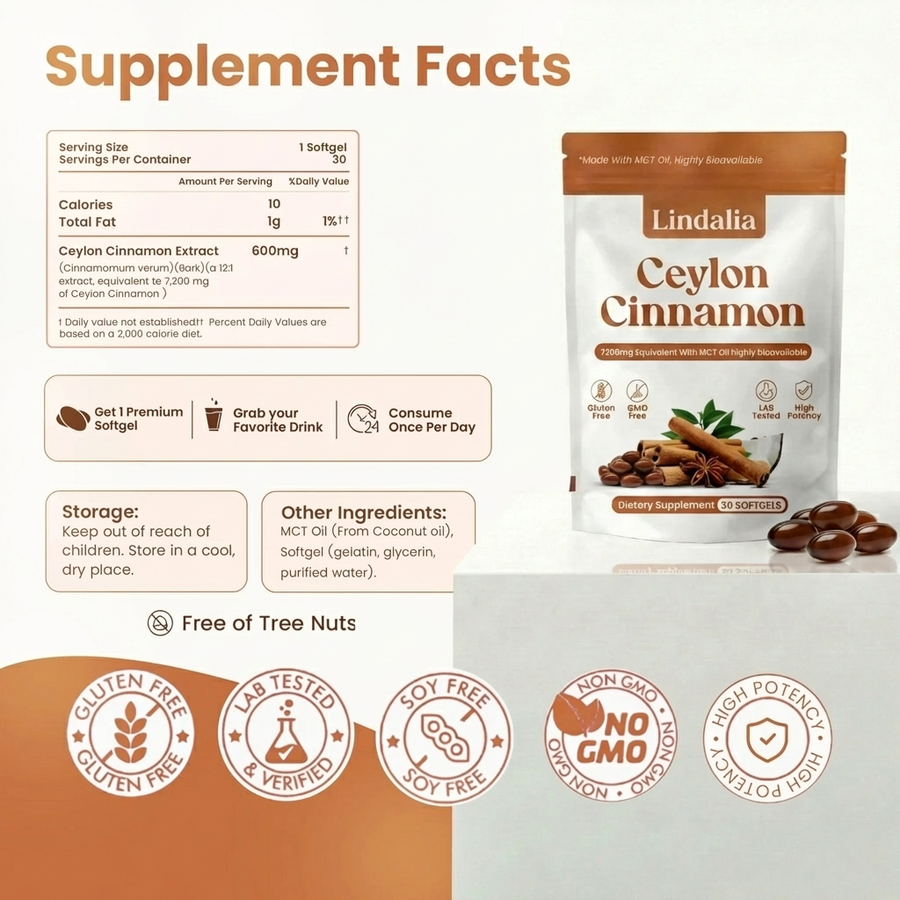
Ceylon Cinnamon 7,200mg with MCT Oil
Consistent pre-meal dosing is where the 30-day changes come from. Therapeutic dose, MCT oil, berberine and chromium for full spectrum support.
See the ProductWhat Still Needs More Time
HbA1c cannot change meaningfully in 30 days. HbA1c reflects average blood glucose across the past two to three months. A blood test at 30 days will capture at most two weeks of your supplementation period within the measurement window. Wait for the 12-week mark.
Fasting blood glucose may begin to shift at 30 days, particularly if you started with an elevated baseline (above 100 mg/dL). But the full effect on fasting glucose typically requires 8 to 12 weeks of consistent dosing. If your fasting glucose at 30 days has not moved much, this does not indicate the supplement is not working. It indicates the biological process is still underway.
Lipid panel changes (triglycerides, HDL, LDL) are even slower. These are downstream effects of improved insulin sensitivity and glucose management. Expect meaningful changes here only at the three-month mark and beyond.
Why Consistency Beats Intensity
Cinnamon's mechanisms are cumulative. Alpha-glucosidase inhibition is a per-dose effect, active for several hours after each dose. But the improvement in insulin receptor sensitivity accumulates over weeks of consistent exposure. Berberine's AMPK activation has both acute and chronic effects: acute cellular glucose uptake with each dose, and chronic improvement in metabolic enzyme expression with sustained supplementation.
This means that perfect daily dosing for 30 days is more effective than sporadic high-dose use. Missing a day occasionally is not a problem. Missing multiple days in a week resets some of the progress in insulin sensitivity and AMPK expression that requires consistent activation to sustain.
The practical advice: tie the supplement to a pre-existing daily habit. Place it next to something you do every day without fail, whether that is your coffee equipment, your lunch bag preparation, or your morning supplement routine. The habit infrastructure matters more than motivation.
Comparing Your 30-Day Experience to What Is Typical
Some variability in individual response is expected. People who start with more pronounced glycaemic instability (higher fasting glucose, more severe post-meal crashes, stronger cravings) typically notice more dramatic changes more quickly because the underlying dysregulation that the supplement addresses is more severe.
People with borderline-normal glucose markers who are supplementing preventively may notice subtler changes at 30 days. The mechanism is still working, but there is less room for dramatic correction. Their long-term benefits are more likely to be about prevention of progression than reversal of established dysfunction.
Age plays a role. Insulin sensitivity naturally declines with age. Older adults starting a therapeutic cinnamon protocol may take a few weeks longer to notice the same changes that younger users experience in the first two weeks.
Diet composition during the protocol matters significantly. If you are consistently eating very high-glycaemic meals (large portions of refined carbohydrates, sugary drinks, minimal protein and fibre), the supplement is working against a heavier glycaemic load. Results come, but more slowly. The supplement is most effective as a support for a generally sensible diet, not a correction for a consistently poor one.
If after 30 days of consistent, therapeutic-dose supplementation with correct timing you notice zero change in post-meal energy or cravings, consider: Is the dose actually therapeutic (above 2,000mg daily)? Is the timing pre-meal (not post-meal)? Is the species verified Ceylon? Three common failure points to check before concluding the supplement does not work.
"Thirty days shows you the direction. Twelve weeks shows you the destination."

Ceylon Cinnamon 7,200mg with MCT Oil
Everything in this guide applies when you have the right formula. 7,200mg Ceylon, pre-meal timing, consistent daily dosing. Start here.
See the Product