

Cinnamon Supplements: What to Look For Before You Buy
Most cinnamon capsules on the market are underdosed, made with the wrong variety, or both. Here is what actually matters before you spend your money.
The cinnamon supplement aisle, online or in-store, looks deceptively simple. Capsules, powder, extract. But behind those nearly identical labels are significant differences in safety, efficacy, and value that most buyers never know to check. This checklist walks through every factor that actually matters.
Step One: Identify the Cinnamon Species
This is non-negotiable. Before you look at dose, price, or anything else, find the species. There are two dominant types used in supplements: Ceylon (Cinnamomum verum) and Cassia (Cinnamomum cassia, aromaticum, or loureiroi).
Cassia dominates the market because it is cheap to source. It grows abundantly in China and Vietnam. It also contains high levels of coumarin, a compound that is hepatotoxic in repeated high doses. The European Food Safety Authority has set a tolerable daily intake for coumarin. At the doses required for meaningful blood sugar effects, a Cassia supplement exceeds it. Long-term daily use of high-dose Cassia carries a genuine risk of liver stress.
Ceylon cinnamon contains roughly 1/1000th the coumarin of Cassia. It is native to Sri Lanka, more expensive to source, but the only variety safe for daily therapeutic dosing. If the label says only "cinnamon" without specifying Ceylon or the Latin name Cinnamomum verum, assume it is Cassia.
Look for "Cinnamomum verum" or "Ceylon cinnamon" explicitly stated. "True cinnamon" is also an acceptable claim if backed by the Latin name. "Cinnamon bark" without species name is a red flag.
Step Two: Check the Actual Dose
Once you have confirmed Ceylon, check the milligrams per daily serving, not per capsule. This distinction matters because some products recommend one capsule per day and some recommend four.
Clinical studies that produced meaningful reductions in fasting blood glucose and HbA1c used doses of 1,000 mg to 6,000 mg per day. The modal dose in studies showing significant effects is around 3,000 mg. Products containing 500 mg per capsule with a one-capsule-per-day recommendation are giving you less cinnamon than a spoonful of the spice on your oatmeal. That is not a therapeutic intervention.
A 7,200 mg daily dose, taken in two split servings, sits in the upper range of what clinical literature supports and delivers a consistent active ingredient load throughout the day rather than one large hit. Split dosing also aligns with the pre-meal timing strategy that research supports.
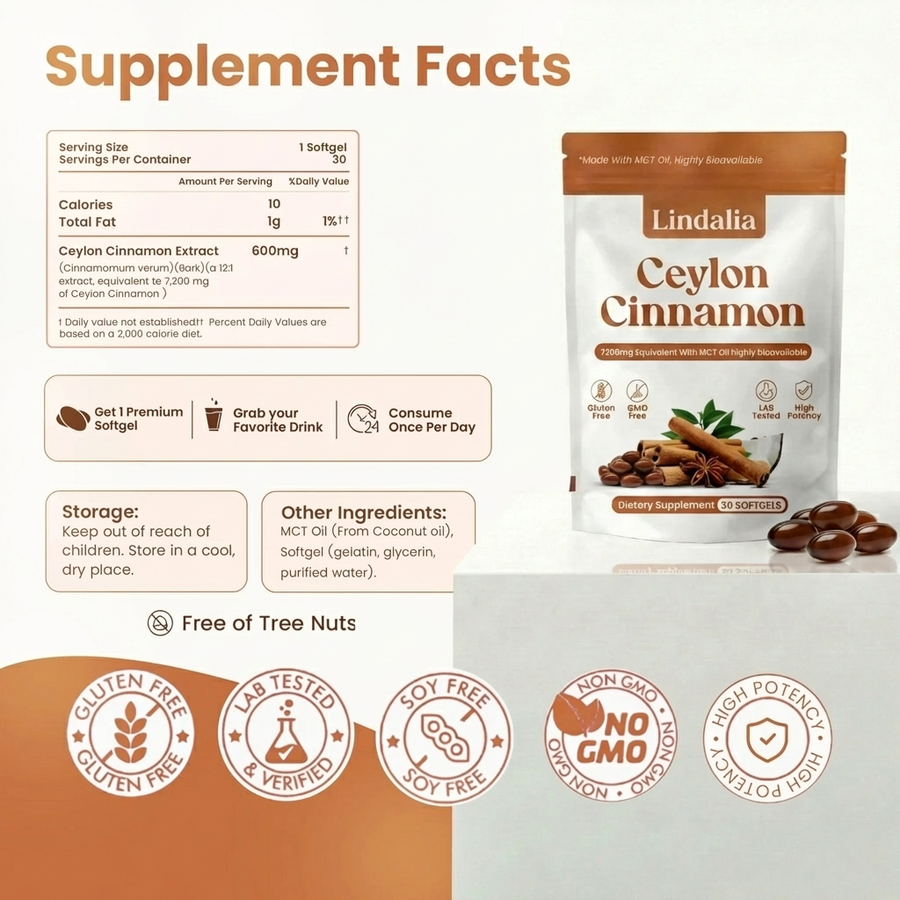
Ceylon Cinnamon at 7,200mg Daily
True Ceylon cinnamon (Cinnamomum verum) at full therapeutic dose, with absorption-enhancing MCT oil. Check every box on this list.
See the ProductStep Three: Evaluate Supporting Ingredients
A good cinnamon supplement can stand alone, but an excellent one pairs cinnamon with ingredients that work through complementary mechanisms rather than duplicating the same pathway.
MCT oil is a critical addition to a cinnamon formula. Cinnamaldehyde, cinnamon's primary active compound, is fat-soluble. Taking it without fat significantly reduces bioavailability. MCT oil provides the fat matrix that enables absorption while also supplying clean, stable energy that does not trigger an insulin response.
Berberine at around 250 mg per day activates AMPK, a cellular energy-sensing pathway that improves glucose uptake in muscle tissue and reduces hepatic glucose output. This mechanism is separate from cinnamon's alpha-glucosidase inhibition and insulin sensitisation, making the two compounds genuinely additive rather than redundant.
Chromium picolinate as a cofactor for insulin receptor function is worth including, particularly at modest doses (around 200 mcg). Many adults following refined diets have suboptimal chromium status, which impairs insulin signalling at the receptor level. Correcting this is quiet but meaningful.
What you should avoid: large amounts of fillers like maltodextrin, silicon dioxide in excessive quantities, artificial colours, and proprietary blends that hide individual ingredient doses. If you cannot see how much of each active ingredient is present, you cannot evaluate the formula.
Step Four: Verify Third-Party Testing
Self-reported quality claims on labels are not independently verifiable. Third-party testing means an external laboratory has confirmed that the product contains what the label states, at the stated quantity, and that it is free from contaminants such as heavy metals and microbial load.
Look for certificates of analysis (COA) from recognised testing bodies or statements of GMP (Good Manufacturing Practice) compliance. These do not guarantee perfection, but they indicate a manufacturer that is accountable to external standards rather than their own marketing department.
This matters particularly for Ceylon cinnamon because the species premium invites substitution. Without third-party confirmation, you are trusting the supplier not to substitute cheaper Cassia and call it Ceylon. This substitution is documented in ingredient supply chains.
Does the brand provide a COA for this batch? Is it GMP-certified? If the company cannot produce a certificate of analysis on request, that tells you something important about their quality control standards.
Step Five: Assess the Bioavailability Strategy
Cinnamaldehyde, polyphenols, and related compounds in cinnamon are not all equally bioavailable in dry capsule form. Extraction method and co-ingredients affect how much actually reaches circulation.
Look for products that include a lipid carrier (MCT, olive oil extract, or similar). This is not a marketing addition; it is backed by basic pharmacokinetics. Fat-soluble active compounds absorbed in the presence of dietary fat show consistently higher plasma concentrations than the same compounds taken without fat.
Standardised extracts are another quality marker. A product that lists "standardised to X% cinnamaldehyde" is telling you that the active compound has been concentrated and measured. A plain cinnamon bark powder does not guarantee how much cinnamaldehyde is present, as this varies by harvest, age, and storage conditions.
Step Six: Match the Formula to Your Goal
Not all cinnamon supplements are designed for the same outcome. Some are positioned as general antioxidant or anti-inflammatory supports. Others specifically target blood glucose management. The ingredients, doses, and synergy stack differ accordingly.
If your primary goal is blood sugar stabilisation, reducing post-meal crashes, and managing cravings, you need a formula with a clinical dose of Ceylon cinnamon, a bioavailability enhancer, and ideally berberine and chromium for complementary pathway support. A general wellness formula at 250 mg per day will not do this job.
If you are in a grey zone, looking for both metabolic support and some anti-inflammatory benefit, the same high-dose Ceylon formula delivers both. Cinnamaldehyde has documented anti-inflammatory action alongside its metabolic effects. The dose required for meaningful inflammation modulation overlaps with the glucose management range.
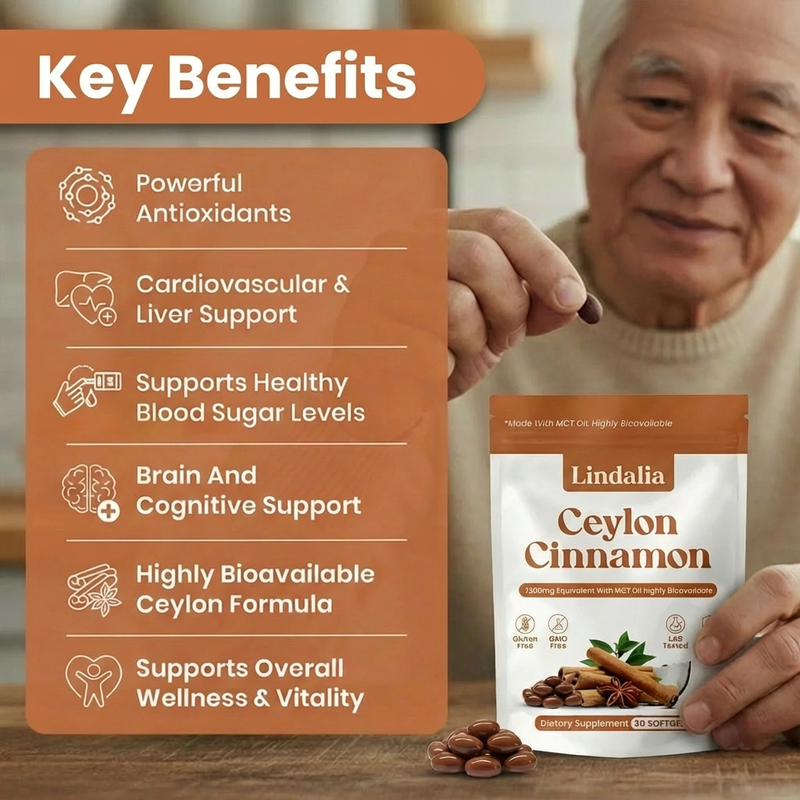
Ceylon Cinnamon 7,200mg Formula
Ceylon-sourced, therapeutically dosed, MCT-enhanced, with berberine and chromium. This formula checks every item on this list.
See the Product