

Color Changing Foundation for Mature Skin:
How to Get a Flawless Finish Over 50
The right formula is only half the equation. Technique, prep, and understanding what your skin actually needs in its fifties are the other half.
You know your face well. You have been wearing makeup for decades, and you have your preferences. But the techniques that worked at 40 are not always the techniques that work at 55. Skin changes, and foundation application needs to change with it. Color changing foundation, used correctly with mature skin, can genuinely give you a better result than any traditional shade-matched formula. Used with old habits and the wrong prep, even the best formula will look mediocre.
This is a practical guide to using color changing foundation over 50: the skincare prep that makes all the difference, the application technique that avoids the crease-and-cake problem, and the routine adjustments that most tutorials aimed at younger skin do not bother to tell you.
Why Prep Is 60% of the Result
Foundation on mature skin is almost entirely determined by what happens before application. This is less true for younger skin with higher natural oil and collagen production to compensate for preparation shortcuts. With mature skin, the formula goes on the skin surface as it finds it. If the surface is dry, flaky, or not properly hydrated, no formula, adaptive or otherwise, will look good.
The single most impactful change most women over 50 can make to their foundation result is committing to proper skincare preparation and then actually waiting for it to absorb before applying makeup.
Gentle exfoliation (2-3x per week, not daily)
Dead skin cell accumulation increases with age as cell turnover slows. This surface buildup causes foundation to sit unevenly and crease faster. A gentle chemical exfoliant (lactic acid or PHA rather than harsh scrubs, which cause micro-tears in thinning skin) used two to three times a week keeps the surface smooth without disrupting the acid mantle that adaptive pigments depend on.
Rich moisturizer with ceramides
Ceramides support the skin barrier and help maintain the acid mantle within its normal pH range. This matters specifically for adaptive foundation because a healthy acid mantle produces more consistent pigment activation. A ceramide-containing moisturizer that actually absorbs rather than sitting on top is the goal. Apply and then wait a minimum of 3 minutes before foundation.
Skip heavy silicone primer
Silicone-based primers create a smooth layer that initially looks great but can cause foundation to slip and collect in lines during the day. For mature skin specifically, a lightweight hydrating primer or no primer at all tends to produce better results. The foundation sits more stably on skin that has absorbed moisturizer than on a slippery silicone surface.
The 3-minute wait is not optional
Applying foundation over moisturizer that has not absorbed causes patchy application and uneven color adaptation (the moisturizer's own pH interferes with the skin's natural pH reading). Set a timer if you need to. Three minutes of waiting produces a significantly better result.
Silicone creates a separate layer between your skin and your foundation. For younger skin with good natural adhesion, this layer stays stable. For mature skin with less oil and surface plumpness, the silicone layer tends to shift during the day, taking the foundation with it and collecting in fine lines. Skipping heavy silicone primer is counterintuitive but consistently produces better all-day results for women over 50.
Application Technique for Mature Skin
Even the best adaptive foundation applied with the wrong technique on mature skin will settle into fine lines and exaggerate texture. The technique adjustments needed are not complicated, but they are different from standard application advice.
Start with less than you think you need
The temptation with mature skin is to add more coverage where it is needed. But more product on fine-lined areas makes those lines more visible, not less. Start with a very light first pass across the whole face. See what the first pass gives you before deciding whether anything needs building up. The answer is almost always: less than you expected.
Apply with short upward strokes, not downward
Foundation applied with downward strokes fills in pores and fine lines from above, essentially pushing product into them. Upward strokes tuck the formula under the fine line rather than into it, which is significantly less visible. This is one of the small technique adjustments that makes a real difference and takes no additional time.
Pat over fine line areas, do not drag
The under-eye area, around the mouth, and any horizontal forehead lines are high-texture zones. Instead of blending with brush strokes over these areas, pat lightly with the ring finger (which applies the least pressure of any finger) after the formula has started to activate on the skin. The warmth of the finger helps the formula settle smoothly rather than dragging it across surface texture.
Allow 90 seconds before final assessment
This applies to adaptive foundation specifically. The color adaptation takes 60 to 120 seconds. Do not adjust coverage or add more product until the initial application has fully activated. What looks slightly uneven before 90 seconds often looks much more even after the pigments have responded to your skin's chemistry.

Collagen-Infused, pH-Adaptive, Satin Glow
Built with the specific needs of mature skin in mind. Technique and formula working in the same direction.
See the ProductChoosing the Right Color Range for Your Skin Today
One of the most consistent frustrations women over 50 describe with traditional foundation is that the shade they have been buying for years stops looking right. This is not in their head. Skin tone changes over decades. Melanin distribution shifts. The warm tones that matched at 40 can look orange or muddy at 55.
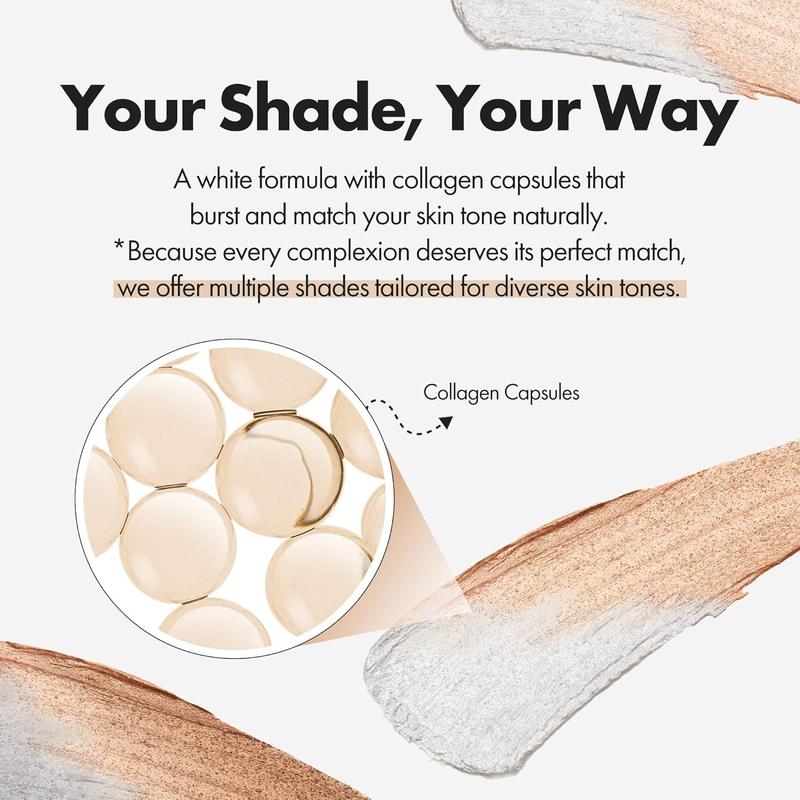
Color changing foundation addresses this directly because it adapts to where your skin is today, not where you decided it was when you last bought foundation. The adaptive pigments respond to your current pH and undertone, which means the formula recalibrates automatically as your skin changes, season to season and year to year.
The practical implication: if you have been struggling to find a shade that looks right on your mature skin, adaptive foundation bypasses the problem entirely. You are not choosing from a grid of numbered shades. You are choosing a starting range (which provides the approximate depth) and letting the pigments handle the rest.
"A flawless finish over 50 is not about hiding your age. It is about foundation that moves with you instead of against you, on skin that has genuinely changed."
All-Day Wear: What Actually Helps
Foundation longevity on mature skin comes down to a combination of formula choice and a few specific post-application steps that most younger-skin tutorials skip entirely.
Setting spray over setting powder. Powder sets foundation chemically by absorbing oils, but it also mattifies and emphasizes fine lines and dryness on mature skin. Setting spray, applied as a fine mist after foundation has fully activated, gives similar longevity without the texture-emphasizing effect. Look for formulas with glycerin or aloe base rather than heavy alcohol, which can dehydrate the skin and cause foundation to crack.
A midday refresh kit. Rather than touching up with more foundation mid-afternoon (which adds layers that look increasingly cakey), keep a small hydrating mist and a single-use clean applicator in your bag. A light mist of a hydrating facial spray, gently blotted (not rubbed) with a clean tissue, resets the look without adding product weight.
The "glow" approach over the "flawless" approach. Chasing a completely pore-free, flawless foundation finish on mature skin is a technique that fights your skin rather than working with it. A satin or natural glow finish that reads as healthy, luminous skin, with visible but flattering texture, consistently looks more polished than a heavy-coverage attempt at complete coverage.
The under-eye area on mature skin is where foundation fails most visibly. Fine lines, crepey texture, and natural darkness conspire against traditional coverage approaches. For this area specifically: apply the lightest possible amount of adaptive foundation, pat (never drag) to blend, and layer only targeted concealer where genuinely needed. Setting the under-eye with powder is almost always counterproductive on mature skin.
Foundation That Works as Hard as Your Prep
Adaptive pigments, collagen, niacinamide, satin finish. Five shade ranges. The formula mature skin deserves.
See the ProductA Note on Undertones Over 50
The undertone problem intensifies with age for many women. Skin that had a clear warm or cool undertone at 30 can become more variable by 55. Sun damage, hormonal changes, and changed melanin distribution all contribute to a complexion that is harder to categorize and harder to match with a fixed shade code.
The good news for adaptive foundation users: the pH-responsive pigments are specifically designed for this kind of variability. They do not ask you to categorize yourself as warm or cool and then find the corresponding letter in a shade name. They read your skin chemistry directly and adapt to what they find.
For mature skin in particular, this means the adaptation result is often more accurate than any traditional shade selection you have ever made, not because the technology is magic, but because it sidesteps the undertone categorization problem entirely. It reads what is there rather than asking you to describe it in advance.

The Flawless Finish Your Skin Has Been Waiting For
Collagen and niacinamide infused, pH-adaptive pigments, satin glow finish. Over 50, this is the formula that works with where your skin is today.
See the Product