

Color Changing Foundation Reviews:
What Real Users Are Saying
Reading reviews for adaptive foundation is an art. Some complaints are actually signs the product is working. Here is how to decode what real users mean.
Online reviews for color changing foundation are a minefield. Some one-star reviews are from users who did not wait for the pigments to activate. Some five-star reviews are from people experiencing only a thermochromic shift, not real skin adaptation. Knowing what to look for, and what complaints actually mean, is the difference between reading reviews usefully and being misled by them.
This article breaks down the most common review patterns for color changing foundation: what they signal, which complaints reveal genuine product problems versus user misunderstanding, and what the pattern of feedback looks like for formulas that genuinely work.
The Complaint That Is Actually a Compliment
The single most common misunderstood complaint in color changing foundation reviews is some version of: "It looked too light when I first applied it, but then it darkened / changed and matched my skin."
This is the product working exactly as designed. The base shade before activation is intentionally lighter than the target adapted shade. The pigments are encapsulated and have not yet responded to the skin's pH. The 60-to-120 second adaptation window is the formula doing its job.
Reviews that describe this process and conclude "it somehow found my shade and looked perfect after a couple of minutes" are the most reliable signal that a formula uses genuine adaptive technology. Reviews that describe disappointment because "it looks different in the tube than on my face" without waiting for the adaptation to complete are describing a misunderstanding, not a product failure.
When reading reviews of adaptive foundation, look for mentions of the adaptation process. A review that says "I applied it and immediately it matched perfectly" is either from someone whose skin matched the base shade by coincidence, or from someone who did not actually use an adaptive formula. Genuine adaptation takes 60 to 120 seconds. Reviews that mention this wait, even briefly, are usually from users who experienced the real thing.
What Consistent Positive Reviews Look Like
Across formulas that use genuine pH-responsive encapsulated pigments, certain themes appear in positive reviews with remarkable consistency. These are the signals worth paying attention to.
"I have never been able to find a foundation shade that works for me. I'm between warm and cool and every numbered shade either looks orange or ashy. This actually matched my skin after a minute or so. I've repurchased three times."
This review pattern appears frequently in genuinely adaptive formulas. The "between warm and cool" user is exactly who benefits most from pH-responsive pigments.
"I usually buy a lighter shade in winter and a darker one in summer. This is the first foundation I've used year-round without needing two. It just adjusts."
Seasonal tracking is a genuine feature of pH-responsive adaptive technology. Reviews that mention this independently are strong quality signals.
"I always turn foundations orange by noon. This one I've been wearing for six weeks and it looks the same at 5pm as it did at 8am. Genuinely shocked."
Oxidation resistance from encapsulated pigments is one of the most consistently praised features across authentic reviews.
What Negative Reviews Actually Mean
Not every negative review reflects a product problem. Understanding why certain complaints appear helps you interpret them correctly.
"It changed to the wrong color"
This can mean two things. If the reviewer has a disrupted skin barrier (from aggressive exfoliation, prescription retinoids, or significant active acne), the skin's pH may be atypical, which can cause the adaptation to land outside the expected range. It can also mean the product's adaptive range does not include the reviewer's skin tone, which is a genuine formula limitation worth knowing about.
"It's too light / too dark to begin with"
If a reviewer chose the wrong starting shade for their skin tone range and did not wait for adaptation, the formula may not have had enough range to compensate. Adaptive technology works within a range, not across unlimited shade space. The starting shade selection matters.
"It looked fine in the morning but changed color by afternoon"
This is the one negative review pattern that does indicate a product problem: oxidation. If a formula's pigments are oxidizing during wear, either the encapsulation is low quality, the encapsulation is breaking down faster than intended, or the formula relies on unprotected iron oxides alongside its adaptive pigments. This complaint, appearing repeatedly in reviews of the same product, is a red flag worth heeding.
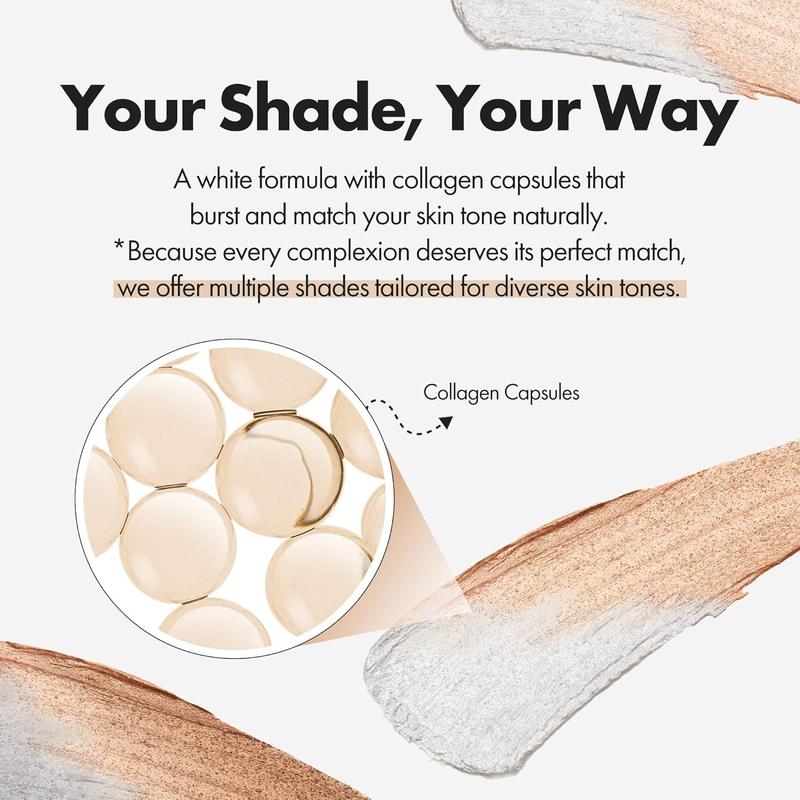
Read What Users Actually Say
pH-adaptive pigments, no orange shift, niacinamide and collagen. Formulated so the reviews write themselves.
See the ProductHow to Spot Fake or Misleading Reviews
The color changing foundation category has attracted low-quality products with heavy review manipulation. Here are patterns that suggest reviews should be taken with skepticism.
Generic language about "natural look" and "easy to blend" without any mention of the color adaptation process. If a five-star review of a "color changing" foundation never mentions the color changing, the reviewer either did not experience real adaptation or the review was written by someone who has not used the product.
Clusters of reviews from the same date. Coordinated review campaigns often produce batches of reviews within a short window. A product with 200 reviews, 150 of which were posted in one week shortly after launch, deserves scrutiny.
Reviews that describe results inconsistent with the technology. If someone says a color changing foundation "matched me perfectly the second I put it on," without any mention of an adaptation period, either the product uses thermochromic (same-for-everyone) technology and happened to match by coincidence, or the review is not reliable.
When evaluating color changing foundation reviews, weight these heavily: mentions of the adaptation wait time, seasonal tracking over multiple purchases, and specific comments about oxidation resistance. These are details that only someone who has used genuine adaptive technology over time would notice and describe. They are the hardest to fabricate and the most useful as signals of formula quality.
What Experienced Makeup Users Say
One of the more interesting review patterns in the adaptive foundation category is that users who describe themselves as having tried many foundations and being "picky" or "hard to match" are disproportionately positive about adaptive technology. This makes sense: people who have spent years testing products are more attuned to what is actually different about this category.
Conversely, reviews that describe limited prior foundation experience and focus mostly on ease of application are less reliable for evaluating whether the adaptive technology is genuinely working. First-time or casual foundation users may simply like that any foundation gives them more even coverage and interpret the result as "color changing" without being able to compare it to a genuine adaptive match.
"The most trustworthy color changing foundation reviews are the ones from people who had given up on ever finding the right shade. Because when they finally did, they sound genuinely surprised."
After-Use Reviews vs. First-Impression Reviews
One more review literacy skill worth developing for this category: the difference between first-impression reviews and after-use reviews.
First-impression reviews (written immediately after opening and trying a product) consistently underperform for adaptive foundation. The reason is the adaptation itself. Someone who tries a product once, has expectations based on traditional foundation behavior, and judges immediately is unlikely to have given the formula time to adapt, and is likely to have missed the oxidation comparison (which only becomes clear relative to their previous product).
After-use reviews, written by people who have used a product for several weeks and are describing the full experience, are far more reliable. They can speak to how well the adaptation holds through seasons, how the product wears across a full day, and whether the initial match was genuinely better than their previous product or just different.
When researching any adaptive foundation, weight verified purchaser reviews that mention extended use above those that appear to be one-time impressions. The technology rewards consistent use and patient evaluation.

The Foundation Built to Earn Good Reviews
pH-responsive pigments, satin glow finish, integrated brush. Formulated to perform the same on day one and day thirty.
See the ProductThe Pattern That Makes or Breaks a Product
Across multiple adaptive foundation products, the single review pattern that most reliably separates genuinely good products from mediocre ones is this: the repurchase signal. Users who come back and buy a second or third time, and say so in their review, are demonstrating something no five-star first-impression review can: that the product held up to extended use and continued to perform.
This is especially relevant for adaptive foundation because the technology's benefits compound with time. A user who has worn the same formula through winter and summer and is writing about not needing to change shades is demonstrating that the adaptation is real and durable. That kind of review is rare and valuable.
When you read color changing foundation reviews, look past the star rating and into the specifics. The user who mentions waiting for adaptation, mentions seasonal use, mentions no orange shift by the end of the day, and mentions coming back for more, is telling you something that matters. That is what a good adaptive foundation experience actually looks like in plain language.

Form Your Own Opinion
Five shade ranges, encapsulated adaptive pigments, integrated brush. Try it and write the review yourself.
See the Product