

Color Changing Foundation Stick:
Why the Stick Format Beats Liquid
It is not just about convenience. The stick format is genuinely better matched to how adaptive pigment technology works. Here is why.
There is a reason the cosmetics industry has slowly been moving toward stick formats for complexion products, and it has nothing to do with trendiness. Sticks apply more precisely, waste less product, stay fresher longer, and travel better than their liquid equivalents. When you add adaptive color technology into the mix, those advantages become even more pronounced.
This article makes the honest case for why a color changing foundation stick outperforms liquid in most real-world use scenarios. Not every scenario, but most of them. If you are on the fence about the format, this should help you decide.
The Problem with Liquid Foundation in Practice
Liquid foundation gets a lot of love in makeup tutorials and product launches, but in daily life, it has some persistent friction points that most people have learned to work around rather than question.
First, it requires something to apply it with. A brush gives you the most coverage control but needs cleaning after every use (or it becomes a bacteria incubator). A sponge gives a skin-like finish but absorbs a significant amount of product in the process, meaning you use more to get the same effect. Fingers work in a pinch but give the least even result and transfer bacteria from your hands to the formula and then to your face.
Second, liquid foundation in a pump bottle or open jar is in constant contact with air. Every time you use it, oxygen exposure degrades the formula slightly. Over time (and most foundation bottles last 6 to 12 months), this means early purchases and late purchases of the same bottle perform differently. For a regular foundation this is annoying. For an adaptive formula where the encapsulated pigment capsules can degrade with oxygen exposure, it is a more significant quality concern.
Third, liquid foundation is not discreet. Applying it on the go requires a mirror, a surface to set things on, and usually at least one application tool. Doing a midday touch-up with liquid foundation while seated at a restaurant table is possible but awkward.
Liquid foundation's invisible cost is the time spent cleaning brushes and sponges. A brush that is not cleaned regularly harbors bacteria and old product that changes how the foundation applies. Factoring in tool maintenance, liquid foundation is genuinely more time-consuming than stick foundation, even if the application itself is similar in length.
Why the Stick Format Works Better for Adaptive Pigments
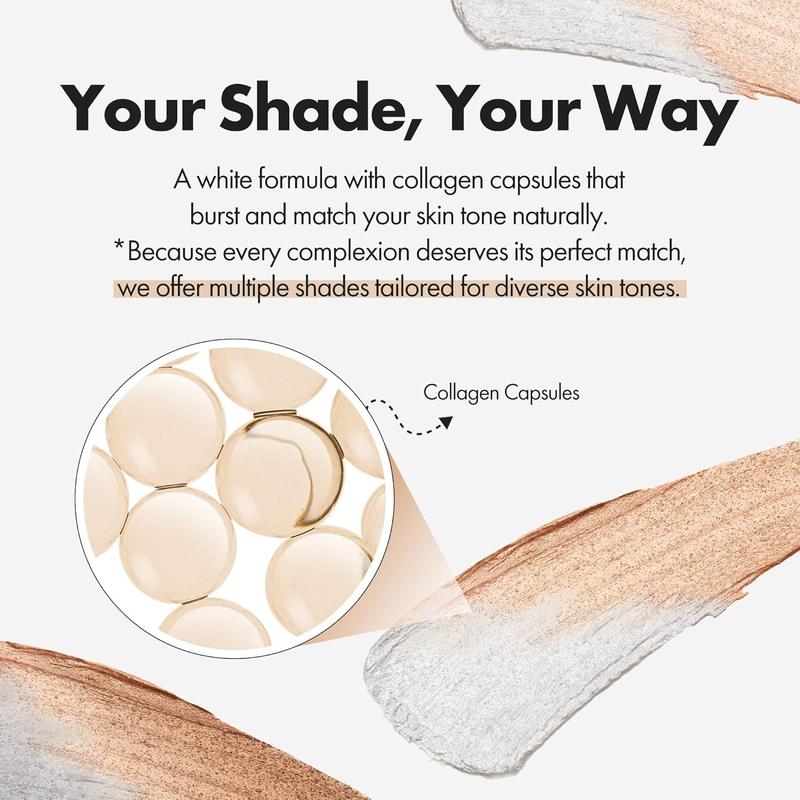
Here is the part that is specifically relevant to color-changing technology. Adaptive pigments in a foundation are microencapsulated in polymer shells that activate on skin contact. In a liquid formula, every time the bottle is opened, the pigments near the surface of the formula are exposed to air. Some minor pre-activation or capsule degradation can occur over time.
In a stick format, the product is sealed. The only surface that contacts air is the small exposed tip of the stick during application. The rest of the formula remains protected inside the packaging. This means the adaptive pigments in a stick format are in better condition at the end of the product's life than those in a liquid bottle that has been opened and closed dozens of times.
The result is more consistent color adaptation throughout the product's life. The first use of a stick and the last use of the same stick perform more similarly than the first and last uses of a liquid bottle.
Integrated brush or direct-to-skin. No separate tools needed.
Requires brush, sponge, or fingers. Each introduces hygiene considerations.
Sealed format protects encapsulated pigments from air exposure between uses.
Each opening exposes formula to air. Capsule integrity can degrade over the bottle's life.
Point-of-contact application. Easier to control coverage area and layering.
Longer blending window but harder to control initial deposit amount.
Self-contained. Works in a bag, at a desk, on the go. No mess.
Requires cap security to avoid leaks. Touch-ups need application tools on hand.

Adaptive Foundation, No Extra Tools
Integrated brush, pH-responsive pigments, niacinamide and collagen. Two minutes from bare skin to satin glow.
See the ProductThe Integrated Brush Advantage
A stick foundation with an integrated brush solves the tool problem entirely. The brush is part of the product, already calibrated for the formula's texture and coverage level, and does not need to be purchased or cleaned separately (just wipe it after use).
An integrated brush also applies differently from a loose brush you are working with separately. Because it is attached to the product itself, the pressure and contact angle are more natural, and the pigment transfers directly from stick to brush to face without the intermediate step of picking up product from a bottle. This direct transfer is part of why stick application tends to look more even and controlled than liquid application, particularly for non-professional users.
The brush also serves the adaptive pigment technology particularly well. Because you are applying the product in short, controlled strokes rather than spreading a pool of liquid, the pigment-to-skin contact is consistent across the face. Every stroke triggers activation. There is no area where the product sits thickly on top of the skin before blending because there is no large initial product deposit.
With a stick foundation and integrated brush, apply in short upward strokes from the center of the face outward. Do not attempt to fully blend immediately after each stroke. Apply the full face first in light passes, then go back and blend edges with circular motions. The pigments are still activating during blending, and buffing too early can interrupt the pH-response process before it is complete.
When Liquid Still Makes Sense
This is not a one-format-wins-everything argument. Liquid foundation is worth choosing if you prefer a very sheer, skin-tint style finish and want to apply it with a damp sponge for that "your skin but better" effect. Sticks tend toward buildable medium coverage, and getting very sheer application requires a lighter hand. Liquid spreads more thinly across a larger area by nature of the format.
Liquid is also a better choice if you genuinely enjoy the ritual of a longer makeup application process and have time for it. Some people find the blending process meditative. There is nothing wrong with that, and a stick is not going to scratch that itch the same way.
But for most people, most mornings, a stick foundation with an integrated brush is the more realistic choice. It requires less setup, less cleanup, less tool investment, and less bag space. Those are not small things when you are deciding what your routine looks like every day.
"The question is not which format looks better in a tutorial. It is which format you will actually use consistently at 7am when you are half-awake and need to leave in ten minutes."
The Hygiene Factor Nobody Talks About
Makeup hygiene is one of those topics that most product reviews avoid because it makes people uncomfortable. But it is worth mentioning. A liquid foundation bottle that is used daily has repeated finger or dropper contact with its opening, and the formula inside is a warm, slightly moist environment. This is a hospitable condition for bacteria, particularly if brushes or fingers are reintroduced to the bottle between applications.
Most foundations contain preservatives specifically to prevent bacterial growth, and at normal use this is managed. But degraded formula around the neck of a bottle, or a sponge that is not cleaned between uses, introduces variables that affect both the formula's performance and skin health over time.
A stick format largely sidesteps these concerns. The formula is self-contained, the only point of contact is the applied tip, and there is no opportunity for fingers or separate tools to contaminate the bulk of the product. If you are at all concerned about product hygiene, the stick is the cleaner choice.

The Foundation Stick Built for Real Mornings
Adaptive pigments, integrated brush, satin finish. The format that actually works with your schedule.
See the ProductCoverage, Finish, and Layering
A well-formulated stick foundation delivers buildable coverage from light to medium-full depending on the number of passes. This is one of the underappreciated advantages of the format. With a liquid, your first deposit of product is your thickest layer, and sheering it down requires additional blending work. With a stick, you start sheer and build up precisely where you need coverage.
The finish of a stick foundation depends largely on the emollient and wax balance in the formula. Formulas weighted toward waxes tend to give a more matte, velvety finish. Formulas weighted toward emollient oils give a more luminous or satin finish. The ideal is somewhere in between: a natural satin glow that reads as healthy skin rather than either dry-flat or overtly shiny.
For adaptive foundations specifically, the finish also interacts with how the pigments have settled into the skin. Because the pigments have responded to your skin's chemistry rather than being applied on top of it, the overall effect tends to look more natural and less "made up" than a fixed pigment applied in the same amount. The color is coming from within the formula's reaction to your skin, not from a deposit sitting on top of it.
Two Minutes. One Tool. All Day.
Five flexible shade ranges, encapsulated adaptive pigments, integrated brush. The stick format at its most functional.
See the Product