

Color Changing Foundation:
The Complete Guide to Finding Your Perfect Shade
What if the problem was never your skin, but the way foundations are made? A full breakdown of how color-adaptive technology actually works.
Be honest: how many foundations are sitting in your drawer right now? Half-used, wrong shade, bought in a moment of optimism and never quite right. If that number is higher than two, you are not alone, and you are not bad at choosing makeup. The system for picking foundation shades is genuinely broken, and a new category of product is trying to fix that.
Color changing foundation works differently from every other foundation on the market. Instead of asking you to pick a shade from a wall of numbered bottles, it reads your skin and adapts. The technology behind it is not as mysterious as it sounds, but it is more sophisticated than most people realize.
Why Traditional Foundation Shade Matching Fails
The problem starts in the store. Most cosmetic counters are lit with fluorescent or warm incandescent lighting, both of which distort color perception. A foundation that looks like a perfect match under those lights can look completely wrong in daylight. This is not your imagination. The spectral output of retail lighting has been deliberately calibrated to make skin look even and radiant, not to give you accurate color information.
Then there is the skin itself. Your complexion is not a fixed value. It shifts with seasons (sun exposure changes melanin distribution), hormones (pregnancy, birth control, and hormonal cycles all affect skin tone), health (inflammation, allergies, and even hydration levels affect how light reflects off the skin), and simply how old a bottle of foundation has been sitting in UV light on a store shelf.
The average foundation range offers between 30 and 50 shades. This sounds generous until you realize that the visible differences between adjacent shades are extremely subtle, and that even professional makeup artists routinely mix two shades to get the right match. For a regular person buying a product alone in a store, a 1-in-50 guessing game with imperfect lighting is not a fair contest.
Oxidation happens when foundation pigments react with oxygen and oils on your skin over the course of a day. Many traditional foundations use iron oxide pigments that are prone to this reaction. The result: what matched your skin at 8am looks darker, warmer, and often orange by 12pm. This is not the same as the wrong shade, but it compounds the problem.
How Color Changing Foundation Actually Works
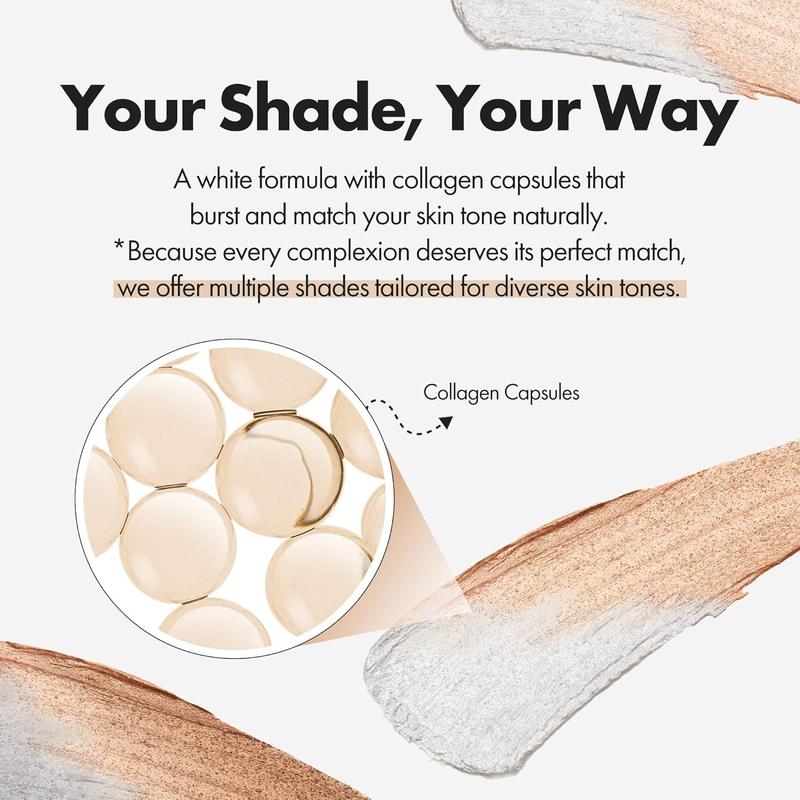
The technology at the core of color-adaptive foundations is called microencapsulation. The pigments are not loose in the formula the way they are in a traditional foundation. Instead, they are encapsulated inside tiny polymer shells. These shells are designed to respond to specific external triggers.
In skin-adaptive foundations, the two primary triggers are skin pH and temperature. Your skin's surface pH typically sits between 4.5 and 6.2, though this varies by person, by area of the face, and even by time of day. When the encapsulated pigment comes into contact with your specific skin environment, the polymer shell releases the pigment at a rate calibrated to that pH. The result is a color that has blended with your skin chemistry rather than been applied on top of it.
Temperature plays a secondary role. Body heat softens and activates certain emollient carriers in the formula, which helps the pigment spread evenly and settle into fine lines and texture rather than pooling on top of them. This is part of why color-adaptive formulas often have a different skin feel than traditional foundations.

Foundation That Finds Your Color
Encapsulated pigments that adapt to your pH and skin tone. No more wrong-shade regrets, no oxidation by noon.
See the ProductWhat Makes a Good Color Changing Formula
Not all color-adaptive foundations are built the same way. Some use basic mood-pigment technology (thermochromic dyes that change with temperature but not with skin chemistry, which is a different and less sophisticated mechanism). Others use actual pH-responsive microencapsulated pigments that respond to individual skin profiles.
Here is what to look for when evaluating a color changing foundation.
Encapsulated pigments, not thermochromic dyes
Thermochromic pigments change color with temperature, but everyone's face is roughly the same temperature. This means thermochromic foundations mostly shift slightly darker or lighter across a fixed range, not genuinely adapt to individual undertones. Look for formulas that specifically mention pH-adaptive or skin-reactive technology.
No oxidation-prone iron oxides as primary pigments
Many conventional foundations use iron oxide pigments in their base. These are stable and safe but prone to oxidizing on the skin throughout the day. A color-adaptive formula that still relies heavily on unprotected iron oxides will still have an orange problem. The encapsulation process should protect pigments from early oxidation.
Skincare ingredients that work with the formula
The same emollient base that helps pigments spread and activate can also deliver skincare actives. Niacinamide (which evens skin tone and minimizes pore appearance) and collagen (which supports surface plumpness and helps foundation look smooth rather than settling into texture) are both worth looking for in a color-adaptive formula.
Your skin undertone (warm, cool, or neutral) is the factor that most foundation buyers get wrong. Traditional shade systems try to address undertone with separate "W," "N," and "C" versions of each shade number. Adaptive pigments read your specific undertone chemistry directly, which is why they consistently outperform traditional matching for people with mixed or hard-to-categorize undertones.
The Format Question: Liquid vs. Stick
Color changing foundations come in both liquid and stick formats, and the format matters more than most people expect. Liquid formulas require application tools (a brush, sponge, or fingers), have a longer blending window, and tend to be harder to apply on the go without making a mess. They also have a shorter shelf life once opened because air exposure accelerates ingredient degradation.
Stick formulas apply directly to the face, typically have an integrated or accompanying brush, and are self-contained in a way that makes them significantly more practical for everyday use. The stick format also tends to produce more controlled, buildable coverage because you are applying pigment in thin, precise passes rather than depositing a pool of liquid product.
For color-adaptive formulas specifically, stick formats have an additional advantage: the pigments activate immediately on contact with the skin rather than partially activating in the bottle from air exposure. This means more consistent color performance over the life of the product.
"The best foundation shade is the one that stops being something you think about. Adaptive technology gets you there by making the product do the guesswork, not you."
Realistic Expectations: What Color Changing Foundation Can and Cannot Do
Adaptive foundation technology is genuinely effective, but it works within a range. The pigments adapt to the specific undertone and depth of your skin, but they do not perform color magic across a span of 10 or 20 shades. Most formulas work well for skin tones from light to medium-deep. Very fair skins and very deep skins are sometimes outside the adaptive range of lower-quality formulas, so checking the declared shade range before buying is worth doing.
Color changing foundation also does not replace the need for appropriate skincare prep. If your skin is very dry, oily, or textured at the surface, no formula adapts well. A light moisturizer before application (let it absorb for two minutes first) makes a significant difference to how any foundation sits and how well adaptive pigments can read the skin.
Finally, patience for the first two minutes after application is important. The adaptive reaction takes 60 to 120 seconds to fully develop. If you blend and immediately step into daylight to evaluate, you will see the base shade, not the finished color. Let it settle before judging the match.

Adaptive Pigments, Integrated Brush, Satin Finish
pH-responsive encapsulated pigments, niacinamide, and collagen in a stick format with a built-in brush. Ready in two minutes.
See the ProductHow to Get the Best Results
Start on clean, moisturized skin. Apply the foundation in light, short strokes directly to the skin, starting at the center of the face and blending outward. Do not over-blend before the pigments have had time to activate. Less product, built up gradually, gives better results than a heavy first pass.
If you have areas that need more coverage (redness, dark circles, blemishes), add a second layer on those specific areas only after the first layer has set. Because adaptive foundations read your skin chemistry rather than a fixed color code, layering does not typically produce an unnatural-looking buildup the way traditional foundations can.
Give the formula about 90 seconds after full application before assessing the color match. The adaptive reaction is fast but not instantaneous. What you see at 90 seconds is what you will wear all day.
Setting a color-adaptive foundation with a translucent powder significantly extends wear time and prevents oxidation later in the day. Apply a light dusting of loose setting powder with a large fluffy brush after the foundation has fully activated. This seals the adapted pigments without altering the shade.
Stop Guessing. Start Wearing.
Five flexible shade ranges. Encapsulated adaptive pigments. No orange effect. No shade drawer of regret.
See the Product