

Color Changing Mature Skin Foundation:
5 Mistakes to Avoid
Switching to adaptive foundation is only the first decision. These five habits will undermine even the best formula, and each one is easy to fix once you know about it.
You did the research. You switched to a color changing foundation that is actually designed for your skin. And then somehow it still does not look quite right. This is more common than it should be, and the reason is almost always one of the same five mistakes. None of them are about the foundation being wrong. They are all about habits that worked on younger skin and stopped working quietly as your skin changed.
Here is what those mistakes are, why each one specifically affects mature skin, and exactly what to do instead.
The 5 Mistakes
Skin cell turnover slows significantly after 45. The outer layer of dead skin cells builds up more quickly and sheds more slowly than it did in your 30s. When foundation is applied over this accumulated layer, it sits on an uneven surface and causes patchiness, flaking, and a dull finish that makes skin look worse rather than better.
For adaptive foundation specifically, this matters even more. The pH-responsive pigments need to reach the living skin surface to activate correctly. A thick layer of dead skin cells insulates the living skin pH from the formula, which can produce incomplete or inconsistent adaptation.
Add a gentle chemical exfoliant to your skincare routine 2-3 times per week. Lactic acid (gentler than glycolic) or PHAs (polyhydroxy acids, the gentlest category) work well for mature skin without disrupting the skin barrier. Do not exfoliate and apply foundation on the same evening. Exfoliate at night, let skin regenerate overnight, and apply foundation the following morning on fresh, calm skin.
This is the mistake that causes most early rejections of adaptive foundation by mature skin users. The foundation looks too light or too pale immediately after application, and the assumption is that it is not working or the shade is wrong. The formula is immediately wiped off and replaced with something else.
What is actually happening: the encapsulated pigments have not yet activated. They need 60 to 120 seconds of skin contact to respond to the pH of the skin surface and reach their adapted shade. Judging at 10 seconds is like judging a cake after two minutes in the oven.
Apply the formula as normal, then stop and wait. Set a phone timer for 90 seconds if you need to. Only after that 90 seconds has passed should you assess the color match or decide whether you need to add more product. The adapted shade is almost always significantly better than the unadapted base shade that first alarmed you.
The instinct when you see a fine line showing through foundation is to add more foundation. This makes the problem worse, not better. More foundation on a fine line area does not fill it in; it sits on top of the line and at its edges, making the line appear as a defined groove in a heavy base, which is significantly more visible than the original fine line.
On mature skin with color changing foundation, over-application also disrupts the adaptation process. The thick layer of formula cannot sit close enough to the skin surface for efficient pigment activation, leading to uneven color and a heavy, mask-like appearance.
Apply a very light first pass across the whole face and allow it to activate. Then assess what remains visible. For specific areas like fine lines, lightly pat (do not drag or rub) with the ring finger, using the warmth of the finger to soften and smooth the formula into the skin rather than adding more product. For genuine dark circle coverage, use targeted concealer only on that area after the foundation base has set.
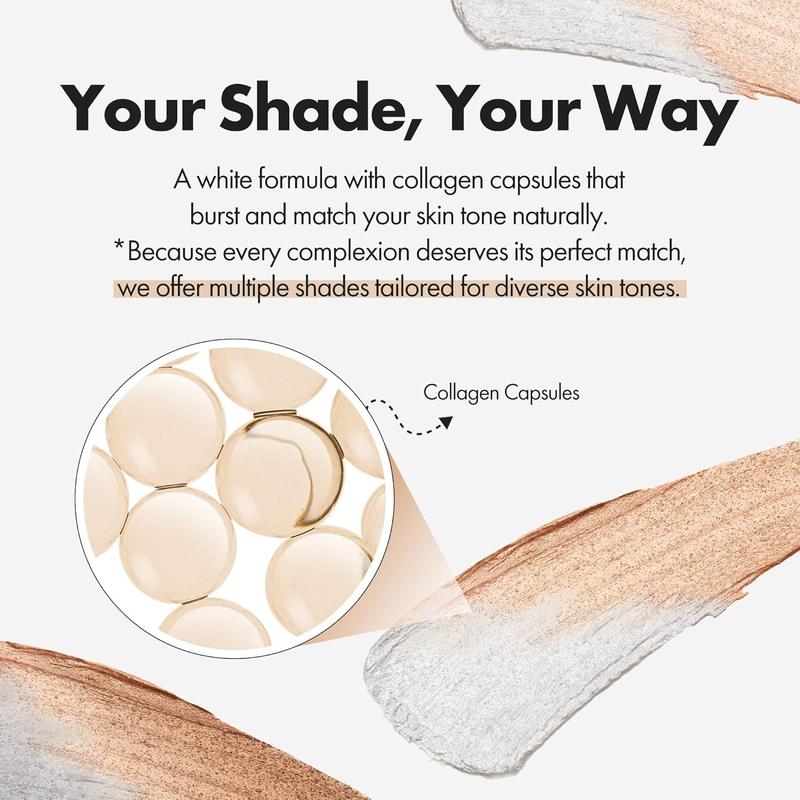
Collagen, Niacinamide, Adaptive Pigments
Designed to sit smoothly on mature skin, not into it. pH-responsive, satin finish, integrated brush. Avoid the mistakes, and this formula delivers.
See the ProductSetting powder is recommended in nearly every makeup tutorial for longevity. For younger skin with more natural oil production, it is a useful step. For mature skin, it is frequently the thing that makes foundation look 10 years older rather than better.
Powder settles into fine lines. It creates a matte, flat surface that emphasizes every texture variation on the skin. On the under-eye area, where crepey texture is often already present, powder creates a settled, aged look that is visible from across the room. Mature skin simply does not have the plumpness and oil to compensate for what powder does to surface texture.
Skip setting powder entirely on fine-lined areas (forehead, under-eye, around the mouth). If you feel you need setting in the T-zone for oil control, use the smallest possible amount of translucent powder only on the nose and center forehead, avoiding any area with texture or lines. For overall longevity, setting spray applied from 18-20 inches away gives better wear time without the aging powder effect.
Not all color changing foundations are built equally for mature skin. Some use adaptive technology in an otherwise standard formula with no skincare benefit. For younger skin, this is a minor gap. For mature skin, a foundation that includes meaningful concentrations of collagen and niacinamide does meaningfully more work than one without them.
Collagen in the formula creates a surface film that helps foundation sit over fine lines rather than into them. Niacinamide at effective concentration visibly evens skin tone over time and minimizes pore appearance, two problems that become more pronounced with age. A formula that adapts color but ignores these concerns is leaving significant opportunity on the table for mature skin users.
When choosing a color changing foundation for mature skin, prioritize formulas that include collagen and niacinamide in addition to the adaptive pigment technology. Check the ingredient list: these actives should appear in the first half of the list to be present at a meaningful concentration. A long ingredient list with these ingredients near the bottom indicates decorative rather than active inclusion.
"The most common reason adaptive foundation does not work on mature skin is not the formula. It is one of these five habits, applied out of long practice and muscle memory from a decade ago."
The Habit Stack That Actually Works
Put the fixes for all five mistakes together, and you get a routine that looks like this:
Exfoliate gently 2-3 times a week. Moisturize with a ceramide-based formula and wait 3-5 minutes. Skip silicone primer. Apply color changing foundation with light upward strokes, using less than you think you need. Wait 90 seconds before assessing. Pat (do not rub) over fine line areas. Set only the T-zone with the lightest possible translucent powder if needed, and skip powder everywhere else. Lock in longevity with setting spray rather than more powder.
Every step in that list is the opposite of what most women over 50 were taught to do with foundation. That is not because the old advice was wrong. It is because it was advice for younger skin, and nobody told you clearly when it was time to update it.
On mature skin, every application problem is solved by using less, not more. Less product, lighter pressure, shorter blending time. The muscle memory of covering and building that most women develop in their 20s and 30s is the main obstacle to great foundation application in their 50s and 60s. Less is consistently better, and it is also faster.

Foundation Built for Mature Skin to Actually Work
Adaptive pigments, collagen, niacinamide, satin finish. The formula that works with the habits you just learned.
See the ProductA Word on Expectations
Correcting these five mistakes will produce a noticeably better result with your color changing foundation. It will look more natural, sit more smoothly over texture, and last longer through the day. What it will not do is erase fine lines or significantly alter the appearance of deep wrinkles. Foundation on mature skin is not capable of doing that, and any product that claims otherwise is not being straight with you.
The realistic and achievable goal is: even tone, light coverage that looks like your actual skin, a finish that does not call attention to itself or make you look like you are wearing makeup. A satin glow that reads as healthy and well-rested rather than made-up. That is what the right formula plus the right technique gives you, and it is genuinely worth pursuing.

The Foundation That Works When You Do It Right
Five shade ranges, adaptive pigments, collagen and niacinamide, satin glow finish. Pair it with the right technique and it genuinely delivers.
See the Product