

Does Cyperus Rotundus Oil Stop Hair Growth: What the Research Shows
What the 2005 JCD study actually measured, why the design matters, what the limitations are, and what the research honestly says about stopping vs slowing hair growth.
When research gets cited in beauty content, the actual findings are often stretched. The clinical evidence for cyperus rotundus oil is genuinely interesting, but it is worth reading what the study actually measured, not what marketing copy says it proved. Here is an honest breakdown of what the research shows and what it does not.
What the 2005 Journal of Cosmetic Dermatology Study Measured
The study, published in 2005 in the Journal of Cosmetic Dermatology, evaluated the effect of topical cyperus rotundus extract on hair regrowth following depilation. The study included participants who removed hair from defined zones and then applied either a cyperus rotundus formulation or a placebo. The treatment and control groups were followed over multiple hair growth cycles.
The primary measurements were hair density (number of visible hairs per unit area), hair regrowth rate (how quickly new growth appeared after removal), and hair shaft characteristics (thickness and texture of regrowing hair). These were measured at defined intervals across multiple cycles rather than at a single time point.
The findings: statistically significant differences in all three measurements between the treatment and placebo groups. Hair in the treatment group grew back more slowly, at lower density, and with finer shaft diameter than in the placebo group. The statistical significance held across cycles, meaning the effect was consistent and not just a one-time observation.
The JCD 2005 study measured hair density, regrowth rate, and shaft characteristics across multiple cycles. All three showed statistically significant improvement in the cyperus rotundus group vs placebo.

The Clinical Evidence Is Real
Cyperus rotundus extract formulated at effective concentrations. The follicle inhibition mechanism is supported by both biochemical and clinical evidence.
See the ProductThe Study Design: Why the Methodology Matters
A placebo-controlled design is the key feature that makes this study meaningful. Both groups went through the same removal procedures, used products that looked and felt the same, and were evaluated by the same observers using the same measurement criteria. The only difference was whether the formulation contained active cyperus rotundus extract or not.
This design controls for the placebo effect, observer expectations, and variation in measurement technique. When you see statistically significant differences between groups in this kind of design, you can attribute those differences to the active ingredient rather than to psychological expectations or measurement inconsistency.
The multi-cycle observation period also matters. Hair removal studies that only look at one cycle can mistake natural variation in the growth cycle for a treatment effect. By following participants across multiple cycles, this study confirmed that the effect was real, reproducible, and increasing over cycles rather than diminishing.
Placebo-controlled, multi-cycle observation. The gold standard for this type of topical ingredient study. The methodology gives the findings real evidential weight.
A single clinical trial is not the end of the story. It is the beginning of confidence in the mechanism.
The Limitations: What One Study Cannot Prove
One study, even a well-designed one, is not a body of evidence. It establishes a finding but does not replace the accumulation of multiple studies with different methodologies, populations, and conditions. In a research landscape with abundant well-funded pharmaceutical trials, one study in a cosmetic dermatology journal is a credible starting point, not a conclusive proof.
The study was conducted in a controlled environment. Participants were monitored, application was consistent, and measurement conditions were standardized. Real-world use involves variability in how consistently the product is applied, the range of skin and hair types, and the different removal methods people use. Real-world results will show more variation than controlled trial results.
The study also does not tell us exactly what concentration of cyperus rotundus extract is needed for the observed effect. This is a limitation shared by most plant-active cosmetic studies. It means that not all cyperus rotundus formulas will deliver the same effect: a formula with negligible concentration of the extract will not replicate the study outcomes regardless of what the label says.
What Other Research Exists
Beyond the 2005 JCD study, there is a body of phytochemical research on cyperus rotundus that documents the mechanism in biochemical terms. Studies on alpha-cyperone and sesquiterpenes from cyperus rotundus confirm 5-alpha reductase inhibitory activity in in vitro assays. This biochemical evidence does not directly prove clinical hair removal effects, but it confirms that the mechanism by which the ingredient could work is real and measurable.
There is also a substantial traditional use record. While traditional use is not clinical evidence, consistent reporting of the same effect across multiple cultures and centuries provides an empirical background that supplements the clinical data. The 2005 study finding is not surprising given the traditional record. It confirms what practitioners observed without knowing the biochemistry.
Connecting the Research to Real-World Use
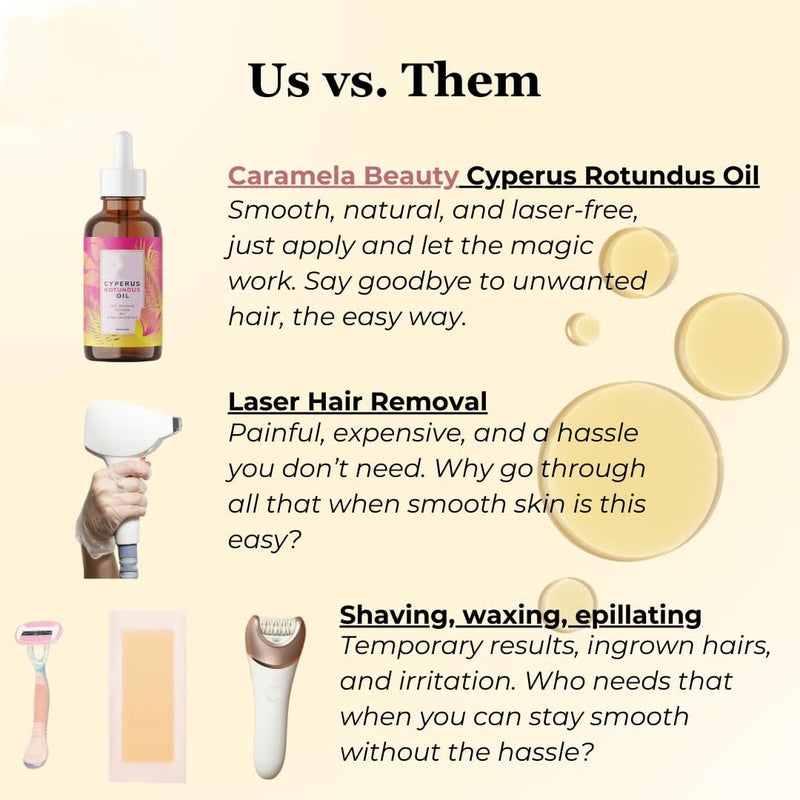
The honest translation of the research into practical expectations: cyperus rotundus oil slows hair regrowth when applied consistently after removal. The effect is cumulative, progressive, and real. It does not stop hair growth entirely. It does not work at the same rate for every hair type or zone. And not all products containing the ingredient name deliver the clinical effect: concentration and formulation quality matter.
The research gives you confidence that the mechanism exists and that it works. The practical outcome depends on applying a well-formulated product correctly and consistently over multiple cycles.
The Research Says It Works When It Is There
Cyperus rotundus extract as a primary ingredient, not a label afterthought. Formulated at effective concentrations with jojoba, rosehip, and tea tree.
See the ProductDoes It Stop Hair Growth?
No. It slows it. The research does not describe cessation of hair growth. It describes statistically significant slowing and thinning across multiple cycles. In some zones with finer hair, after many cycles, the slowing can become dramatic enough that individual users describe the growth as nearly stopped. But that is a practical outcome in specific circumstances, not what the research proved as a general effect.
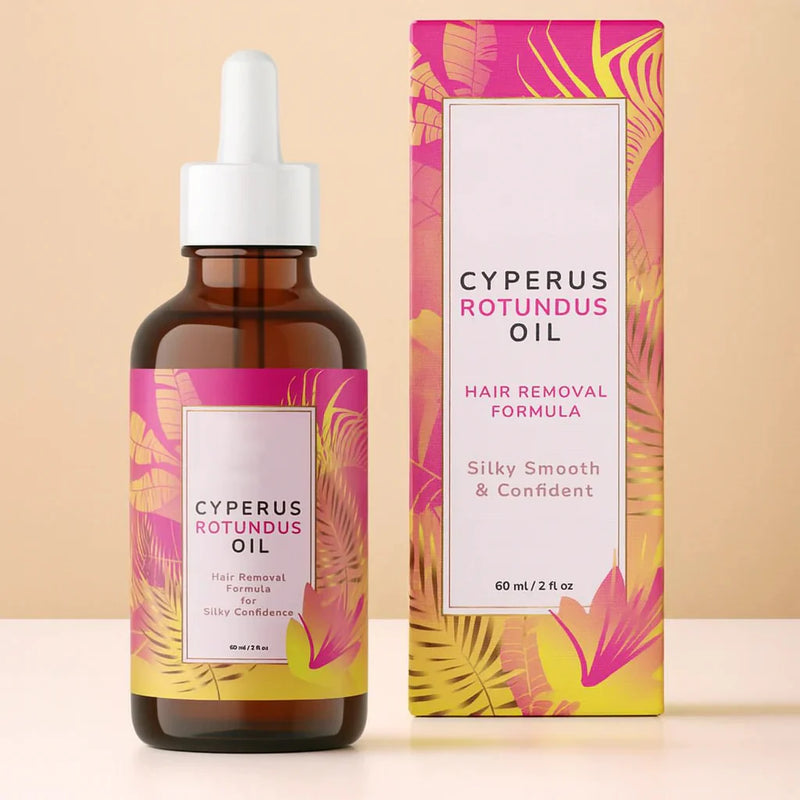
Cyperus Rotundus Hair Removal Oil
Evidence-based. Realistic. Effective for what it actually does: slowing and thinning regrowth over cycles.
See the Product