

Does Cyperus Rotundus Oil Work: The Science Behind This Ancient Remedy
Alpha-cyperone, 5-alpha reductase, a 2005 clinical study. The science behind cyperus rotundus oil is more substantial than most natural beauty claims.
Cyperus rotundus has been used in traditional medicine for over two thousand years. That alone does not prove it works for hair removal. What makes this ingredient worth taking seriously is that the traditional use pointed researchers toward a specific mechanism, which has now been confirmed in biochemical and clinical studies. Here is the full scientific picture.
Cyperus Rotundus: What Botanists and Chemists Know
Cyperus rotundus, also called nut grass or purple nutsedge, is a sedge plant classified in the Cyperaceae family. It is considered one of the most invasive weeds on earth, growing in tropical, subtropical, and temperate regions across every inhabited continent. The part used medicinally is the underground rhizome and tuber, which concentrates the plant's bioactive compounds.
The phytochemical profile of cyperus rotundus rhizome is well-studied. It contains alpha-cyperone, beta-selinene, isocyperol, and a range of sesquiterpene ketones and alcohols. These compounds belong to the sesquiterpene class of terpenes, a category of plant chemicals with documented anti-inflammatory, antimicrobial, and enzyme-inhibitory properties across multiple biological systems.
Alpha-cyperone is the primary compound of interest for hair follicle applications. It is a sesquiterpene ketone found in high concentration in the rhizome oil. It is the compound most associated with the 5-alpha reductase inhibitory effect that makes cyperus rotundus relevant for hair management.
The primary active compound is alpha-cyperone, a sesquiterpene ketone from the cyperus rotundus rhizome. It is this compound, alongside related sesquiterpenes, that inhibits 5-alpha reductase at the hair follicle level.

From Ancient Plant to Modern Formula
Alpha-cyperone from cyperus rotundus extract. Formulated with jojoba, rosehip, and tea tree for complete post-removal care.
See the Product5-Alpha Reductase: The Enzyme at the Center
5-alpha reductase (5-AR) is an enzyme found in various tissues, including hair follicles. In the follicle, it converts testosterone into dihydrotestosterone (DHT). DHT is a more potent androgen that binds to receptors in the follicle and promotes the anagen (active growth) phase. Higher DHT activity at the follicle means faster regrowth after removal.
This is the same enzyme pathway that pharmaceutical drugs like finasteride target for androgenic hair loss. Finasteride inhibits 5-AR systemically, which reduces DHT throughout the body and is why it affects scalp hair loss. The cyperus rotundus application is the inverse: local inhibition at the follicle level, in zones where you want less growth activity, applied topically so the effect stays where you put it.
The sesquiterpenes in cyperus rotundus, particularly alpha-cyperone, have been shown in biochemical assays to reduce 5-AR activity. This inhibition slows the conversion of testosterone to DHT at the follicle, which in turn extends the time the follicle spends in the catagen (transition) and telogen (rest) phases before restarting anagen. The practical outcome is slower regrowth after each removal session.
The chemistry of cyperus rotundus was used empirically for centuries before anyone knew what an enzyme was. The research just named what traditional practitioners already observed.
The 2005 Journal of Cosmetic Dermatology Study
The most cited clinical evidence for cyperus rotundus as a topical hair regrowth inhibitor is a 2005 study published in the Journal of Cosmetic Dermatology. The study evaluated participants who underwent hair removal and then applied either a cyperus rotundus formulation or a placebo to the treated areas over multiple hair growth cycles.
The outcomes measured included hair density, regrowth rate, and hair shaft characteristics. The treatment group showed statistically significant reductions in all three measures compared to the placebo group. Hair grew back more slowly, at a lower density, and with a finer shaft diameter. These are exactly the outcomes you would expect from a 5-AR inhibitor working at the follicle level.
The placebo-controlled design is what gives this study its weight. Both groups went through the same removal procedures and were evaluated under the same conditions. The difference in outcomes is attributable to the active cyperus rotundus extract, not to the removal method, skin condition, or observer bias.
The JCD 2005 study found statistically significant reductions in hair density, regrowth rate, and hair shaft diameter in the cyperus rotundus group vs placebo, across multiple hair cycles.
From Ayurveda to Cosmeceuticals
In Ayurvedic medicine, cyperus rotundus is known as mustaka or nagarmotha. It appears in classical texts including the Charaka Samhita and Ashtanga Hridayam as a treatment for skin and hair conditions, as well as for its anti-inflammatory and antimicrobial properties. Practitioners used the dried rhizome in preparations applied to the skin and hair, observing that it affected hair quality and growth over time.
This traditional use was not random or superstitious. Ayurvedic practitioners selected plants based on observed outcomes over generations. The observation that cyperus rotundus affected hair growth was consistent enough to be documented and passed down. Modern phytochemistry confirmed the mechanism: the sesquiterpenes that make this plant effective are concentrated in exactly the parts that traditional medicine used, extracted in exactly the ways that preserve bioactivity.
The move into cosmeceutical formulations over the past two decades reflects growing interest in plant-derived actives with validated mechanisms. Cyperus rotundus sits at the intersection of traditional credibility and modern biochemical evidence. That combination is rarer than the beauty industry suggests, which makes it worth noting when a traditional remedy actually holds up to scrutiny.
Why Topical Application Works for Follicle Inhibition
Some active ingredients need to be taken orally to reach their target tissue. For hair follicle inhibition, topical application is actually the more logical route. The follicle is a skin structure accessible from the surface, and it is most accessible immediately after hair removal when the channel is open. A well-formulated oil delivers the active compounds directly to the follicle tissue without any systemic exposure or metabolism.
The carrier oils in a quality cyperus rotundus formula, particularly jojoba, which closely matches human sebum in molecular structure, enhance the penetration of the active sesquiterpenes into the follicle channel. This is not passive diffusion. It is targeted delivery using oils that the skin already recognizes and absorbs readily.
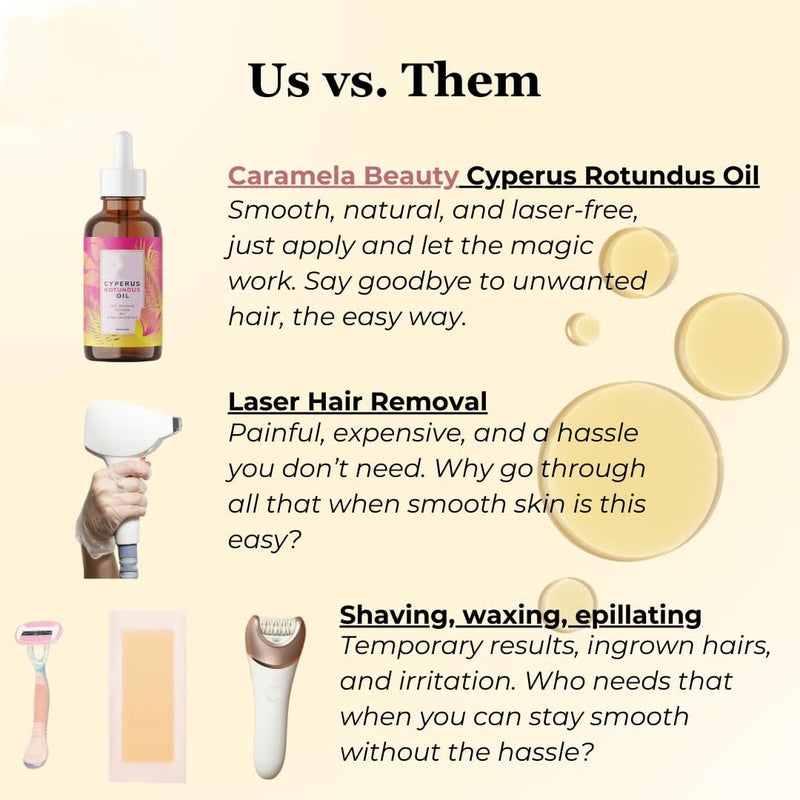
Cyperus Rotundus Hair Removal Oil
Formulated with cyperus rotundus extract, jojoba, rosehip, and tea tree. Applied post-removal for progressive follicle inhibition.
See the Product