

Foundation Color Changing:
Is It Really Worth the Hype?
We are going to answer this question honestly, including the parts where adaptive foundation falls short. Because it does not work perfectly for everyone.
The shade-matching problem in the beauty industry is real. The drawer of half-used foundations in the wrong shade is a nearly universal experience. So when color changing foundation promises to solve that, it is not surprising that people want to believe it. The question worth asking is: does it actually deliver, or is it another clever marketing story?
The answer, like most honest answers in beauty, is: it depends. On the formula, on your skin, and on what you are expecting it to do. This article gives you an unfiltered look at what color changing foundation genuinely does well and where it has real limitations.
What Color Changing Foundation Actually Gets Right
Let's start with the wins, because they are real. The core technology works. pH-responsive microencapsulated pigments do react to individual skin chemistry in a way that produces a personalized color adaptation. This is not marketing fiction; it is applied polymer chemistry that has been used in other industries (pharmaceuticals, food technology) for decades and is well-understood.
The results that most consistently hold up across users:
Better undertone matching than guessing from a shade range. The chemical reaction reads your specific undertone (warm, cool, neutral, or anything in between) and adapts accordingly. People with mixed or hard-to-classify undertones consistently report better results with adaptive formulas.
No seasonal re-purchasing. Because the formula adapts to where your skin is today, the same product works in winter and summer without needing a separate shade. This is a practical and genuine advantage.
Reduced oxidation when properly formulated. Encapsulated pigments that activate in a controlled way are less exposed to the ongoing oxidation reaction that causes traditional foundations to turn orange during the day. Quality adaptive formulas perform noticeably better on this metric.
Skincare integration. The emollient carrier systems that work best with adaptive pigments are also well-suited to delivering skincare actives like niacinamide and collagen. Many adaptive foundations deliver measurable skincare benefit alongside the color function.
One common complaint about color changing foundation, "it looked fine at first and then changed color," is usually actually a win: the user is seeing the adaptation happen in real time. The formula is supposed to shift from its base shade to your skin-matched shade during those first 60 to 120 seconds. Judging the color before that process is complete is like judging a baked cake from the batter.
Where Color Changing Foundation Has Real Limits
Now the honest part. Adaptive foundation is not a universal miracle, and pretending otherwise would not be fair to you.
Very deep skin tones are often underserved. Most adaptive formulas work well from light to medium-deep, but the chemistry of the base shade range limits how deep the adapted color can go. If you have a deep to very deep skin tone, you will need to verify that the specific formula's adaptive range covers you. Not all do.
Not all "color changing" products use genuine adaptive technology. Some use thermochromic dyes (which change with temperature, the same for everyone) or simply have a slightly warming undertone that makes them look adaptive when they are not. Distinguishing real from performative requires reading ingredients and understanding what pH-responsive means.
Disrupted skin barrier can reduce adaptation accuracy. The acid mantle, the skin's slightly acidic surface, is what triggers the pH response. If your skin barrier is disrupted by aggressive cleansing, over-exfoliation, or active breakouts, the pH at the skin surface may be atypical, and the pigment adaptation may be less accurate. This is also true of prescription retinoids and some acids used in skincare.
Coverage is typically light to medium. Adaptive formulas are not built for full-coverage work. The chemistry of the encapsulation limits how much pigment can be delivered without the product looking heavy or cakey. If you need significant coverage for scarring or hyperpigmentation, adaptive foundation is best used as a base with targeted concealer on top.

The Formula That Does What It Says
pH-responsive encapsulated pigments, no orange shift, niacinamide and collagen infused. Five flexible shade ranges covering light to medium-deep.
See the ProductWho Benefits Most
Based on the actual limitations and genuine strengths above, adaptive foundation is worth the hype for specific people. Let's be direct about who that is.
If you have never been able to find your exact shade in a traditional range: This is the primary use case for adaptive foundation, and it works. The chemistry solves the guessing problem. If wrong shades are your persistent problem, adaptive foundation is a worthwhile switch.
If your skin tone changes significantly with seasons or sun exposure: One adaptive foundation tracks those changes. Two or three seasonal traditional shades do not. The cost-per-use and the simplification of your routine both favor adaptive.
If you have been frustrated by orange foundation by midday: Oxidation is a real and persistent problem with traditional foundations, and encapsulated pigments genuinely address it in quality formulas. If the noon-orange is something you experience regularly, this alone may justify the switch.
If you want your foundation to do some skincare work at the same time: The best adaptive foundations include active niacinamide and collagen at meaningful concentrations. If this matters to you, adaptive formulas are often the better choice on this metric as well.
"The hype is earned for the people it is designed for. If shade-matching has always felt like a losing game, adaptive foundation is not another product telling you to try harder. It is one that finally meets you where you are."
Who Might Not Find It Worth It
There are also people for whom adaptive foundation is not the clearest choice, and being honest about this is part of giving you actually useful information.
If you have very deep skin and most adaptive formulas do not cover your shade range, you will need to find a brand that specifically addresses deeper tones or accept that current adaptive technology has not fully served this part of the market yet. It is improving, but it is not there universally.
If you require heavy coverage for significant scarring or hyperpigmentation, adaptive formulas may not provide the opacity you need without combining them with targeted concealer, which adds a step. Traditional full-coverage formulas may still be the better base for you.
If you are satisfied with your current shade match and your foundation does not oxidize on your skin, the adaptive category does not offer you a compelling problem to solve. There is no need to switch for switching's sake.
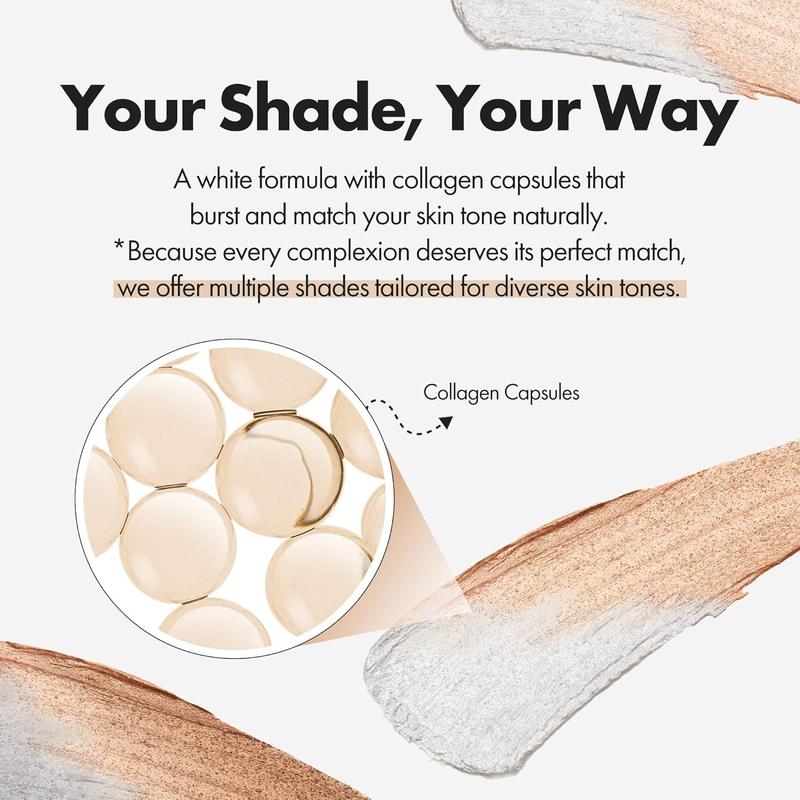
There Is an Alternative to the Shade Drawer
Formulated for people who are tired of guessing. Adaptive pigments, skincare actives, integrated brush. One foundation for every season.
See the ProductThe Bottom Line
Color changing foundation earns its hype for a specific, large group of people: those who have struggled with shade matching, seasonal tone changes, midday oxidation, or all three. For them, it solves real problems with real technology and genuinely changes the experience of buying and wearing foundation.
For people who have never had these problems, it is a nice-to-have rather than a must-have. The skincare benefits and format convenience may still make it worth trying, but the core pitch is less compelling if the problem it solves is not one you have.
The key is knowing the difference between a formula that uses genuine pH-responsive encapsulated pigments and one that simply calls itself "color changing" because the marketing team noticed the trend. The former delivers. The latter disappoints. Knowing how to tell them apart, which this article has tried to help with, is the most useful thing you can take away.

Worth It, Backed by Actual Chemistry
Real adaptive technology. Honest about what it does and who it is for. The foundation that earns its claims.
See the Product