

Foundation Color Changing Reviews: Stick vs Liquid, Which One Wins?
Two formats, the same adaptive goal. A complete breakdown of how stick and liquid color changing foundations differ in application, performance, and real-world results so you can make the right call for your skin.
Color changing foundation comes in two primary formats: stick and liquid. Both use adaptive pigment technology to shift from a universal starting color toward the wearer's skin tone. But the format changes almost everything else: how the product applies, how the pigment activates, how long it wears, how it interacts with different skin types, and how it fits into your daily life. This breakdown goes through both formats honestly, identifies which situations favor which, and gives you the framework to decide without guessing.
The Core Difference Between Formats
Liquid color changing foundations are formulated as emulsions, typically oil-in-water or water-in-oil systems, that require a tool or fingers for application. The formula blends across the skin and the adaptation mechanism activates as the product spreads and contacts the skin surface.
Stick color changing foundations are solid or semi-solid formulas encased in a twist-up or retractable housing. They apply by direct contact with the skin and can be blended with fingers or a sponge. The solid format means the product warms and softens on contact with skin heat, which contributes to both the blending process and the pigment activation sequence.
These are fundamentally different textures with different strengths. Neither is objectively superior; they serve different users and different situations better.
Both stick and liquid formats can use either thermochromic or pH-responsive adaptation mechanisms. The format does not determine the technology quality. What matters for adaptation precision is the pigment system, not the delivery format. Research the mechanism independently of the format.
Application: How Each Format Performs
Liquid foundation gives you more control over blending and coverage distribution, especially in large areas. A brush or sponge can build coverage gradually and seamlessly, and liquid formulas are generally more forgiving of application technique variations. The learning curve is lower for beginners because mistakes blend out more easily.
Stick foundation applies with a precision that liquid cannot match. You deposit exactly where you swipe, which is ideal for targeted coverage and for avoiding overloading areas that do not need it. This precision also means mistakes are more visible until blended, so technique matters somewhat more. That said, modern stick formulas warm and blend quickly, so the window for error is short.
An important practical point: most stick foundations do not require a separate brush or sponge. You can apply and blend with clean fingers in under 60 seconds. This is a meaningful advantage for a quick routine or when you do not have access to tools.
How the Adaptation Mechanism Differs Between Formats
The adaptation mechanism, whether thermochromic or pH-responsive, works in both formats, but the contact dynamics are slightly different.
In liquid format, the formula spreads across a larger area before much adaptation occurs. This can mean the shift happens more gradually and more evenly across the face, which can look natural. However, if the formula is applied quickly over a large area, the adaptation may be slightly uneven in early wear before it settles.
In stick format, the formula is deposited in a more concentrated way at the point of application and then blended. This means a larger concentration of product contacts the skin at one point, which can produce a faster and more localized initial adaptation. Blending spreads this adapted layer across adjacent areas.
For pH-responsive systems, this contact-and-blend dynamic in stick format can actually be an advantage: the more direct and sustained skin contact of a stick application may trigger a fuller activation of the encapsulated pigments before blending begins.

Lindalia: pH-Responsive Color Adaptation in a Precision Stick
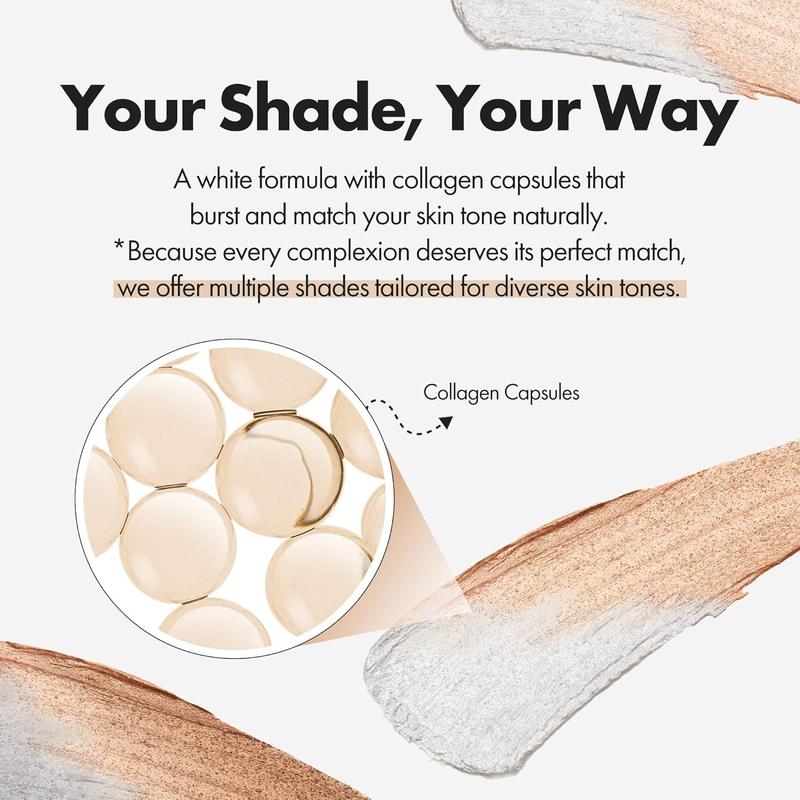
Microencapsulated pigments activate on contact with your skin's acid mantle. No brush required. Niacinamide, collagen, and a satin finish in a travel-ready stick.
Shop LindaliaHead to Head: The Comparison Table
| Category | Stick | Liquid |
|---|---|---|
| Application speed | Fast, no tools needed | Moderate, tool recommended |
| Precision | High, targeted deposit | Lower, broader spread |
| Blending ease | Good with warming technique | Excellent, more forgiving |
| Travel convenience | No spill risk, no tools | Pump or cap, needs tool |
| Hygiene | No open formula exposure | Pump reduces contamination |
| Coverage range | Light to medium | Light to full |
| Dry skin performance | Good over moisturizer | Better, more hydrating base |
| Oily skin performance | Better control, less slip | Can look heavy at midday |
| Mature skin | Satin finish avoids settling into lines | Depends on formula weight |
| Adaptation activation | Direct contact, fast trigger | Gradual over spread area |
Which Skin Types Favor Stick
Combination and oily skin tend to do well with stick foundations. The solid format deposits a controlled amount of product without excess slip, and the formula tends to set faster on skin with more natural oils, which translates to better midday hold.
Mature skin often responds well to stick foundations specifically because the satin or soft-glow finishes common in stick formulas do not settle into fine lines the way heavier liquid formulas can. The direct application also avoids the tugging that sometimes occurs when spreading a heavy liquid formula across more delicate skin.
Normal skin works with both formats. The choice for normal skin comes down to preference for finish, coverage level, and routine speed rather than compatibility requirements.
Which Skin Types Favor Liquid
Dry skin generally benefits from liquid foundations because the emollient-rich base provides additional moisture as part of the coverage process. Liquid formulas also tend to sit more comfortably on dry patches, while stick formulas can feel slightly tacky on very dry areas before blending.
Skin that needs higher coverage for concerns like significant redness, hyperpigmentation, or blemishes is better served by liquid. The buildable nature of liquid formula and the tool options available (brush for more coverage, sponge for more sheerness) give more control over the final coverage level.
Beginners who are still developing their application technique may also find liquid more forgiving, since the blend window is longer and errors correct more easily.
"Neither format wins outright. Stick wins on convenience, precision, and travel. Liquid wins on blendability and coverage ceiling. The better question is which trade-offs matter less to you."

Lindalia: What the Stick Format Looks Like at Its Best
pH-responsive pigments, skin-first ingredients, and a satin finish that works across skin types. A stick designed to deliver more than convenience: actual results, every day.
See the ProductWhat Online Reviews Get Wrong About the Format Debate
A significant proportion of negative reviews about color changing foundations blame the format when the real issue is the technology or the shade range. Someone who bought a liquid color changing foundation and got poor shade adaptation is not experiencing a liquid-specific problem: they are experiencing a technology or formulation problem that would be equally present in stick format.
Similarly, reviews praising stick foundations for "incredible shade matching" are more often reflecting the quality of the adaptation mechanism (pH-responsive vs. thermochromic) than the stick format itself. A stick with thermochromic technology and a liquid with pH-responsive technology: the liquid will produce better adaptation, even though the stick format wins on convenience.
When reading reviews, separate format feedback from technology feedback. Look for comments specifically about the color shift quality, the oxidation behavior, and the wear-time shade stability. Those comments tell you about the adaptation mechanism. Comments about ease of use, mess, and application speed tell you about the format.
The Verdict
Stick and liquid each win in their lane. If you are optimizing for speed, travel-friendliness, precision application, control over product amount, and performance on oily or mature skin, the stick format deserves serious consideration. If you are optimizing for dry skin comfort, maximum blendability, higher coverage potential, or beginner-friendly technique, liquid has the advantage.
What matters more than the format is the adaptation mechanism inside it. A stick with pH-responsive encapsulation outperforms a liquid with thermochromic pigments on the specific dimension most people care about most: does the color actually match my skin, or does it just shift in a general direction?
Know what mechanism you are looking for, then choose the format that fits your life.
Try the Stick That Gets the Technology Right
pH-responsive color adaptation, niacinamide, collagen, and a satin finish in a precision stick. No tools required. Travel-ready. A full routine in 60 seconds.
Shop LindaliaChoose stick if: you want a fast, no-tool routine, you have oily or combination skin, you travel frequently, or you prefer precise application. Choose liquid if: your skin is dry, you need higher coverage, or you prefer more blending flexibility. In either case, prioritize the adaptation mechanism over the format when evaluating shade-matching quality.