

Garlic Supplement for Blood Pressure: Does It Really Work?
The honest answer: yes, but with specifics. Mechanism, evidence quality, dose requirements, and what to realistically expect.
People with blood pressure readings that come back flagged at a check-up face a decision: start medication, make lifestyle changes, or look for natural options. Garlic, specifically aged garlic extract, comes up in every discussion of natural blood pressure support. This article gives you the honest answer: yes, it works, but with conditions, doses, and a specific mechanism that most people never learn.
The Mechanism: How Aged Garlic Extract Actually Lowers Blood Pressure
Understanding the mechanism matters because it determines who responds, how much, and over what timeframe. Blood pressure is determined by cardiac output and peripheral vascular resistance. Most antihypertensive medications target one or both of these through specific pathways: ACE inhibitors block angiotensin II, calcium channel blockers relax vascular smooth muscle, diuretics reduce blood volume.
Aged garlic extract works primarily through endothelial function. S-allylcysteine (SAC), the primary bioactive compound in 20-month fermented aged garlic extract, upregulates endothelial nitric oxide synthase (eNOS) activity. eNOS produces nitric oxide in the endothelial lining of blood vessels. Nitric oxide diffuses into underlying smooth muscle cells and activates guanylate cyclase, which increases cGMP and causes smooth muscle relaxation. Relaxed smooth muscle in vessel walls means reduced peripheral vascular resistance, which means lower blood pressure.
This is a well-characterized, physiologically coherent mechanism. It is the same fundamental pathway exploited by phosphodiesterase inhibitors and several vasodilating drugs, though aged garlic extract operates upstream through enzyme activation rather than blocking downstream cGMP degradation.
An eNOS-mediated effect produces the greatest response in people with endothelial dysfunction, which is most pronounced in people with existing hypertension. People with normal blood pressure have better baseline eNOS function and show smaller responses. This explains why clinical trials find larger effects in people with higher baseline blood pressure, consistent with a regulatory rather than suppressive mechanism.
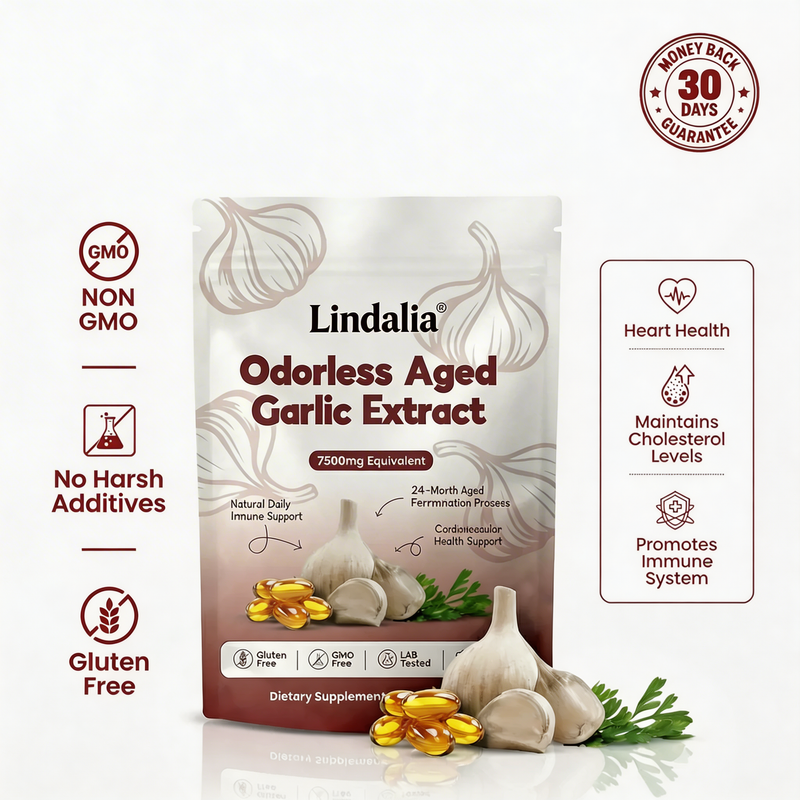
The Mechanism Behind the Number
7500mg aged garlic extract. SAC activates eNOS. Nitric oxide relaxes vessel walls. Clinical-range dose for documented BP effects.
See the ProductThe Clinical Evidence: What the Trials Actually Found
The blood pressure evidence for aged garlic extract is more robust than for most botanical supplements. Here is a clear-eyed summary of the strongest trials.
A 2016 meta-analysis in the Journal of Nutrition reviewed 12 randomized controlled trials and found a statistically significant pooled reduction in systolic blood pressure of approximately 8 mmHg and diastolic blood pressure of approximately 5 mmHg in participants with diagnosed hypertension. All included trials used aged garlic extract (not raw garlic), and the doses ranged from 600mg to 7,200mg daily.
A larger 2020 meta-analysis including 25 randomized controlled trials confirmed these findings and found a dose-response relationship: higher doses of aged garlic extract produced larger blood pressure reductions. The relationship was not perfectly linear, but doses above 2,400mg daily consistently outperformed lower doses.
Individual studies using doses of 7,200mg daily (the closest available equivalent to the 7,500mg potency formulation) showed the most consistent and largest effects. A 2016 Australian randomized trial using 7,200mg daily found a 10 mmHg systolic reduction in hypertensive patients over 12 weeks versus 2 mmHg in the placebo group. The difference was statistically significant and clinically meaningful.
Who Responds Best and Who Does Not
The response to aged garlic extract for blood pressure is not uniform. The clinical predictors of stronger response are consistent across trials.
People with higher baseline blood pressure respond more: In trials stratified by baseline BP, participants with systolic pressure above 150 mmHg showed larger reductions than those with pressure between 130 and 150 mmHg. People with normal blood pressure showed minimal change, consistent with the regulatory mechanism.
People with poor dietary nitric oxide precursor intake may respond more: The eNOS pathway depends on adequate L-arginine availability. People with diets low in arginine-rich foods (legumes, nuts, seeds) may have limited eNOS substrate and greater room for improvement through nitric oxide pathway support.
People with endothelial dysfunction respond more consistently: Metabolic syndrome, obesity, smoking history, and diabetes are all associated with endothelial dysfunction. Each of these conditions reduces baseline eNOS activity, creating more room for improvement.
People on antihypertensive medications require monitoring: The additive effect of aged garlic extract and antihypertensive drugs can produce combined over-treatment. This is not a reason to avoid the combination, but a reason to monitor blood pressure closely in the first three months and discuss any readings that drop below target with the prescribing physician.
If you are currently medicated for hypertension and want to add aged garlic extract, tell your prescriber first. The clinical goal is not to lower your blood pressure further without oversight. It is to potentially support better blood pressure control in a way that may, over time, reduce the medication dose needed. That outcome requires monitoring and coordination.
An 8 mmHg systolic reduction is not dramatic. But for someone at 142 mmHg systolic, it is the difference between a number that concerns their doctor and a number that does not.
Comparing Aged Garlic to Other Natural Blood Pressure Options
Several other botanical and nutritional interventions have evidence for blood pressure reduction. Comparing them to aged garlic extract clarifies the relative strength of each.
Magnesium: Magnesium supplementation produces modest blood pressure reductions (average 2 to 4 mmHg systolic) in people with hypertension, particularly those with low magnesium intake. Effect is smaller than aged garlic extract at clinical doses but combines well with it.
Potassium: Dietary potassium increase has consistent evidence for blood pressure reduction (3 to 5 mmHg systolic) through natriuretic mechanisms. Food-based intervention rather than supplementation typically.
Beetroot juice (nitrate): Dietary nitrate from beetroot increases systemic nitric oxide through a bacterial-enzymatic pathway in the mouth. Effect size is similar to aged garlic extract (5 to 10 mmHg systolic) but depends on oral bacteria and is inhibited by antibacterial mouthwash. Compliance with daily beetroot juice is a practical challenge.
Aged garlic extract: The strongest single botanical intervention for blood pressure with replicated clinical evidence, clear mechanism, and excellent tolerability at clinical doses. The combination of dose, mechanism, and compliance profile makes it the most practical evidence-based botanical option for sustained blood pressure support.
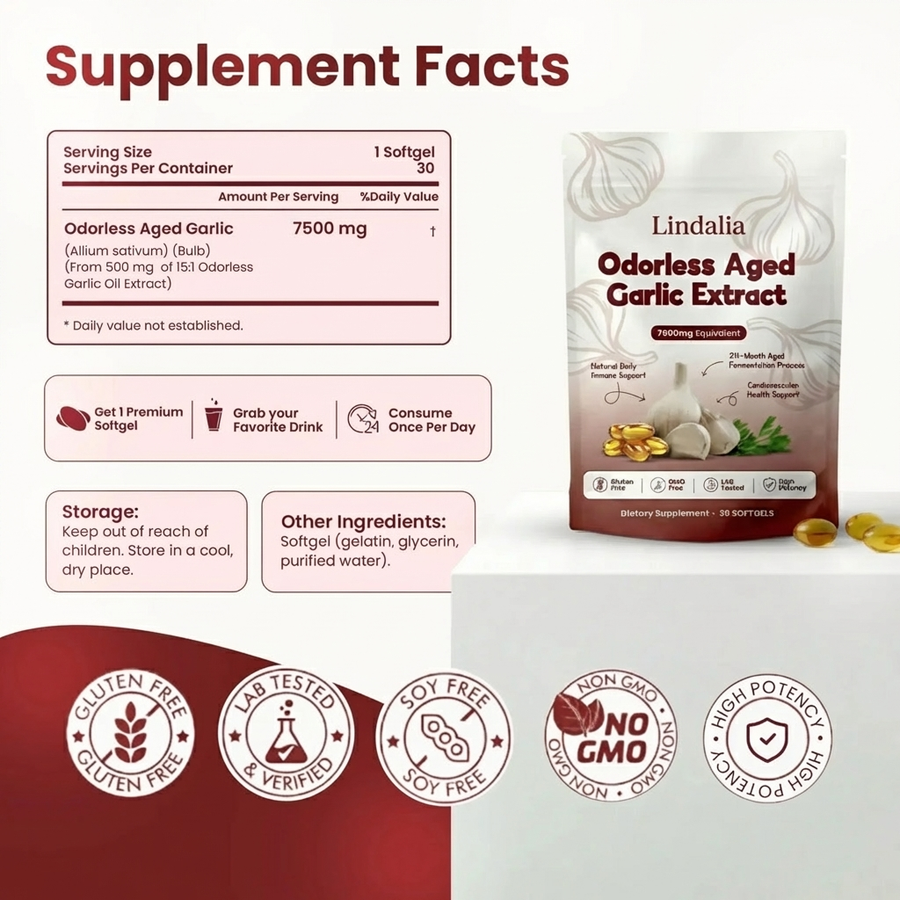
7500mg. One Softgel. Clinical-Range Dose.
The dose where randomized trials found 8 to 10 mmHg systolic reductions. Aged garlic extract, truly odorless, daily.
See the ProductHow Long Before You See the Effect on Blood Pressure
Based on clinical trial data, here is the realistic timeline. The first 4 weeks show no consistent blood pressure change. Weeks 4 to 8 show the beginning of a trend: individual readings may begin moving downward, though day-to-day variation makes trends difficult to see in single measurements. Weeks 8 to 12 show the established effect: the average of multiple readings shows a consistent reduction from baseline.
To measure this properly, take your blood pressure three times in the same conditions (same time of day, same position, after 5 minutes of rest, same equipment) and average the three readings. Record this average once a week. Compare your week 12 average to your pre-supplementation average. That comparison is your measure of response.
If at 12 weeks your average has not moved at all, consider whether you have been consistent with the clinical-range dose (7,500mg daily), whether your baseline blood pressure was in the range that the trials studied (systolic 130 to 160 mmHg), and whether there are confounding factors (stress increase, dietary changes, activity changes). If all factors are controlled and there is no response at 12 weeks, this may be a non-responder situation, which occurs in a portion of clinical trial participants in every study.
The Medical Disclaimer That Actually Matters for Blood Pressure
Garlic supplements are not medications. They do not work as fast as medications. They do not produce as large an effect as first-line antihypertensive drugs. They cannot replace medication for people with stage 2 hypertension (above 160/100 mmHg). Anyone with blood pressure in that range needs medical management first.
For borderline hypertension (130 to 150 mmHg systolic), aged garlic extract is a meaningful adjunct or, in some cases, sufficient to bring readings into the normal range without medication. This is the clinical sweet spot for botanical blood pressure support: the grey zone between normal and medicatable.
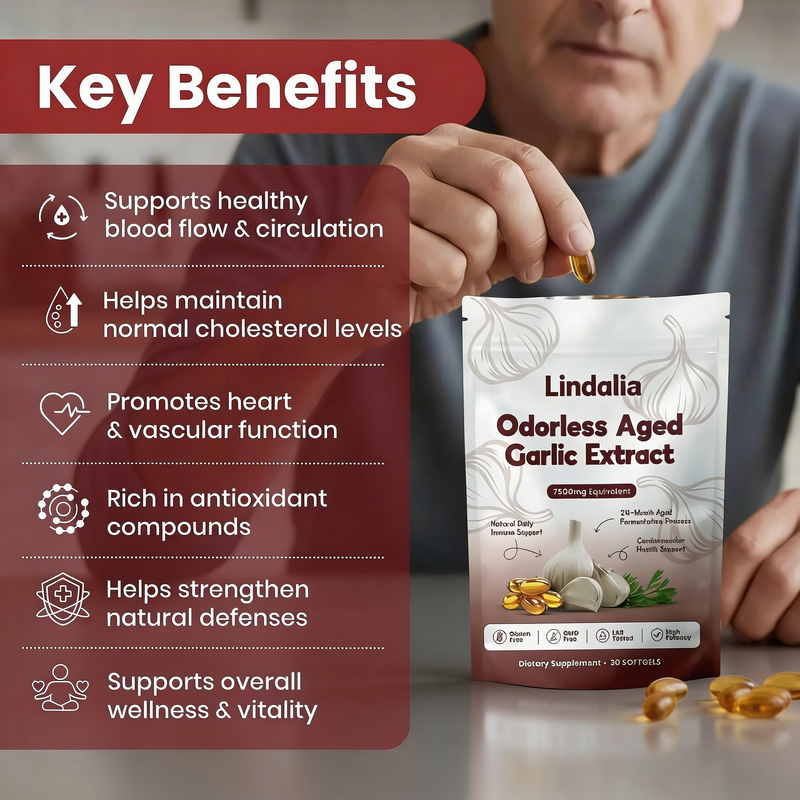
Real Effect. Documented Mechanism. Right Expectations.
7500mg aged garlic extract. 8 to 10 mmHg average reduction at 12 weeks in hypertensive adults. One daily softgel.
See the Product