

The Complete Guide to Garlic Supplements: Benefits, Types, and the Right Dose
Not all garlic supplements are the same. Here is what the science actually says about types, effective doses, and what to expect.
You added garlic to your diet years ago for a reason. Cardiovascular protection, immune support, and the antioxidant density that researchers keep documenting. But eating two cloves a day means the smell follows you everywhere, and raw garlic capsules often deliver the same problem in pill form. This guide covers everything you need to make a rational decision about garlic supplementation: what the different forms actually do, which doses show real clinical effects, and why the chemistry of aged garlic extract is genuinely distinct from grinding up a bulb and putting it in a capsule.
What a Garlic Supplement Actually Is
Walk into any health food store and the garlic section is crowded. Garlic oil capsules. Garlic powder tablets. Dried garlic concentrate. Aged garlic extract softgels. Enteric-coated formulas claiming to be odorless. The labels use similar language, but the contents are chemically very different.
Raw garlic contains allicin, the compound responsible for its sharp smell and much of its antimicrobial activity. Allicin forms when the enzyme alliinase reacts with alliin after a clove is crushed or chopped. The problem: allicin is reactive and unstable. It breaks down quickly after formation, it does not survive stomach acid well, and it is the direct source of garlic breath and gastric irritation. Most raw garlic capsules and powder tablets contain these same unstable compounds. Enteric coating delays breakdown but does not change the underlying chemistry.
Aged garlic extract is different at the molecular level. When garlic is aged for 20 months in a water-ethanol solution, the harsh sulfur-rich compounds like allicin convert into stable, water-soluble organosulfur compounds. The two most studied are S-allylcysteine (SAC) and S-allylmercaptocysteine (SAMC). These molecules have no odor, cause no gastric irritation, and absorb well because they are water-soluble. They are not a diluted version of raw garlic. They are a chemically transformed version with a distinct bioactivity profile.
Aged garlic extract does not contain allicin. The aging process converts allicin into SAC and SAMC, which are more stable, odorless, water-soluble, and better absorbed. Less smell does not mean less potency. It means different chemistry.
The Core Health Benefits Backed by Clinical Research
Garlic supplementation has been studied more rigorously than most botanical compounds. Here is what the evidence actually supports.
Cardiovascular function: This is the most robust area of research. Multiple randomized controlled trials and meta-analyses show that aged garlic extract reduces systolic and diastolic blood pressure in people with mild to moderate hypertension. The mechanisms involve nitric oxide synthesis (which relaxes blood vessel walls), reduced arterial stiffness, and improvement in endothelial function. A review published in the Journal of Nutrition found that aged garlic extract produced a reduction of around 10 mmHg systolic in hypertensive participants over 12 weeks.
Cholesterol and LDL oxidation: The effect on total cholesterol is modest in most studies, typically a 4 to 8 percent reduction. More significant is the effect on LDL oxidation. Oxidized LDL is the form that contributes to arterial plaque formation. SAC and SAMC are potent antioxidants that reduce LDL oxidation, which may matter more for long-term cardiovascular risk than total LDL numbers alone.
Immune modulation: Aged garlic extract increases the activity of natural killer (NK) cells, responsible for identifying and destroying virus-infected cells. A 12-week trial found that participants taking aged garlic extract had significantly greater NK cell activity compared to placebo. This is particularly relevant for adults over 50, where baseline immune function declines gradually each year.
Anti-inflammatory activity: Chronic low-grade inflammation contributes to cardiovascular disease and metabolic syndrome. Aged garlic extract reduces several inflammatory markers including C-reactive protein and interleukin-6 in clinical trials, though effect sizes vary by baseline inflammation levels.
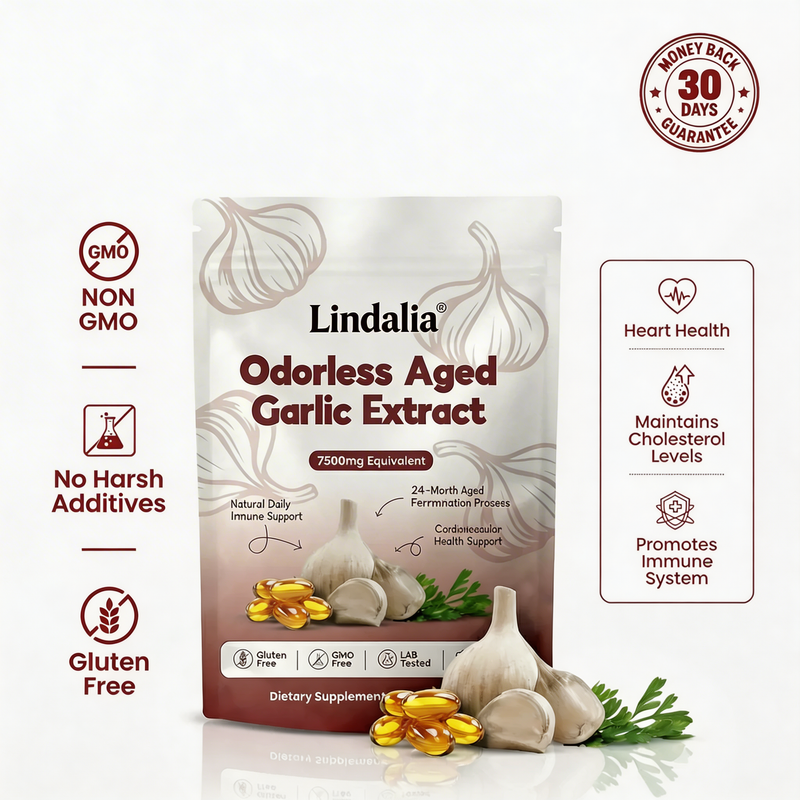
7500mg Potency, Truly Odorless
Fermented 20 months for stable SAC and SAMC. No smell, no gastric irritation, clinical-range dose.
See the ProductDosage: Where the Gap Between Marketing and Science Lives
This is where most garlic supplements quietly fail. The studies showing meaningful cardiovascular effects used daily doses between 2,400mg and 7,200mg of aged garlic extract. Garlic capsules sold in most pharmacies contain 500mg to 1,000mg of dried garlic powder per capsule. That is not the same compound, and it falls well short of clinically relevant quantities.
At 500mg per capsule of dried garlic, you would need six to fourteen capsules daily to approach the doses used in cardiovascular studies, and that assumes equivalent bioactivity, which it does not have. Raw garlic compounds are not well-absorbed, are unstable in the gastrointestinal tract, and cause side effects at high doses.
The clinically meaningful dose range for aged garlic extract specifically is 2,400mg to 7,200mg per day. A supplement providing 7,500mg potency per serving places you at the upper end of what clinical trials have studied for cardiovascular endpoints, without the instability or tolerance problems associated with raw garlic at equivalent quantities.
Raw Garlic Capsules vs Aged Garlic Extract: The Chemistry Matters
The marketing language on raw garlic capsules often emphasizes allicin content as a quality marker. Higher allicin yield is presented as more potent. This framing misunderstands the science.
Allicin is unstable. It forms only when alliinase enzyme contacts alliin, which happens when fresh garlic is crushed. In a dry capsule, this enzymatic reaction may not occur efficiently. If it does occur, allicin reaches the stomach where acid conditions accelerate its breakdown. Most of the allicin in a raw garlic capsule does not survive to be absorbed. Studies measuring plasma levels after raw garlic capsule ingestion show very low SAC concentrations compared to equivalent doses of aged garlic extract.
In aged garlic extract, the conversion from allicin to SAC and SAMC has already occurred during the 20-month fermentation process. These compounds are already present in their stable, water-soluble form before the capsule is swallowed. They survive gastric transit, are absorbed in the small intestine, and appear in plasma at predictable concentrations. The bioavailability gap between raw garlic and aged garlic extract is substantial when measured directly.
The most common reason people stop taking garlic supplements is the smell and digestive discomfort. A supplement you stop after two weeks provides no long-term cardiovascular benefit. Aged garlic extract removes the barrier to consistent use, which compounds over months into measurable outcomes.
The fermentation process does not strip garlic of its potency. It converts that potency into a form the body can actually use.
What to Expect Week by Week
Clinical timelines for garlic supplementation are often misrepresented. Here is a realistic picture based on what studies report.
Weeks 1 to 2: Most people notice nothing dramatic. What you should notice is the absence of side effects common with raw garlic: no odor, no gastric discomfort. Biochemically, the antioxidant activity begins immediately, but measurable changes in blood pressure or cholesterol take longer to establish.
Weeks 3 to 4: Some users report mild improvements in energy and general baseline wellbeing. These are subjective and variable. During cold and flu season, you may begin to notice reduced severity or frequency of illness, though immune effects take 4 to 8 weeks to build.
Weeks 6 to 12: This is the window where cardiovascular markers begin to shift in clinical trials. If you have access to blood pressure monitoring or a cholesterol panel, weeks 8 through 12 are when baseline comparisons become meaningful. Studies documenting significant BP reduction used 12-week intervention periods as their primary endpoint.
Beyond 12 weeks: Long-term use is where the most consistent benefits appear. Arterial stiffness reduction, sustained NK cell activity, and cumulative antioxidant protection take months to establish. Many users over 50 report that after three to four months, they notice they have not had a significant cold or respiratory infection, which aligns with the NK cell data.
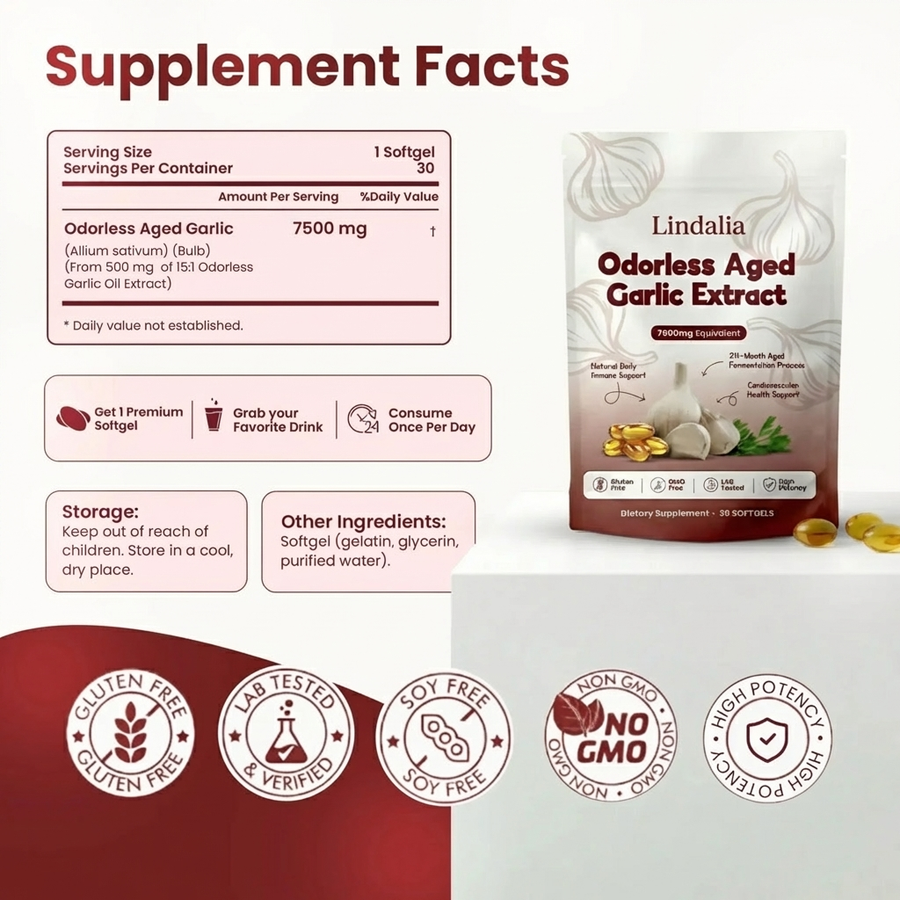
The Dose That Matches the Research
One softgel daily. Clinical-range potency without the smell or stomach issues of raw garlic capsules.
See the ProductWho Should Use Garlic Supplements and Who Should Be Careful
Aged garlic extract is broadly well-tolerated. Side effects reported in trials are minimal and significantly lower than with raw garlic. That said, there are two categories of people who should consult their physician before starting.
People taking anticoagulants: Aged garlic extract has a mild blood-thinning effect. For most healthy people, this is a benefit. For people already taking warfarin, clopidogrel, or similar anticoagulants, the combined effect needs to be monitored. Several cases have been documented where patients who added aged garlic extract needed their anticoagulant dose adjusted after a few months of supplementation.
People taking antihypertensive medications: The blood pressure-lowering effect of aged garlic extract is real and clinically meaningful. For someone already on antihypertensive medication, this additive effect may cause blood pressure to drop more than intended. This is not necessarily a reason to avoid it, but a reason to monitor and coordinate with a prescribing physician.
Take one softgel with a meal. Consistency matters far more than perfect timing. The same time each day with food improves absorption and builds the habit that makes long-term results possible. If you are on any cardiovascular medications, flag the addition to your prescriber.
How Aged Garlic Extract Fits Into a Broader Cardiovascular Protocol
Garlic supplementation is not a replacement for medical management of cardiovascular risk. It is a well-supported adjunct. The most consistent evidence positions aged garlic extract as a useful tool for people with mildly elevated blood pressure, early-stage cholesterol concerns, or a family history of cardiovascular disease who want to take meaningful preventive action beyond lifestyle changes alone.
The evidence also supports its use for immune maintenance in older adults, particularly those who notice they are more susceptible to seasonal illness than they were a decade ago. The NK cell data is consistent across multiple studies, and the absence of side effects at clinical doses makes long-term use practical.
For someone starting garlic supplementation, the priority is form and dose. An aged extract at 7,500mg potency is categorically different from a 500mg raw garlic powder capsule at the back of a pharmacy shelf. The chemistry, bioavailability, clinical data, and side effect profile are all different. Treating them as equivalent because they both say garlic on the label is a common and avoidable mistake.
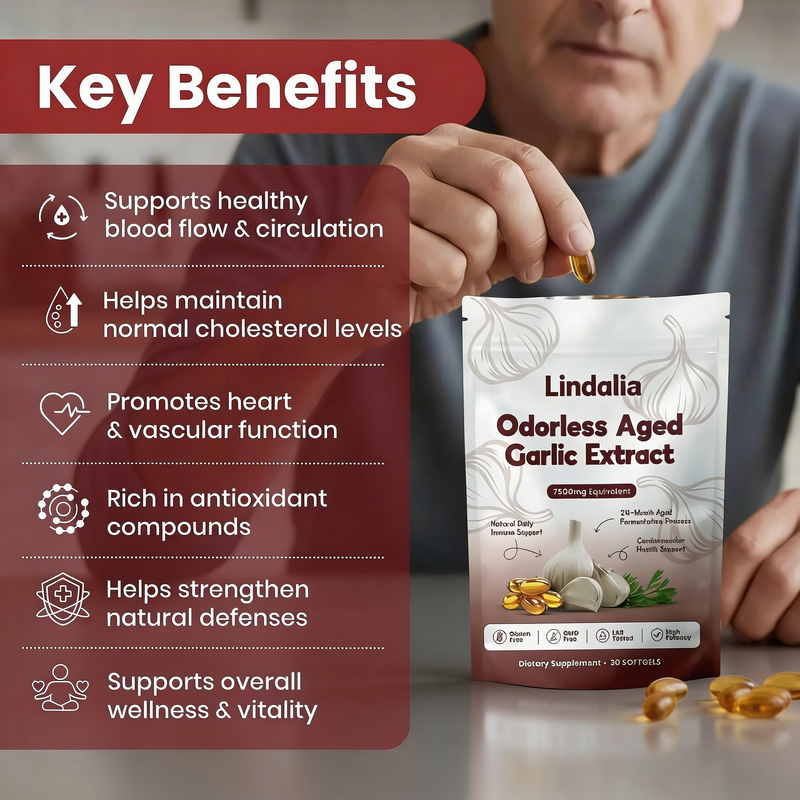
Aged Garlic Extract That Actually Reaches Clinical Dose
7500mg potency, fermented 20 months, softgel for maximum bioavailability. No odor, no stomach issues.
See the Product