

Garlic Supplements for Blood Pressure: How Much to Take Daily
The specific dose question most articles avoid: what do the blood pressure trials actually use, and what does that mean for the bottle in your hand?
Dosing is where most garlic supplement decisions go wrong. A product providing 500mg of garlic in any form and a product providing 7,500mg of aged garlic extract are sold next to each other in the same supplement section, at similar price points, with similar packaging. The dose difference is fifteen-fold. For blood pressure specifically, that difference is the entire evidence base versus none of it.
What the Blood Pressure Trials Used
The clinical literature on garlic and blood pressure is specific about doses. Trials that found statistically significant blood pressure reductions used the following dose ranges of aged garlic extract (not raw garlic powder): 600mg to 1,200mg daily in some early studies with modest effects; 2,400mg to 3,600mg daily in trials showing consistent moderate effects; 7,200mg daily in the trials showing the largest and most consistent reductions.
The dose-response relationship is clear in the meta-analyses: higher doses of aged garlic extract produce larger blood pressure reductions. The 2020 meta-analysis of 25 trials found a linear trend between dose and systolic blood pressure reduction within the 600mg to 7,200mg range. At 7,200mg daily, the pooled reduction was approximately 10 mmHg systolic. At 1,200mg daily, it was approximately 3 to 4 mmHg.
This dose-response relationship means that taking 1,000mg daily is not a partial solution. It is taking a fraction of the dose associated with meaningful clinical effects and expecting those effects. The evidence does not support that expectation.
A supplement providing 7,500mg of aged garlic extract per serving sits at the upper end of the clinical dose range, where the strongest blood pressure effects were documented. This is not an arbitrary number. It reflects the dose in the trials that found 10 mmHg systolic reductions in hypertensive adults over 12 weeks.
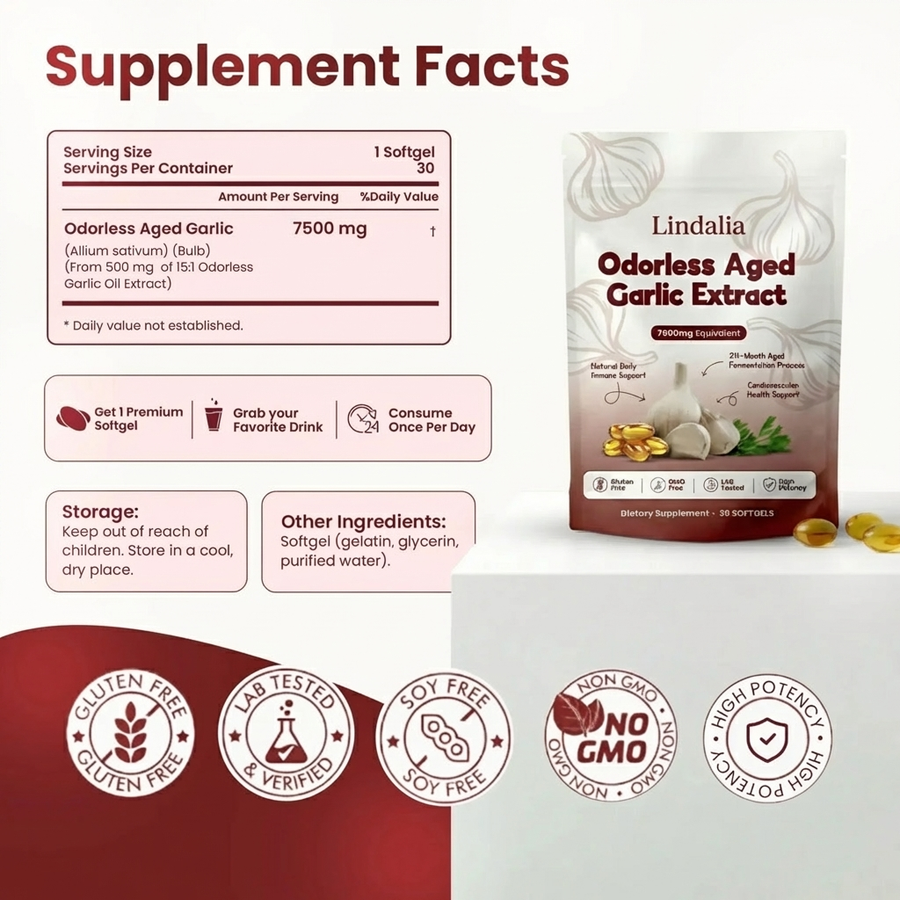
7500mg. Not 500mg. The Dose That Matters.
Aged garlic extract at the dose used in blood pressure trials. One daily softgel. The clinical range in a single serving.
See the ProductWhy Raw Garlic Dose Comparisons Are Misleading
Many garlic supplement labels state a fresh garlic equivalency, something like "equivalent to 10,000mg of fresh garlic." This is a marketing conversion, not a pharmacokinetic measurement. The calculation divides fresh garlic weight by a moisture content factor to produce a dried weight equivalent. It does not reflect allicin stability, bioavailability, or the presence of SAC and SAMC.
A raw garlic powder capsule claiming "10,000mg fresh garlic equivalent" typically contains around 600mg to 1,000mg of dried garlic powder. That powder contains alliin and alliinase, which may form allicin in the digestive tract. Most of that allicin will not survive stomach acid in its original form. The plasma concentrations of active compounds from this product are a fraction of what the "10,000mg equivalent" label implies.
When comparing doses for blood pressure purposes, use only actual milligrams of aged garlic extract. Fresh garlic equivalencies, allicin yield claims, and garlic complex blends are not comparable to aged garlic extract milligrams. The blood pressure clinical trials cited in the literature used aged garlic extract at specific milligram doses. That is the only comparison that maps onto the evidence.
Timing: When During the Day to Take It
Clinical trials have used various timing protocols: some specify morning dosing, some evening, some with meals and some without. No trial has found a significant timing effect on blood pressure outcomes from aged garlic extract. The half-life of SAC in plasma is approximately 9 hours, which means plasma concentrations remain elevated for most of the day with once-daily dosing.
Blood pressure has a circadian pattern: it rises sharply in the early morning hours (the morning surge) and is highest in the late morning. Some practitioners prefer evening dosing to maintain higher SAC plasma levels during the morning surge period. This is physiologically logical but not supported by specific head-to-head timing trials.
The practical recommendation: take aged garlic extract at the same time each day with a meal. The consistency is more important than the specific timing. Taking it with food slows gastric emptying and provides slightly more extended absorption, and it anchors the habit to an existing routine.
Some practitioners prescribe split dosing (half the daily dose morning, half evening) for supplements with short half-lives. SAC's 9-hour plasma half-life means that once-daily dosing maintains adequate plasma levels throughout a 24-hour period, making split dosing unnecessary for aged garlic extract.
The dose in the bottle is not the dose you need if the dose in the bottle is not what the trials used. This is the single most important concept in garlic supplement selection.
How Long to Take It Before Judging the Effect
The minimum duration for a meaningful blood pressure assessment with aged garlic extract is 12 weeks of consistent daily dosing. This is not a conservative suggestion. It is based on when the clinical trials placed their primary endpoint measurements and when the physiological adaptations are fully established.
The endothelial adaptations that drive blood pressure reduction (increased eNOS expression, sustained nitric oxide availability, reduced vascular smooth muscle tone) require 8 to 12 weeks to establish. Week-by-week blood pressure readings may show a gradual trend beginning around week 6 to 8. A single blood pressure reading at week four that is unchanged from baseline is within the normal clinical timeline.
For measurement methodology: take your blood pressure in the same conditions, same time of day, after 5 minutes of seated rest, three times in succession and average the three readings. Do this once a week. Compare your 12-week average to your pre-supplementation baseline average. That comparison is your efficacy assessment. Individual daily readings are too variable to be meaningful for this purpose.
What to Do If You See No Response at 12 Weeks
If you have been taking 7,500mg of aged garlic extract daily for 12 weeks and your blood pressure average has not changed, consider the following before concluding that garlic does not work for you.
Verify the form: Confirm your supplement contains aged garlic extract specifically, not raw garlic powder. The label should say "aged garlic extract" and specify the fermentation period.
Verify consistency: Have you actually taken it every day for 12 weeks? Missing multiple days per week reduces the effective weekly dose and interrupts the biological accumulation needed for the eNOS pathway effects.
Check confounding factors: Blood pressure is highly sensitive to stress, sleep, sodium intake, alcohol, and physical activity. If any of these increased substantially during your 12-week trial, the blood pressure effect of aged garlic extract may have been offset by lifestyle changes. A controlled comparison is difficult outside of clinical trial conditions.
Consider your baseline: If your starting blood pressure was in the normal range (below 120/80), the clinical evidence does not strongly predict a meaningful reduction. The trials showing 8 to 10 mmHg reductions enrolled hypertensive adults. If you are not hypertensive, aged garlic extract may provide other benefits without producing measurable blood pressure changes.
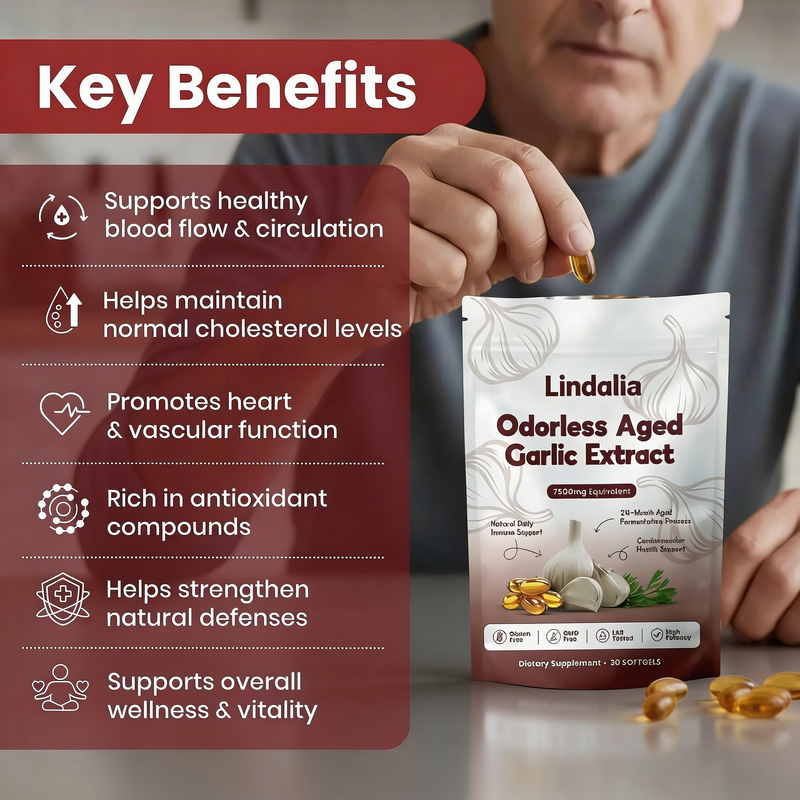
7500mg Daily. 12 Weeks. Consistent.
Clinical-range potency in one softgel. The dose and duration that matches the blood pressure research.
See the ProductAdjusting With Your Doctor Over Time
For people on antihypertensive medications who add aged garlic extract, the best outcome of successful supplementation is a conversation with their physician about whether the medication dose can be reduced. If blood pressure is consistently lower at 12 weeks, and is approaching the lower boundary of the therapeutic target range, that is a medical conversation to have rather than a unilateral decision to reduce medication.
Several practitioners who follow patients on combined antihypertensive and aged garlic extract protocols report that medication dose review is appropriate at 3 to 6 months. The combination occasionally produces blood pressure control that is better than the medication alone, which creates an opportunity to reduce pharmaceutical load under physician supervision.
This is the ideal scenario: not replacing medication, but using a well-evidenced supplement to improve the overall cardiovascular protocol and potentially reduce pharmaceutical dose over time. It requires monitoring, communication with a prescriber, and patience. It is a meaningful possible outcome of taking the right dose of the right form of garlic supplement consistently.
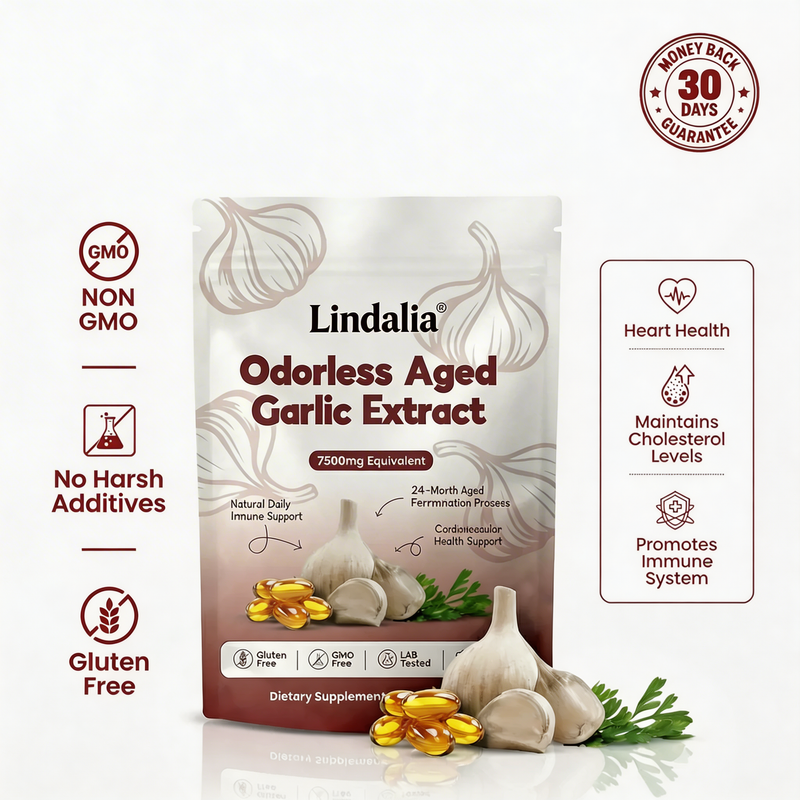
7500mg Per Softgel. One Daily. 12 Weeks to Results.
The upper-range clinical dose in the blood pressure trials. No underdosing. No raw garlic compromises.
See the Product