

Heavy Tartar Removal at Home: Is It Really Possible?
An honest assessment of what at-home tools can achieve on heavy deposits, what they cannot, and the timeline for real results.
Heavy tartar buildup is the honest challenge case for at-home dental care. The glossy marketing suggests any device solves any deposit in a few sessions. The truth is more nuanced. Here is what is actually achievable at home, what is not, and how to maximize the former.
Defining "Heavy" Tartar
Calculus severity exists on a spectrum. Light supragingival calculus is thin, relatively recently formed (within the past 3 to 6 months), and only partially mineralized. It adheres to the enamel surface but has not had time to fully crystallize across its full depth. This type is most responsive to at-home ultrasonic removal.
Moderate calculus has been present longer, has fully mineralized, and may span several millimeters of tooth surface. The outer layers are exposed and accessible; the inner layer at the enamel interface is firmly bonded but less dense than the surface layer. At-home devices work on this category with consistent effort over multiple sessions.
Heavy calculus includes deposits that have been accumulating over many months to years without professional removal, may be layered through multiple mineralization cycles, and can extend from the crown surface down into the sulcus (subgingival). The supragingival portion of heavy deposits is accessible to at-home tools. The subgingival portion is not, and requires professional instruments to address safely.
The gum line is the practical boundary of at-home ultrasonic tools. Everything above it is accessible. Everything below it, in the sulcus, is not safely reachable with consumer-grade tip geometries and power levels. This is not a device limitation but a deliberate safety design: subgingival instrumentation without training damages the gum attachment apparatus.
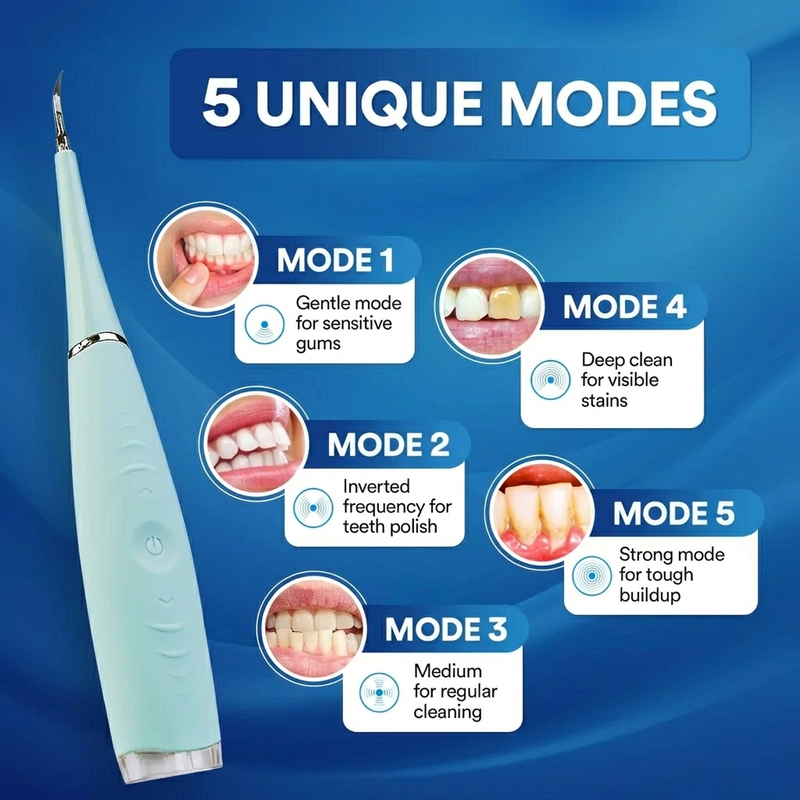
Ultrasonic Tooth Cleaner by Lindalia
Supragingival calculus removal at home, progressive over multiple sessions. Multiple intensity modes, LED visibility. Fine metal tip for heavy surface deposits.
See the ProductWhat At-Home Tools Can Realistically Do
For supragingival heavy calculus: consistent high-intensity ultrasonic sessions (working up to full intensity gradually) can progressively disrupt and remove surface deposits over 6 to 12 weeks. Heavy deposits do not come off in one session. The physics are straightforward: vibrational energy fractures the crystal lattice progressively, and thick deposits require more cumulative energy input than thin ones. Session 1 may produce very little visible change. Session 5 or 6 may produce significant detachment as the vibrational energy has accumulated enough micro-fractures across the deposit's depth.
This is not a failure of the tool. It is the expected physics. The analogy is erosion: water does not carve a canyon in one rainstorm. Consistent, repeated application of the right force eventually overcomes the most resistant material.
For the cosmetic component: surface staining on heavy deposits responds faster than the calculus itself. The flat polishing tip combined with the fine tip disruption can produce visible color improvement within the first 2 to 4 sessions, even while the underlying deposit takes longer to fully remove. This visual improvement is real and clinically meaningful even if the structural removal is still in progress.
The Combination Approach for Heavy Deposits
For heavy supragingival calculus, the most effective at-home approach combines tools rather than relying on any single method. Ultrasonic vibration addresses the mineral bond. Water flosser at high pressure flushes fragments that have been partially dislodged but not yet detached. Anti-tartar toothpaste prevents rapid re-accumulation in areas that have been cleared. Each tool contributes differently and the combination is meaningfully more effective than any single method.
Session protocol for heavy deposits: fine tip at medium intensity on deposit areas (2 to 3 minutes), followed immediately by water flosser at standard pressure over the same areas (30 to 45 seconds), followed by anti-tartar toothpaste brushing (2 minutes). This sequence is more intensive than the standard maintenance routine and is appropriate for the first 4 to 8 weeks of addressing established heavy buildup, after which intensity can reduce to the standard maintenance level.
With heavy deposits, expect three phases. Weeks 1 to 3: surface staining begins to reduce, very little structural change visible. Weeks 4 to 8: fragments begin to detach, surfaces become smoother to the tongue. Weeks 9 to 12: measurable reduction in overall deposit volume, surfaces visibly cleaner. The curve is front-loaded with small changes and back-loaded with larger visible shifts.
Heavy calculus formed over months. Removing it takes weeks, not sessions. The physics does not change with impatience.
When a Professional Baseline Is the Right First Step
If you have heavy subgingival deposits (indicated by consistent gum bleeding at the margins, gum recession, or visible dark deposits below the gum line), the correct sequence is professional cleaning first to establish a clean baseline, then home maintenance to prevent return to the prior level. Attempting to address subgingival heavy calculus with home tools is not effective and may mask symptoms that indicate advancing periodontal disease.
Even for heavy supragingival deposits, a professional cleaning that removes the existing burden and then a commitment to consistent home maintenance produces better long-term outcomes than months of at-home effort on a very heavy initial baseline. The professional visit resets the clock; the home routine keeps it from running fast again.
The economic rationale: one professional cleaning plus consistent home maintenance to prevent re-accumulation is less expensive over a 12-month period than multiple professional cleanings without home maintenance. The investment in an at-home device pays back in reduced cleaning frequency and less intensive (shorter, less costly) professional visits.
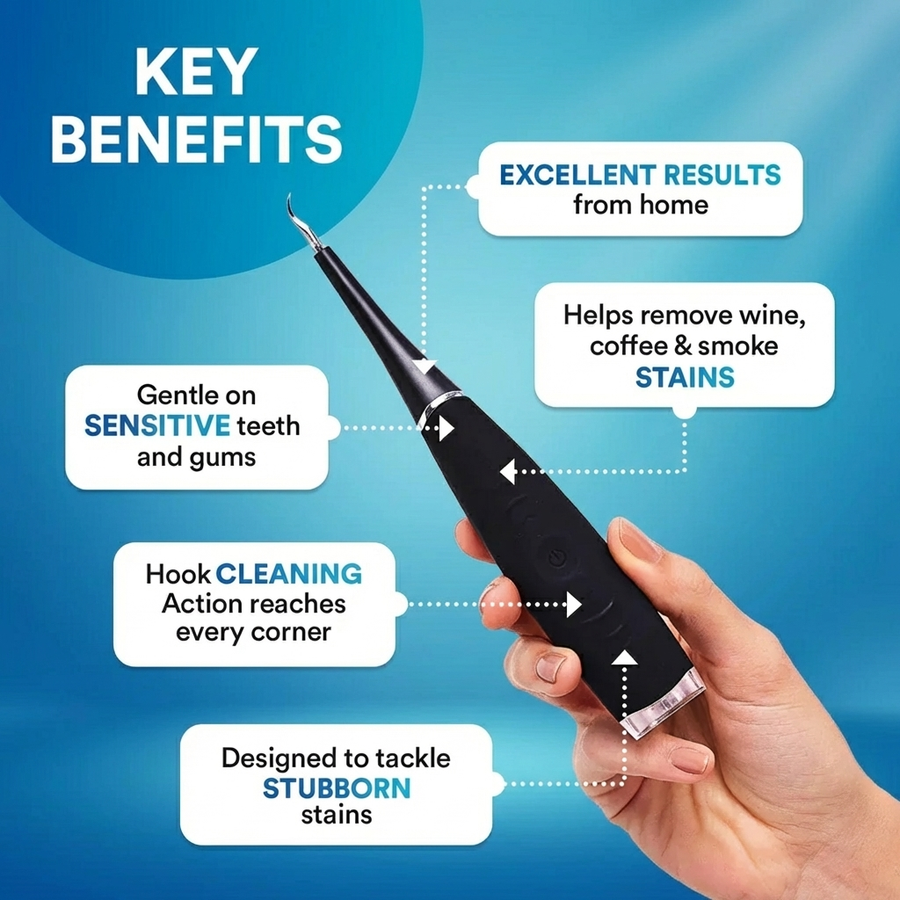
Lindalia Ultrasonic Tooth Cleaner
Multiple intensity modes for progressive escalation on heavy deposits. Fine tip for structural removal, flat tip for surface polish. LED for visibility on dense buildup areas.
See the ProductPreventing Heavy Buildup From Returning
Once you have cleared heavy supragingival deposits (through professional care, at-home effort, or both), the maintenance phase is critical. Calculus does not stop forming; the goal is to keep it from reaching the heavy stage again. Twice-weekly ultrasonic sessions prevent deposits from progressing from early (soft, easily disrupted) to moderate (harder) to heavy (fully mineralized, layered) by catching them at the earliest, most vulnerable stage.
Anti-tartar toothpaste reduces the rate of new mineralization. Good brushing and flossing habits limit the raw material for calculus formation. The combination keeps heavy deposits from reforming in people who are predisposed to rapid calculus accumulation.
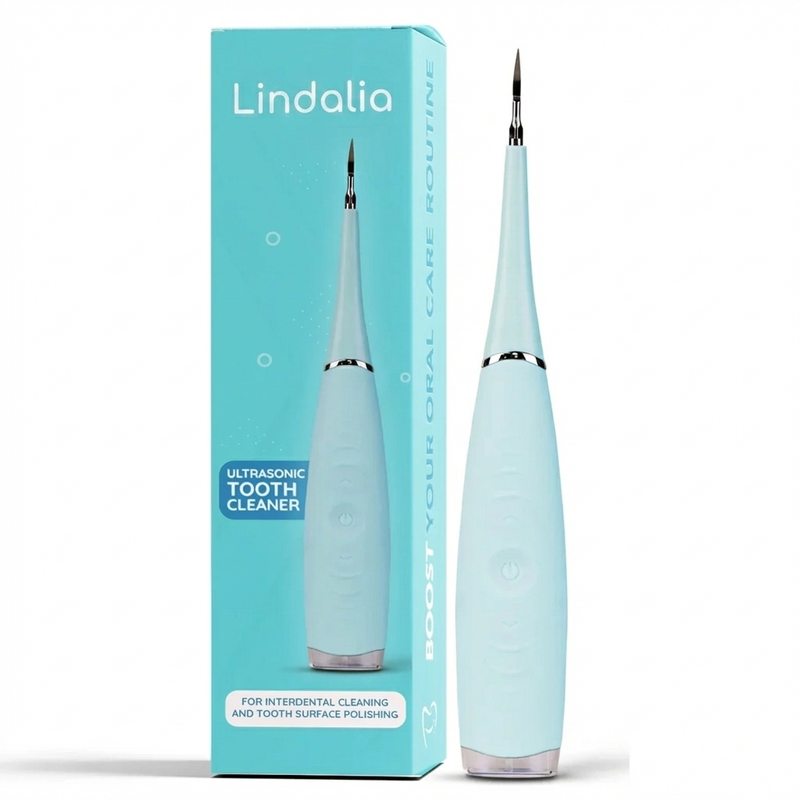
Lindalia Ultrasonic Tooth Cleaner
After clearing heavy deposits, 2x weekly maintenance keeps them from returning. The tool for both phases: removal and prevention.
See the Product