

How to Remove Black Tartar From Teeth: Causes and Solutions
What makes tartar black, why it is harder to remove, and the adapted approach for tobacco, iron, and medication-related deposits.
Black or very dark tartar is a different problem from the yellow-brown deposits most people associate with calculus. It is more resistant, has specific causes, and requires a clear-eyed understanding of what you are dealing with. Here is the explanation and the honest approach to addressing it.
What Makes Tartar Black
Standard calculus ranges in color from white to cream to yellow to brown, depending on how long it has been present, how heavily it has been stained, and where in the mouth it is located. Black tartar is a distinct category with different causes and properties.
The primary cause is tobacco use. Cigarette smoke contains tar compounds and chromogenic particles that penetrate deeply into the porous structure of calculus and into the acquired pellicle on enamel. Over time, oxidation of these compounds produces dark brown to black coloration that is significantly harder to remove than surface-level staining from coffee or tea.
Iron compounds are the second major cause. Iron-containing saliva or oral fluids react with sulfur compounds produced by certain oral bacteria to form iron sulfide, which has a distinctive black coloration. This type of black staining is particularly common in people who take liquid iron supplements (the iron leaches into saliva), people with certain gastrointestinal conditions that increase iron in oral secretions, and infants or young children exposed to iron-fortified formulas or supplements. In adults, black staining from iron is often distributed in thin horizontal lines along the gum margin, sometimes called "black line stain."
The thin black line that runs along the gum margin in some adults, particularly women over 40 and non-smokers, is a specific type of chromogenic bacterial staining called black line tartar or extrinsic black stain. It is caused by Actinomyces and related iron-reducing bacteria, tends to form in very clean mouths (these bacteria compete poorly when plaque levels are high), and is associated with lower caries risk. It is cosmetically undesirable but not a sign of poor oral hygiene.
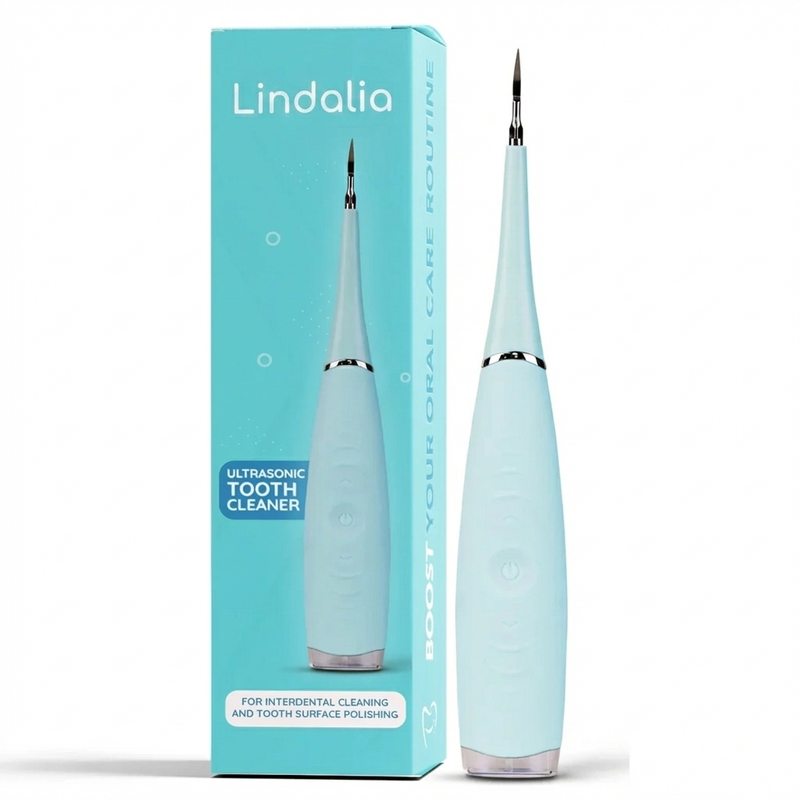
Ultrasonic Tooth Cleaner by Lindalia
Vibrational energy targets the mineral bond beneath even darkly stained deposits. Multiple intensity modes. LED light to see what you are working on.
See the ProductCertain Medications and Black Tartar
Bismuth-containing medications (used for digestive issues) react with hydrogen sulfide produced by oral bacteria to form bismuth sulfide, which stains teeth and deposits black. This effect reverses when the medication is discontinued, but the staining binds to calculus deposits and pellicle during use and requires active removal.
Chlorhexidine mouthwash, while effective as an antibacterial agent, causes significant staining when used long-term. It is a cationic compound that binds to tannins from foods and beverages, forming dark brown to black deposits on teeth and tongue. This is one of the reasons chlorhexidine is recommended for short courses only, not indefinite daily use.
Certain antipsychotic medications alter salivary composition in ways that promote darker calculus formation in some users. The mechanism is not fully established but appears related to changes in salivary pH and protein composition that affect the type of bacteria colonizing the calculus surface.
Why Black Tartar Is Harder to Remove
The difficulty of removing black tartar compared to lighter deposits comes from two factors. First, the chromogenic compounds that cause the dark color are often bound within the mineral matrix of the calculus itself, not just on its surface. A stain on the surface of a deposit can be polished or disrupted without affecting the deposit's structural integrity. A stain that has polymerized within the mineral matrix is only removed when the deposit itself is removed.
Second, tobacco-related calculus tends to be harder and more densely mineralized than calculus in non-smokers. Smoking alters salivary composition, increasing certain mineral concentrations that accelerate calculus mineralization. The result is a deposit that is often denser and more strongly bonded to the enamel surface than comparable non-tobacco calculus at the same site.
This does not mean at-home removal is impossible. It means it requires more sessions and more consistency, and expectations should be calibrated to gradual improvement over weeks rather than dramatic single-session change.
Tobacco calculus is dense, diffusely distributed, particularly on inner lower surfaces and outer lower back molars, and may also accumulate heavily on outer upper surfaces in heavy smokers. Black line stain (iron-bacterial) is typically fine, linear, and follows the gum margin precisely. The two types respond differently to home treatment: black line stain often responds more readily to ultrasonic vibration.
Black tartar takes longer to remove because it took longer to form in the density it has. Patience and consistency are the only variables you control.
The At-Home Approach for Black Tartar
For tobacco-related dark calculus: ultrasonic vibration at moderate to high intensity (work up to high intensity gradually after 3 to 4 sessions at lower settings), focused on the heaviest deposit areas. Sessions may need to run 3 to 4 minutes on the affected zones rather than the standard 2 minutes. Frequency should be 3 sessions per week rather than 2 for the first 6 to 8 weeks while establishing a new baseline.
For iron-related black line stain: the stain often responds well to the flat polishing tip after the fine tip disrupts the thin calculus layer beneath it. The black line is typically associated with a very thin calculus layer, making it more accessible than the thick tobacco deposits. Multiple sessions at moderate intensity, focused on the precise gum margin line where the stain is located, produce visible improvement within 3 to 4 weeks in most cases.
For medication-related staining: address the primary source first. If the staining is from chlorhexidine, discuss alternative antibacterial strategies with your dental provider. For bismuth-related staining, the stain diminishes when the medication course ends; home ultrasonic use during and after accelerates clearance.

Lindalia Ultrasonic Tooth Cleaner
Progressively increase intensity for darker, denser deposits. Fine tip for disruption, flat tip for polishing. LED visibility where dark staining makes access harder.
See the ProductWhen Professional Help Is Necessary
Very heavy tobacco-related deposits that have been accumulating over many years without professional cleaning often require professional ultrasonic scaling to establish the initial clean baseline. At-home devices can maintain that baseline and prevent it from returning to previous levels, but they may not be sufficient as the sole removal tool for deeply layered, long-standing dark calculus.
If you have consistent dark deposits that show no measurable improvement after 8 to 10 weeks of 3x weekly home ultrasonic use, a professional cleaning is the appropriate next step. Post-cleaning, the home routine then prevents re-accumulation to the previous level. Many users in this category find that after one professional cleaning to reset the baseline, consistent home maintenance keeps dark deposits from returning to their prior severity.

Lindalia Ultrasonic Tooth Cleaner
Multiple intensity modes for harder deposits. Consistent use 3x per week for the first 6 weeks. The tool for the longer removal timeline.
See the Product