

How to Remove Tartar From Teeth at Home: A Dentist-Free Routine
A realistic weekly structure that fits into real life. Daily habits plus twice-weekly sessions, with exact timing and sequence.
A routine only works if it fits into real life. Knowing the optimal sequence is not enough; it also needs to be simple enough to execute consistently when you are tired, rushed, or distracted. Here is the weekly structure that delivers results without requiring you to think about it every day.
The Weekly Framework
The dentist-free maintenance routine has two tiers: daily habits that prevent new calculus from forming, and weekly sessions that address deposits that have already mineralized. Getting both right is what separates a routine that maintains clean teeth from one that only feels like it does.
Daily tier: brush twice (morning and evening), floss once daily (evening is best because you are removing the day's accumulated plaque before the overnight fast, during which plaque mineralizes in the absence of eating-related saliva flow). This tier is non-negotiable; without it, calculus forms so rapidly that the weekly ultrasonic sessions are perpetually catching up.
Weekly tier: ultrasonic device use 2 to 3 times per week, spaced roughly every 2 to 3 days. This tier addresses the deposits that the daily tier cannot remove. Think of it as the maintenance layer that prevents the gradual accumulation that makes professional cleanings feel like major events.
Plaque mineralizes overnight in the calmer saliva environment of sleep. Flossing in the evening removes the interproximal plaque accumulated during the day before the mineralization window. Morning flossing is better than no flossing, but evening has the higher preventive impact.
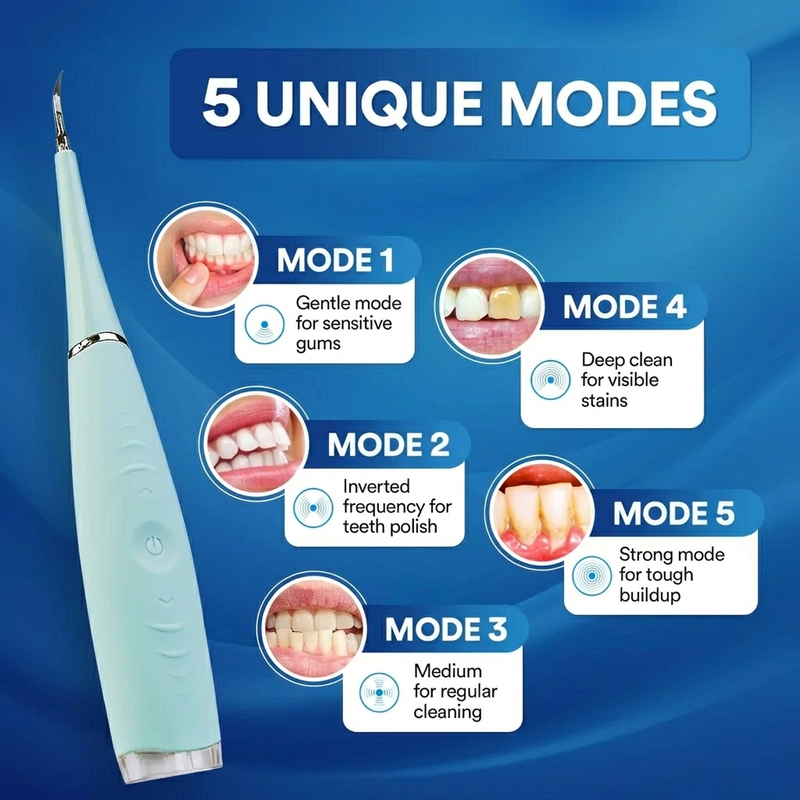
Ultrasonic Tooth Cleaner by Lindalia
The anchor of the weekly maintenance tier. Fine tip for calculus, flat tip for polishing. 200+ uses per charge means it is always ready.
See the ProductMonday/Thursday Rhythm (2x Weekly)
For most people, a Monday/Thursday pattern works well because it spaces sessions approximately 3 days apart while fitting predictably into a standard week. Session on Monday morning or evening, session on Thursday morning or evening. Neither day requires more time than the other. Each session runs 6 to 8 minutes including the polishing step.
The 3-day gap between sessions is significant. Plaque begins mineralizing within 24 to 72 hours. At 72 hours between sessions, you are catching early-stage calculus at its most vulnerable point, before it has had time to fully harden. At this stage, the vibrational energy required to disrupt it is lower and the removal is more complete.
If you miss a session by a day, it is not a problem. If you regularly stretch sessions to 5 to 7 days apart, you are operating in the window where deposits have had time to harden significantly, making each session less effective at full removal.
The Full Evening Session (8 minutes)
For days when you run an ultrasonic session, the evening routine looks like this. Floss first, threading through all contact points and sweeping under the contact area with a C-shape motion. This removes the soft interproximal plaque before the ultrasonic device works the broader surfaces.
Use the ultrasonic device next, before brushing. Inner lower front teeth first (40 seconds), lower back molar outer surfaces (30 seconds per side), upper gum margins (30 seconds per quadrant). Switch to the flat tip for a 60-second polishing pass over the same zones.
Brush last, using a tartar-control toothpaste. Brushing after the ultrasonic session removes the debris that has been dislodged from tooth surfaces during the session, and the fluoride from the toothpaste remineralizes any minor surface disturbance from the device. This sequence is more effective than brushing before the device, because brushing first would remove the fresh plaque you then floss, and the device would be working on surfaces that just had toothpaste residue on them, which can slightly dampen the vibrational energy transfer.
Floss, then brush with tartar-control toothpaste, then rinse. 4 to 5 minutes. No device needed. The simplicity of non-session evenings is what makes the 3-session-per-week rhythm sustainable.
Morning Routine: Keep It Simple
Morning routine on all days: brush with tartar-control toothpaste, 2 minutes, correct technique. Rinse. That is it. Morning does not need to be a tartar-management session; the evening session handles that work. Morning is about removing the bacterial film that has formed overnight and applying fluoride protection before the day's dietary acid exposure begins.
If you drink coffee in the morning, rinse with water after your last cup before heading to work. This does not replace brushing but reduces the time that tannin-rich liquid is in contact with tooth surfaces before your evening routine.
Two good evenings per week change what six-month cleanings find. Consistency over intensity, every time.
Monthly Check-In
Once a month, spend an extra 2 minutes examining the inner lower front teeth in a mirror under good light. This is the most reliable indicator of how well your routine is working. In the first month, you will likely still see some visible yellowish deposits. By month 2, the surface should feel noticeably smoother and appear lighter. By month 3 to 4, the inner surfaces of lower front teeth should look significantly cleaner than they did before the routine.
If you see rapid re-accumulation within days of a session, consider whether you are spending enough time on the specific inner lower zones (where salivary mineral deposition is fastest), whether your tartar-control toothpaste is active (some formulations lose pyrophosphate efficacy with prolonged storage), and whether dietary factors like very frequent coffee or tea consumption are contributing to accelerated staining that is masking the calculus improvement.
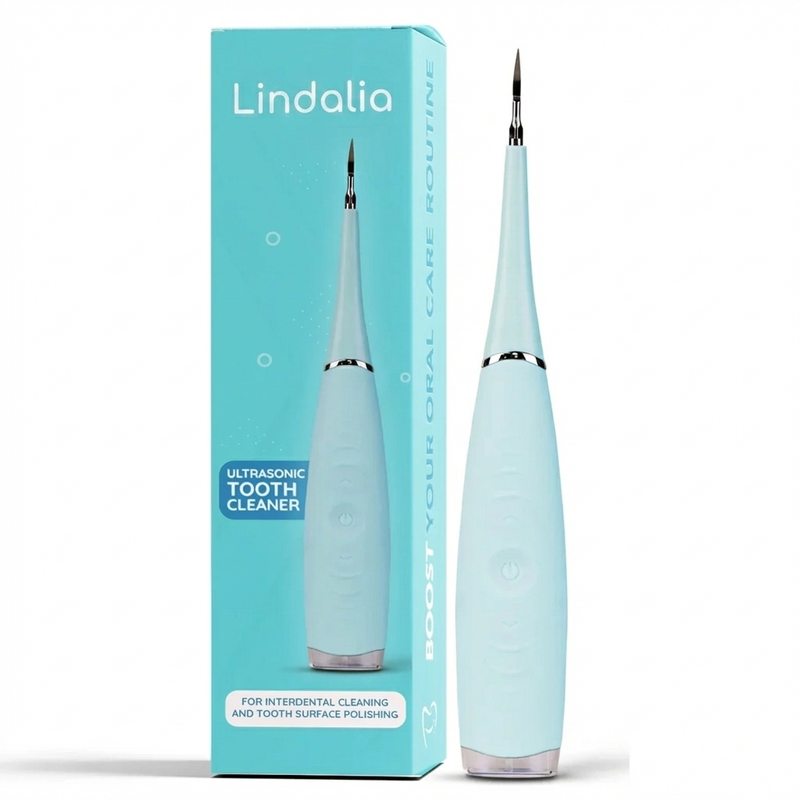
Lindalia Ultrasonic Tooth Cleaner
Monday and Thursday, 8 minutes each. Fine tip, flat tip, LED, USB rechargeable. The tool that fits into a real routine.
See the ProductAdapting When Life Interrupts
Travel, illness, or schedule disruption will break the rhythm at some point. When this happens, resume from where you left off without trying to compensate with extra-long or extra-intense sessions. The routine value is in the average over weeks and months; one missed week does not undo previous progress.
If you have been away for more than 2 weeks, expect slightly more resistance from deposits at your first returning session. Use low intensity for the first session back and progressively increase over the following two sessions. Do not try to remove everything in one session after a gap; this leads to gum irritation and discourages continued use.
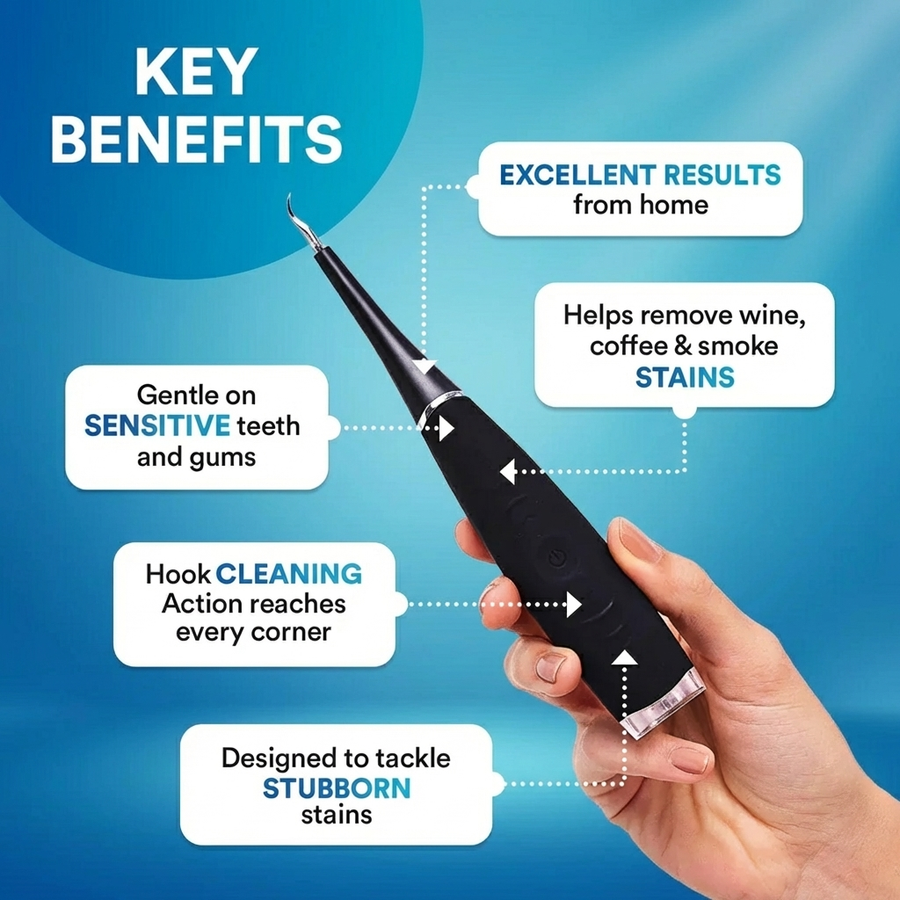
Lindalia Ultrasonic Tooth Cleaner
Simple enough to do consistently. Effective enough to change what your hygienist finds. USB rechargeable so it is always ready.
See the Product