

How to Remove Tartar From Teeth Without a Dentist: 5 Proven Methods
Five at-home methods ranked honestly by effectiveness, with practical guidance on combining them for real results.
Most adults discover they have significant tartar buildup when a hygienist points it out at a cleaning. The question that follows is predictable: can you do anything about it at home, or are you entirely dependent on professional tools? The honest answer is nuanced, but more encouraging than most people expect.
First: Understanding What You Are Up Against
Tartar, which dentists call calculus, is mineralized dental plaque. Plaque is a soft bacterial film that forms on teeth continuously. When it is not removed within 24 to 72 hours, calcium and phosphate from saliva infiltrate the bacterial matrix and crystallize, hardening the plaque into calculus. Once that mineralization occurs, the deposit is bonded to the tooth surface with a force that bristles alone cannot disrupt.
The hardness varies. Fresh calculus that has only been mineralizing for a few weeks is softer and more brittle than deposits that have been accumulating for months or years. Early deposits are the ones most accessible to at-home methods. Long-standing, layered calculus that has calcified through multiple mineral deposition cycles is more resistant and eventually requires professional tools to address completely.
With that context, here are five methods ranked by effectiveness for at-home use.
Plaque begins mineralizing within 24 to 72 hours of formation. The deposits are softest and most vulnerable to disruption in the first 2 to 3 weeks. This is why consistent, frequent at-home treatment outperforms occasional heavy sessions: you catch deposits while they are still disrupted.
Method 1: Ultrasonic Vibration (Most Effective)
Home-grade ultrasonic devices transmit rapid vibrational energy through a fine metal tip directly to the tartar deposit. The frequency fractures the crystalline mineral structure at its bond with the enamel, causing the deposit to detach without scraping pressure. This is the same physical principle used in professional ultrasonic scalers, calibrated to a power level appropriate for non-clinician use.
Effectiveness ranking: highest available for at-home tartar removal. The mechanism directly addresses the mineral bond that makes tartar adherent, which no other consumer tool does. Best applied to supragingival deposits (above the gum line), inner lower front teeth, and back molar areas where calculus accumulates fastest. Consistent use 2 to 3 times per week produces measurable reduction in new calculus accumulation over 4 to 8 weeks.
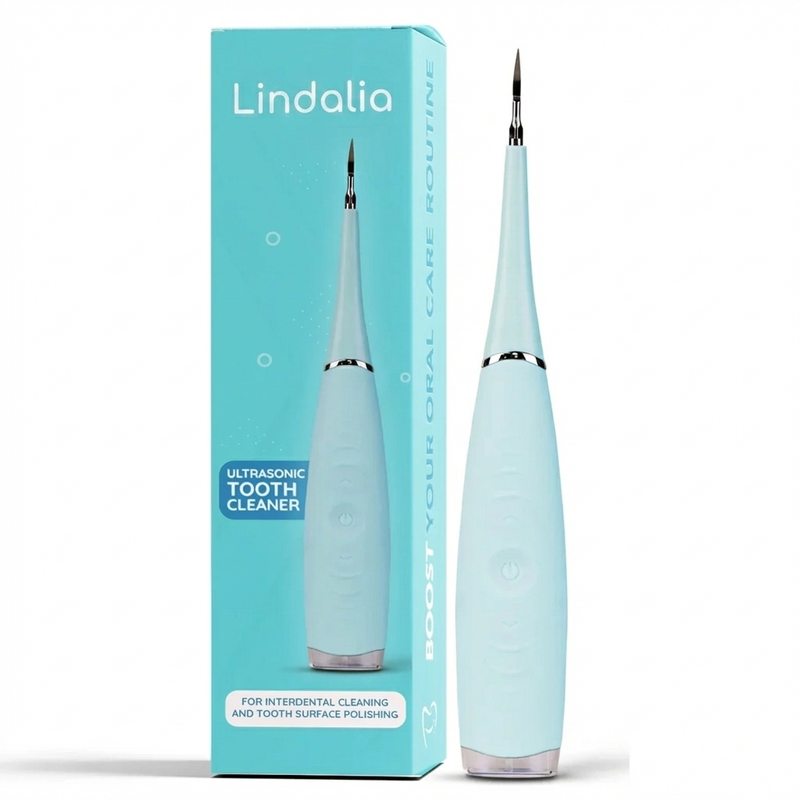
Ultrasonic Tooth Cleaner by Lindalia
The direct mechanism for at-home tartar removal. Fine metal tip, LED light, multiple intensity modes. USB rechargeable.
See the ProductMethod 2: Water Flosser on High Pressure
A water flosser cannot remove hardened calculus. The water stream does not generate the force needed to break the mineral bond. What it can do effectively is remove soft plaque from areas brushes miss, flush the gum sulcus, and disrupt the thin film of fresh plaque before it mineralizes. For prevention, water flossers are genuinely effective. For removal of existing tartar, they are not.
Where they earn a place in a complete routine: combined with ultrasonic cleaning, the water flosser flushes debris dislodged by the vibrational action out of interproximal spaces and the gum margin. Using the ultrasonic device first and then running a water flosser improves the cleaning completeness noticeably.
Method 3: Certain Toothpastes (Preventive, Not Curative)
Anti-tartar or tartar-control toothpastes typically contain pyrophosphate compounds (most commonly tetrasodium pyrophosphate or disodium pyrophosphate). These molecules interfere with the mineralization process by blocking the binding of calcium and phosphate to the plaque matrix. They work as prevention, reducing the rate at which new plaque mineralizes into calculus, but they cannot dissolve calculus that has already fully hardened.
Clinical studies show that tartar-control toothpastes reduce the rate of new calculus formation by approximately 35 to 55% compared to regular toothpaste. This is a meaningful preventive effect. But after 4 to 6 weeks of use, existing calculus remains essentially unchanged in these studies. The toothpaste prevents; the ultrasonic device removes.
Practical use: tartar-control toothpaste as part of your brushing routine reduces the rate at which new deposits form between ultrasonic sessions. The combination of both is more effective than either alone.
Baking soda (sodium bicarbonate) at a pH of approximately 8.3 can soften very early calculus deposits slightly by altering the local pH and disrupting the early mineral binding process. However, its abrasive potential means it should not be used daily or at high concentration. It is not effective on established hardened deposits and poses enamel abrasion risk with heavy use.
Method 4: Oil Pulling (Limited, Specific Role)
Oil pulling, the practice of swishing vegetable oil around the mouth for 10 to 20 minutes, has some evidence supporting its effectiveness against soft plaque and certain oral bacteria. The mechanism is thought to involve bacterial cell membrane disruption by fatty acids and a saponification effect that emulsifies some of the bacterial matrix.
For established calculus removal: not effective. The physical force generated by swishing oil is far below what is required to disrupt mineralized deposits. For gum health maintenance, some evidence supports a modest benefit. For preventing calculus formation through plaque control, it may contribute as a supplement but not a substitute for brushing and flossing.
Method 5: Dietary Modification (Foundational Prevention)
Reducing fermentable carbohydrate frequency (the sugars that feed the bacteria producing the plaque matrix) reduces plaque formation rates and alters the pH environment in which mineralization occurs. This is prevention at its most fundamental level.
Sugar-free xylitol gum after meals reduces oral bacterial counts by interfering with bacterial adhesion mechanisms. Drinking water frequently (rather than allowing sugar or acid from beverages to sit on tooth surfaces) dilutes and buffers the oral environment. These are supporting habits, not replacements for mechanical cleaning.
Prevention slows what removal addresses. Both matter. The sequence is: remove what is there, then slow what forms next.
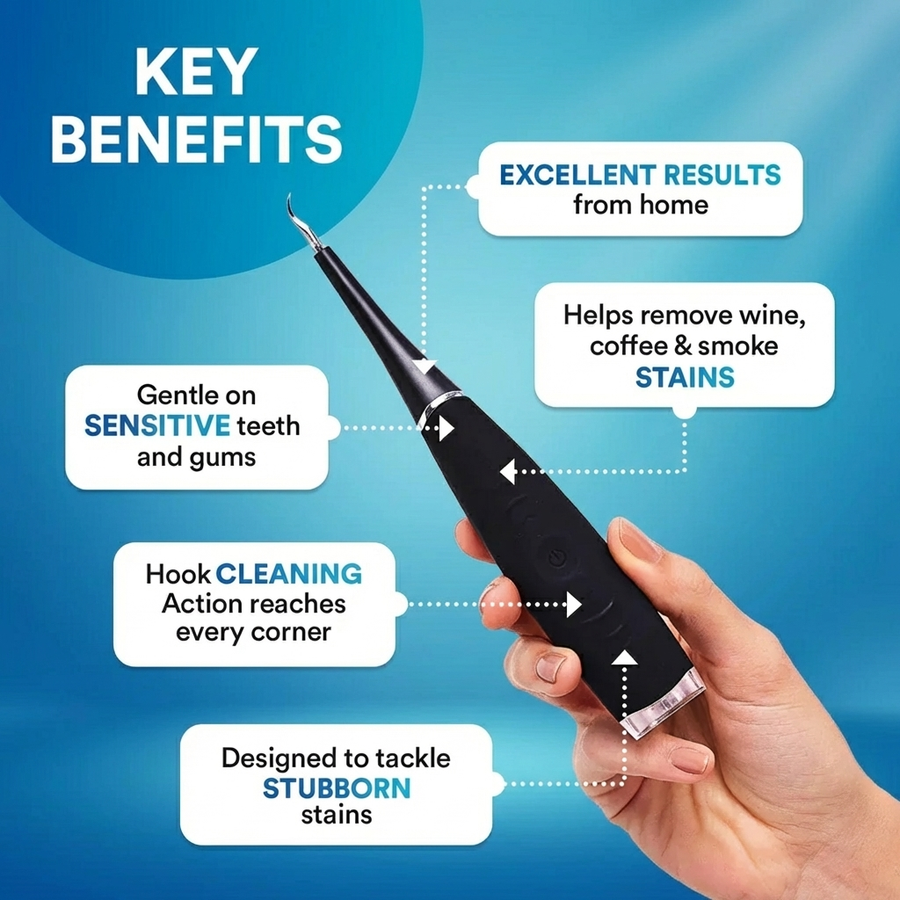
Ultrasonic Tooth Cleaner by Lindalia
Method 1, ranked highest for at-home tartar removal. Fine tip for calculus, flat tip for stains. Start your 8-week baseline today.
See the ProductThe Honest Ranking
Ultrasonic vibration is the only at-home method that directly addresses calculus by targeting its mineral bond. Anti-tartar toothpaste reduces future formation. Water flossers support plaque prevention and post-cleaning flushing. Oil pulling has marginal gum health benefits. Diet modification provides a foundation for all of the above.
The most effective protocol: ultrasonic cleaning 2 to 3 times weekly plus anti-tartar toothpaste daily plus water flosser as an adjunct. Combined, these three reduce both the existing deposit burden and the rate of new formation, which compounds into meaningfully cleaner teeth over time.
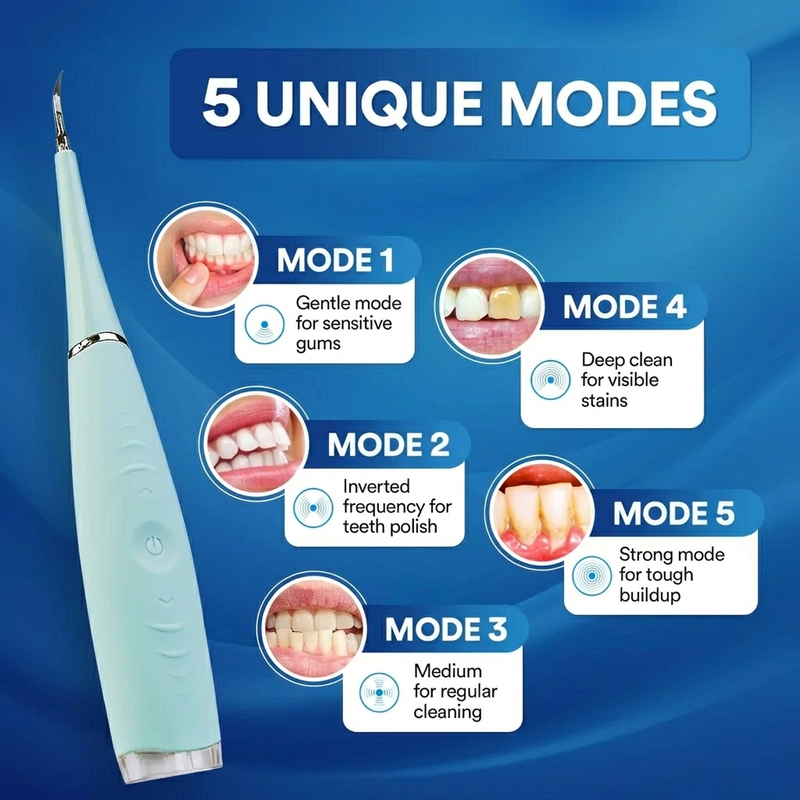
Lindalia Ultrasonic Tooth Cleaner
The direct mechanism against tartar. LED illuminated, USB rechargeable, multiple intensity modes. The anchor of an effective at-home routine.
See the Product