

Is Cyperus Rotundus Oil Safe: What Dermatologists Say
The dermatological view on cyperus rotundus: favorable safety profile, specific precautions for pregnancy and known allergies, and the PCOS use case.
Before integrating any new ingredient into your skin care routine, particularly for zones as sensitive as the bikini area or face, it is reasonable to ask what qualified professionals would say about it. The dermatological view on cyperus rotundus oil is broadly positive, with specific nuances worth knowing about for particular populations and use cases.
The Dermatological Profile of Cyperus Rotundus
From a dermatological standpoint, cyperus rotundus extract is a plant-derived active with a well-characterized phytochemical profile. The primary actives, alpha-cyperone and related sesquiterpenes, are lipophilic compounds with established anti-inflammatory and enzyme-inhibitory properties. They are not novel experimental chemicals. They have been used in traditional medicine preparations applied to skin for centuries.
The safety profile for topical application is considered favorable. No systemic toxicity has been identified in topical use studies. The compounds do not penetrate deeply enough to enter systemic circulation at concentrations used in cosmetic formulations. The action is local, at the follicle level in the skin tissue where the oil is applied.
Dermatologists would note that the most common concern with any oil-based product applied to freshly depilated skin is contact irritation, not toxicity. The skin after waxing or shaving is temporarily more permeable and reactive. A patch test before first use on a sensitive zone, and waiting for acute post-removal inflammation to settle before applying, are the professional recommendations that address the most likely risk.
Cyperus rotundus extract is considered safe for topical cosmetic use. No systemic toxicity at cosmetic concentrations. Primary risk is contact irritation, manageable with a patch test and correct application timing.
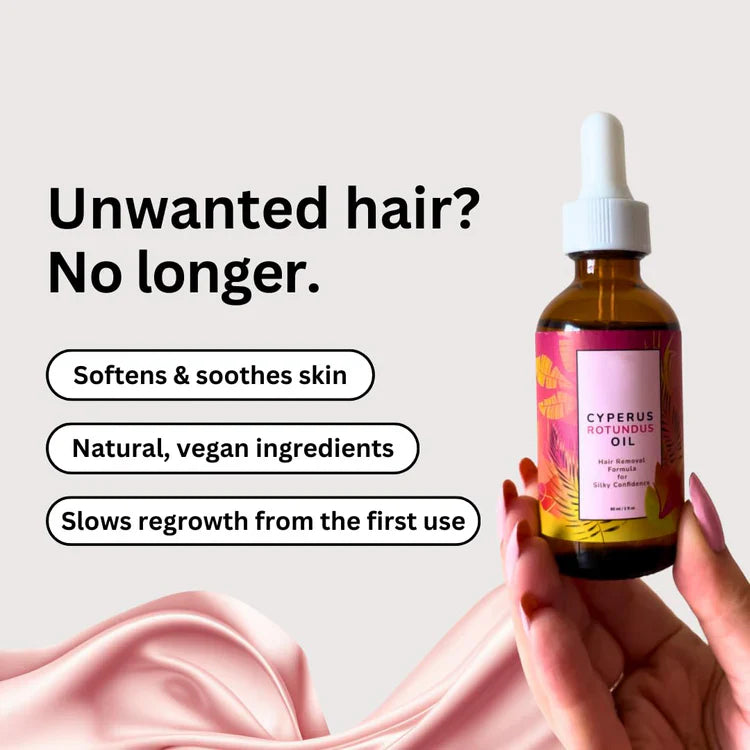
Dermatologist-Compatible Hair Removal Oil
Plant-derived actives with a known safety profile. Formulated for post-removal skin across all body zones.
See the ProductWhat We Know About Long-Term Topical Use
Long-term topical use of plant oil formulations has a generally favorable safety record in dermatological literature. The ingredients in a quality cyperus rotundus formula, including jojoba, rosehip, and tea tree oil, have all been used in cosmetic and topical medical preparations for decades. Their long-term safety is well-characterized.
The cyperus rotundus extract itself has a documented history of traditional topical use over centuries. While this does not substitute for modern long-term safety studies, it provides a substantial empirical record with no signal of chronic harm from regular topical application. The 2005 JCD study involved repeated application over multiple cycles without adverse systemic effects noted in the study population.
One consideration for very long-term, high-frequency use is the potential for cumulative contact sensitization to any ingredient, including tea tree oil. This is a general principle of topical skincare rather than a specific concern with cyperus rotundus. Rotating application zones or taking a break between cycles if irritation develops is sensible precautionary practice.
Centuries of traditional topical use, a clinical study without adverse systemic effects, and ingredient components with established safety records all support long-term use with appropriate monitoring.
The combination of traditional use data and modern phytochemical research makes cyperus rotundus one of the better-supported natural actives for post-removal skin care.
Pregnancy, Breastfeeding, and Hormonal Sensitivities
Pregnancy and breastfeeding are periods when additional caution with any topical product is appropriate. There is limited specific safety data on cyperus rotundus oil use during pregnancy. The general dermatological approach is to avoid ingredients without a clear pregnancy safety record unless the benefit outweighs the uncertainty. Tea tree oil in particular is an ingredient where professional guidance varies regarding pregnancy, with some sources advising caution during the first trimester.
If you are pregnant or breastfeeding, consulting your healthcare provider before starting any new topical product, including cyperus rotundus oil, is the appropriate step. This is not a specific warning about this product but a standard recommendation for this population.
For individuals with hormonally sensitive conditions such as estrogen receptor-positive conditions or active hormonal treatment protocols, the topical, local application of cyperus rotundus oil is generally not expected to cause hormonal interference because the active compounds act at the follicle level without systemic absorption. That said, raising this with a supervising physician is always a reasonable precaution for anyone with a hormone-sensitive diagnosis.
PCOS and Excessive Hair Growth
Polycystic ovary syndrome causes elevated androgen levels, which can result in hirsutism: excessive or coarser hair growth in zones where androgens have a higher effect, including the face, chin, chest, and abdomen. Women with PCOS often find that standard hair removal cycles are shorter and more demanding than for women without the condition.
Cyperus rotundus oil can be a useful management tool in this context. By inhibiting 5-alpha reductase locally, it reduces the conversion of testosterone to DHT at the follicle in the treated zone. This partially counteracts the elevated androgen drive on follicle activity. The result is a meaningful extension of the regrowth cycle even in the context of elevated androgens, though the extension may be less dramatic than in women with normal androgen levels.
Importantly, the oil addresses the symptom, not the cause. PCOS-related hirsutism is driven by systemic hormone levels. Topical follicle inhibition is a maintenance strategy, not a treatment. Any PCOS management should still involve appropriate medical care for the condition itself.
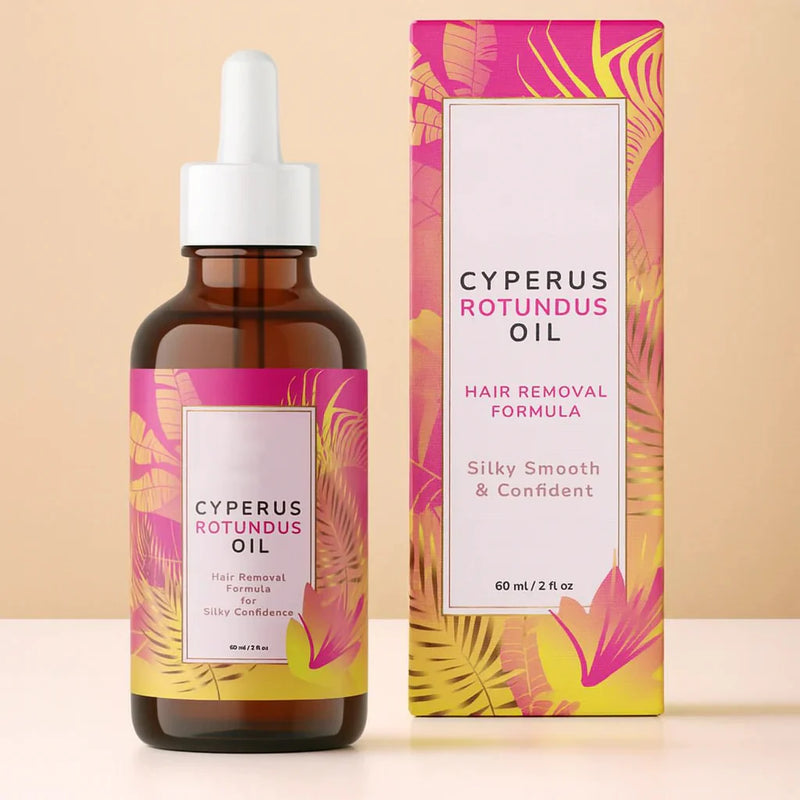
Managing Hair Regrowth Alongside PCOS
Topical 5-alpha reductase inhibition can help slow the follicle activity driven by elevated androgens. A management tool, not a replacement for medical care.
See the ProductThe Overall Safety Verdict
For the large majority of women using cyperus rotundus oil as directed, after hair removal, on normal or combination skin types, in standard body and facial zones, the product is safe. The risk profile is consistent with other oil-based topical cosmetics. Patch test before first use, avoid inflamed skin, and check the ingredient list for known personal sensitivities.
For specific populations, including pregnant women, those with known contact allergies to the formula ingredients, or those with active skin conditions, consult a healthcare provider or dermatologist before adding any new topical to the routine.
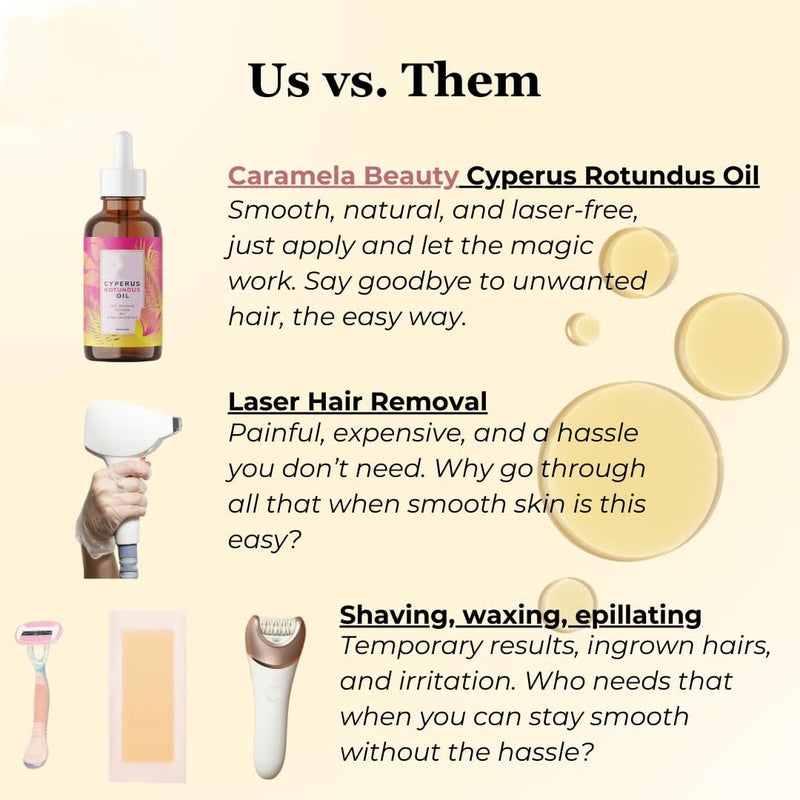
Cyperus Rotundus Hair Removal Oil
Plant-derived actives with a favorable safety profile. Suitable for all skin tones and types with correct application protocol.
See the Product