

Korean Color Changing Foundation: Why K-Beauty Is Leading the Trend
South Korea has been at the forefront of adaptive coverage innovation for decades. Here is what the K-beauty approach brings to color changing technology and what Western brands have learned from it.
If you have been tracking color changing foundation trends, you have noticed that South Korean brands keep appearing near the top of recommendation lists. This is not a coincidence, and it is not just marketing. K-beauty's influence on the adaptive coverage category runs deeper than packaging aesthetics. It comes from a formulation philosophy, a consumer culture around skin quality, and years of cushion compact innovation that gave Korean formulators a head start on understanding how to make coverage feel like skin rather than something sitting on top of it.
Disclosure: Lindalia sells a color changing foundation stick that participates in the market discussed in this article. The following analysis covers the K-beauty category broadly and is intended as educational context, not a ranking of competing products.
How K-Beauty Got Here First
The story of Korean adaptive coverage starts in 2008, when Amorepacific filed a patent for the cushion compact format. The cushion was not just a packaging innovation; it required developing formulas with specific viscosity, transfer properties, and skin-contact behavior that had not been worked out before.
Those formulation challenges pushed Korean beauty labs to think carefully about how coverage products interact with skin at a molecular level. What happens to the formula in the 30 seconds after application? How does it behave differently across skin types? How does it look six hours after a humid commute?
That research foundation gave Korean formulators a structural advantage when the color changing category began growing. They already understood adaptive coverage behavior. Adding a dynamic pigment system was a natural extension rather than a new territory.
The cushion compact format, now ubiquitous globally, was a Korean innovation. The formulation requirements it created, including precise application transfer and on-skin texture transformation, directly influenced how Korean labs approached dynamic pigment systems years later.
The K-Beauty Approach to Skin Tone Matching
Korean beauty culture has a specific relationship with complexion coverage that differs from Western traditions in a few meaningful ways. The dominant aesthetic goal in K-beauty is "glass skin," meaning a luminous, transparent-looking complexion where the skin appears healthy and lit from within rather than covered over.
This goal drives formulation decisions. A foundation designed for glass skin cannot rely on heavy opaque coverage. It needs to sit transparently, reflect light intelligently, and enhance the skin's own color rather than replace it. This is precisely what effective color changing technology does when it works correctly.
The emphasis on skin quality over coverage weight also pushed Korean formulators toward lighter textures with more sophisticated pigment systems. Rather than simply putting more pigment in a formula to achieve a match, K-beauty brands invested in pigments that behave differently, that adapt, that sit differently on different skin types.
The Two Adaptation Mechanisms in Korean Products
It is important to distinguish between two different approaches you will encounter in Korean color changing foundations, because they perform very differently.
The first is light-reflective adaptation. Many Korean CC creams and tinted bases use a combination of pearl pigments, reflective particles, and coverage agents that make the formula look more skin-like by mimicking the way healthy skin reflects light. This is not true color adaptation but it can create a convincing natural-look effect. Products in this category often include skin-conditioning actives, SPF, and treatment ingredients alongside the coverage system.
The second is chemical adaptation. Some Korean formulas use reactive pigment systems that respond to the chemistry of the skin they contact. pH-responsive encapsulation is the most sophisticated version of this: pigments are contained in polymer shells that release at the acid mantle pH range of human skin (4.5 to 6.2), producing a shift that correlates with individual skin biochemistry rather than just surface temperature.
Understanding which type you are looking at matters because the results and limitations are quite different. Light-reflective formulas produce consistent, skin-like results but do not truly adapt. pH-responsive formulas adapt more precisely but require more careful formulation to work across a wide range of skin tones.

Lindalia: Applying the Same Science K-Beauty Pioneered
Microencapsulated pigments that activate against your skin's acid mantle, combined with niacinamide and collagen. A stick format designed for the same lightweight, skin-first philosophy.
Shop LindaliaWhat K-Beauty Gets Right That Western Brands Often Miss
Several formulation principles that are central to K-beauty color changing foundations are still being adopted more slowly by Western and Western-distributed competitors.
Skin conditioning as a baseline, not an add-on. Korean color changing formulas commonly include meaningful concentrations of actives like niacinamide, adenosine, panthenol, and fermented ingredients alongside the coverage system. Western brands at the same price point more often offer coverage as the primary value proposition with skin conditioning as secondary.
Texture investment. K-beauty formulas tend to pay close attention to the sensory experience of the product. Texture is considered a functional characteristic, not just an aesthetic one. A formula that feels comfortable for eight hours will be worn longer and more often, which matters for brand loyalty.
Finish calibration. The K-beauty ideal of healthy, luminous skin has produced a generation of formulas that hit a specific soft-radiance endpoint rather than the full-matte or heavy-coverage finishes that have dominated Western drugstore formulations.
Testing across Asian skin tones. Korean beauty R&D has historically done extensive consumer testing across a range of East and Southeast Asian skin tones, which are underrepresented in Western beauty research. This has produced formulas that often perform better across the light-to-medium range of warm-neutral and olive undertones.
The Practical Realities of Buying Korean Color Changing Foundation
K-beauty color changing foundations come with some practical considerations worth knowing before you buy.
Shade availability is the biggest variable. Most Korean foundations are formulated with a relatively limited shade range that performs best for light to medium complexions. Deeper complexions and strongly pink-cool undertones are frequently underserved. This is improving as brands enter Western markets and expand shade development, but it remains a real limitation in practice.
Import and availability vary. Genuine Korean beauty products are not always easily accessible depending on where you live. Third-party sellers sometimes substitute products, adjust formulations for different markets, or sell older stock. If you are buying through a non-official channel, verify the seller's reputation and check batch codes where possible.
SPF versions are common and may affect adaptation. Many Korean color changing foundations include SPF, which is a positive addition but can slightly affect the color shift behavior. Chemical sunscreen ingredients in particular can interact with pH-responsive pigment systems, so testing the product carefully on your skin is important.
"K-beauty's contribution to color changing foundation is not a single product or ingredient. It is a philosophy: skin first, coverage second, and the two should be indistinguishable."

pH-Responsive Microencapsulation, Explained Simply
When pigments are encapsulated in polymer shells that open at skin pH levels, the result is an adaptation that responds to your skin's actual chemistry. That is the same principle K-beauty labs have built their most advanced formulas around.
Learn MoreWhat Western Brands Learned and Where Global Innovation Is Going
The influence of K-beauty on global color changing foundation development is visible in formulation trends over the past several years. Lighter textures have displaced heavier coverage formulas across the category. Skin conditioning actives are now increasingly expected rather than exceptional. The glass-skin finish aesthetic has moved from a Korean preference to a global market expectation.
More specifically to the adaptive pigment category, the most sophisticated Western and Western-distributed formulas now use pH-responsive encapsulation technology that draws directly on research and methods that were more established in Korean cosmetic labs earlier than elsewhere.
The next frontier in the category is likely broader shade inclusion combined with sophisticated adaptation mechanisms. Current pH-responsive systems work best in the light to medium range. Extending that precision to deeper complexions requires additional formulation work that several brands are pursuing.
How to Choose a Korean Color Changing Foundation
If you are specifically interested in a Korean adaptive foundation, a few questions will help you narrow down.
Which adaptation mechanism does it use? Ask whether the color shift is light-reflective or chemically reactive. Check ingredient lists for pH-responsive encapsulation technology versus simple reflective pigments. The product description or brand science page should answer this.
What is your undertone? Korean foundations are typically calibrated for neutral to warm and neutral to cool undertones across the light to medium range. If you are deeply warm, deeply cool, or have a deep complexion, research whether the specific brand has tested and developed for your tone range.
Is the product genuinely from the brand, and is it intended for your market? Check the seller if buying online and look for language about the specific regional formulation. Some brands adjust formula for different markets.
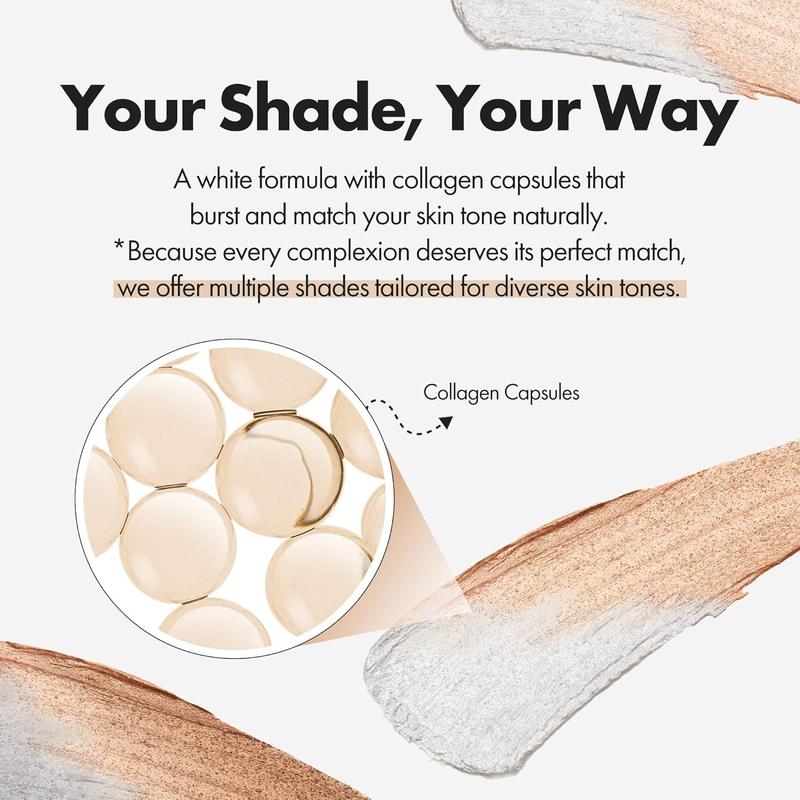
Lindalia: Skin-First Coverage with pH-Responsive Technology
A foundation stick designed around the same skin-first philosophy: adaptive pigments, niacinamide for tone evenness, collagen for surface smoothing, and a finish that looks like your skin, not like foundation.
Shop the StickA K-beauty-quality color changing foundation should include: a transparent-to-skin finish rather than a heavy coverage layer, meaningful skin-conditioning actives at effective concentrations, and a color adaptation mechanism that responds to skin rather than just to heat. If all three are present, you are looking at a genuinely sophisticated product.