

Lymphatic Drainage Face Brush: The Tool Your Skincare Routine Is Missing
A serum can hydrate, brighten, and firm. What it cannot do is physically move fluid that has pooled in your face while you slept. That requires something different.
Most skincare routines are built around chemistry: ingredients that hydrate, brighten, repair, or protect. They do their work through skin absorption, biological response, and gradual change measured in weeks. None of that chemistry addresses the mechanical problem of fluid sitting where it should not be. A lymphatic drainage face brush does something your entire product lineup cannot, and that gap is why so many well-stocked skincare routines still start every morning looking swollen.
The Gap in Most Skincare Routines
Walk through a typical morning skincare lineup: cleanser, toner, vitamin C serum, moisturizer, SPF. Each product is doing something valuable. The cleanser removes overnight buildup. The serum delivers antioxidants and brightening actives. The moisturizer seals in hydration. The SPF protects against UV damage. This is a solid, evidence-based set of steps.
Now consider what none of those steps addresses: the interstitial fluid that has accumulated in your facial tissue overnight because the lymphatic system slows when you lie still for eight hours. That fluid is not a surface problem, not a hydration problem, and not a damage problem. It is a physical accumulation of liquid in tissue, and the only way to address it is physical movement.
This is the gap. A complete skincare routine with excellent products still produces a morning face that is puffier than it would be with five minutes of properly directed lymphatic drainage. Adding the brush does not replace any of the chemistry. It addresses the one problem the chemistry fundamentally cannot solve.
Two Different Problems. Skincare products work on the skin's biology: collagen, hydration, oxidation, cell turnover. A lymphatic brush works on the skin's plumbing: moving fluid through vessels to drainage nodes. These are distinct systems, and both need attention for the face to look its best in the morning.
What Happens to Your Skincare When You Add the Brush
There is a well-established relationship between skin surface condition and product absorption. Skin with a layer of overnight dead cells and accumulated surface waste absorbs serums and moisturizers less efficiently than freshly cleared skin. The active ingredients in your products are present but partially blocked from reaching the living tissue below.
Brushing the face before applying skincare products removes that surface layer and stimulates circulation just below the skin surface. Products applied to freshly brushed skin absorb measurably faster and more completely. The vitamin C serum you were already using works harder after the brush than it did before, because the surface it is landing on is more receptive.
This is a secondary benefit that many brush users notice within the first week: the skincare products they were using before seem to work better after adding the brush. The products have not changed. The canvas they are being applied to has.

Fill the Gap Your Skincare Products Cannot
The Lindalia De-Bloat Brush handles the physical problem that chemistry cannot address, making everything that comes after it in your routine work harder.
See the ProductWhere the Brush Fits in the Routine
The simplest position for the brush is before everything else: dry skin, immediately after waking, before cleansing. This is when fluid accumulation is at its maximum and the drainage effect is most visible. The five-minute brush session, followed by a gentle cleanse, means that the first active skincare product you apply lands on skin that has been freshly stimulated, cleared of surface debris, and already showing the de-puffed structural improvement.
Some users prefer to cleanse first, then brush on damp skin, before applying serums. This sequence also works, though many find that the visible comparison (puffy pre-brush face versus cleared post-brush face) is most motivating when brushing happens before any other preparation. The mirror feedback reinforces the habit.
The Sequence That Produces the Most From Both Systems
Five minutes of dry brushing, followed by a gentle cleanse, followed by serum applied to freshly activated skin, followed by moisturizer and SPF. The total morning routine is not longer than it was before. One step has been added at the beginning, and every step that follows it benefits from the improved skin surface condition it creates.
"A well-made serum delivered to freshly brushed skin works harder than the same serum applied to eight hours of overnight accumulation. The brush does not replace the serum. It prepares the skin to receive it properly."
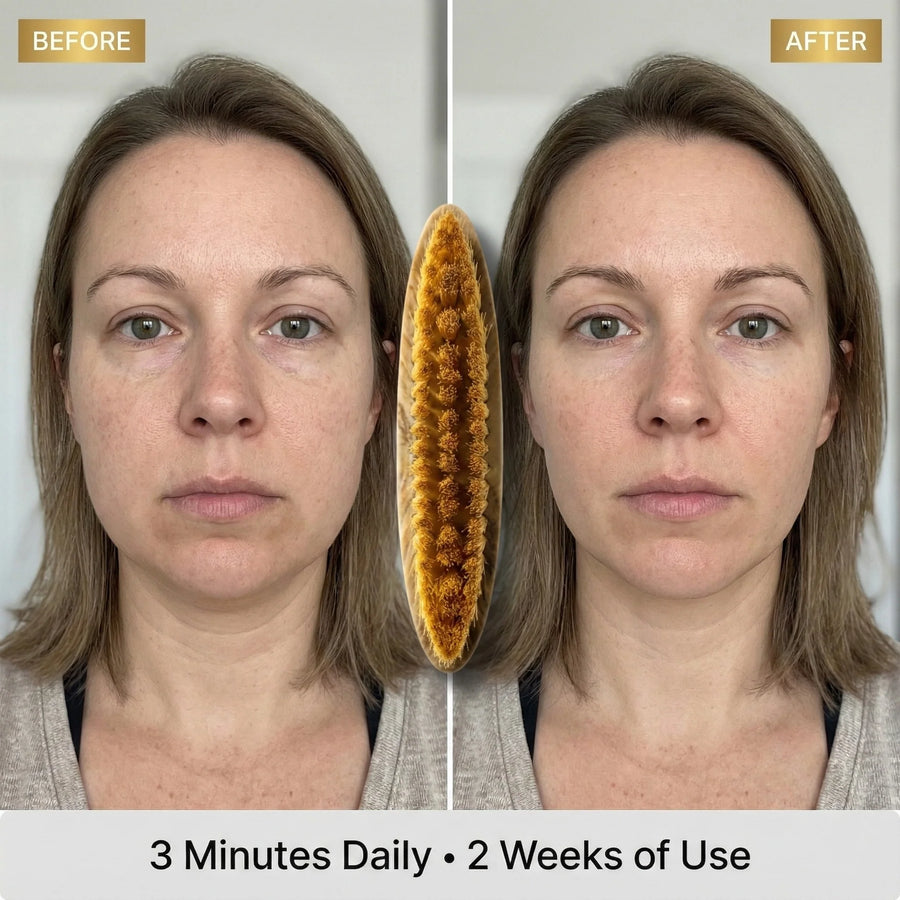
Your Skincare Routine, But the First Step Actually Works
Five minutes before your cleanser. Visible de-puffing before your serum even touches your skin. The Lindalia De-Bloat Brush belongs at the start of every morning routine.
See the ProductWho Has the Biggest Gap to Fill
Everyone experiences overnight lymphatic slowdown, but some groups accumulate more fluid than others. People over 35 see the lymphatic system's efficiency decline with age, meaning proportionally more overnight accumulation and a more dramatic difference when it is cleared. People with high-sodium diets, frequent travelers, those with hormonal fluctuations, and anyone who woke up after poor sleep or alcohol consumption are all working with above-average fluid accumulation that a standard skincare routine leaves entirely unaddressed.
For these groups, the brush is not a nice addition to an otherwise sufficient routine. It is addressing a problem that everything else they do in the morning is simply ignoring.
For Product Maximizers. If you are spending on quality serums and seeing less improvement than the ingredients should theoretically deliver, look at when and how you are applying them. Brushing first significantly improves the conditions those actives land in, and the same product at the same dose can produce more visible results on freshly prepared skin.
What the Brush Does Not Do (So You Know What You Still Need)
A lymphatic drainage face brush is not a substitute for SPF, for hydration, for targeted treatments, or for consistent sleep and diet. It addresses the fluid accumulation problem specifically. It does not protect against UV damage, reverse photodamage, increase collagen production, or treat active breakouts.
The honest position of the brush in a routine is: it fills a specific gap that products cannot, it improves the effectiveness of the products that follow it, and its daily use over weeks produces a compounding improvement in the lymphatic baseline that reduces how much work the acute morning session needs to do. That is a well-defined, valuable role — and also a clearly bounded one.
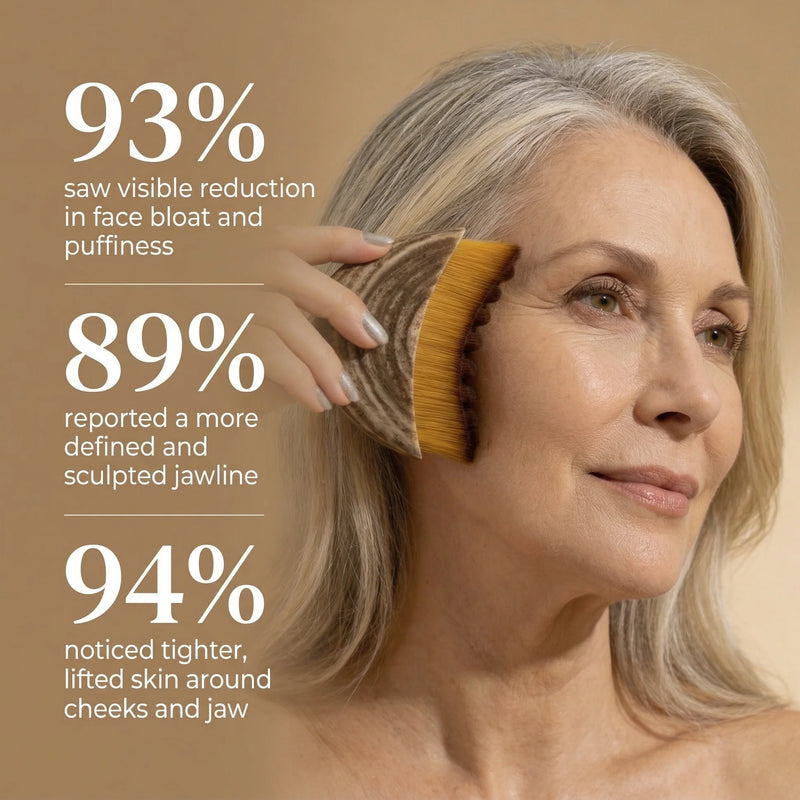
The De-Bloat Lymphatic Face Sculpting Brush
Fills the gap your serum cannot. Ultra-fine bristles, contoured ergonomic handle, visible results on the first use. Five minutes before everything else in your routine.
See the Product