

Oil of Oregano Capsule: How to Choose the Right Dosage
There is no one-size answer. Here is how to match your oil of oregano capsule dosage to your situation, your history, and your goals.
Oil of oregano capsules do not come with a single correct answer on dosage. The right amount depends on what you are trying to accomplish, your digestive tolerance, and whether you are using it for prevention or to address an active issue. Here is a clear, practical framework for choosing and adjusting your dose based on your specific situation.
The Two Doses and When to Use Each
The practical dosage range for oil of oregano softgels sits between one and two per day. This range reflects what the research on carvacrol efficacy has used, what clinical practitioners typically recommend, and what real-world tolerance patterns support.
One softgel per day is the preventive and maintenance dose. It is appropriate for seasonal immune support during cold and flu season, for general gut health maintenance in someone without acute symptoms, and for anyone new to oregano oil who is establishing tolerance in the first week. At this dose, carvacrol exposure is consistent but modest, providing ongoing antimicrobial pressure without aggressively disrupting the gut microbiome.
Two softgels per day is the active dose for people managing specific issues: recurrent respiratory infections, suspected candida overgrowth, chronic gut dysbiosis, or a current mild to moderate infection. This dose provides higher carvacrol concentrations throughout the day, which sustains the antimicrobial pressure needed to meaningfully reduce pathogen populations over the course of a therapeutic cycle.
The two softgels should be split across two meals (one at lunch, one at dinner, or one at breakfast and one at dinner) rather than taken together. This distributes the carvacrol exposure over the day, maintaining more consistent intestinal concentrations than a single doubled dose would provide.
If you are new to oil of oregano supplements, begin at one softgel per day for the first 7 days regardless of your intended dose. This allows your gut microbiome to adjust gradually. The first week at a conservative dose dramatically reduces the likelihood of initial digestive discomfort as your gut flora composition begins to shift.
The 4-to-6-Week Cycle: Why It Exists and Why It Matters
Oil of oregano is not a supplement designed for indefinite daily use without breaks. This is a meaningful difference from vitamins or minerals that can be taken continuously without concern. The reason is straightforward: carvacrol's antimicrobial activity does not discriminate perfectly between pathogenic organisms and beneficial gut bacteria.
While the worst pathogens (Candida, E. coli, Staphylococcus) are more sensitive to carvacrol than the dominant probiotic bacteria in the gut, extended uninterrupted use at full dose gradually depletes the beneficial microbiome alongside the pathogens. The 4 to 6 week on-cycle is long enough to complete a meaningful therapeutic effect against most pathogens while limiting the cumulative impact on beneficial bacteria.
The 2-week off-period allows the gut microbiome to recover, beneficial bacteria to repopulate, and your body's own immune defenses to recalibrate. Many practitioners recommend taking a quality probiotic supplement during the off-period to actively support microbiome restoration. Restarting a new cycle after the two-week break allows another targeted antimicrobial push without the cumulative depletion effects of uninterrupted use.
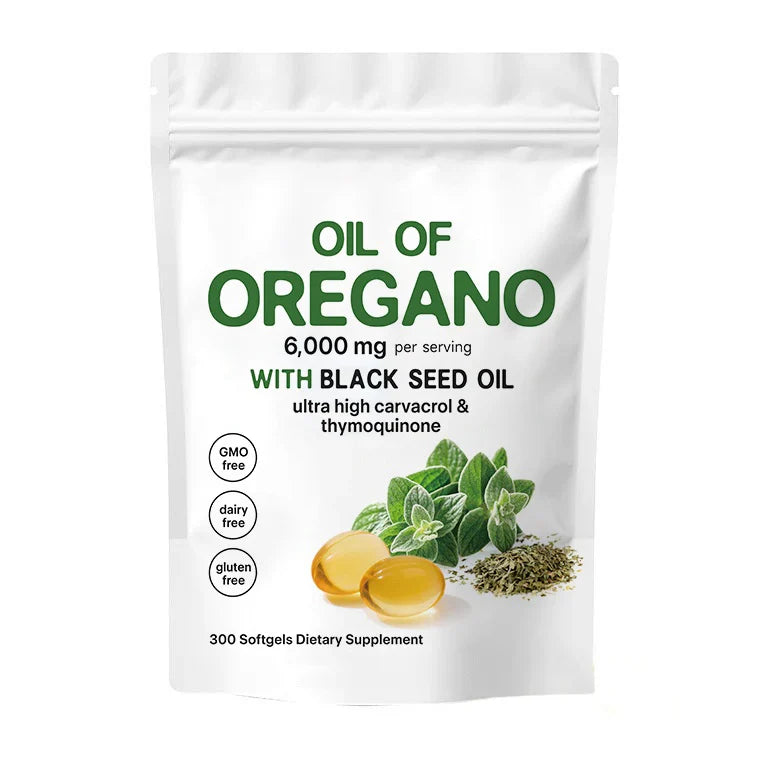
Oil of Oregano Softgels
Each softgel delivers a precise carvacrol dose. No measuring, no guessing. Start your cycle at
See the ProductDosage for Specific Situations
For seasonal immune prevention during high-risk periods (autumn, winter travel, periods of high stress or sleep disruption): one softgel per day with the largest meal. Start in early autumn and complete a 4 to 6 week cycle. Many people repeat this once or twice during the cold season. The preventive dose is not about aggressively targeting any specific pathogen. It is about maintaining an elevated antimicrobial baseline that makes it harder for respiratory pathogens to establish an infection.
For active respiratory infection support (during a cold or mild respiratory infection): two softgels per day, split across meals. Begin as early in the infection as possible. Continue for the full cycle duration or until symptoms resolve, whichever comes first. Note: a mild cold and a bacterial pneumonia require different responses. This dosing approach is appropriate for mild upper respiratory infections, not for serious lower respiratory tract infections that need medical evaluation.
For gut dysbiosis management (chronic bloating, suspected bacterial overgrowth, candida-related symptoms): two softgels per day, split across meals, for a full 4 to 6 week cycle. This application benefits most from the intestinal release of the softgel format, which delivers carvacrol directly to the small intestine. Gut dysbiosis typically takes longer to resolve than a respiratory infection; completing the full cycle is important.
For antifungal support (recurring yeast infections, oral thrush, skin fungal infections): two softgels per day for the full cycle. Candida populations can be persistent. A full therapeutic cycle provides sustained antifungal pressure, and some practitioners recommend two consecutive cycles (with the 2-week break between them) for entrenched fungal issues.
The dose that works is the dose you will take consistently for the full cycle. That is why the format and the starting dose both matter as much as the carvacrol concentration.
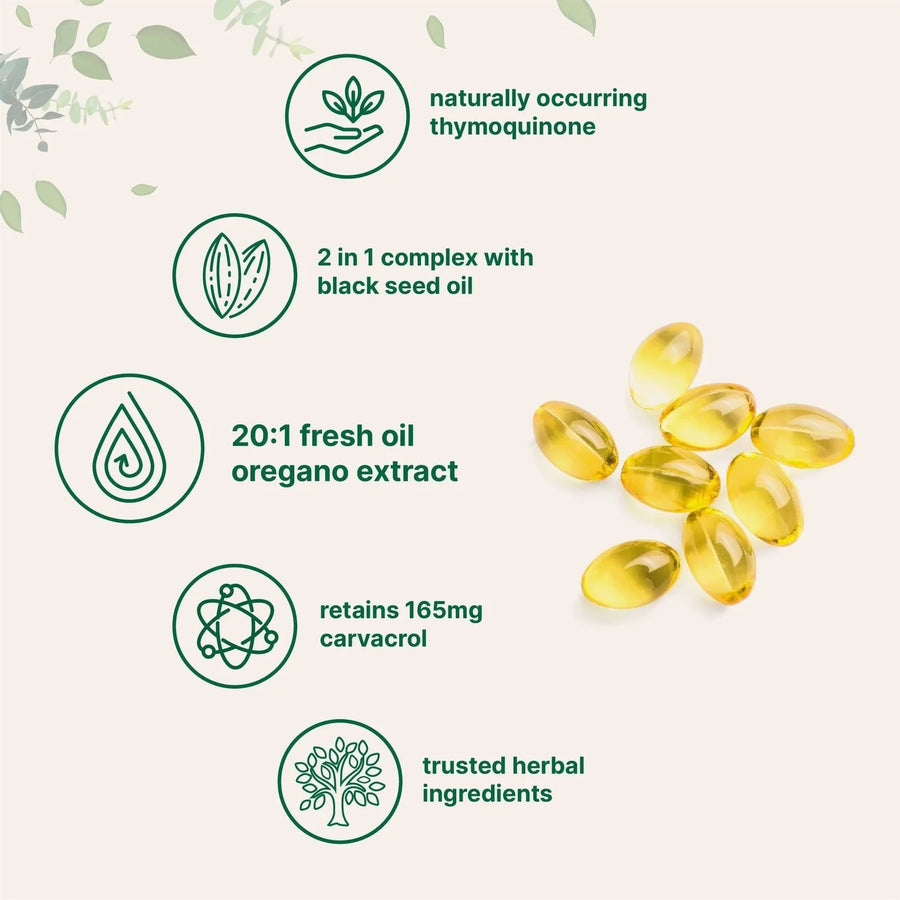
Oil of Oregano Softgels
Precise softgel dose for consistent cycling protocols. 30-day supply, 30-day guarantee.
See the ProductAdjusting Dose Based on Digestive Response
The most common reason to adjust dose is digestive tolerance. Oil of oregano, even in softgel form, affects the gut microbiome composition from the first dose. As carvacrol reduces the population of opportunistic organisms in the gut, some people experience a temporary increase in digestive symptoms: bloating, loose stools, or mild cramping in the first few days.
This is often described in naturopathic practice as a "die-off" response, reflecting the release of cellular debris from dying microorganisms. It is temporary and typically resolves within 3 to 5 days. If it is mild, continuing at the same dose and drinking extra water is sufficient. If it is more uncomfortable, reduce to every-other-day dosing for 3 to 4 days before returning to daily use.
People with a history of significant gut dysbiosis or a very depleted microbiome (for instance, after multiple rounds of antibiotics) may need a more gradual ramp. In these cases, starting at one softgel every other day for the first week, then one daily for the second week, then two daily in week three onwards is a gentler approach that reduces the severity of the initial microbiome adjustment.
Reduce your dose or slow your ramp if you experience: significant loose stools lasting more than 5 days, persistent nausea even when taking the softgel with food, or severe bloating and cramping that does not improve after the first week. These signals indicate the microbiome is adjusting faster than it can recover in real time. A slower ramp prevents this.
What to Take During the Off-Cycle
The 2-week off-period is not a passive pause. This is the optimal window to actively support microbiome restoration. A broad-spectrum probiotic taken during the off-period (and optionally throughout the on-cycle as well) provides a resupply of beneficial bacterial strains that helps counteract the gradual depletion caused by oregano oil's broad antimicrobial activity.
Prebiotic foods (garlic, onions, leeks, asparagus, oats) during the off-period provide fermentable substrates that support the growth of replenishing beneficial bacteria. This is not mandatory, but for people using oregano oil for entrenched gut dysbiosis across multiple cycles, the quality of the off-period diet significantly affects how well the microbiome recovers before the next cycle begins.
Some practitioners recommend timing the off-period to coincide with periods of lower infection risk: mid-winter (after the initial respiratory season peak) or early summer. This maximizes the value of both the on-cycle (high-risk periods) and the off-cycle (lower-risk recovery windows).
During the 2-week break from oregano oil: take a quality multi-strain probiotic daily, eat fiber-rich prebiotic foods, reduce sugar intake (which feeds opportunistic fungi and bacteria), and assess your symptom response. If symptoms return quickly during the off-period, it may indicate that additional cycles or addressing underlying disruption factors (diet, antibiotics, stress) are needed.
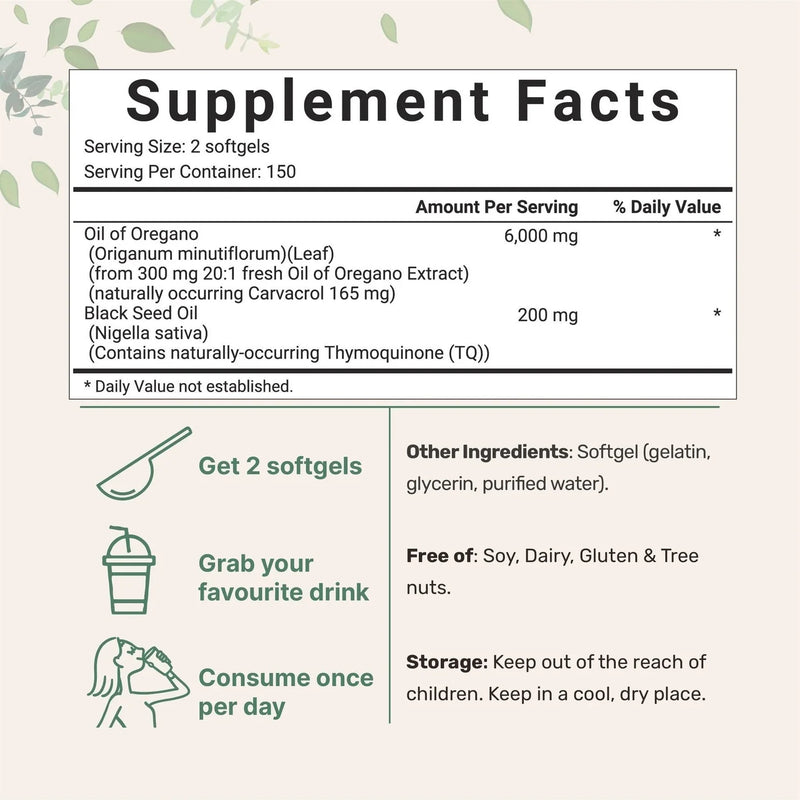
Oil of Oregano Softgels
High-carvacrol formula, softgel delivery, no burning. The foundation of a proper oregano oil protocol.
See the Product