

Oregano Oil Capsules: The Complete Guide to Benefits and Usage
From the mechanism behind carvacrol to the right dose for your situation, here is everything you need to know about oregano oil capsules.
Oil of oregano has been used medicinally for thousands of years, but it is the last two decades of laboratory and clinical research that explain precisely why it works. The active compounds in wild oregano, particularly carvacrol, have a documented mechanism of action against bacteria, fungi, and certain parasites that sets them apart from most botanical supplements. Here is the complete picture, from the plant chemistry to the practical usage guide.
What Oil of Oregano Actually Is (and Is Not)
The oregano used in cooking and the oregano used in medicinal supplements are often the same species (Origanum vulgare) but are used at entirely different concentrations of active compounds. Culinary oregano is harvested and used for flavor, which comes from volatile aromatic compounds. Medicinal oregano oil is concentrated from wild-harvested plants specifically selected for high carvacrol content.
Carvacrol is the primary active compound in oil of oregano, typically comprising 60 to 85% of the oil's active profile in quality extracts. It is a phenolic compound that researchers have studied extensively for antimicrobial, antifungal, and anti-inflammatory properties. Thymol, the second major compound, acts in synergy with carvacrol and broadens the antimicrobial spectrum.
An important distinction: oregano oil (the essential oil, sometimes used in cooking) is extremely concentrated and harsh. Oil of oregano supplement (the form used medicinally) is typically the essential oil blended with a carrier oil like olive oil to bring it to a safe, usable concentration. The capsule or softgel format then delivers this blended oil without any direct contact with the stomach lining.
The dried oregano in your kitchen contains minimal carvacrol compared to a therapeutic-grade oil of oregano supplement. The concentration of active compounds in wild-harvested medicinal oregano oil is typically 10 to 30 times higher than in the culinary herb. Using culinary oregano supplements to get medicinal effects is like using decaffeinated coffee to stay awake.
The Science Behind Carvacrol: Why It Works Differently Than Antibiotics
The mechanism by which carvacrol acts against bacteria and fungi is what makes oil of oregano scientifically interesting, not just anecdotally useful. Conventional antibiotics typically work by interfering with specific biochemical processes inside a target cell: blocking cell wall synthesis, inhibiting protein production, or disrupting DNA replication. Each of these biochemical targets can eventually mutate to resist the antibiotic.
Carvacrol works differently. It disrupts the physical integrity of microbial cell membranes. The compound integrates into the lipid bilayer of bacterial and fungal cell membranes, increasing membrane fluidity and permeability. This allows electrolytes and cell contents to leak out, disrupting the cell's ability to maintain its internal environment. The cell effectively loses structural integrity.
Because this is a physical disruption rather than a specific biochemical interference, the development of resistance is significantly harder for microorganisms. There is no single genetic mutation that prevents a physical membrane disruption. Multiple simultaneous mutations across the entire membrane composition would be required, which is biologically improbable. This is why carvacrol has maintained antimicrobial efficacy even against strains that have developed resistance to conventional antibiotics in laboratory settings.
Thymol, the secondary phenolic compound, complements carvacrol by targeting slightly different membrane components and extending the antimicrobial spectrum. The two compounds together show greater efficacy in studies than either compound alone, a synergistic effect that has been documented in multiple in vitro and some in vivo studies.
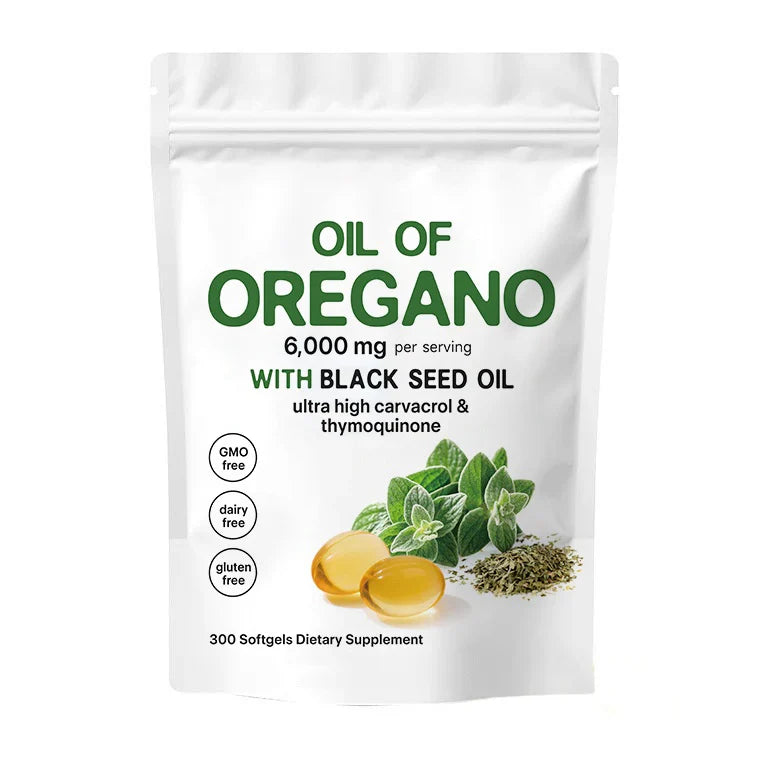
Oil of Oregano Softgels
Wild-harvested oregano oil in softgel format. Intestinal release, no aftertaste, precise dose.
See the ProductThe Four Main Areas Where Oregano Oil Capsules Deliver Results
Immune support is the most common reason people take oregano oil capsules, particularly during cold and flu season. The antimicrobial activity of carvacrol affects a broad range of respiratory pathogens. Studies have documented activity against Staphylococcus aureus, Streptococcus pyogenes, and several strains of respiratory bacteria. The antiviral research is more preliminary, but some studies suggest carvacrol may disrupt enveloped viruses through a similar membrane-targeting mechanism.
Antifungal activity is one of the most clinically studied applications of oil of oregano. Carvacrol and thymol have demonstrated efficacy against Candida albicans in multiple laboratory and some clinical studies. This makes oregano oil capsules a popular choice among people managing recurrent yeast infections, oral candidiasis, or suspected intestinal fungal overgrowth. The antifungal mechanism follows the same physical membrane disruption pathway as the antibacterial mechanism.
Gut health applications are driven by oil of oregano's effects on gut dysbiosis: an imbalance in the intestinal microbiome often characterized by overgrowth of opportunistic bacteria or fungi. Symptoms of gut dysbiosis include chronic bloating, irregular bowel habits, gas after eating, and general digestive discomfort. Oregano oil's antimicrobial action against these opportunistic organisms can reduce symptoms significantly, typically within the first one to two weeks of use.
Respiratory health support is the fourth major application. Carvacrol has demonstrated expectorant and anti-inflammatory properties in respiratory tissue in several studies. People using oregano oil capsules during respiratory infections often report faster mucus clearance and reduced duration of symptoms. This is not a replacement for prescribed treatment in serious respiratory infections, but as a supportive measure for mild infections and cold symptoms, the evidence is reasonably supportive.
Carvacrol does not play by the rules that bacteria have learned to resist. It attacks the structure, not the chemistry. That distinction is what 30 years of antimicrobial research keeps returning to.
Why the Capsule (Softgel) Format Matters
If you have ever tried liquid oil of oregano drops, you know the problem: the burning sensation in the throat and stomach is significant, the oregano flavor is intense and persistent, and dosing is imprecise with a dropper. Many people who try liquid oregano stop within a week. The compliance failure has nothing to do with the ingredient. It has everything to do with the format.
Softgels solve all three problems. The oil is encapsulated in a gelatin or vegetarian capsule that passes through the stomach intact. The oil is released in the intestine, where it bypasses direct contact with the sensitive stomach lining. There is no burning sensation, no aftertaste (the capsule seals in the volatile oils), and each softgel contains a precisely measured amount.
The intestinal release has an additional clinical benefit: for gut health applications, releasing the oil directly in the small intestine rather than in the stomach means higher concentrations of carvacrol reach the gut environment where it needs to act. This is physiologically more relevant than stomach delivery for most oregano oil applications.
Take your softgels with your largest meal of the day, not on an empty stomach. Food slows gastric emptying, giving the softgel more time to pass into the intestinal environment before the capsule dissolves. Eating fat alongside the softgel also improves absorption, since carvacrol is a fat-soluble compound.
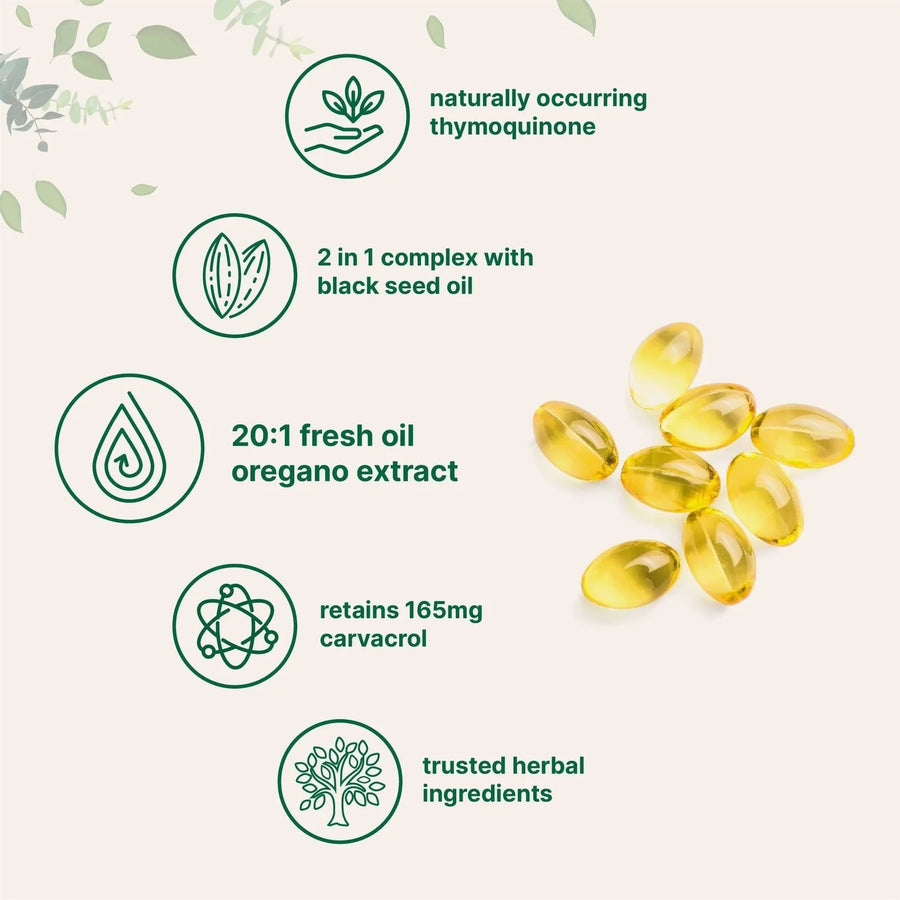
Oil of Oregano Softgels
High-carvacrol formula, intestinal delivery, zero aftertaste. 1,900+ reviews at 4.7 out of 5.
See the ProductDosage: What the Research and Practice Suggest
For general immune support and prevention: one softgel per day, taken with a meal. This is the maintenance dose most commonly used for seasonal immune support during high-exposure periods (autumn, winter, or travel).
For active infections or antifungal applications: two softgels per day, ideally split across two meals. This higher dose maintains therapeutic carvacrol concentrations throughout the day, which is important for consistent antimicrobial pressure.
Starting at one per day for the first week is advisable for people with sensitive digestive systems. This allows the gut microbiome to adjust before a higher dose is introduced. Some people experience temporary digestive changes in the first few days as the oregano oil begins affecting gut flora composition.
Cycling matters. Oil of oregano is not designed for indefinite daily use without breaks. The same antimicrobial properties that affect pathogens also affect beneficial gut bacteria over time. The recommended protocol is 4 to 6 weeks of daily supplementation followed by a 2-week break. This protects the beneficial microbiome while allowing the therapeutic effect of each cycle to complete.
Contraindications and Safety
Oregano oil should not be taken during pregnancy. Carvacrol has documented uterotonic properties at higher concentrations, meaning it can stimulate uterine contractions. This is a genuine contraindication, not a precautionary footnote.
Women who are breastfeeding should consult a healthcare provider before using oregano oil supplements. Limited safety data exists for this period, and the potential for transfer of carvacrol compounds via breast milk is not well characterized.
Children under 12 should not take adult-dose oregano oil supplements. The formulations and dosing in adult softgels are not calibrated for pediatric physiology.
If you are on prescribed antibiotics for a diagnosed bacterial infection, do not substitute or combine oregano oil without discussing it with your prescribing physician. Oregano oil has genuine antimicrobial properties, but it is not equivalent in efficacy or spectrum to prescription antibiotics for serious infections. It is a preventive and supportive tool, not an emergency treatment.
4 to 6 weeks on, 2 weeks off. This protocol appears in naturopathic practice guidelines and is supported by the rationale that indefinite use without breaks can deplete beneficial gut bacteria alongside the pathogens. During the off period, a broad-spectrum probiotic can help maintain gut microbiome diversity.
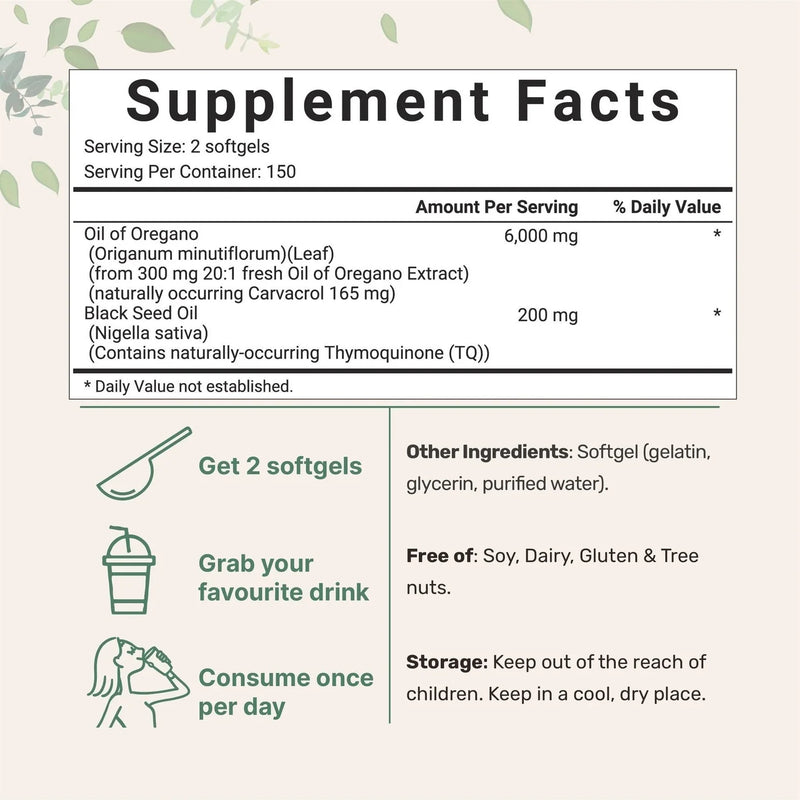
Oil of Oregano Softgels
Precise dose, no burning, no taste. The softgel format that makes daily oregano oil actually sustainable.
See the Product