

Orthopedic Contour Pillow: How Contouring Supports Your Cervical Spine
The shape of your pillow matters more than what it's made of. Here's the anatomy behind contour design and why it works when everything else doesn't.
Most people think about pillow material first: memory foam versus latex versus buckwheat. Material matters, but it's secondary to shape. A flat pillow made of the best memory foam in the world still provides no cervical support, because it has no mechanism for supporting the neck independently of the head. Shape is the feature that makes orthopedic pillows orthopedic. Material just determines how well that shape performs over time.
The Anatomy Behind the Contour
To understand why contouring matters, you need a basic picture of what's happening in the cervical region during sleep. Your cervical spine has a natural lordotic curve, an inward arc that faces the front of your body. When you stand or sit with good posture, that curve is maintained by both muscle activity and the alignment of the vertebrae themselves. When you lie down, gravity shifts, and the curve needs passive support rather than active muscle engagement.
For back sleepers, the problem is the gap between the mattress and the base of the skull. If a flat pillow fills that gap at the head level, it simultaneously pushes the head up while leaving the cervical curve unsupported beneath it. The neck hangs in mild extension or mild flexion depending on the pillow height, but the natural inward arc is never actively maintained. A contoured pillow with a defined cervical channel fills that channel specifically, supporting the curve while letting the head sit at the correct height separately.
For side sleepers, the geometry is different. The gap to fill is between the ear and the shoulder, which averages 10 to 14 centimeters for most adults. The neck needs to be perfectly horizontal, neither bent toward the mattress nor lifted above the shoulder line. A contoured pillow with raised lateral lobes bridges that gap while keeping the ear, shoulder, and hip in a straight horizontal line. A flat pillow at the right height might bridge the gap but won't maintain the head's position precisely throughout the night as sleep position subtly shifts.

Cervical Orthopedic Pillow
A dual-height contour with a cervical channel for back sleepers and raised lateral lobes for side sleepers. One pillow, two positions solved.
See the ProductWhy Shape Beats Material
If you gave a physiotherapist a choice between a perfectly contoured pillow made of mediocre foam and a flat pillow made of the finest memory foam available, they would choose the contoured one every time. The shape creates the functional zones that different sleeping positions require. Material affects how well those zones perform and how long they hold their shape, but it cannot compensate for an absent or inadequate contour.
This is why many well-meaning people buy expensive memory foam pillows, find them comfortable, and still wake up with neck pain. The foam is doing its job: conforming to the head and distributing pressure. But a flat foam surface, no matter how responsive, treats the head and neck as a single load when they need to be handled differently. The head is heavier and needs cradling. The neck is curved and needs filling.
The contour resolves this by building the positional differentiation into the physical structure of the pillow. The cervical channel is lower so the neck can rest into it. The head section is at the right height for the sleeping position. These aren't features the foam achieves through compression. They're features the shape provides before the foam has done anything at all. The foam then determines how precisely and consistently those shapes are maintained under real load.
Hold a contour pillow on its side and look at the profile. The lateral lobes should be visibly higher than the central channel. If the height difference looks minimal from this angle, the contour is likely decorative rather than functional. The height difference should be at least 2 centimeters to be clinically meaningful.
The Dual-Height Concept Explained
Dual-height refers to a pillow design where one side of the pillow is lower than the other side, so that the same pillow can serve both back sleepers and side sleepers by flipping it. The lower side has a shallow cervical channel that supports the neck without pushing the head too far forward, ideal for back sleeping. The higher side has raised lateral lobes that bridge the ear-to-shoulder gap without creating a head tilt, ideal for side sleeping.
In practice, this means one pillow genuinely addresses two distinct anatomical requirements without compromise. Combination sleepers who shift between back and side during the night also benefit, because the dual-height contour maintains appropriate support in both positions as they naturally reposition throughout sleep cycles.
The height difference between the two sides is typically 1.5 to 3 centimeters. This seems small but is biomechanically significant. Half a centimeter of extra loft in the lateral position for a side sleeper translates to a perceptible head tilt that, maintained for six hours, creates the same kind of sustained asymmetric tissue stress that flat pillows are known for. Precision in loft height is not about comfort fine-tuning. It's about whether the neck is genuinely in neutral position or slightly off it all night.
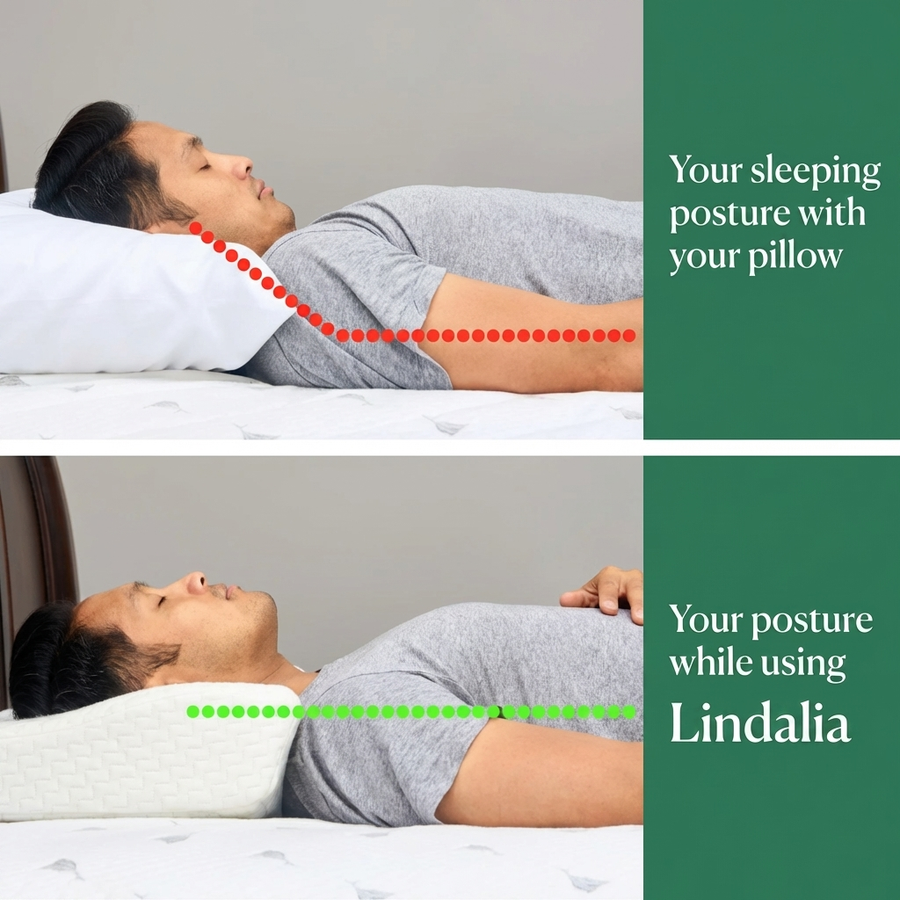
The Dual-Height Contour That Adapts to You
Sleep on your back or your side. The dual-height design keeps your cervical spine aligned in whichever position you naturally prefer.
See the ProductContour Depth and Its Effect on Cervical Support
The depth of the cervical channel (how much lower it is than the surrounding foam) is a specification that most pillow brands don't advertise but that significantly affects how well the pillow supports the neck. A shallow channel, less than 1.5 centimeters deep relative to the lateral lobes, is primarily cosmetic. It creates the visual impression of a contour without providing meaningful support to the cervical curve.
A functional cervical channel needs to be deep enough that the neck actually rests into it rather than riding on top of it. When you lie on your back on a properly contoured pillow, you should feel the foam supporting the underside of your neck in the inward arch, not just touching the base of your skull and the back of your head while leaving the curve unsupported in between.
For most adults, a cervical channel 2 to 4 centimeters below the surrounding lateral areas provides genuine support without creating excessive extension. Very deep channels, over 4 centimeters, can push the cervical curve into hyperextension, which is its own problem. The goal is to fill the natural curve without amplifying it. A channel that matches the depth of your natural cervical lordosis, which physiotherapists estimate at 2 to 3.5 centimeters in most adults, is the target.
If you move between back and side sleeping during the night, choose a pillow where the height difference between the cervical channel and the lateral lobes is comfortable in both orientations. Some pillows are optimized for one position at the expense of the other. A true dual-height design should feel genuinely supportive in both.
Contouring isn't a design choice. It's the mechanism by which a pillow actually supports the spine rather than just filling space beneath the head.
How Contouring Affects Long-Term Cervical Health
The cumulative benefit of sleeping on a properly contoured orthopedic pillow extends beyond morning stiffness reduction. Over weeks and months of correct cervical alignment during sleep, the soft tissues around the cervical spine, the muscles, ligaments, and joint capsules, gradually normalize their resting tension. Habitual compensatory patterns that developed in response to years of poor pillow support begin to unwind.
Physiotherapists who work with patients on cervical pain management consistently find that proper sleep support accelerates the results of their manual therapy and exercise interventions. When a patient's cervical tissues are being continuously stressed during eight hours of sleep, the progress made during daytime treatment is partially undone each night. When sleep support is corrected simultaneously, the rate of tissue normalization improves substantially.
People who have used contoured cervical pillows for three months or more often report changes beyond just reduced pain: better range of motion in the morning, less tendency for the neck to feel stiff after prolonged sitting, and a reduction in the general muscle bracing around the neck and shoulders that chronic cervical issues tend to create. These are downstream effects of the spine being allowed to maintain its natural geometry for a third of every day, compounded over weeks and months.
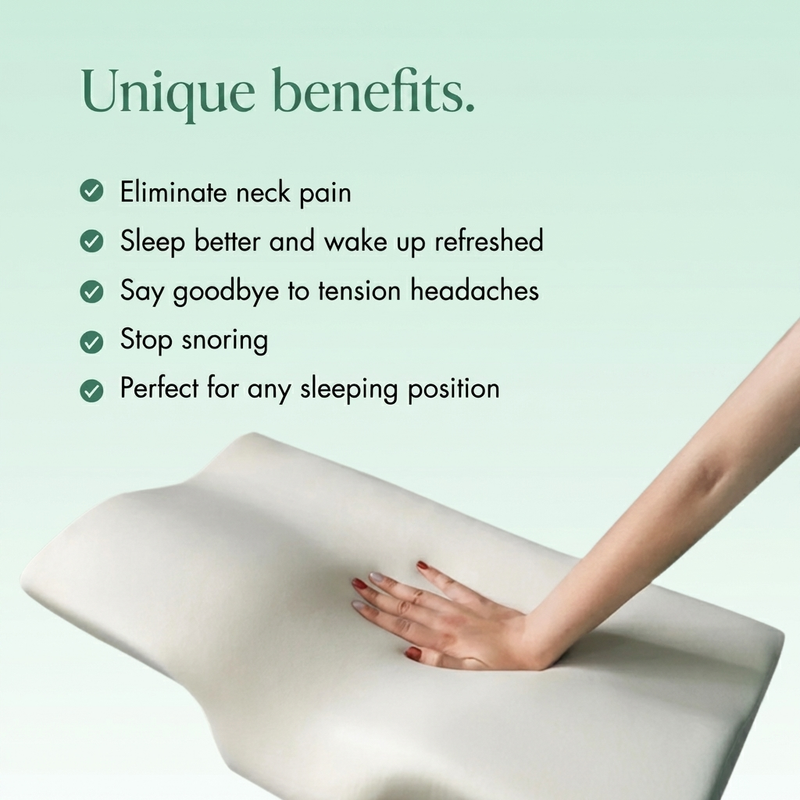
Orthopedic Contour Pillow for Real Cervical Support
Precision dual-height contour. Dynamic memory foam. Designed to support the neck, not just the head. Free shipping.
See the Product