

Orthopedic Memory Foam Pillow: Why Memory Foam Makes All the Difference
Not all memory foam is the same. The material inside your pillow determines whether you get genuine spinal support or just a comfortable impression of it.
Walk into any bedding store and you'll find twenty pillows with "memory foam" on the label. Pick two of them up and compress them in your hand. They feel completely different from each other, and that difference is not cosmetic. It affects how the pillow behaves under the weight of your head for eight hours, whether it stays supportive or gradually compresses into something closer to a flat pad, and ultimately whether your neck gets genuine support or just a softer version of the same problem.
What Memory Foam Actually Is
Memory foam was originally developed by NASA in the 1960s as a material to absorb impact in aircraft seats. The key property is viscoelasticity: the material is both viscous (it flows slowly under pressure) and elastic (it returns to its original shape). When you compress it, it deforms gradually rather than immediately bouncing back. When you remove the pressure, it recovers slowly rather than springing up.
That slow response is what makes memory foam different from latex or standard polyurethane foam. Latex pushes back against pressure with equal and opposite force, which can create pressure points under heavier areas. Standard polyurethane compresses immediately and bounces back immediately. Memory foam absorbs the pressure gradually and distributes it across a larger surface area before returning.
In the context of a pillow, this means memory foam can conform to the specific contours of your head and neck rather than treating them as a single mass. The heavier occipital area of your skull sinks slightly more than the lighter cervical curve, and the foam responds accordingly. This differentiated response is fundamental to orthopedic support. You can't get it from latex, fiberfill, or buckwheat.

Cervical Orthopedic Pillow
Dynamic memory foam with graduated density for both head cradling and firm cervical support in one piece of foam. Free shipping.
See the ProductStandard Memory Foam vs Dynamic Memory Foam
This is where most buyers get misled. Standard memory foam is cut or molded to a single density rating, typically expressed as pounds per cubic foot. A 3 lb/ft³ foam is relatively soft throughout. A 5 lb/ft³ foam is firmer throughout. Either way, the entire pillow behaves the same: the part under your head and the part under your neck have the same resistance.
For a standard pillow shape, that's acceptable. For an orthopedic contoured pillow, it creates a problem. The cervical channel, the lower central area of a contour pillow designed for back sleepers, needs to be supportive enough to maintain the natural inward curve of the neck. The head rest areas need to be soft enough to cradle without creating pressure on the skull. A single-density foam can't do both well simultaneously.
Dynamic memory foam solves this with graduated density built into the same foam structure. The material has a denser core that provides structural resistance and a softer surface layer that adapts to body contours. This is not two separate pieces of foam glued together. It's one piece with varying internal structure. The result is a pillow that feels soft against your skin while maintaining enough resistance in its core to hold the cervical spine in proper position even as your body weight fully loads the material.
When a pillow claims to use memory foam, ask about the density. Any density below 3 lb per cubic foot will compress significantly under sustained use and lose its supportive properties within weeks. Quality orthopedic pillows use foam at 4 to 5 lb per cubic foot minimum.
Why "Soft" and "Supportive" Are Not the Same Thing
This is one of the most persistent misunderstandings in pillow marketing. Soft means the surface yields easily to touch. Supportive means the material maintains a defined shape and resists compression enough to hold your cervical spine in alignment. You can have a pillow that is both soft on the surface and supportive in its structure. You can also have a pillow that is soft throughout and therefore not supportive at all.
The "cloud-like" feel that many pillow brands promote is the opposite of what an orthopedic pillow needs to deliver. A pillow that feels like a cloud under your hand is a pillow that compresses fully under the sustained weight of your head. By hour two, you're sleeping on something that has gone from a contoured shape to a vaguely flattened mass. Any cervical support it offered when you first lay down has evaporated.
What you want is a pillow that feels comfortable against your face and ear, soft enough not to create pressure points, but maintains its shape and height throughout the night. When you lift your head and look at the pillow in the morning, a properly dense memory foam pillow should still show its original contour shape, not the impression of your head. If it does show a deep impression, the foam density was too low.
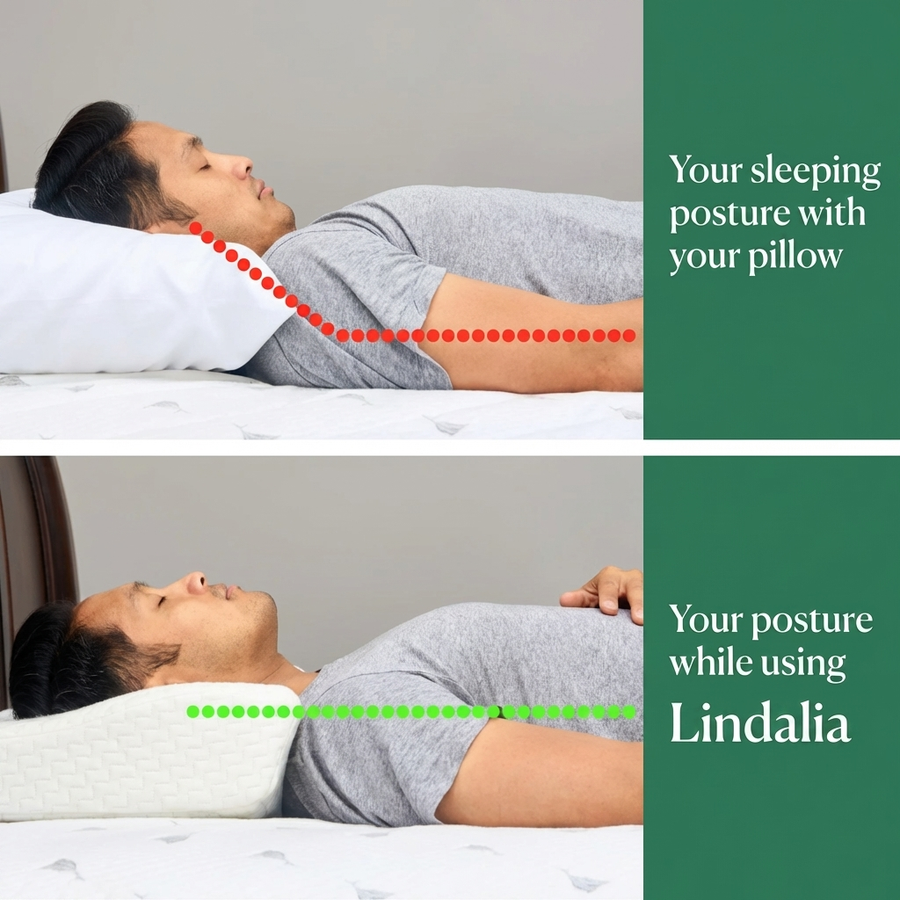
Dynamic Foam That Holds All Night
Unlike single-density foam that compresses flat, the graduated structure in this pillow maintains its cervical support from the first hour to the last.
See the ProductTemperature Sensitivity and Breathability
Traditional memory foam has a known weakness: it responds to temperature. As body heat warms the foam, it becomes softer and more conforming. This is partly what gives it the slow-response feel. But it also means a pillow that was firm when you lay down on a cool winter night may behave differently in July, or if you run warm. The support characteristics can shift based on ambient and body temperature.
Modern memory foam formulations address this with open-cell structures and gel infusions. Open-cell foam has a porous internal architecture that allows air to move through the material rather than trapping heat. This reduces the temperature differential between the surface and the core, making the foam's behavior more consistent across different sleeping environments. Gel infusions add a heat-absorbing component that draws warmth away from the sleeping surface.
Breathability also matters for comfort during sleep. A pillow that traps heat causes you to shift and move more frequently during the night, disrupting the sleep cycles that make sleep restorative. A properly ventilated memory foam pillow keeps your head cooler, which contributes to both sleep quality and consistent foam behavior throughout the night.
Look for pillows that specify open-cell or gel-infused memory foam rather than just listing 'memory foam.' These formulations address the heat retention problem that standard memory foam is known for, which affects both comfort and long-term support consistency.
The foam inside your pillow isn't just a comfort material. It's a structural component doing orthopedic work every single night.
How Foam Density Affects Longevity
Beyond the immediate support question, foam density determines how long a pillow will continue performing as designed. Low-density foam (under 3 lb/ft³) typically shows significant compression and shape loss within six to twelve months of regular use. The viscoelastic properties degrade, the material stops recovering fully between uses, and the pillow that felt supportive when new provides little structural benefit a year later.
Medium-to-high density foam (4 to 5.5 lb/ft³) maintains its properties significantly longer. Quality orthopedic pillows built from dense foam routinely provide consistent support for three to five years. This changes the economics of the purchase considerably. A cheaper low-density pillow that needs replacing annually costs more over three years than a quality orthopedic pillow that stays supportive for the same period.
The shape memory function is also density-dependent. The pillow's ability to return to its contoured shape after the night's use, to maintain the cervical channel depth and the correct loft height, depends on the density being high enough to resist permanent deformation. When you press into a quality memory foam pillow and release, it should recover completely within thirty to sixty seconds. If it stays compressed for longer than that, the density is too low for sustained orthopedic use.
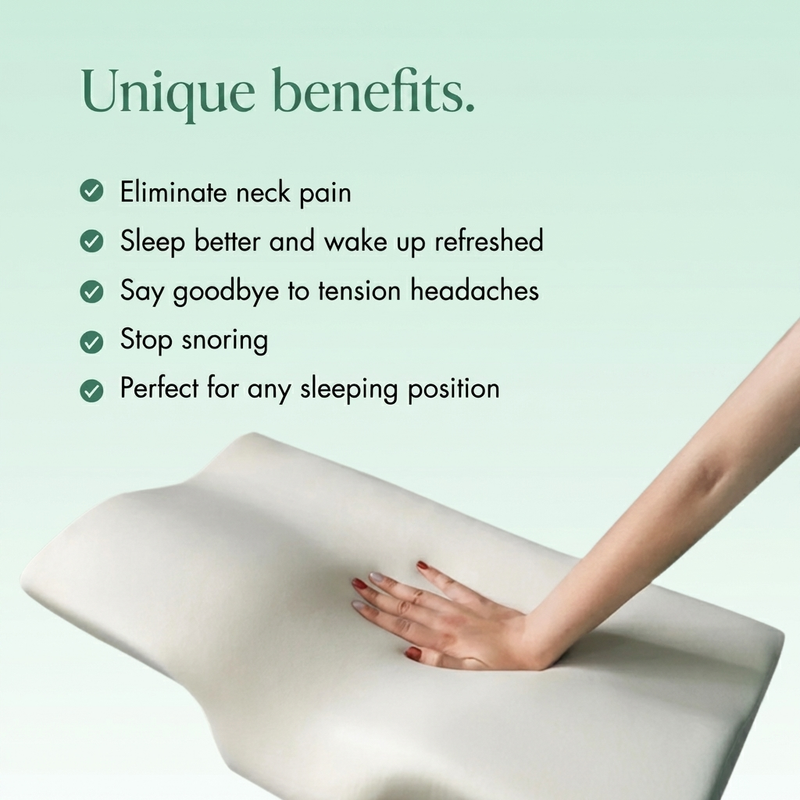
Orthopedic Pillow with Dynamic Memory Foam
Graduated density. Open-cell breathable structure. Contoured for back and side sleepers. Satisfaction guarantee.
See the Product