

Orthopedic Pillow for Back Sleepers: How to Keep Your Spine Aligned
Back sleeping is the position physiotherapists most often recommend, but only when your pillow is correctly configured for it. Here's what that actually requires.
Back sleeping is the gold standard for spinal alignment. Gravity loads the spine symmetrically, the lumbar curve is supported by the mattress, and the shoulder joints are free rather than compressed. But back sleeping on the wrong pillow can be worse than side sleeping on the right one, because the wrong pillow in the back position pushes the head forward into chin-to-chest flexion for the entire night. Getting back sleeping right requires a specific configuration that most standard pillows don't provide.
What Back Sleeping Actually Requires From a Pillow
Back sleepers have a specific anatomical need that's different from side sleepers. The gap to fill isn't between the shoulder and the ear. It's between the back of the skull and the mattress, specifically while maintaining the natural inward curve of the cervical spine. A back sleeper needs a pillow that accomplishes two things simultaneously: raises the head to a comfortable height, and supports the cervical lordosis beneath it without pushing the whole head-neck unit into flexion.
This is why the cervical channel is the critical feature for back sleepers. A flat pillow at the right height raises the head but leaves the cervical curve hanging unsupported between the skull and the mattress. A pillow with a defined central channel that's lower than the main body of the pillow supports the cervical curve at the right height while allowing the head to sit slightly higher on the surrounding foam. This is the configuration that maintains the natural C-curve in the cervical spine during back sleeping without requiring muscle effort.
The correct loft for back sleeping is significantly lower than for side sleeping. Most back sleepers need 7 to 10 centimeters of loft at the head position, with the cervical channel sitting 2 to 3 centimeters below that. A pillow that's correct for a side sleeper at 13 centimeters of loft is completely wrong for the same person as a back sleeper, pushing their chin toward their chest and creating the classic "neck bent forward" back sleeping problem.

Cervical Orthopedic Pillow with Deep Cervical Channel
The lower side of the dual-height contour is designed specifically for back sleeping. The cervical channel supports the natural C-curve while the head rests at the correct height.
See the ProductThe C-Curve: Why It Matters and How to Maintain It
The cervical lordosis, the natural inward curve of the neck, exists for functional reasons. It allows the weight of the head to be transmitted efficiently through the vertebral bodies rather than requiring the posterior muscles to constantly resist forward head tendency. When the curve is maintained, the mechanical advantage of the spine is intact. When it's flattened or reversed, the posterior muscles must work continuously to prevent the head from falling forward.
During back sleeping, the risk is both over-maintaining and under-maintaining the curve. A pillow that's too thick pushes the head forward, flattening or reversing the cervical lordosis. The chin approaches the chest, the posterior cervical muscles are placed in mild stretch, and the anterior cervical structures including the discs are compressed anteriorly. This is the classic "too many pillows" position that anyone with chronic neck problems has been warned about by a physiotherapist.
A pillow that's too thin creates the opposite problem: the head falls backward toward the mattress, and the cervical curve goes into hyperextension. The facet joints on the posterior cervical spine are compressed, and the anterior muscles are stretched. This is less common because most people use at least some pillow height, but it explains why sleeping without any pillow, which some people try after being told their pillow is "too thick," often doesn't help and sometimes makes things worse.
Lie on your back on your current pillow. Look up at the ceiling without moving your head. Your chin should be roughly horizontal, parallel to the ceiling. If your chin points toward the ceiling, your pillow is too thin. If it points toward your chest, too thick. The horizontal chin position corresponds roughly to the neutral cervical position that back sleeping should maintain.
Common Back Sleeper Mistakes
The most frequent mistake back sleepers make is using multiple pillows. Two standard pillows stacked one on the other push the head into significant forward flexion. This is a particularly common habit for people who have developed it as a way to feel "more comfortable," but the forward flexion position becomes more comfortable through adaptation: the cervical muscles have shortened anteriorly and lengthened posteriorly to accommodate the position, which is exactly the pattern that creates chronic neck pain and headaches.
The second common mistake is using the side sleeping side of a dual-height pillow for back sleeping. The higher side is designed for side sleeping and is typically 3 to 5 centimeters taller than what back sleeping requires. Using the high side as a back sleeper creates forward head flexion that counteracts the cervical support the pillow was designed to provide. If you have a dual-height pillow, use the lower side for back sleeping and the higher side for side sleeping. The two sides exist for this reason.
Adding a rolled towel under the neck is a folk remedy that occasionally helps and often makes things worse. If the towel is correctly placed and the correct diameter, it can supplement the cervical support provided by an otherwise inadequate pillow. In practice, towels shift position during sleep, are rarely the correct diameter, and are not a substitute for a properly designed cervical channel that's built into the pillow structure at the correct depth and position for back sleeping anatomy.
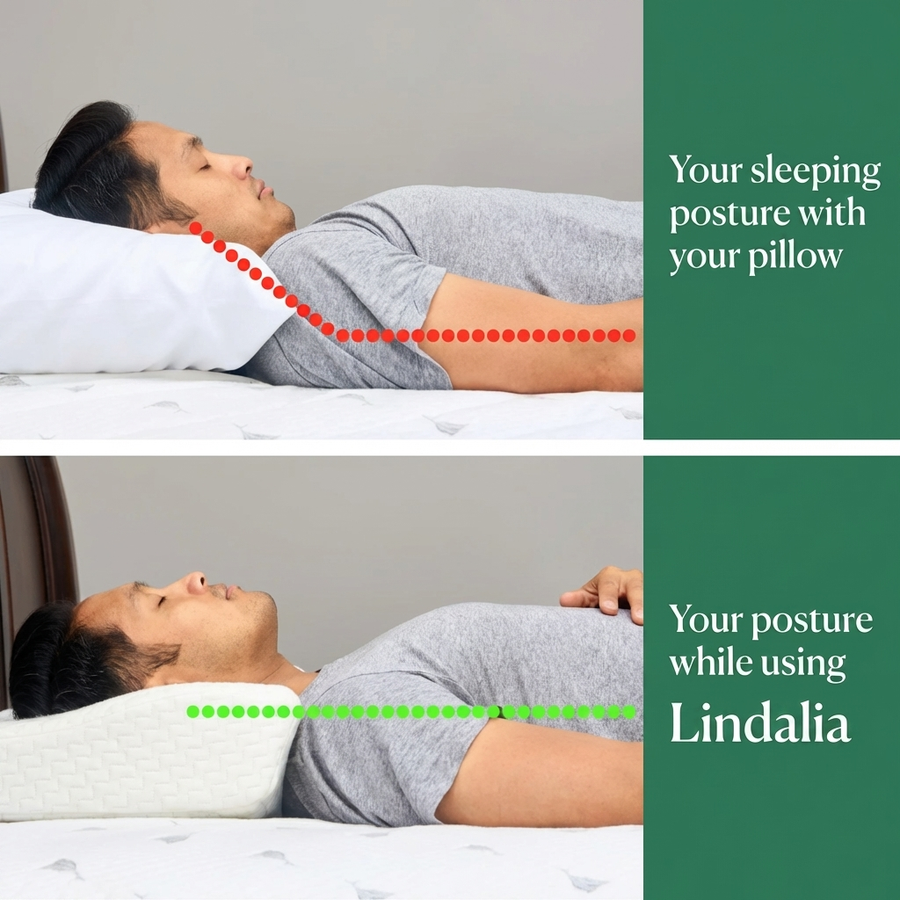
Dual-Height Design Solves Both Positions
The lower side of the dual-height contour maintains your C-curve in back sleeping. Flip it for side sleeping. One pillow, both positions done correctly.
See the ProductHow a Cervical Channel Supports the C-Curve
The cervical channel in a contoured orthopedic pillow is a specific structural feature: a lowered central section that allows the neck to rest into it rather than riding on top of the main foam surface. When a back sleeper's neck settles into this channel, the foam on either side of the channel provides upward support to the cervical curve, maintaining the lordosis passively without any muscle effort required from the sleeper.
The depth and width of the channel matter. A channel that's too shallow provides only superficial guidance. A channel that's too deep pushes the neck into hyperextension. The ideal channel depth is 2 to 3.5 centimeters below the surrounding foam surface, enough to cradle the cervical curve without exaggerating it. The width should accommodate the full depth of the neck's anteroposterior dimension, roughly 10 to 14 centimeters, so the channel doesn't cut into the neck tissues on either side.
For people with a more pronounced cervical lordosis (a deeper neck curve, which is common in people who have spent years in forward-head posture before correcting it), a deeper channel may be needed. For people with a flatter cervical curve (which can result from years of forward-head posture that has actually reduced the lordosis), a shallower channel that doesn't push the remaining curve into hyperextension is more appropriate. This is one reason that adjustable pillows or pillows with multiple firmness inserts are sometimes recommended for people with atypical cervical curves.
If you've had years of forward head posture or have been told by a physiotherapist that your cervical lordosis is reduced, be cautious with deep cervical channels. A channel designed for a typical curve depth may feel like it's pushing your neck into hyperextension because your curve is flatter than the channel assumes. Start with a shallower channel and adjust from there, or consult a physiotherapist for specific guidance.
Back sleeping protects your spine. A wrong pillow in the back position defeats the entire purpose of the position.
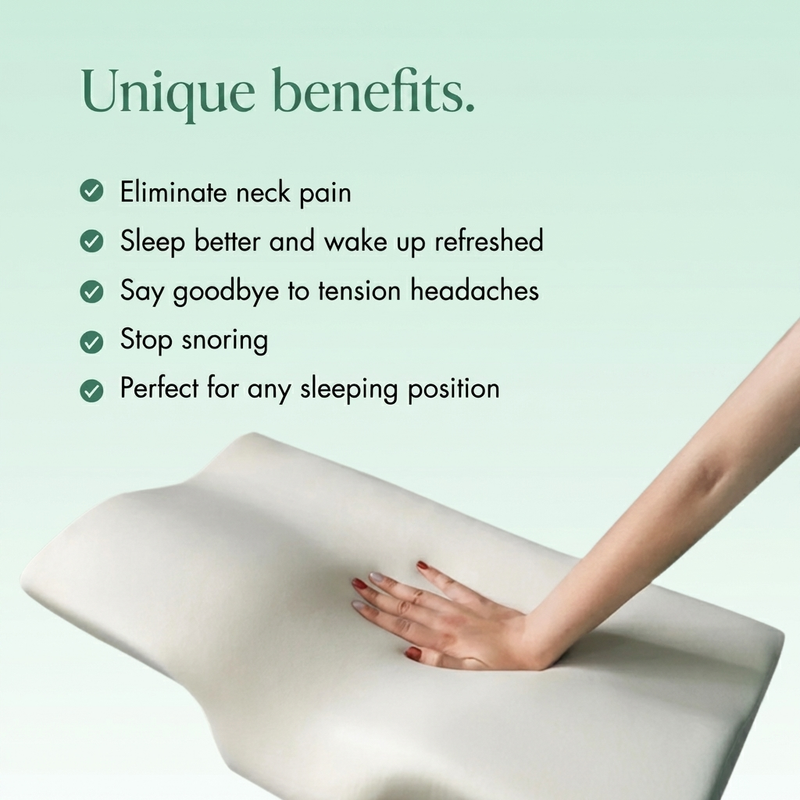
Cervical Orthopedic Pillow with Defined Cervical Channel
The correct loft, the correct depth, the correct contour for maintaining the C-curve through a full night of back sleeping.
See the Product