

Orthopedic Pillow for Neck and Shoulder Pain: One Pillow, Two Problems Solved
Neck pain and shoulder pain feel like separate issues. They usually aren't. Here's how they're connected and how a single well-designed pillow addresses both.
You wake up and your neck is stiff. An hour later, your shoulder starts aching. You treat them as two separate problems, different stretches, different advice, maybe different doctors. But in most cases, neck pain and shoulder pain that appear together in the morning have a single shared cause: how your cervical spine and shoulder girdle are positioned relative to each other during sleep. Fix the shared cause, and both problems tend to resolve together.
The Anatomical Link Between Your Neck and Shoulders
The cervical spine and the shoulder girdle are connected by a dense web of muscles, and this connection runs in both directions. The trapezius muscle attaches to the cervical vertebrae at the top and the shoulder blade at the bottom. The levator scapulae connects the cervical spine directly to the upper corner of the shoulder blade. The scalenes run from the cervical spine to the first and second ribs. When the neck is misaligned during sleep, these muscles don't just protect the neck. They pull on the shoulder.
Sustained mild tension in the trapezius, which is exactly what an ill-fitting pillow creates over seven hours, produces a characteristic pattern of stiffness and soreness that most people recognize as "shoulder tension." They describe it as tightness between the neck and shoulder, a feeling of the shoulder being pulled up toward the ear, or a deep ache in the upper back that seems to radiate from the neck. This isn't a shoulder joint problem. It's a cervical muscle problem that presents in the shoulder.
The levator scapulae is particularly relevant for side sleepers. When the neck bends laterally during side sleeping, either toward the mattress because the pillow is too low, or away from it because the pillow is too high, the levator scapulae on the bent side is placed in sustained stretch or compression. Either direction creates the kind of chronic low-grade muscle irritation that shows up as a persistent ache in the angle between the neck and the shoulder, right where the muscle attaches.

Cervical Orthopedic Pillow
A dual-height contour that keeps the neck neutral in both sleeping positions, removing the sustained muscle tension that creates both neck and shoulder pain.
See the ProductThe Side Sleeping Problem Explained
Side sleeping is the most common sleep position and also the one most likely to create combined neck and shoulder problems when done on a poorly fitting pillow. The reason is geometry. In side sleeping, the shoulder of the down arm is pressed into the mattress, and the neck must bridge the gap between that shoulder and the head. If the pillow doesn't bridge this gap precisely, the neck bends one way or the other, and the chain of muscles running from the neck to the shoulder blade experiences sustained asymmetric stress.
The shoulder joint itself is also vulnerable in side sleeping because it's bearing body weight for extended periods. The lateral deltoid, the subacromial bursa, and the rotator cuff tendons are all compressed between the humeral head and the mattress surface when you sleep on your side. This compression is unavoidable in side sleeping, but it's significantly worsened when the neck is also misaligned, because the resulting muscle tension in the trapezius and levator scapulae increases the effective load on the shoulder structures below.
People with existing shoulder problems, rotator cuff issues, bursitis, or impingement, consistently find their symptoms worse in the morning after side sleeping on a flat or incorrectly fitted pillow. The sustained compression combined with the additional tension from cervical muscle strain creates an overnight inflammatory environment in the shoulder that produces the characteristic morning soreness. Correct the cervical alignment, and the shoulder compression remains (it's unavoidable in side sleeping) but the additional muscular tension component is removed, which substantially reduces the severity of morning shoulder pain.
If you sleep on your side and have shoulder pain, try placing a small pillow between your knees in addition to your cervical pillow. This aligns the hips and pelvis, reducing the rotation that can pull the shoulder out of its ideal position during side sleeping. The combination of correct cervical loft and hip alignment is more effective than either alone.
Trapezius Tension and Its Morning Pattern
The upper trapezius is one of the most chronically overworked muscles in the modern body. It responds to both cervical misalignment and emotional stress by increasing its resting tone, a state of partial contraction that never fully releases. When a person with elevated trapezius tone sleeps on an ill-fitting pillow, they begin the night with muscles that are already tighter than optimal, and then load those muscles with seven hours of mild sustained stress on top of an already elevated baseline.
The result is the morning shoulder ache that feels disproportionate to the previous day's activity. Nothing particularly demanding happened. You slept. But you slept with tight muscles that were made tighter, and you wake up feeling like you've been working your shoulders all night. In a sense, you have been. The trapezius has been modulating the cervical stress your pillow was creating, contracting subtly to protect the joints and soft tissue from the strain your pillow was imposing.
The test for this pattern is simple: if your shoulder tension is consistently worse in the morning than in the evening, and better after some gentle morning movement, it's postural-overnight in origin rather than activity-related. Activity-related shoulder tension typically builds through the day and peaks in the evening. Overnight-positional tension peaks in the morning and disperses through movement. Recognizing the pattern tells you where to intervene.
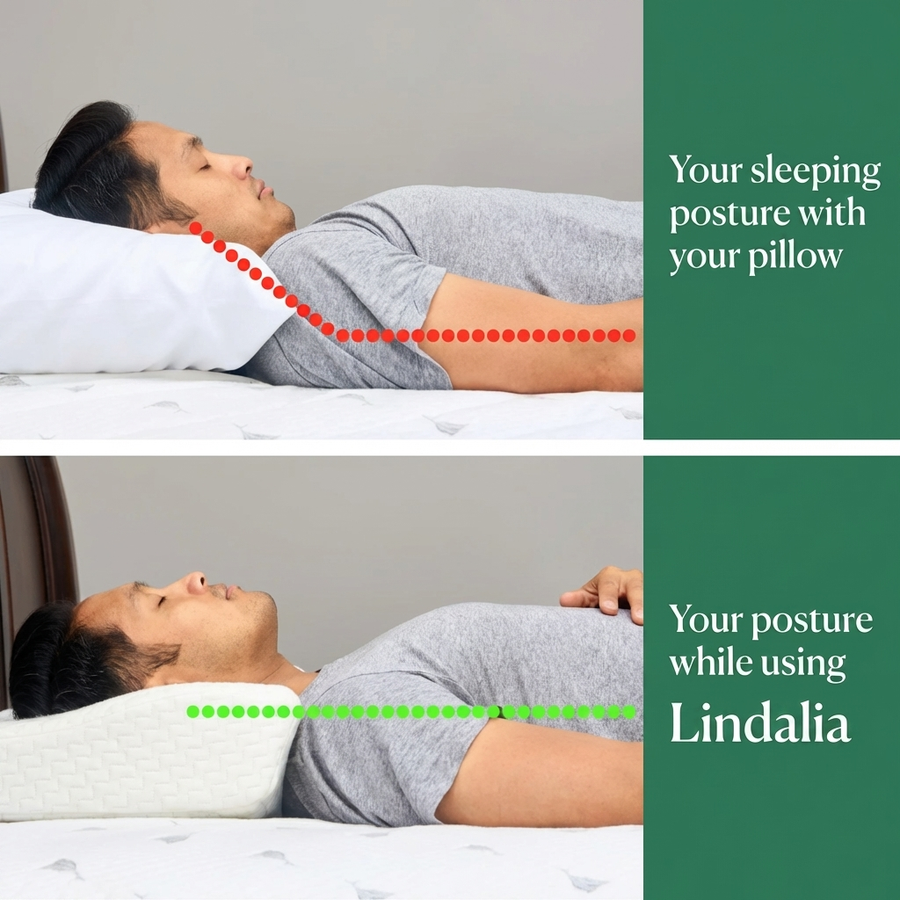
Neck and Shoulder Relief Through Better Sleep
When the cervical spine is properly supported overnight, the muscles connecting neck to shoulder finally get to fully rest and recover.
See the ProductWhat Dual Support Actually Means in Practice
A pillow that provides dual support for neck and shoulder pain needs to do two things simultaneously. First, it needs to keep the cervical spine in neutral alignment, which means the right loft for your shoulder width and sleeping position, and a contoured shape that differentiates between back and side sleeping. Second, it needs to allow the down shoulder to be in a position that minimizes joint compression while the neck is supported.
This is where the design of the lateral lobes on a contoured pillow matters for shoulder pain specifically. A pillow with correctly elevated lateral lobes lifts the head to the right height without requiring the shoulder to compensate. The shoulder can settle naturally on the mattress without the neck bending toward it. The trapezius and levator scapulae don't need to do active stabilization work. The pillow is doing it instead, and the muscles can actually rest.
The material under the head also affects shoulder load. A memory foam surface that's too firm can push back against the skull with enough force to create a lateral pressure that pushes the head slightly away from the shoulder, subtly straining the upper cervical soft tissue. A foam that's soft enough on the surface to let the skull settle naturally, while firm enough in its core to maintain the correct loft, keeps the head in the right position without creating a secondary force vector on the neck-shoulder structure.
For people with significant shoulder pain in addition to neck issues, consider adding a body pillow to hug during side sleeping. This keeps the upper arm slightly elevated rather than resting against the torso, reducing the internal rotation of the shoulder that can compress the rotator cuff tendons. Combined with a proper cervical pillow, this is the approach most physiotherapists recommend for complex shoulder-neck presentations.
The trapezius doesn't clock out when you sleep. If your pillow gives it a reason to stay engaged, it will work all night, and you'll feel it in the morning.
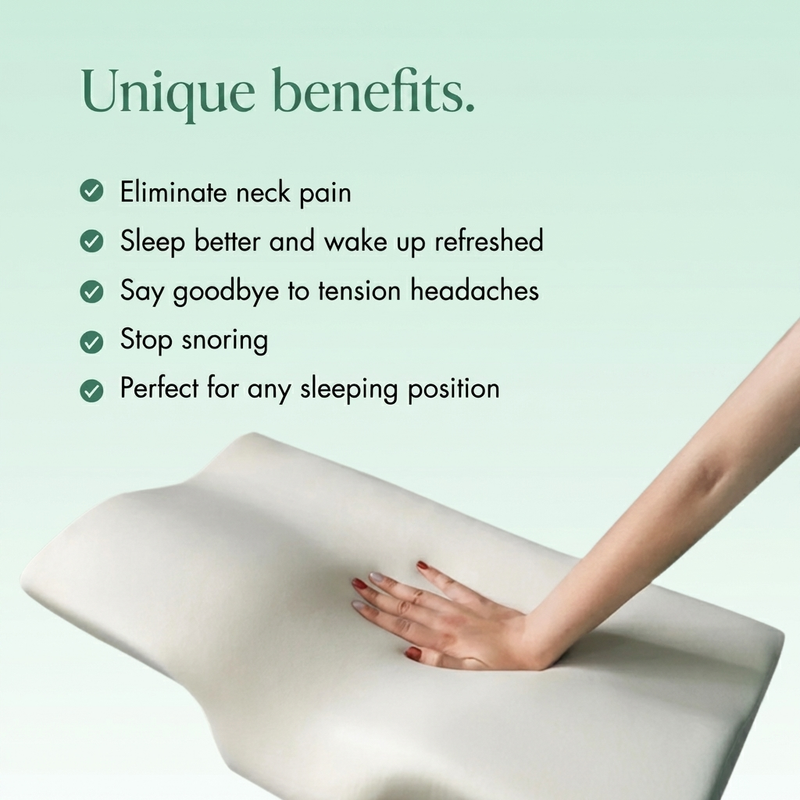
The Cervical Orthopedic Pillow for Neck and Shoulder Relief
Raised lateral lobes keep your neck neutral and your shoulder free. Dynamic foam, dual-height, satisfaction guarantee.
See the Product