

Orthopedic Pillow for Neck Pain: How to Choose the Right One
The pillow aisle is full of promises. This guide cuts through the marketing and gives you the five criteria that actually matter when you have neck pain.
If you have neck pain and you're looking for a new pillow, you're going to be confronted with a wall of products, each claiming to be orthopedic, therapeutic, or clinically recommended. The vast majority of them are standard pillows with better packaging. Knowing what to look for, and what to ignore, makes the difference between spending money on something that actually fixes your mornings and buying yet another pillow that doesn't.
Criterion 1: Foam Density and Type
The first thing to check is the foam density, measured in pounds per cubic foot (lb/ft³) or kilograms per cubic meter (kg/m³). For a pillow genuinely capable of maintaining cervical alignment over a full night of sleep, you need at minimum 4 lb/ft³ (64 kg/m³). Below that, the foam compresses too fully under sustained head weight and loses its supportive properties within hours of lying down.
If a brand doesn't specify density, that's already informative. Quality orthopedic foam manufacturers list their density because it's a selling point. When it's absent from the description, assume the density is low. The foam type matters too. Dynamic or graduated-density memory foam outperforms single-density foam because it can provide different resistance levels across the pillow surface, firmer support under the neck, softer cradling under the head, in one continuous piece of material.
Ask specifically whether the memory foam is open-cell or gel-infused. Traditional closed-cell memory foam traps heat and softens as body temperature warms it. This creates an inconsistency between how the foam performs when you first lie down versus two hours into the night when it's fully warm. Open-cell and gel-infused formulations maintain more consistent behavior throughout the night, which translates to more consistent cervical support.

Cervical Orthopedic Pillow
Dynamic memory foam with proper density, genuine dual-height contour, and hypoallergenic materials. Designed for people who wake up with neck pain.
See the ProductCriterion 2: Contour Geometry
The contour of an orthopedic pillow should be functional, not decorative. There's a meaningful difference between a pillow that has a slight wave shape and one that has a defined cervical channel with measured height differences between zones. The former is cosmetically contoured. The latter is structurally contoured.
Look for a clear cervical channel, the lower central section of the pillow designed for back sleepers, that is at least 2 centimeters below the lateral lobes. For side sleepers, the lateral lobes should be meaningfully raised above the center, typically 3 to 5 centimeters above the cervical channel. If you can hold the pillow at eye level and the contour looks minimal, it probably won't provide the positional differentiation your neck actually needs.
A dual-height design means one side of the pillow is configured for back sleeping (lower loft, deeper cervical channel) and the other side is configured for side sleeping (higher loft to bridge the ear-to-shoulder gap). This matters if you're a combination sleeper or if you're unsure which position is right for your neck. You can try both sides and use whichever provides better relief.
Once you get a pillow, lie on your back and have someone check your head position from the side. Your head should be level, not tilted up or down. Your ear should be roughly in line with your shoulder. If your chin is pointing toward the ceiling, the pillow is too thin. If it's tucked toward your chest, it's too thick.
Criterion 3: Loft Height for Your Body
Loft is the pillow's height when uncompressed. Getting the right loft is as important as getting the right foam density, because the correct loft is determined by your anatomy, specifically your shoulder width and your preferred sleeping position. There is no universal correct height. A loft that's perfect for a broad-shouldered side sleeper is too high for a narrow-shouldered back sleeper.
Side sleepers need a loft that matches the distance from the outer edge of their shoulder to their ear, measured while lying on their side. For most adults, this falls between 10 and 14 centimeters. Pillows at this height bridge the gap precisely, keeping the ear, shoulder, and hip aligned horizontally. Back sleepers need less loft, typically 7 to 10 centimeters, enough to support the cervical curve without pushing the chin forward.
Some pillows offer adjustable loft by including removable inner inserts or multiple foam layers. This is a practical feature for anyone who isn't sure of their ideal height, or who shares a bed with someone who prefers a different loft. The adjustability also accommodates changes in mattress firmness over time, since a mattress that softens will effectively require less loft from your pillow.
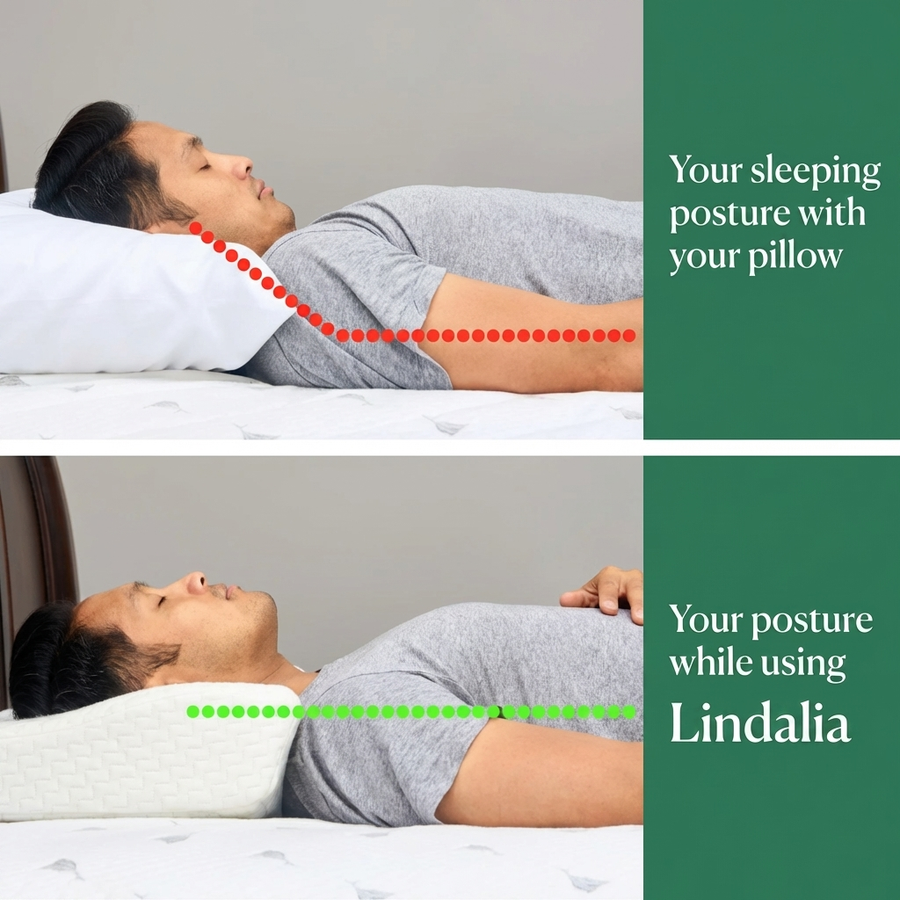
Dual-Height Cervical Support
One side for back sleepers, one side for side sleepers. Dynamic foam that holds the right height all night long.
See the ProductCriterion 4: Material Safety and Washability
Hypoallergenic certification matters more for pillows than for most other bedding because your face is in contact with the pillow surface for the entire night. Memory foam that isn't certified can off-gas volatile organic compounds (VOCs), particularly in the first weeks after purchase. Look for CertiPUR-US certification or equivalent, which confirms the foam has been tested for harmful chemicals, heavy metals, and off-gassing levels.
The cover material is equally important. A removable, machine-washable cover is a basic hygiene necessity for a pillow you use daily. Covers that can't be removed or washed accumulate skin cells, dust mites, and moisture over time, which affects both hygiene and long-term sleep quality. Tencel and bamboo-derived covers are particularly good options because they're naturally moisture-wicking, soft against skin, and hold up well to regular washing without pilling or stiffening.
Consider whether the pillow itself (not just the cover) can be aired out. Memory foam pillows shouldn't be machine washed, but they benefit from occasional airing in indirect sunlight. A pillow with a cover that's easy to remove for washing, combined with regular airing of the foam core, maintains hygiene and foam performance significantly better than one that's sealed into its cover.
Be skeptical of pillows that claim to be orthopedic but list only 'memory foam' without density specifications, pillows with non-removable covers, pillows that feel cloud-soft throughout without any firmer resistance in the core, and any product that doesn't mention the certifications of its foam materials.
Criterion 5: Durability Evidence
A pillow's durability is hard to assess at the point of purchase, but there are proxy indicators. Foam density (high density lasts longer), warranty length (a brand offering a three-year warranty is more confident in their foam's longevity than one offering thirty days), and brand transparency about materials all correlate with durability. Reviews mentioning long-term use, specifically comments about whether the pillow still supports as well at six months or one year as it did initially, are the most direct signal available.
Ask what the return or guarantee policy is. Brands that offer meaningful satisfaction guarantees are implicitly saying they're confident enough in the product that they don't expect you to return it. A thirty-night trial is common in quality bedding brands. The period matters because it takes at least two weeks to properly evaluate a new sleep support product, and thirty days gives you time to make a genuine assessment rather than a first-impression judgment.
Avoid pillows with permanent shape guarantees if they don't specify foam density. Foam shape guarantees are only meaningful if the foam is dense enough to maintain its shape, and a vague guarantee without specifications is just marketing language. A concrete density rating combined with a warranty is far more credible than any promise-based language.
Choosing a pillow for neck pain isn't about finding something comfortable. It's about finding something structurally correct for your anatomy.
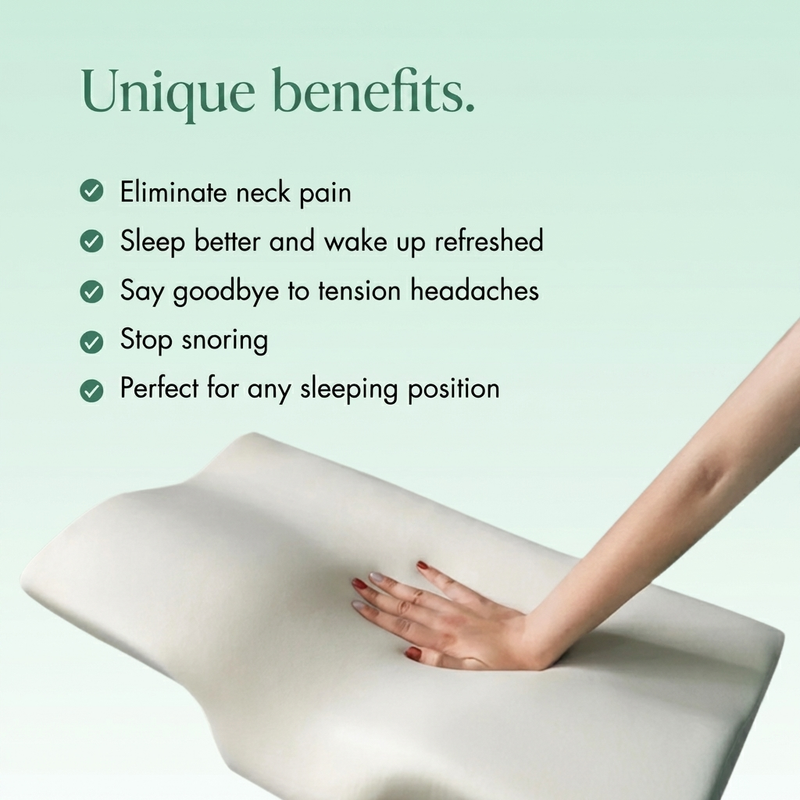
The Orthopedic Pillow for Neck Pain
High-density dynamic foam. Dual-height functional contour. CertiPUR-US certified materials. Free shipping and satisfaction guarantee.
See the Product