

5 Signs You Need an Orthopedic Pillow Tonight
Your body has been sending you signals. Here's how to read them and what they're telling you about what happens to your neck while you sleep.
Most people who need an orthopedic pillow don't know they need one. They've normalized the way they feel in the morning. The stiffness, the dull headache, the shoulder that needs a minute before it works properly, it all just seems like how they wake up. It's not how you have to wake up. Here are five signs that your pillow is causing structural problems your body is trying to tell you about.
Sign 1: You Wake Up With a Stiff Neck That Loosens Through the Morning
This is the most common and most dismissed signal. The stiffness is there when you first get up, gradually improves over an hour or two, and is largely gone by mid-morning. Most people interpret this as their body "warming up," as though stiffness after sleep is simply biological. It's not. A neck that wakes stiff and loosens through movement has spent the night in a position that created tissue inflammation, and that inflammation is being gradually dispersed through circulation and activity.
The give-away is that the stiffness appears after sleep specifically. If you nap for twenty minutes in a chair and feel fine waking up, but feel stiff after a full night in bed, the duration of the positional stress is the variable. Twenty minutes of mild misalignment doesn't accumulate enough inflammatory response to cause symptoms. Seven hours does. The pattern is diagnostic: stiffness that's specifically worse after a full night's sleep is a direct indicator of a sustained positional problem.
The specific muscles or joints that feel stiff also give you information. Stiffness at the base of the skull and upper cervical region points to the head-neck interface, specifically how your head was positioned relative to your cervical spine. Stiffness deeper in the mid-cervical region suggests the curve itself was under sustained stress. Stiffness in the suboccipital muscles (the small muscles at the base of the skull) is particularly associated with a pillow that's too thick, keeping the head in mild flexion all night.

Cervical Orthopedic Pillow
A dual-height contour that holds your neck in the right position for the full night. No more stiffness that takes two hours to go away.
See the ProductSign 2: You Get Headaches That Start at the Back of Your Head
Cervicogenic headaches are genuinely common and genuinely misunderstood. They originate in the cervical spine or the muscles attached to it, but they refer pain to the head, often presenting as a dull pressure behind the eyes, at the temples, or radiating from the base of the skull to the forehead. People treat these headaches with pain medication for years without ever addressing the cervical source.
The morning timing is the key diagnostic feature. If you wake up with a headache already present, or develop one within the first hour of the day before any obvious stress or screen exposure, the source is almost certainly cervical. Your neck has been in a compromised position all night, the suboccipital muscles have been under sustained tension, and the referred pain pattern is what you experience as a headache.
A simple test: press firmly into the muscles at the base of your skull while you have one of these headaches. If that pressure reproduces or increases the head pain, it's almost certainly cervicogenic. The treatment protocol starts with cervical alignment correction, and for many people, the single most impactful intervention is changing their pillow to one that eliminates the overnight positional stress creating the suboccipital tension in the first place.
When you have your morning headache, press your thumbs into the muscles on either side of the base of your skull, just below where the skull meets the neck. If this pressure intensifies or reproduces the headache, you're likely dealing with a cervicogenic pattern. This responds well to cervical alignment correction during sleep.
Sign 3: One Shoulder Feels Different From the Other in the Morning
Asymmetric shoulder sensation on waking is a reliable indicator of side-sleeping on a pillow with incorrect loft. When the pillow is too low for your shoulder width, your neck bends toward the mattress throughout the night. The muscles and nerve tissue on the upper side of the neck are placed in sustained mild stretch. The result is a feeling of tightness, numbness, or heavy fatigue in the shoulder and upper arm on the side you slept on.
If you're a side sleeper and consistently notice that one shoulder feels heavier, tighter, or has more limited range of motion in the morning, trace back to which side you slept on. If the symptoms match the down side (the side against the mattress), your pillow is too low. If they match the upper side (the side facing the ceiling), your pillow is too high, pushing your neck into lateral flexion the other way.
Numbness or tingling in the arm, particularly in the first two to three fingers, can accompany this pattern. The brachial plexus, the nerve bundle that feeds the arm, runs through the neck and can be mildly compressed by sustained lateral neck flexion during sleep. This is not the same as thoracic outlet syndrome or true radiculopathy, but it's a signal that the nerve tissue is being placed under stretch or compression for hours at a time, and it stops happening when the lateral loft issue is corrected.
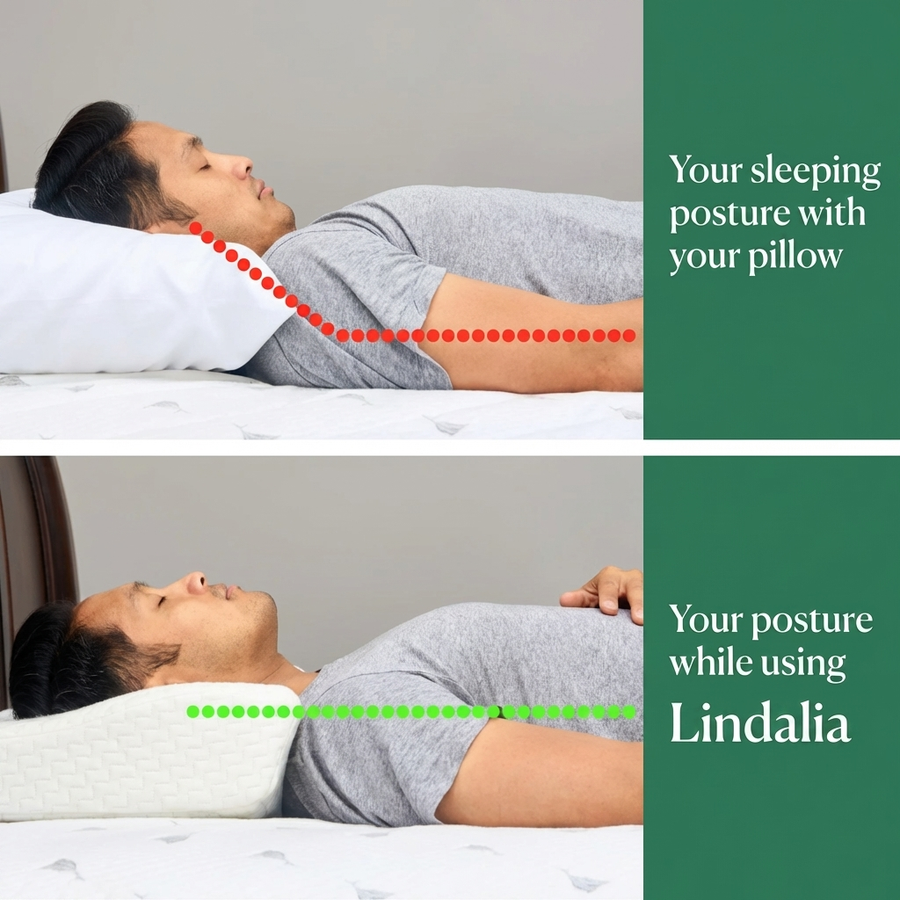
Raised Lateral Lobes for Perfect Shoulder Alignment
The dual-height design bridges the ear-to-shoulder gap precisely, so your neck stays horizontal and your shoulder stays free all night.
See the ProductSign 4: You Flip Your Pillow Multiple Times During the Night
If you're flipping, folding, or repositioning your pillow repeatedly through the night, your body is trying to find a position of comfort that your pillow isn't providing. This is not a quirk or a restless sleep personality. It's a feedback loop: the current pillow position is creating enough discomfort to partially wake you, you reposition hoping for relief, the new position isn't right either, and the cycle continues.
People who flip to the cool side of the pillow repeatedly are also often dealing with heat retention, which means their foam is a closed-cell type that traps body heat and softens unevenly. The cool flip feels better briefly because the firmer, cooler foam provides better support, but it warms quickly and the cycle resumes. This is a material issue rather than a shape issue, and it's addressed by open-cell or gel-infused foam that maintains consistent temperature and behavior throughout the night.
The repositioning behavior also has sleep quality consequences beyond the mechanical discomfort. Each partial awakening to adjust the pillow interrupts the sleep cycle. If these awakenings happen during the approach to deep sleep or REM sleep, they prevent the brain from entering these restorative phases. The cumulative effect over weeks of interrupted sleep cycles is a level of daytime fatigue that goes beyond what the total hours of sleep should produce.
Keep a one-week log of which position you fall asleep in and which you wake up in. If you consistently start on your back and wake on your side, or start on your right and wake on your left, you're repositioning to escape discomfort. A properly supportive pillow tends to reduce the number of position changes through the night because it maintains comfort in the position you chose to begin with.
Sign 5: Your Pain Is Better on Nights You Fall Asleep on the Couch
This one is almost diagnostic on its own. If you occasionally fall asleep on the couch and feel better the next morning than you do after a full night in bed, the bed pillow is causing damage that the couch cushion (which provides accidental but sometimes better-fitting support to the neck) is not. The couch isn't a good sleep solution, but the contrast it reveals is important information.
What happens on the couch is often accidental contouring. The cushion armrest supports the neck at an angle that happens to work for your anatomy. The couch back provides some resistance that prevents the head from sinking too far. None of this is designed, but it sometimes accidentally produces better cervical support than a flat, overly soft bed pillow. The solution isn't to sleep on the couch. It's to bring the functional support the couch provides accidentally into your bed intentionally, through a properly designed orthopedic pillow.
If this sign applies to you, pay attention to the specific couch configuration that feels good. Are you on your back with your head slightly elevated? Side-lying with your head on the armrest? This tells you something about the loft and angle your neck prefers, which can guide your pillow selection. Someone who feels better on their back with mild cervical extension needs a different loft than someone who feels better side-lying with the neck in full neutral.
If your neck is better after a nap on the couch than after a full night in your bed, your bed pillow is the problem, not your couch.
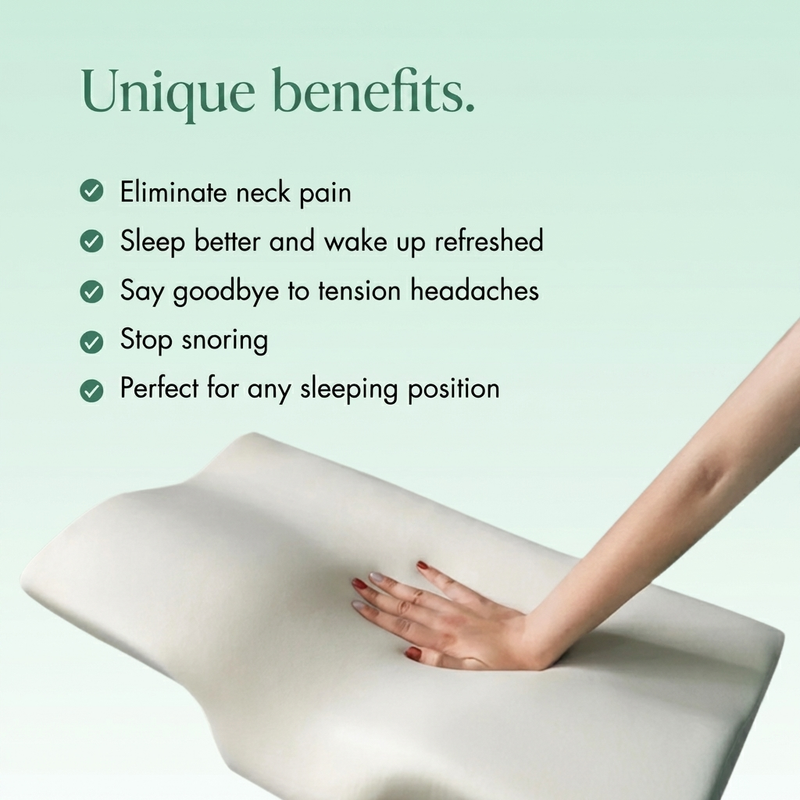
The Orthopedic Pillow Built for Cervical Relief
Dual-height contour, dynamic memory foam, hypoallergenic. Satisfaction guarantee and free shipping. Your mornings can be different.
See the Product