

Orthopedic Shoulder Pillow: How It Relieves Pressure While You Sleep
The shoulder takes more compressive load during side sleeping than most people realize. Here's what's happening inside the joint, and how the right pillow changes it.
Side sleeping compresses the down shoulder against the mattress for stretches of thirty minutes or more. The joint was not designed for this kind of sustained static load, and the tissues inside it respond accordingly. Morning shoulder soreness, arm numbness, a feeling of heaviness or reduced mobility in the down-side shoulder, these are not random problems. They're the predictable result of hours of joint compression, and a properly designed orthopedic pillow can significantly reduce the tissue stress that creates them.
What Happens Inside the Shoulder During Lateral Sleep
The shoulder joint (glenohumeral joint) is a ball-and-socket design with a relatively shallow socket, making it highly mobile but also relatively vulnerable to compressive and shear forces. When you sleep on your side, the weight of your upper body presses the humeral head into the glenoid socket with sustained force. The subacromial bursa, a fluid-filled sac that normally cushions the space between the rotator cuff tendons and the acromion, is compressed between the humeral head and the acromion above it.
Under normal daytime conditions, this compression is brief: you move, the bursa decompresses, circulation restores, and the tissue recovers. During sustained lateral sleep, the compression continues without interruption. The bursal fluid is squeezed out progressively, reducing the cushioning capacity of the structure. The rotator cuff tendons, particularly the supraspinatus which passes through this space, experience increasing friction against the acromion as the bursa deflates. After thirty to sixty minutes, the subacromial space is running at reduced capacity.
The bicipital tendon in its groove on the anterior humerus also experiences compressive stress during side sleeping, particularly if the arm is in internal rotation (elbow pointing backward). People with pre-existing bicipital tendinopathy often notice significantly worse symptoms in the morning after side sleeping, especially on the affected side. The sustained compression of the already-irritated tendon during sleep amplifies the inflammatory response that shows up as pain.

Cervical Orthopedic Pillow with Lateral Support
When the cervical spine is properly supported, the shoulder muscles relax. Less muscular tension means less additional compression on an already-loaded shoulder joint.
See the ProductHow the Neck Connects to Shoulder Pressure
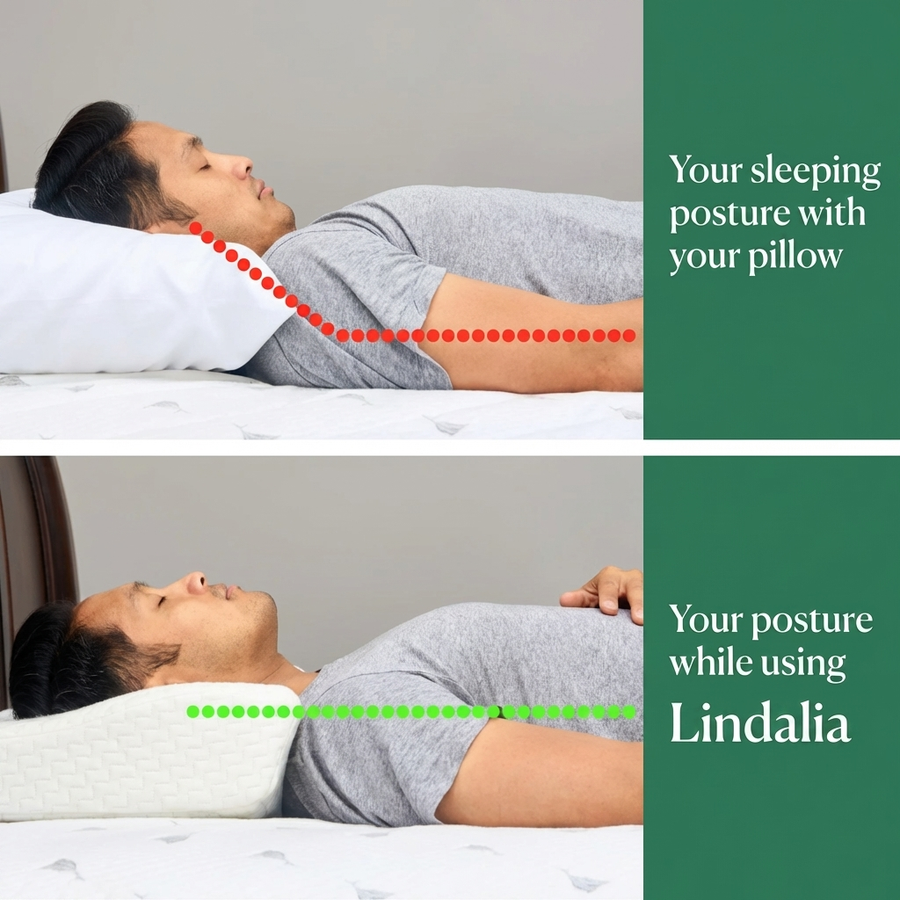
Here's where cervical alignment and shoulder compression intersect. When the neck is in lateral flexion during side sleeping (bent toward the mattress because the pillow is too low), the muscles that cross the neck-shoulder interface, the trapezius, levator scapulae, and scalenes, increase their resting tone to protect the cervical joints. This increased muscle tone creates additional downward force through the shoulder girdle, adding compressive load to the already-stressed shoulder joint below.
This is why the pillow height affects shoulder pain even though the pillow isn't directly in contact with the shoulder. A pillow that's too low for a side sleeper's shoulder width creates both cervical lateral flexion and elevated cervical muscle tension, which increases the effective load on the down shoulder. Correcting the pillow height removes the cervical flexion, reduces the protective muscle tension, and the effective compression on the shoulder joint decreases even though nothing has changed about how you're lying on the shoulder itself.
This mechanism explains a pattern that puzzles many people: they have shoulder pain and try sleeping on the other side to relieve it, but now their other shoulder starts hurting too. The real problem was never the shoulder itself. It was the cervical misalignment creating excess muscle tension throughout the shoulder girdle. Both shoulders become symptomatic because the root cause is bilateral: poor pillow support affects the neck regardless of which side you sleep on.
Think about which shoulder hurts more in the morning. If it's consistently the down side (the side you sleep on most), the primary issue is local joint compression from lateral sleeping. If both shoulders are symptomatic or the upper side hurts more, the issue is more likely the cervical muscle tension pattern from incorrect pillow height. The mechanism is different, and so is the solution.
Arm Numbness and Tingling: When Compression Affects Nerves
The brachial plexus is the network of nerves that originates in the lower cervical spine and feeds through the neck and shoulder into the arm. It passes through a space called the thoracic outlet, bounded by the first rib below, the clavicle in front, and the muscles of the neck above. This space is vulnerable to compression from multiple directions, and sustained lateral sleeping can compress it from the cervical side if the neck is in lateral flexion.
When the brachial plexus is compressed during sleep, the result can be numbness, tingling, or weakness in the arm, typically affecting the first two or three fingers (C6-C7 nerve distributions) or the fourth and fifth fingers (C8-T1 distributions), depending on which cervical levels are being compressed. People often describe waking up with a "dead arm" or pins and needles that require several minutes of movement to resolve.
This is not the same as the "arm falling asleep" phenomenon caused by sleeping on the arm and directly compressing the radial nerve at the elbow or axilla. Neural compression from cervical lateral flexion produces a more diffuse, finger-specific tingling that comes from further up the chain. The pattern resolves when the cervical position is corrected, which is why the first movement upon waking (moving the head and neck) often relieves the tingling before any arm movement is needed.
From Neck to Shoulder to Arm
Proper cervical alignment removes the brachial plexus compression that creates morning arm numbness. One pillow change, multiple symptoms addressed.
See the ProductMattress Contribution to Shoulder Pressure
The pillow doesn't control everything. The mattress contributes significantly to shoulder compression during side sleeping by determining how deeply the shoulder sinks below the body surface. A very firm mattress doesn't absorb shoulder pressure at all, creating a hard contact point that concentrates the compressive load on the subacromial structures. A very soft mattress allows the shoulder to sink so deeply that the entire shoulder complex is embedded below the body line, creating sustained compression of the shoulder capsule from multiple directions simultaneously.
The ideal mattress for side sleeping, from a shoulder perspective, is medium to medium-firm: firm enough to support the body without allowing the shoulder to sink below optimal depth, but soft enough at the surface to cushion the shoulder contact point and distribute the load across a larger area rather than concentrating it at the highest pressure point. Memory foam mattresses with a comfort layer achieve this well. Very firm innerspring mattresses without a comfort layer are the most likely to create shoulder contact pressure problems for side sleepers.
If you can't change your mattress, a mattress topper with 5 to 8 centimeters of medium-density memory foam can significantly change the shoulder pressure experience during side sleeping. The topper allows the shoulder to sink slightly into a cushioned surface while preventing the excessive sinking of a full soft mattress. Combined with a properly fitted cervical pillow that removes the muscle tension component, a topper can make a problematic firm mattress usable for side sleepers with shoulder issues.
Some side sleepers find significant relief by placing a small thin pillow or folded blanket under the down arm, between the arm and the mattress. This slightly lifts the arm, reduces the internal rotation of the shoulder, and takes some compressive load off the subacromial space. It's not a substitute for a proper cervical pillow, but it can be a useful addition for people with significant shoulder joint issues.
The shoulder can't decompress while you're lying on it. Your pillow's job is to make sure the muscles around it at least stop adding to the problem.

Orthopedic Pillow That Protects Your Shoulder
By keeping your neck in neutral alignment, this pillow removes the cervical tension that amplifies shoulder compression every night.
See the Product