

Recommended Garlic Supplement: Doctor-Approved Daily Picks
Why more health professionals are recommending aged garlic extract, and what they look at on the label when they do.
Your doctor may not have mentioned garlic supplements at your last appointment. But a growing number of cardiologists, naturopathic physicians, and integrative medicine practitioners have incorporated aged garlic extract recommendations into their cardiovascular and immune support protocols. Here is what informs those recommendations, what practitioners look for on the label, and why aged garlic extract in particular has earned clinical credibility.
Why Health Professionals Are Paying Attention to Aged Garlic Extract
Healthcare providers who recommend botanical supplements operate under a higher standard of evidence than general wellness marketers. They are looking for peer-reviewed trials with clear endpoints, reproducible results, and a mechanism that explains the observed effects. Aged garlic extract meets these criteria in specific clinical areas better than most botanical compounds.
The blood pressure evidence is the strongest driver. A meta-analysis of randomized controlled trials found that aged garlic extract produced a statistically significant reduction in systolic blood pressure in participants with hypertension, averaging around 8 to 10 mmHg over 12 weeks. For a patient with borderline hypertension at 138/88 who is not ready to start medication, a 10 mmHg systolic reduction is clinically meaningful. It may delay the need for pharmacological intervention or complement existing treatment.
The mechanism is understood: aged garlic extract promotes nitric oxide synthesis in endothelial cells, which causes smooth muscle relaxation in blood vessel walls and reduces peripheral vascular resistance. This is the same pathway targeted by several antihypertensive drug classes. The effect is more modest than medication, but it is real, documented, and mechanistically coherent.
Practitioners who recommend supplements look for three things: a defined mechanism, reproducible clinical evidence at documented doses, and an acceptable safety profile. Aged garlic extract provides all three for cardiovascular applications. Raw garlic products at typical retail doses provide none of the three at clinically relevant levels.
The Form Distinction That Matters in Clinical Contexts
When a healthcare professional recommends garlic supplementation, they are almost always referring to aged garlic extract, not raw garlic powder. This distinction is rarely explained in clinical encounters because practitioners assume patients will research it. They often do not, and end up buying a 500mg raw garlic capsule at a pharmacy and reporting back that garlic did nothing for their blood pressure.
The form distinction matters because the clinical evidence that practitioners cite was conducted with aged garlic extract specifically. The transformation of allicin into S-allylcysteine (SAC) during the 20-month fermentation process produces a compound that is water-soluble, stable, well-absorbed, and free of the volatile sulfur compounds that cause the smell and gastric irritation associated with raw garlic. When practitioners note improved patient compliance with aged garlic extract compared to raw garlic preparations, they are observing the practical consequence of this chemistry.
A practitioner recommendation for aged garlic extract is not a general garlic recommendation dressed up with a product category. It is a recommendation for a specific chemical process, a specific class of compounds, and a specific dose range.
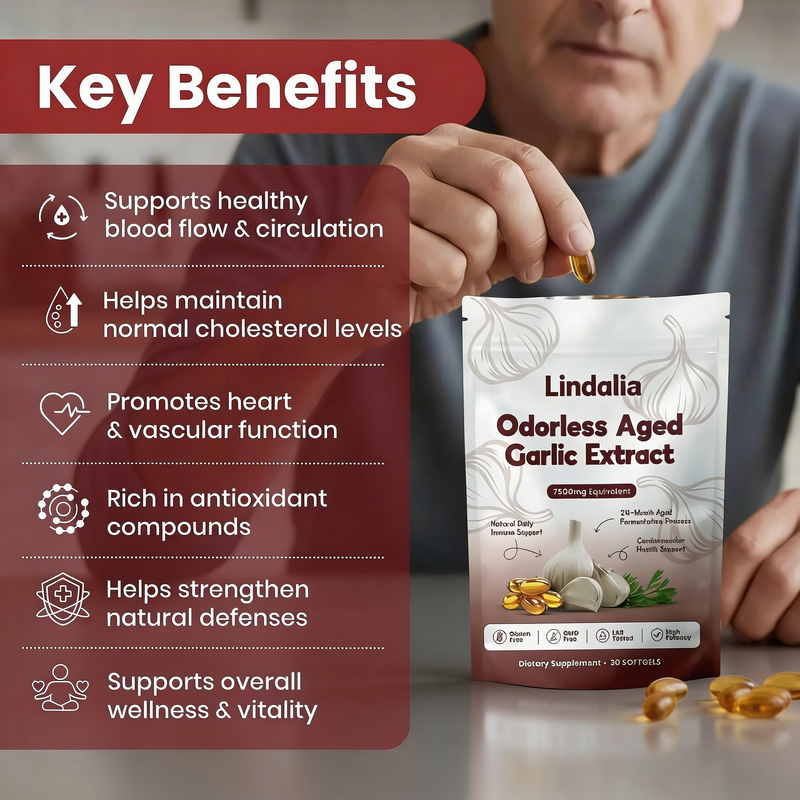
The Form Practitioners Actually Recommend
Aged garlic extract, 20 months fermented. The chemically distinct form with clinical evidence for cardiovascular support.
See the ProductWhat Practitioners Look for on the Label
A healthcare professional evaluating a garlic supplement for patient recommendation runs through a short checklist. It starts with the form of garlic: aged extract, not powder or oil or "concentrate." It continues with the dose: above 2,400mg per serving for cardiovascular applications. It checks for SAC standardization, which indicates quality control. It looks at the delivery form: softgels for consistent absorption. And it checks the inactive ingredients for anything that would interact with medications or be problematic for patients with specific conditions.
The dose requirement is where most retail garlic supplements fail immediately. A product containing 500mg to 1,000mg of garlic in any form will not be recommended by a practitioner who has read the clinical literature, because the studies showing effects used doses four to fifteen times higher. The recommended starting dose for cardiovascular applications in clinical protocols is typically 2,400mg daily, with higher doses in the 7,200mg range used in studies targeting blood pressure specifically.
Practitioners also look for evidence that the product was manufactured under GMP conditions and tested by a third party. This is standard practice for any supplement recommendation: the compound in the bottle should match the label, and the manufacturing environment should not introduce contaminants.
The Immune Support Argument for Adults Over 50
The second clinical area where practitioners recommend aged garlic extract is immune support for older adults. This is a practical concern: immunosenescence, the gradual decline of immune function with age, begins in the fifth decade and accelerates after 60. Natural killer cell activity, a key first-line defense against viral infections, declines measurably with age.
A 12-week randomized trial found that participants taking aged garlic extract had significantly higher NK cell counts and cytotoxic activity compared to placebo. The mechanism involves immune modulation through cytokine signaling, with aged garlic extract compounds increasing IL-2 and other NK-stimulating cytokines. For a patient over 55 who reports getting sick more frequently than they used to, or who experiences longer recovery times from respiratory infections, this is a clinically relevant target.
Practitioners integrating aged garlic extract for immune support typically use it as part of a broader protocol during fall and winter months. The 12-week build-up period aligns well with starting in October before peak cold and flu season. By December, the immune effects are at their established plateau.
Adults over 50 are simultaneously the population with the highest prevalence of cardiovascular risk factors and the one experiencing the most significant age-related immune decline. Aged garlic extract addresses both through documented mechanisms. This dual action is part of why practitioners increasingly include it in maintenance protocols for this age group.
A supplement earns a professional recommendation when the mechanism is understood, the evidence is reproducible, and the dose is specific enough to replicate what the research found.
The Medication Interaction Conversation
Practitioners who recommend aged garlic extract also counsel patients on the two primary interaction categories. The first is anticoagulants. Aged garlic extract has a mild antiplatelet effect, meaning it modestly reduces platelet aggregation. This is beneficial for cardiovascular protection in healthy individuals, but it adds to the effect of blood-thinning medications like warfarin or newer anticoagulants. Patients on these medications who add aged garlic extract should have their coagulation parameters monitored, and dosage adjustments are sometimes needed.
The second interaction category is antihypertensive medications. Because aged garlic extract reduces blood pressure through a genuine physiological mechanism, adding it to an existing antihypertensive regimen can cause the combined effect to overshoot. Patients taking lisinopril, amlodipine, or other antihypertensives who add aged garlic extract at clinical doses may find their blood pressure drops below target. Practitioners typically monitor blood pressure monthly for the first three months when adding aged garlic extract to an antihypertensive regimen.
These are not reasons to avoid aged garlic extract for people on cardiovascular medications. They are reasons to coordinate with a prescriber and monitor. Several practitioners note that patients who add aged garlic extract and achieve improved blood pressure control sometimes need their medication dose reduced, which they typically view as a positive outcome.
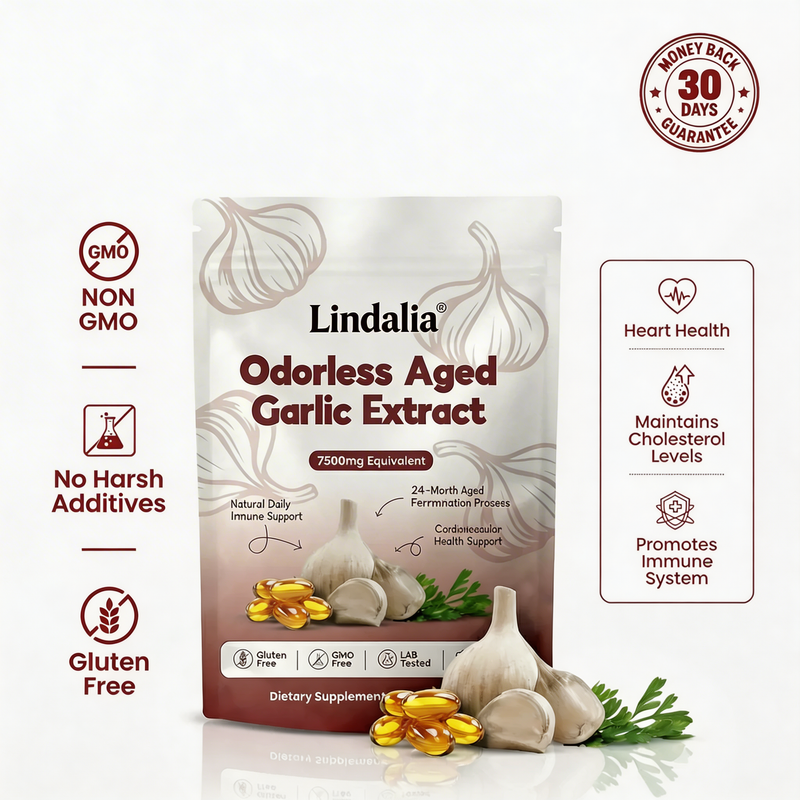
The Formula Practitioners Would Choose
Aged garlic extract, 7500mg potency, 20 months fermented. Designed around the research that informs professional recommendations.
See the ProductHow to Have a Productive Conversation With Your Doctor About Garlic Supplementation
If you want to discuss garlic supplementation with your healthcare provider and receive a useful response, specificity helps. Rather than asking "should I take garlic supplements?" ask "what do you think about aged garlic extract at 7,500mg daily for blood pressure support?" The second question signals that you have done research, know the distinction between aged and raw garlic, and are asking about a specific dose with clinical precedent.
Bring the specific product you are considering. Ask your provider to review the label. The conversation will be more productive if your provider can see the form, dose, and ingredients rather than imagining a generic garlic supplement.
Also mention any cardiovascular medications you are taking. The anticoagulant and antihypertensive interaction information is well-documented and your provider will want to factor it into their assessment. Coming prepared with this information demonstrates that you are approaching supplementation as a serious health decision, not a casual purchase.
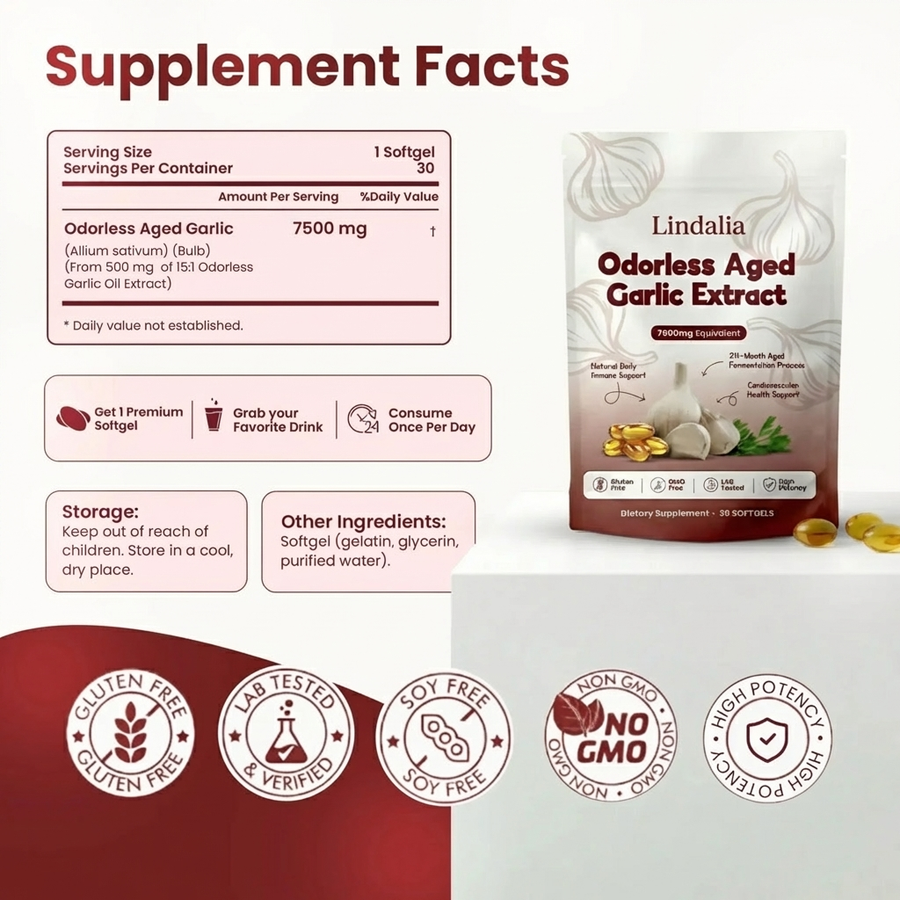
One Softgel. Clinical Dose. Consultation-Ready.
7500mg aged garlic extract. Bring the label to your next appointment. The formula that informs the professional conversation.
See the Product